


SEACOAST POETRY
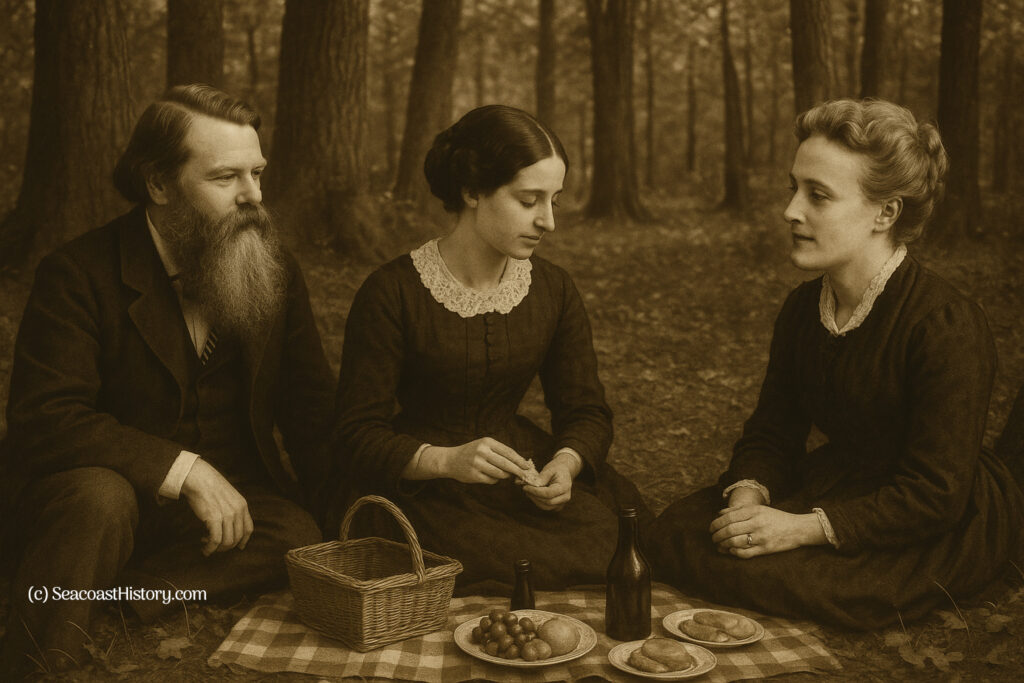
She was married to one of Portsmouth’s most famous men of letters. Together, they linked the arts scene of our Seacoast with the Boston literati and the English poets and writers. But when James T. Fields died, Annie found what some believe was a new kind of love.
When we left off with our last poem, it was 1880. Portsmouth-born editor and poet James T. Fields had just died, making a widow of Annie Fields (1834-1915), a popular writer in her own right. Anonymously, Mrs. Fields immediately produced a book in honor of her husband, and kindled a different kind of love.
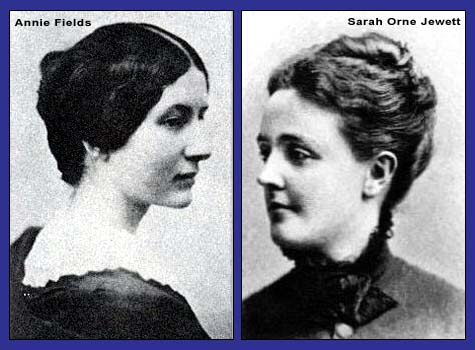
It is her relationship with South Berwick, Maine, writer Sarah Orne Jewett (1849-1909) that has become the focus of scholarly articles. Jewett had lost her father two years before Fields lost her husband, and what began as shared grief evolved into a lifelong partnership. Their live-in relationship has been described as a milestone in the history of lesbianism. They were the very definition of a “Boston marriage,” the connection of two financially independent Victorian women, active in the arts and feminists at heart, yet strictly constrained by their times.
The impact of their affection is evident. Soon after they became close, both launched prolific and successful and long-lasting periods of writing. Despite their reputations as poets, it is their prose that is today most accessible. Jewett is best known for her poignant short stories, and Fields for her biographical sketches of New England authors. Annie Fields, who often referred to herself as “the widow of Mr. Fields” and published poetry as Mrs. James T. Fields, also outlived her second love. She survived to edit the works of Sarah Orne Jewett, too.
Much of her poetry is lost to us in ornate, stilted constructions, over-rich with “thy” and “thou” and exclamation points. But the following lines to Sarah Jewett still have a heart and a pulse.
— J. Dennis Robinson
SEE ALSO: Bringing Charles Dickens to America
TO —–, SLEEPING
By Annie Fields
BELOVËD, when I saw thee sleeping there,
And watched the tender curving of thy mouth,
The cheek, our home of kisses, the soft hair,
And over all a languor of the south;
And marked thy house of thought, thy forehead, where
All trouble of the earth was then at rest;
And thy dear eyes, a blessing to the blest,
Their ivory gates closed on this world of care, —
Then, then I prayed that never wrong of mine,
That never pain which haunts these earth-built bowers,
If I could hinder, or could aught relieve,
Should ever more make sad this heart of thine;
And yet, dear love, how oft thou leav’st thy flowers,
Here in the rain to walk with me and grieve!
 Reverend Samuel Haven Fathered 17