


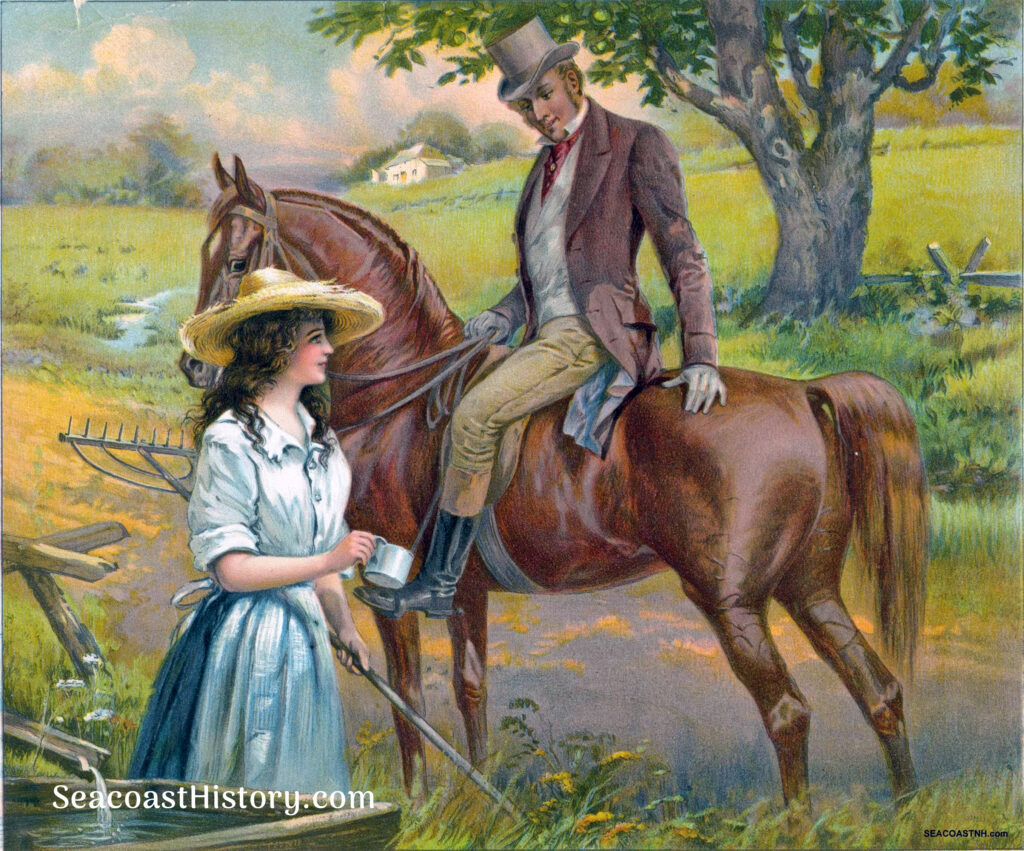
It is no secret that I possess the world’s largest collection of Maud Muller memorabilia. Don’t ask me why. In the poem “Maud Muller” by John Greenleaf Whittier, a beautiful maiden meets a handsome judge riding along the road from South Berwick to York, Maine. He stops at a natural spring there. She offers him a cup of fresh spring water. Both are smitten. Maud harbors a desire for a better life. The judge is drawn to her simple rustic beauty. But neither acts. They are from two different social classes. The judge rides on. The moment passes and they live to regret their failure to act. Whittier wrote:
“For of all sad words of tongue or pen,
The saddest are these: ‘It might have been!”
The poem struck a chord in the Victorian mind and Maud Muller became an icon,of inactivity. Later, as the bustling industrial 20th century dawned, Maud Muller, leaning on her hayrake, came to symbolize the past that, by contrast, seemed pastoral, romantic, slower, and simpler.
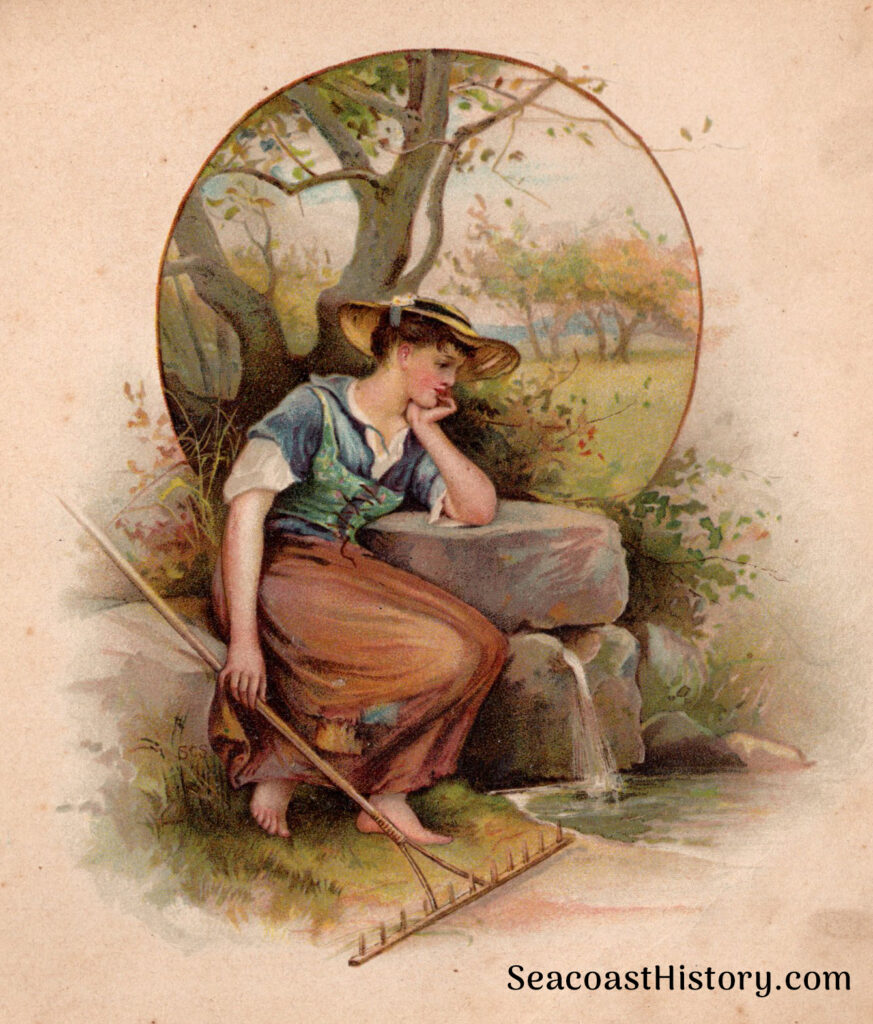
Maud’s rustic image appeared in magazine covers, in gift books, postcards, and advertisements for soap powder. Writer Bret Harte parodied Whittier’s poem by imagining what would happen if the maid and the judge actually married. In Harte’s poem the couple come to regret their unhappy marriage. They complain that — “It is, but hadn’t ought to be.”
The spring where many of us used to collect fresh water by the roadside, regrettably, no longer exists. This image comes from a small, undated gift book edition of the poem designed in London and printed in Bavaria. (Author’s Collection) (c) J. Dennis Robinson
SEE ALSO: Whittier Died in Seacoast, NH and Snowbound
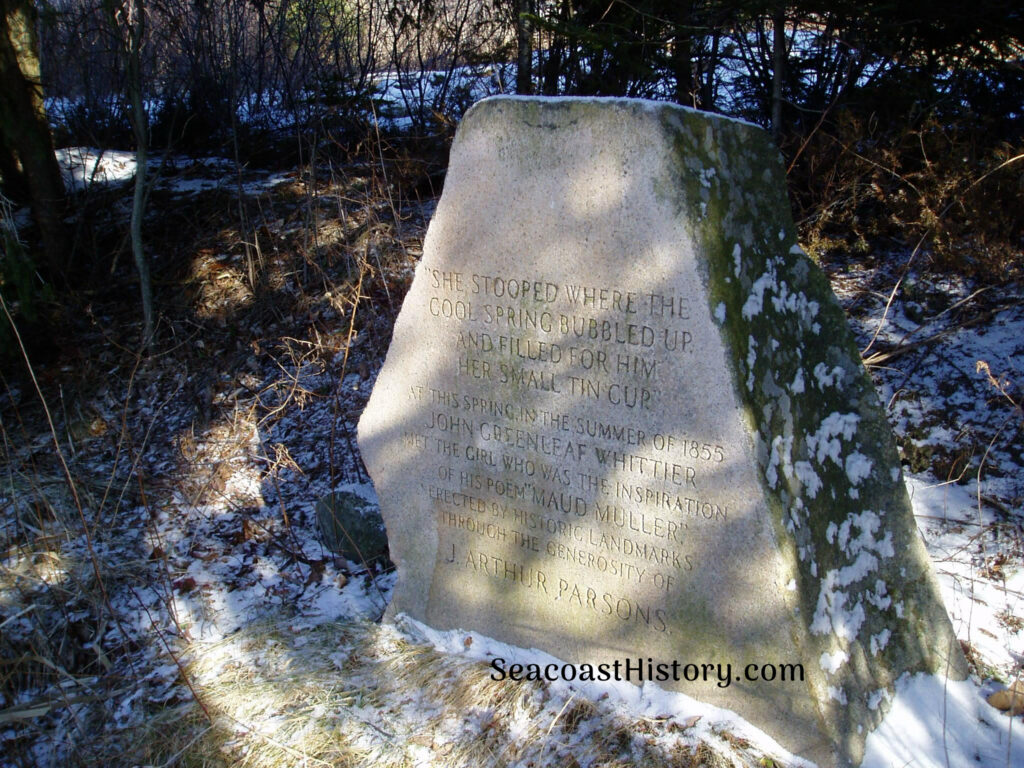
 The Resurrection of Thomas Moses