



NOTE: This article appeared six years before my nonfiction book, Mystery on the Isles of Shoals, was published by Skyhorse Press and Aduble.com. I rest my case.
Maren Hontvet went berserk? Not likely. Yellow journalists, modern historic fiction and armchair detectives have offered alternate theories on the March 1873 murders at the Isles of Shoals. But for those who prefer facts to fiction, it is clear that Louis Wagner was the guilty man.

The question inevitably comes up and my reply never changes. “Louis Wagner did it,” I say with absolute certainty. That is what I told Mary Richards on a TV episode of Boston Chronicle. That’s what I said to the two grad students who drove all the way here from Orono, Maine. I repeated myself on two different University of New Hampshire documentaries and again to a pair of media students from Emerson College as they were twisting bright lights in my face and running a microphone cord up my sweater. I said it on the Travel Channel, the Discovery Channel, and the History Channel.
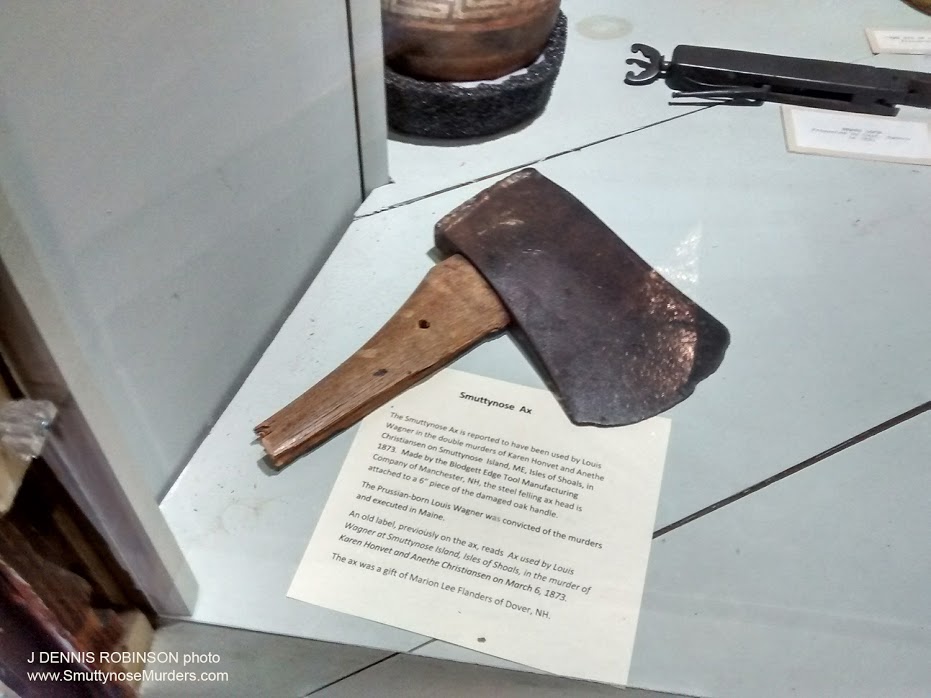
The Emerson interviewer recoiled as if struck. This was not what she wanted to hear. Louis Wagner, a dory fisherman from Prussia, was convicted of killing Anethe Christensen with an ax and strangling and cutting Karen Anne Christensen. Both women are buried in Portsmouth. Wagner was hanged on June 25, 1875, one of the last men executed in the state of Maine. Americans, however, love conspiracies.
“But what about the Maren theory?” my interviewer asked, fiddling with the dials on her recording machine and tapping at the battery. The question always comes up.
The victim as murder suspect
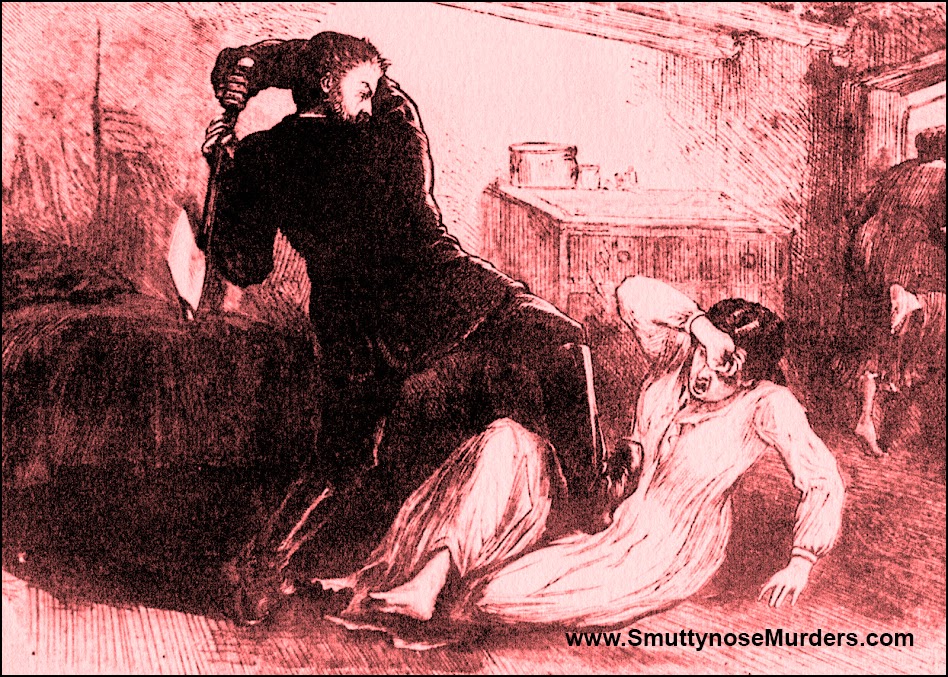
“It’s ridiculous!” I say. The theory suggests that Maren Hontvet, the surviving victim went berserk, hacking her own sister and sister-in-law to death at the Isles of Shoals. The double homicide took place on a winter night when the three women were alone on the island. Maren’s husband John and Anethe’s husband Ivan had been forced to stay over in Portsmouth waiting for a train carrying bait for their fishing boat. Maren escaped the murder scene in her nightclothes and hid outdoors until morning among the icy rocks on the barren island.
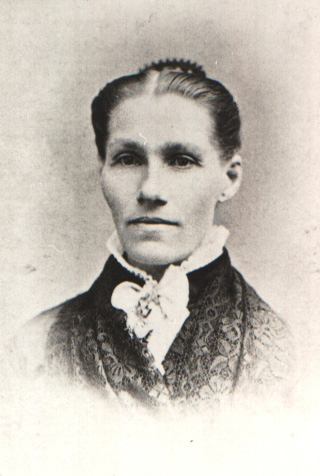
The “Maren theory” is not really a theory at all. It is fiction. Anita Shreve popularized the idea in her 1997 novel The Weight of Water, later adapted into a movie starring Sean Penn. The book was a bestseller and is still widely read. The film bombed. Shreve’s plot twists on an “confession” letter discovered at the Portsmouth Athenaeum. The Athenaeum, like the murders, is real. But the letter is not. Shreve made it up. Yet, her novel follows the actual trial transcript so closely that fact and fiction blur.
It was Maren Hontvet who pinned the crime on Louis Wagner. Critics often point out that Maren did not see Wagner clearly through her open bedroom window. Maren testified that she heard Anethe crying “Louis! Louis! Louis!” as her sister-in-law ran outdoors, only to be followed and killed just below Maren’s window. Maren very likely had to step over Anethe’s bloody body as she herself escaped. Wagner waited for her to return, even making himself a meal in the kitchen, before rowing back to the mainland.
“Okay, there was a Maren theory,” I admit to my interviewer. “But do you know where it came from?”
I keep a Xerox of a Portsmouth newspaper clipping from September 23, 1873 to illustrate my point. “Wagner’s latest dodge,” the article reads, “Is to accuse poor Mrs. Hontvet of the murder of the two girls.” Desperate and sentenced to death row, Wagner also suggested that John Hontvet spent $500 hiring witnesses to frame him for the crime and take suspicion off his wife.

The dollar amount is significant. Louis Wagner believed John Hontvet had $500 or $600 stashed in a trunk at the house on Smuttynose. (Valued at $25,000 today.)Wagner had worked as a fisherman for Hontvet and had lived briefly with the family at the Shoals. He knew his way around the island well, even in the dark. Wagner’s intention was robbery, not murder. His bloody fingerprints throughout the house indicate a desperate search for something. Wagner never found the money John Hontvet had hidden, but he did empty a wallet containing $15.
Wagner did not know Karen, who he thought was working at the hotel on nearby Appledore Island, was staying with the Hontvets and sleeping in the kitchen near the stove. When he surprised her upon entering the house, the killing spree began.
The trial record shows us that, before rowing to Smuttynose, Wagner bumped into his former employer in Portsmouth on the evening of March 5. John Hontvet told Wagner he and Ivan planned to spend the night on the mainland, leaving the women alone on Smuttynose. Hontvet asked Wagner to help him load the bait when it arrived at midnight by train. Wagner said he was broke, agreed to take the job, but never showed up to “bait the trawls.”
Sympathy for the devil
“But how could a man row ten miles to the Shoals and back in one night?” my interviewer always asks. The question gets me crazy. Wagner was a dory fisherman, I remind people. He rowed wooden boats for a living. H was 28 years old. As a summer steward on Smuttynose Island, I see kayakers make the trip all the time. A powerful man in a sturdy wooden craft could easily get to Smuttynose and back in fair weather under the cover of darkness. It is not a Herculean task. Witnesses reportedly saw Wagner rowing near New Castle in the morning. A rowboat owned by a local man was stolen that same night, and later found abandoned. Wagner had worked for the family from whom he stole the boat.
There are other conspiracy theories, all equally unsatisfying. One points to a ghostly schooner seen around the Shoals the night of the murder. A local cruise ship still recounts the silly theory that Karl Thaxter, son of poet Celia Thaxter, may have done the deed. Karl, who was mentally challenged, reportedly had angry fits as a child and lived on Appledore with this mother. This wild fiction is absolutely unsupported, but is repeated endlessly to titillate summer tourists. Simply by acknowledging it here, the myth lives on.
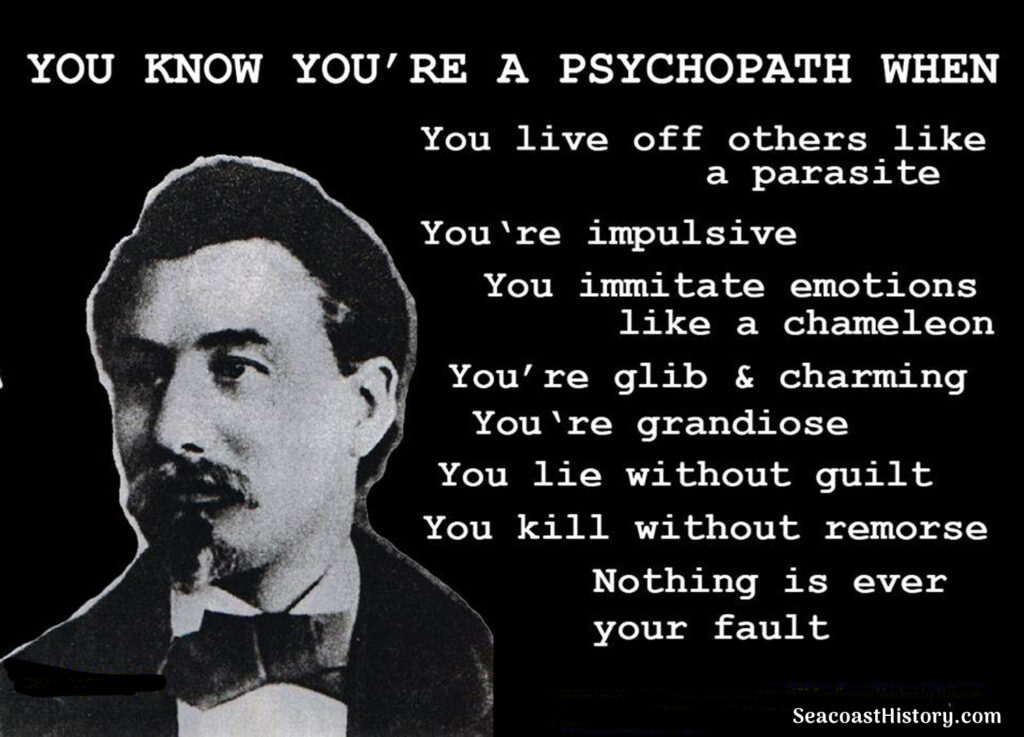
It was Wagner’s seductive personality, more than anything, that made 19th-century reporters wonder. From beginning to end he proclaimed his innocence. Wagner talked freely with reporters and took to reading and carrying a bible. Compared to the angry mob that threatened to lynch him before the trial, Wagner seemed more victim, than killer. Throughout his trial Wagner sat straight and calm, sometimes looking sad, sometimes smiling. One Portsmouth reporter who interviewed Wagner on March 11, described him sympathetically:
“He is a young, blue-eyed, fair-haired man, with a very mild expression of countenance, and easy assured manner. He possesses one of those faces to which you would naturally take a liking, though there is about it a weak appearance, which grows upon you the more you look upon him. … I came away certainly not impressed with a conviction of his innocence, but still cherishing a reasonable doubt and feeling much kinder toward him that on entering the cell.”
The trial was no slam-dunk. The evidence was circumstantial. The spotty transcript indicates that Wagner’s attorney did a poor job of defending his client, adding to his reputation as an underdog. In the end, Louis Wagner went to the gallows bravely, unrepentant and holding his bible.
The case against Louis
“So what makes you so certain that Wagner is guilty?” my interrogators ask with a tinge of suspicion, as if I am the one railroading an innocent man. My conviction that the authorities got the right man seems to take all the fun out of their armchair detective work.
“Only Wagner had the means, the motive, and the opportunity,” I tell them. What more is required?
Even the conspiracy theorists admit that Wagner’s behavior is odd. The night before the murder he was penniless and unkempt. The day following the murder Wagner shaved his beard, hopped a train to Boston and was apprehended wearing new clothes and suddenly clean shaven. His purchases, according to one account, roughly equal the $15 found missing from the Hontvet home. When arrested, Wagner went along without protest, never questioning his captors. A button reportedly belonging to Maren was found in his pocket. His boots matched bloody prints found on the island. A shirt covered in human blood (Wagner insisted it was fish guts) was later discovered tucked inside the privy at his Portsmouth boarding house. Catching a train out of town, Wagner reportedly told a passerby that he was in a hurry because he had just killed two sailors, and had to kill one more.
What tightens the noose for me is Wagner’s total inability to account for his whereabouts on the night of the murder. Three times Wagner asked John Hontvet if the women would be alone on the island. He did not show up at the dock to bait trawls, Wagner said, because he went to a saloon and got drunk, strange behavior for a man who did not drink alcohol. No one saw him lying in a public street where he swore he passed out for hours. He did not show up at his boarding house on Water Street. where he shared a room with two other men. His bed had not been slept in. His clothes were covered in ice and blood, fish bood, he claimed. A bllody shirt was discovered in the privy of the boarding house after he was seen carrying something in there.
As soon as she was discovered wandering barefoot in her nightclothes, Maren Hontvet identified Louis Wagner as the killer. It was a risky statement. If even a single witness had seen Wagner in Portsmouth at one of the many locations he swore he visited, his innocence was assured. Instead, Wagner was spotted near an abandoned dory in New Castle the next morning, Half a dozen witnesses testified seeing him, exhausted, wild-eyed, and bloody, walking into Portsmouth from New Castle on the morning of the murder.
There’s more. Maybe someday I’ll write a book about it. Every homicide does not require a trick ending and sometimes, ladies and gentlemen of the jury, justice is served.
© 2008 J. Dennis Robinson. All rights reserved.

 What the Cushings Left Behind
Leave a Reply