


When I was a high school English teacher one of my standard assignments was to have the kids write their own obituaries. It wasn’t as macabre as it sounds. They were to imagine themselves having just passed on at age 100. The obituary was a look back on all the things they had accomplished in their long fruitful lives.
Kids will be kids. Some (and by “some” I mean “some boys”) proudly imagined themselves as having been notorious bank robbers or crooked politicians, or serial killers. But most students took the assignment seriously. And one could read in their essays the seeds of hope for the future. We all wonder at that age what we might become. Then one day we wake up to the realization that we have become another thing.
I’m finally writing my will for real. A recent birthday and a brush with death are great motivators. Although my brain insists I’m in my twenties and moving my futon into my first Portsmouth apartment on Union Street–my body knows otherwise.
It was no big deal, at first. I bought an off-the-shelf “Last Will & Testament” software and skimmed the instructions. Two hours later my digital printer spat out the document. In the background, I can hear a thousand lawyers screaming. When you spend most of your time writing history books about dead people, preparing to become one is not all that scary.
Protest all you like,but we’re all preparing to disappear. We watch endless murder mysteries and zombie movies on television. We keep journals, have kids, take selfies, celebrate birthdays, attend worship services, join Ancestry.com, buy insurance, go to museums, and pre-pay for cemetery plots. We buy plastic skeletons and severed limbs at Home Depot or Walmart to decorate our homes. We dress up like ghouls and march in the Halloween parade. It’s all planning and rehearsal for the big day when we lose control of our own story. That’s when the historians swoop and feast on your legacy.
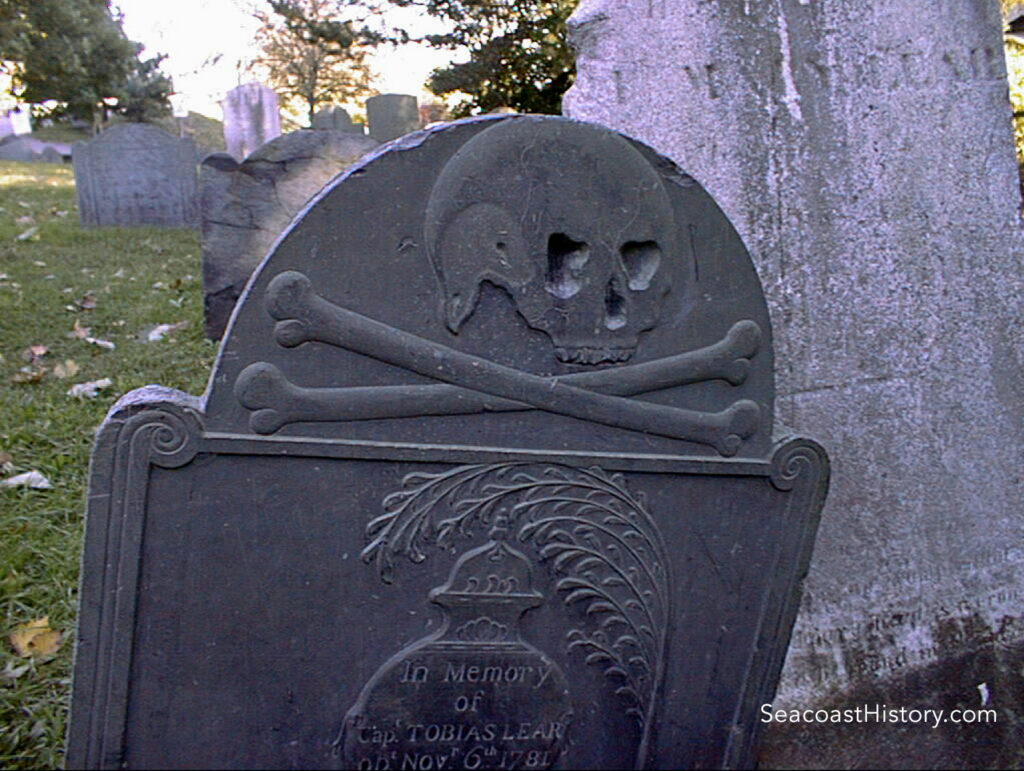
This week’s photograph, of course, is Portsmouth’s spookiest tombstone. It belongs to Tobias Lear IV (1737-1781) who resides at Point of Graves in the South End. Capt. Lear built tall ships. His house, a former museum, survives just up the street and is now privately owned. His son, Tobias Lear V, married three wives, served as secretary to George Washington, and shot himself with a pistol for reasons unknown. Historians have had a field day writing about the Lears ever since.
None of us really has control of our legacy. We will become what future generations decree. But for the moment, as the moon rises and the wolves howl, we can at least decide who gets our stuff. On second thought, I’m not going out with an $84 estate plan. Hey, Google! Find me a lawyer.
Copyright j. Dennis Robinson. All rights reserved.
 Irvin Cobb Catches Fire in Portsmouth