


NOTE: A reminder that “Strawbery Banke” refers to an imagined “ye olde” spelling created in the 20th century to apply to the 10-acre history museum in Portsmouth, NH. For clarity, I use the spelling “Strawberry Bank” to refer to the Piscataqua River region from the 16303-1650s that included modern-day Portsmouth, New Castle, Rye, Greenland, Newington, and the Isles of Shoals. This essay is about that Strawberry Bank. – JDR
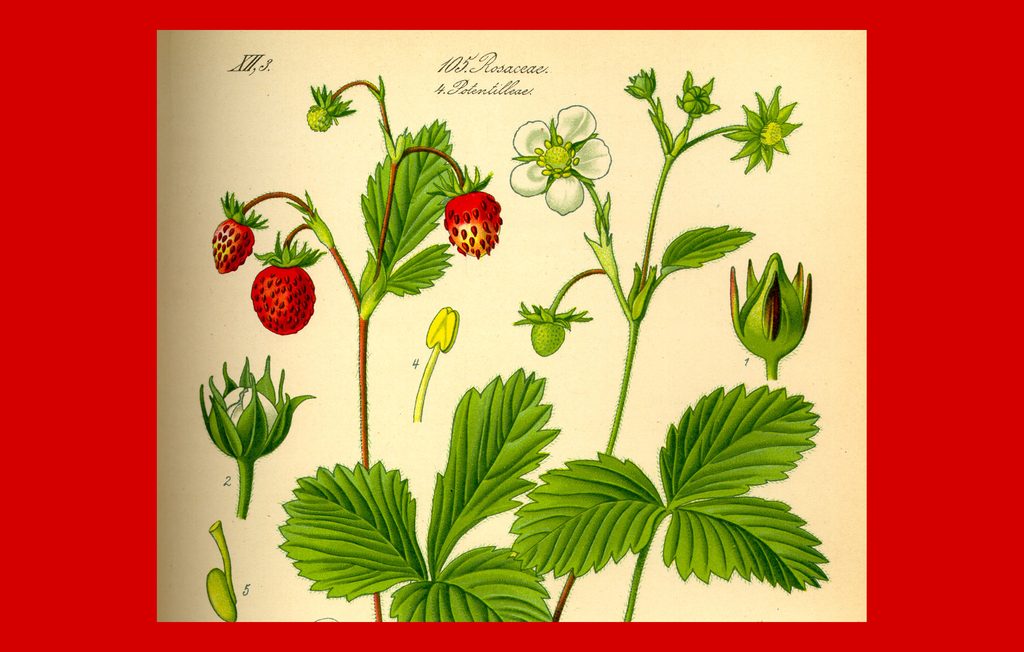
Perhaps wild strawberries were growing along the banks of the Piscataqua River when the first European settlers arrived around 1630. Perhaps not. Local historians have suggested that Strawberry Bank, Portsmouth’s original name, was inspired by a patch of wild strawberries, possibly cultivated by Native Americans, that was located near present-day St. John’s Church. But this is pure fantasy. The truth is, we have no clue about those strawberries, and likely never will.
Years ago I suggested that the early name may be more nostalgic than descriptive. Maybe the land here looked familiar to the first frightened and homesick settlers. Maybe it reminded them of a spot some 3,000 miles away in England.
“Puddle Dock” in the city’s South End, for example, likely derives from the Puddle Dock area in Blackfriars, London. Nearly every town in the seacoast region has a corresponding location in England.
Google Maps was in its infancy when I made that suggestion years ago. But look again. There is a Strawberry Bank Hotel in Meriden and Warwickshire, a pub in Coventry, and a B&B in Somerset, England. The name appears on maps in Linlithgow, Dundee, and Dalkeith in Scotland. Strawberry Bank is a nature preserve in Gloucestershire, and a walking trail in Sutherland, England. Strawberry Bank is one of the highest points in Nottinghamshire, not far from Boston, England. An archaeological site at Strawberry Bank in Somerset is an easy drive to English cities named Exeter, Biddeford, Falmouth, Gloucester, Worcester, Swansea, Andover, Salisbury, Wells, Plymouth, and even Portsmouth. I rest my case.
READ: Portsmouth was a failed mining colony
Struggle in the wilderness
Captain John Mason, who held the land grant to what became coastal New Hampshire, died in 1635. His farming and trading center had failed. His investors quickly abandoned their plantation on the Piscataqua. But unlike many failed colonists in New England, the orphans of Strawberry Bank did not cut and run. Some stayed and laid claim to Mason’s buildings, land, and property, valued at a total of ₤10,000 sterling. Our city founders, in effect, were squatters who took over the land that Mason had stolen from the Indigenous tribes.
With no help coming from Mason’s heirs and with supplies running low, about 20 “planters” got together in 1640 and formed their own government. After 10 years the settlement had just one bible, no church, and no minister. The document they devised, the Strawberry Bank Combination, has been lost, but it likely offered the same oath to God and to the King as the famous Mayflower Compact in Plymouth, Massachusetts.
Strawberry Bank initially resisted falling under the protection and strict laws of the powerful Puritans of Massachusetts. The plantation functioned briefly like an independent nation with its own governor. But there was not much to govern. By 1641, like surrounding settlements at Exeter, Hampton, Kittery, Durham, and Dover, Strawberry Bank came under the jurisdiction of Massachusetts.
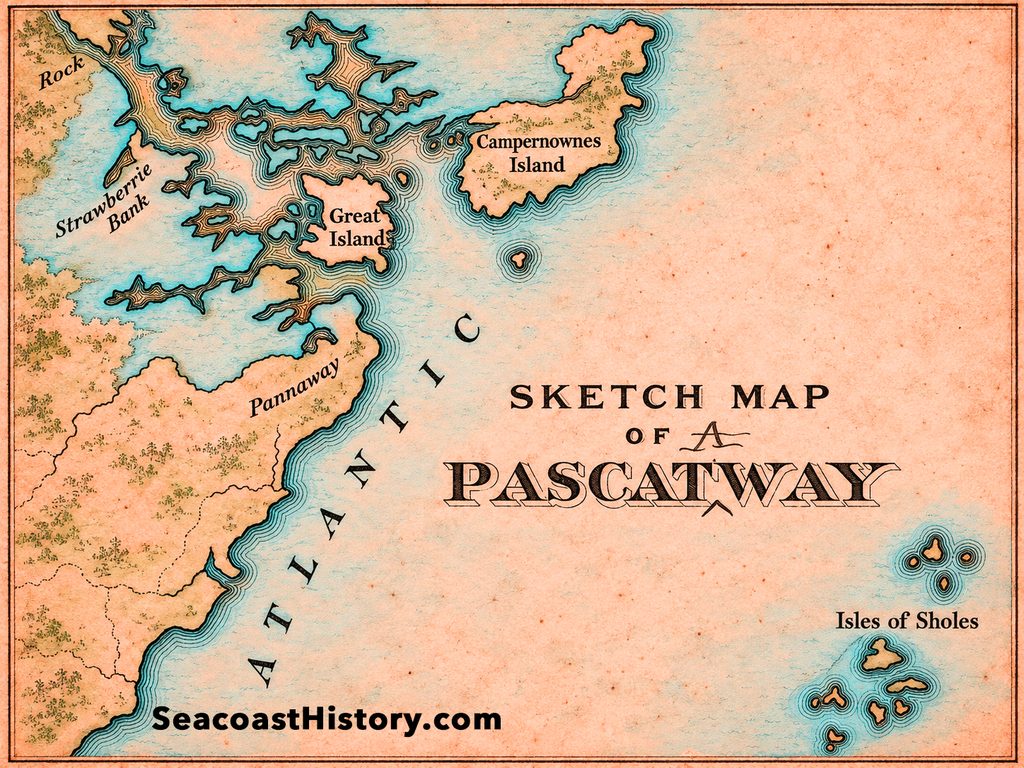
The Strawberry Bank population originally centered near the fort at Great Island, now New Castle, then expanded along Little Harbor and Sagamore Creek. Not much was going on at the Great House in Portsmouth’s South End. So the pioneers cleverly set aside an unused plot of land or “glebe,” of fifty acres, designed to attract a minister to the wilderness outpost. The glebe would eventually become the bustling downtown area of Portsmouth. The Puritan government, however, did not like the region’s first choice of an Anglican minister and drove him away.
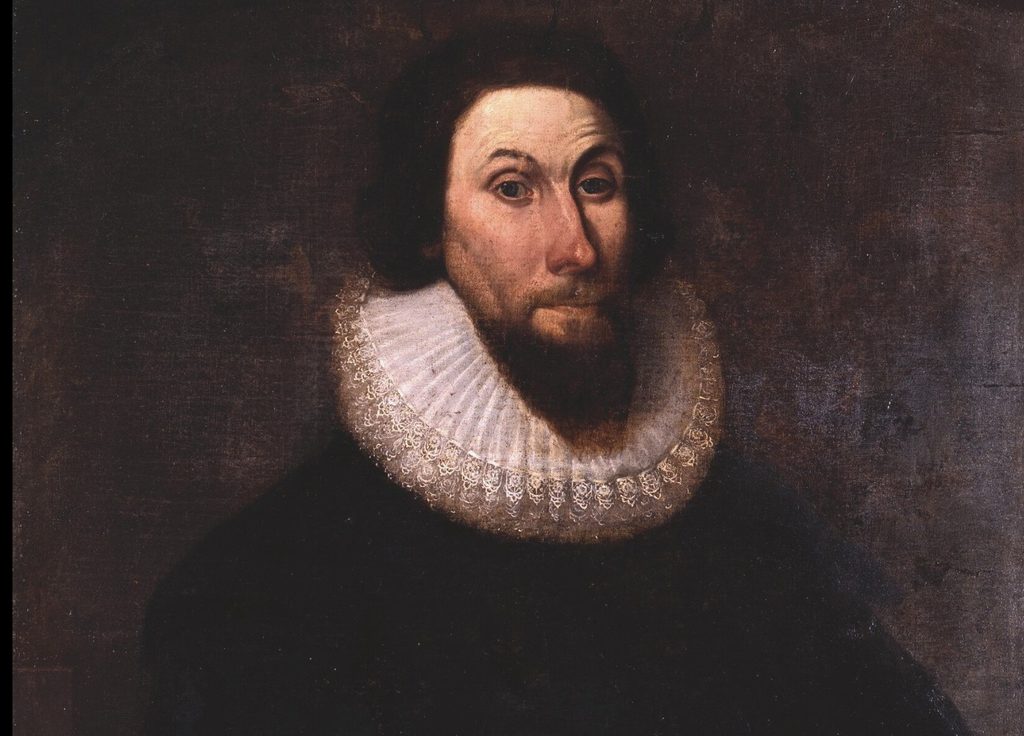
Governor John Winthrop of Massachusetts wanted this region, the connecting point to the Mass Bay Colony holdings in what would become Maine. Across the ocean, a bloody civil war left the Puritans in control of England. King Charles I was beheaded and Puritan military leader Oliver Cromwell became Lord Protector of England. Empowered by the shift in political power, here in New England, Governor Winthrop intended nothing less than a complete Puritan takeover of the Piscataqua region.
Puritans like Brian Pendeleton of Sudbury and Richard and John Cutt, originally from Wales, moved to Strawberry Bank in its early days and became wealthy influential leaders. The Cutts brothers gobbled up land at the Isles of Shoals and what would become the towns of Rye, Greenland, Newington, and New Castle. But there was a delicate political balance evolving in New Hampshire where locals resisted being totally assimilated by Massachusetts. Laws were less harsh here and locals managed to retain control of the courts. The powerful Puritans were balanced at Strawberry Bank by royalist sympathizers like Henry Sherburne and John Pickering, who had arrived in the 1630s, among other “Old Planters” and early fishing families.
Call us Portsmouth
Enter Robert Tufton Mason. In 1650 the grandson of Captain John Mason began a lengthy legal battle to claim the territory of New Hampshire that he believed belonged to his family. In a strict legal sense, Mason’s claim to New Hampshire was weak. The Puritans did not want to give up dominance of this area and attempted to redraw the New Hampshire borders in their favor. The original settlers, who had effectively stolen Mason’s holdings, also did not want to give their land back to his heirs.
In January 1652, the town selectmen, including Pendelton, Sherburne, Pickering, and the town surgeon Renald Fernald, got together at George Walton’s tavern on Great Island and “updated” the early written records of Strawberry Bank. Undesirable passages from the first 20 years of the town history were suppressed, and a new “town book” was created. (Historians have assumed the original documents were destroyed, but at least one local scholar has suggested that the first town book may have survived and could someday turn up — so check your attic.)
It seems likely that the records were doctored to weaken the hereditary claims of Robert Mason, who was seeking restitution in the courts. The town fathers, in their wisdom, also quickly handed out 46 hefty land grants to the 50 or 60 families already living in Strawberry Bank. New Hampshire was not going to be a region controlled by a single wealthy feudal landowner. Instead, this would be a land of laws and fences and stone walls–with every man for himself.
Call us Portsmouth
Having taken over Mason’s abandoned property, fudged the town records, created a glebe, and distributed free land to influential residents, Strawberry Bank leaders needed a new name. Oliver Cromwell was in full flower when local leaders begged the Massachusetts General Court at Boston to rebrand the town as “Portsmouth.” Still under the heavy Puritan thumb, the May 1653 petition is a masterpiece of humility. The town had been “accidentally” called Strawberry Bank “by reason of a bank where strawberries was found in this place.” But the name was no longer suitable.
The goal of the petition was partially to expand the territory of Portsmouth toward Great Bay and clear up the border with Dover. Bit it was also designed to turn Strawberry Bank into the dominant seaport, from which all imports and exports to England must pass.
The farming is awful at Strawberry Bank, the town fathers complained to the Boston court. “The qualities of the land we live upon is so bad, its incredible,” they wrote. As a result, they warned, the few families living here might soon move away. If they stayed, however, they could better support the Puritan church. The future of the town was its deep harbor, they claimed, that was “as good as any in this land.”
Farming was not going to be the future of Portsmouth. Already the founders could see the potential to build one of the most important early seaports in the New World. Gov. John Winthrop knew this too. Portsmouth would become a center for shipbuilding and for international trade, particularly of fish, fur, and tall pine trees for ship masts. Its swift current and sheltered harbor made it a potentially important military stronghold. And its new name would honor John Mason, its founder, who had lived in Portsmouth, England.
By 1658, Oliver Cromwell was dead and Charles II soon restored the monarchy and Parliament in England. Cromwell’s corpse was disinterred and placed on trial, but it did not have much to say. The head of the former Lord Protector was cut off and placed on a spike that hung for decades over Parliament. But in New England, the Puritan’s remained powerful.
New Hampshire remained largely under the control of Massachusetts until 1691. After the death of John Cutt, New Hampshire again became a royal province with its capital at Portsmouth. The king, effectively, was so sick of the Puritans that he created New Hampshire as a Loyalist buffer between Massachusetts and Maine (which remained under Massachusetts control until 1820). This royal decision gave rise to the wealthy Wentworth family dynasty that greatly shaped the history of this region and much of New Hampshire. The town, accidentally named Strawberry Bank, had grown up, and it was ready to do business with the world.
READ: 1623: Pilgrims, Politics, Pipe Dreams & the Founding of New Hampshire
Copyright © 2014 by J. Dennis Robinson, all rights reserved.
 The Dead Tree on South Road
