


I’m going to make a wild guess here and see what the scholars have to say. I bet the Purcell House (1758) in Portsmouth, NH, was originally unpainted. Was it later painted white? Was it stained? Were the clapboards replaced over time? And how did it become the iconic mustard-yellow landmark we know as the John Paul Jones House Museum?
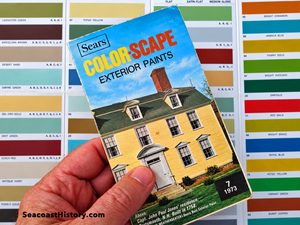
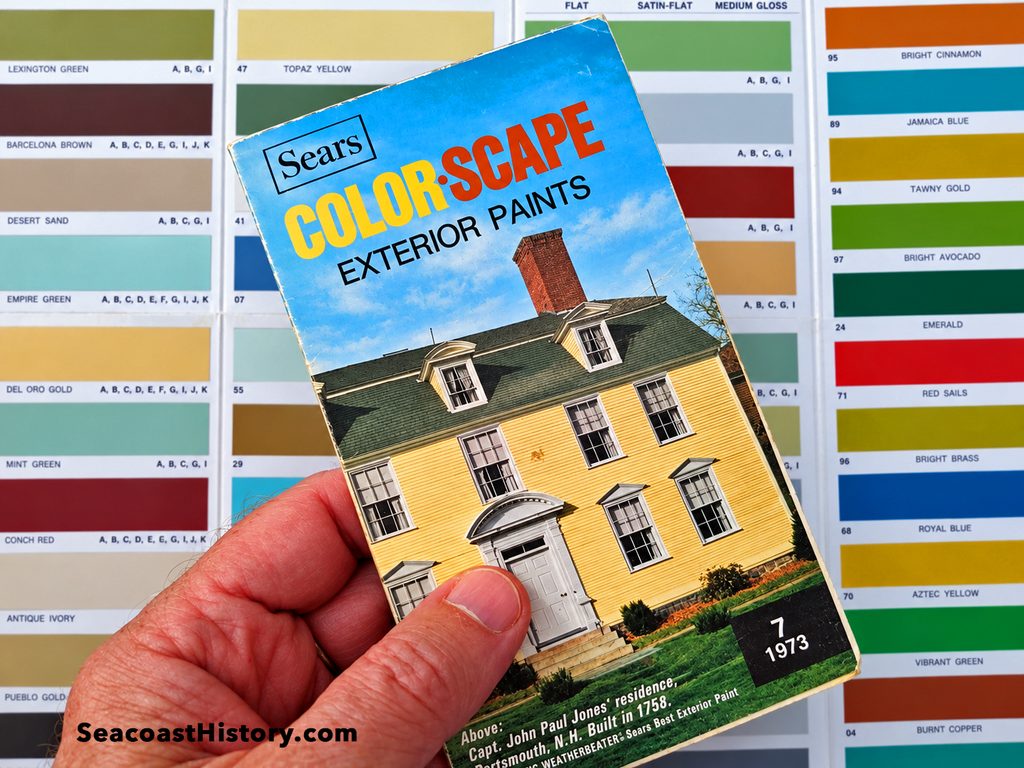
We do know that in the 1970s, with the nation’s bicentennial approaching, Sears launched a costly marketing idea. “The Great American Homes” campaign offered to paint a series of historic houses. Sears did the work for free to promote its Weatherbeater exterior paint colors
The advertising slogan was: “Sears Paint for Great American Homes Like Yours.” According to the National Park Service: “The campaign combined historic preservation, patriotic nostalgia, and commercial advertising. And it was quite successful, winning advertising awards and continuing in various forms for years.”
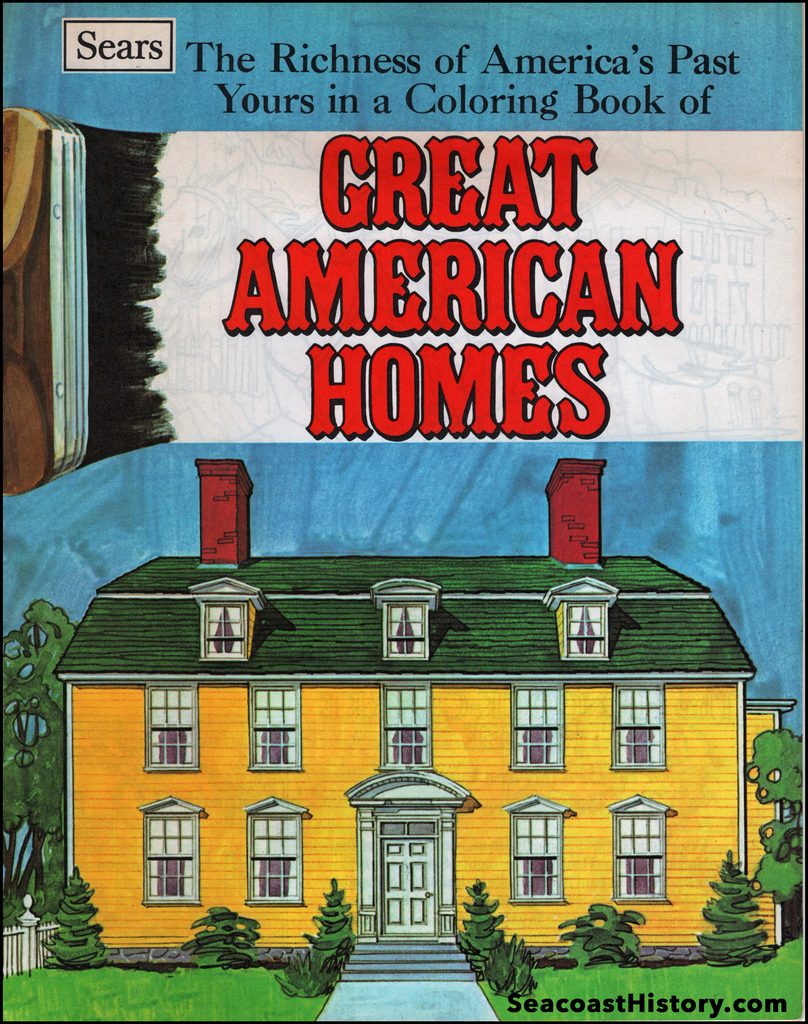
According to a National Park Service historic structure report, Sears crews would visit participating properties, prepare the exterior surfaces, make minor repairs, and repaint the buildings. In exchange, Sears obtained permission to photograph the houses for its advertising. Local painting contractors were hired for each job.
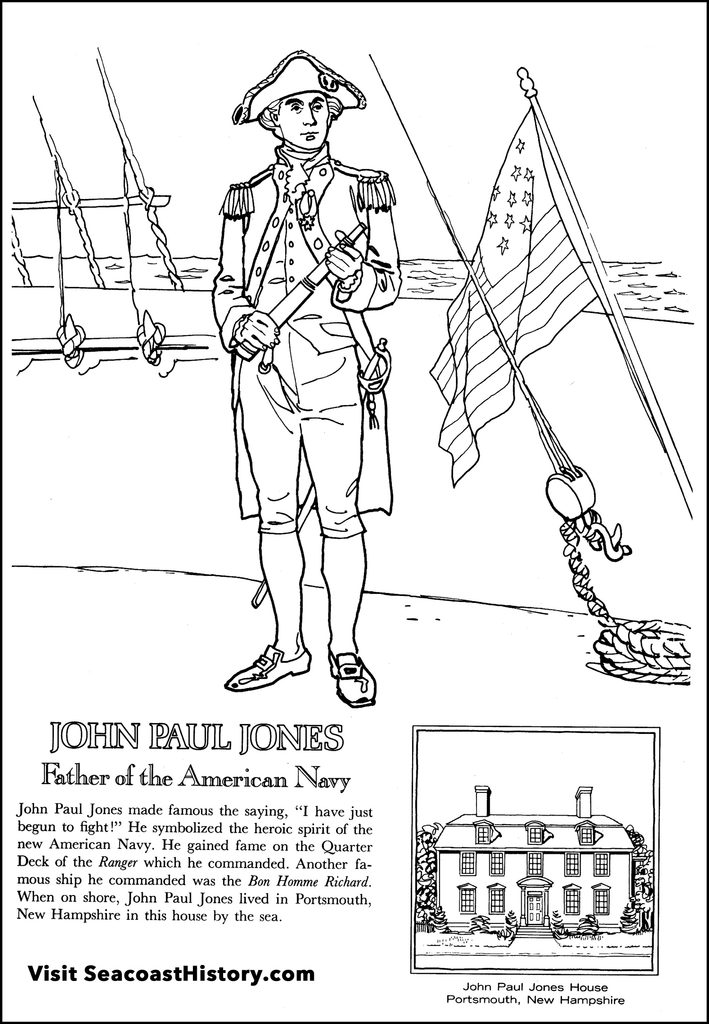
The houses were associated with famous Americans. John Paul Jones was never an American citizen, but the Portsmouth Historical Society museum made the cut. The house appeared in a handout of Sears paint colors, in magazine and TV ads, and on the cover of a coloring book featuring 15 other historic houses. The featured figures included revolutionaries John Hancock and Samuel Adams. Betsy Ross, Nathan Hale, Sam Houston, railroad builder Leland Stanford, Confederate General Beauregard, Booker T. Washington, Buffalo “Bill” Cody, Theodore Roosevelt, Mark Twain, and Helen Keller, plus the Longwood Mansion in Nachez and the Bethesda Home for Boys. Accounts also list the Robert E. Lee House, but that one does not appear in the free coloring book.
The Portsmouth Herald front page announced, “John Paul Jones Gets Real Face-Lifting.” With the painting done, the Herald reported, “25 cameramen and technicians descended on the house.” The work cost Sears a reported $20,000 and the Jones House was the last of 16 houses featured in the ad campaign.
According to the Herald, the house exterior was stripped down to the bare wood, rotted boards replaced, and even some work was completed on the granite steps and the roof of the garage (carriage house).
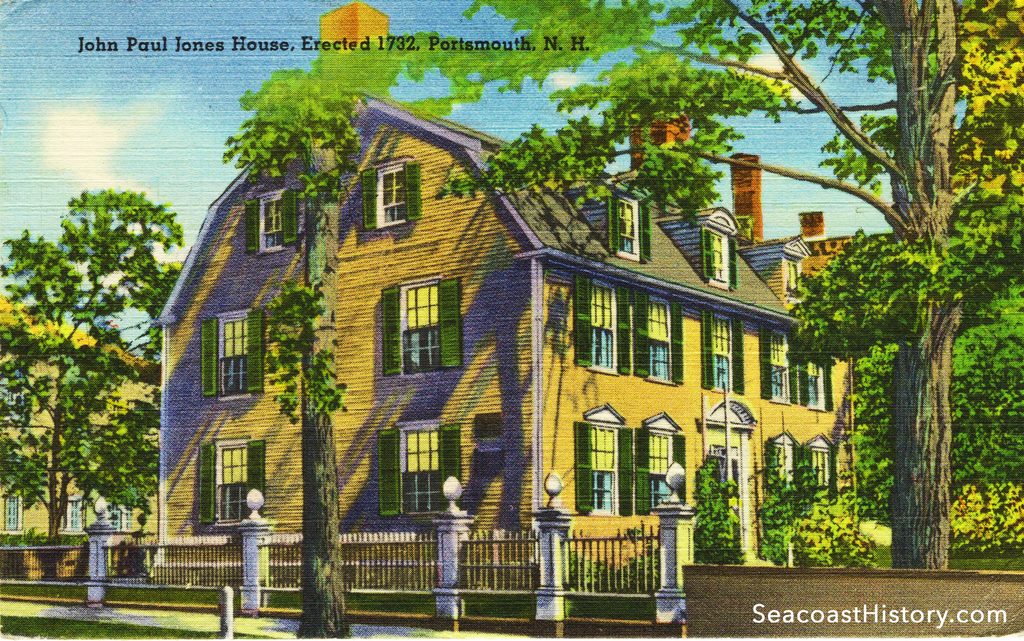
“The house was painted YELLOW,” the Herald reported, “a color chosen by the Portsmouth Historical Society.” The society was formed in 1917, in part, to save the house from being razed by the Granite State Fire Insurance Company that planned to build an office building on the corner of Middle and State Streets. The house was built in 1758 for Captain Gregory Purcell and his wife. Local legend says Sarah Purcell twice rented a room to John Paull Jones after her husband’s death left her in debt with eight children.
Why yellow? Here’s my guess. This image often appears among early postcards of the house. These penny postcards were “colorized” in the printing process, often in Germany, from black-and-white photographs. Was the house already stained yellow or was the color selected by the manufacturer? Did the historical society pick the color based on the popular postcard? We’ll wait for the scholars to weigh in.
© J. Dennis Robinson, All rights reserved.
 When Portsmouth Changed Its Name
