


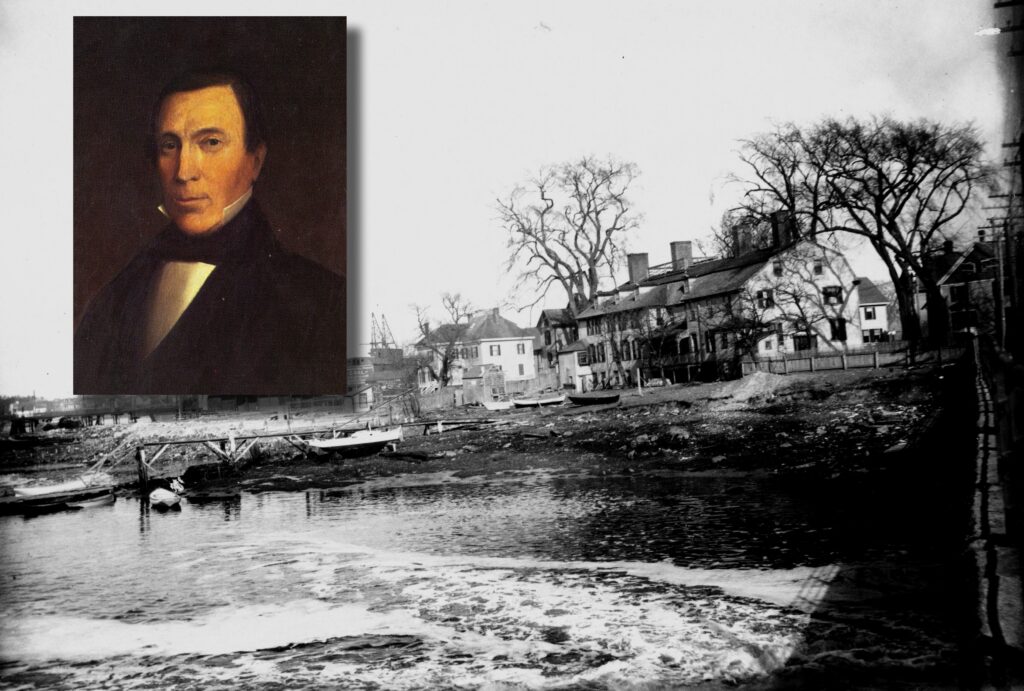
Even with so much Portsmouth history preserved, it is often difficult to get a handle on the enormous changes this city has seen. The mansion of shipbuilder George Raynes (seen here) on the south shore of the North Mill Pond, for example, was removed in 1938. Only his name remains. Raynes Ave. off Maplewood Ave. is the site of the former Portsmouth Herald building across from North Cemetery. Raynes Shipyard turned out 50 three-masted ships here in the mid-19th century. This area has been hyperdeveloped in recent years and and is all but impossible to recognize.
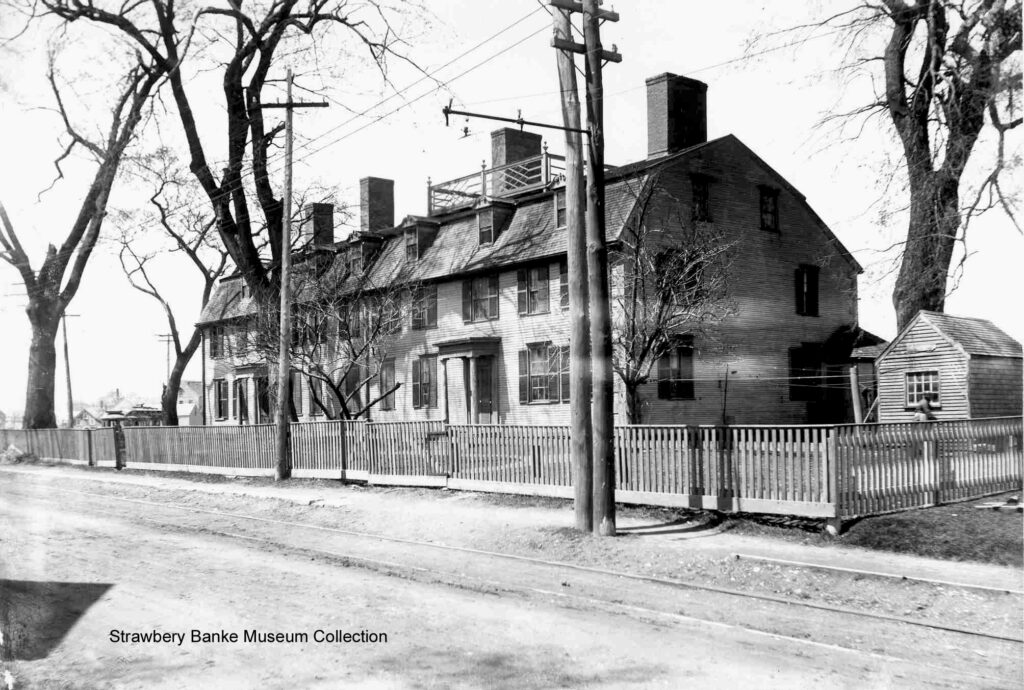
Before Raynes bought the property in 1832, it was known as the Boyd Estate. Col. George Boyd was one of Portsmouth’s wealthiest merchants before the Revolution. Back then, the property and its ornate gardens extended out to Deer Street. Boyd bought the estate in 1770 from a wealthy Englishman named Peter Livius, who had purchased it from Col. Nathaniel Meserve. Meserve died of smallpox at the second siege of the French fort at Louisbourg, Nova Scotia in 1758. Before that, Meserve ran his own shipyard. Here he built the famous 50-gun AMERICA for the Royal Navy in 1749. The first phase of the Meserve-Livius-Boyd-Raynes house, seen here, was constructed as early as 1740.
(Photo courtesy Strawbery Banke Museum, painting courtesy Portsmouth Athenaeum)
 Alex Herlihy Talks About His History of Rye, NH