


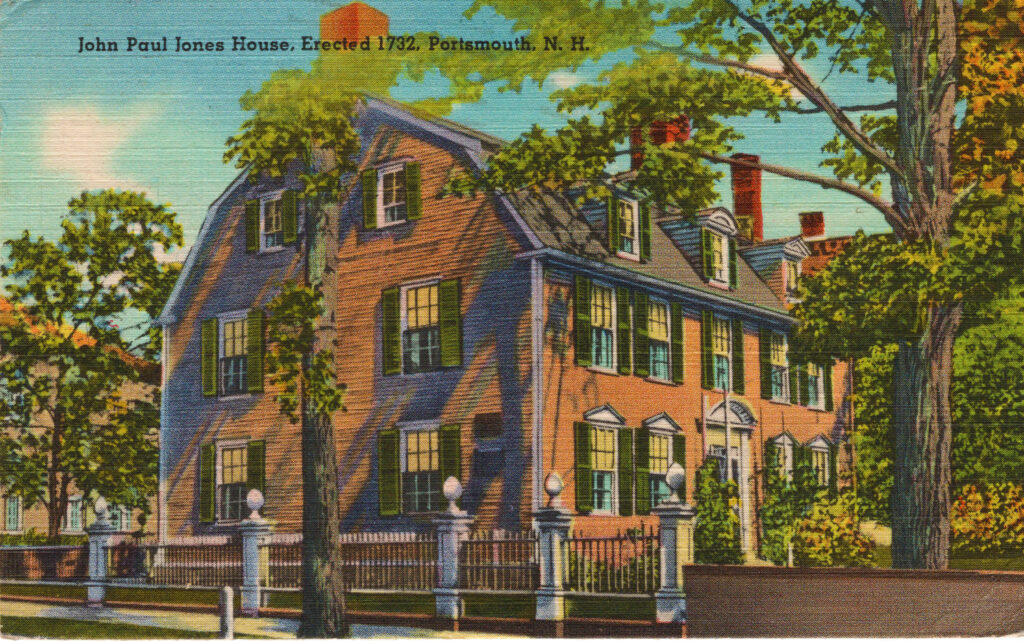
Portsmouth, New Hampshire, proudly claims to have the only John Paul Jones House Museum, which is almost true. The Revolutionary War captain was born in Scotland, and his birthplace there is a popular tourist site. You can also see the marble sepulcher that bears his body (exhumed in France in 1905) at Annapolis in Maryland. Those three should be the top sites on any pilgrimage.
Jones (his real name was John Paul) was a “citizen of the world, and never an American. There are JPJ plaques and memorials all over the planet, from a statue in Washington, DC, to a marker outside the Paris hotel where he died alone, to a sign in St. Petersburg, Russia, where Jones served in the navy of Catherine the Great.
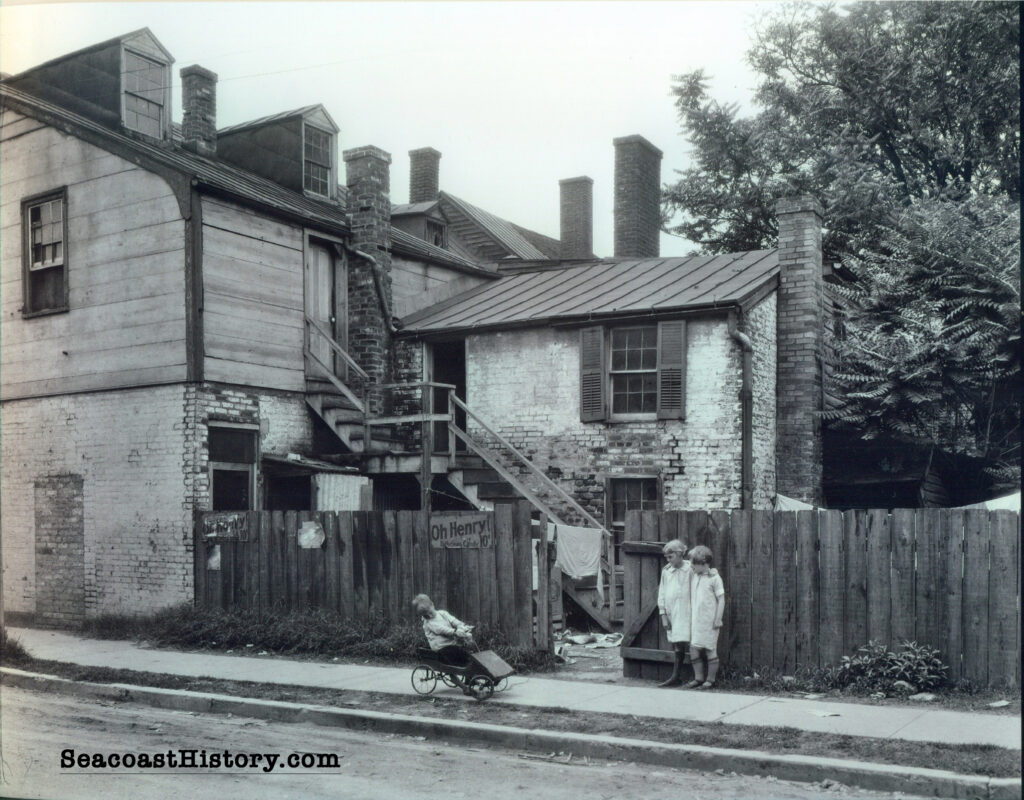
There was a John Paul Jones House at 501 Caroline Street in Fredericksburg, Virginia. It was a museum until about two decades ago, according to historian Sandra Rux, when it was sold and converted to a private home. During the sale, a banner on the side of the building read “The John Paul Jones House: This could be your home.” There are several postcards of the Fredericksburg house, and a few early photographs of the building in the Library of Congress archive.
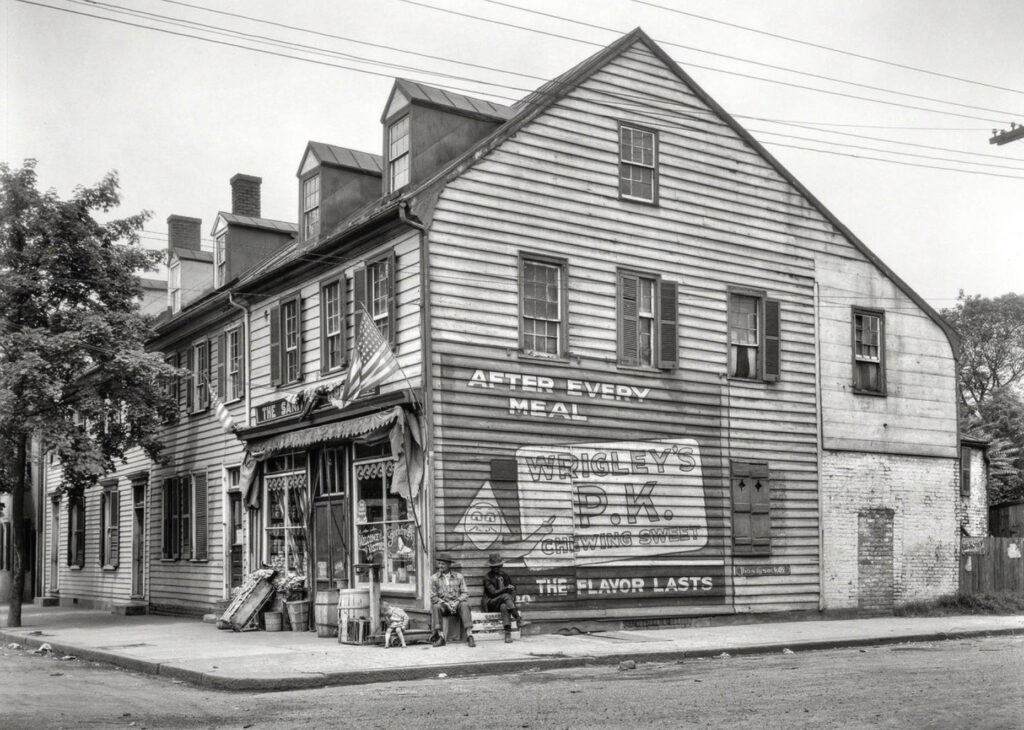
The structure served as a Safeway grocery store, a bakery, and a lighting store in the 20th century. A plaque on one wall installed by the DAR in 1910, claims it was “the only home in America of John Paul Jones.”
The Portsmouth Historical Society became steward of the John Paul Jones House Museum here in 1917, saving it from the wrecking ball. The mustard-colored 1758 mansion is preserved as a museum at the corner of State and Middle streets downtown. Its front garden, surrounded by a restored cedar fence, is among the key garden spots in the city center.
I purchased a print of this rare shot of the back of the Fredericksburg house. Two girls in sack dresses and a boy on a metal pedal car pose in the backyard. Clothes hang on a line behind a fence with a sign advertising Oh Henry candy bars.
According to a real estate website, the house was built in 1758, the same year as the “Purcell House” in Portsmouth, NH, where he reportedly rented a room during the American Revolution.
Jones visited his older brother William Paul here as a boy. Jones fled back to Virginia in 1774 after killing one of his crewmen, reportedly in self-defense, and escaped from an admiralty court hearing in the West Indies. It was here in Virginia (others say North Carolina) that he added the surname “Jones.”
Jones also joined the Masons here and hung out with influential revolutionary men. He dated Dorothea Dandridge, who then married Patrick Henry. His brother William Paul, a tailor and, by some accounts, a tobacco farmer, died in 1774.
JPJ went on to win international attention for his raids on the British Isles in the warships Ranger and Bonhomme Richard. He stayed twice, legend says, in the house that bears his name in Portsmouth, NH.
© J. Dennis Robinson, all rights reserved.
 Shopping Privacy, Then and Now