

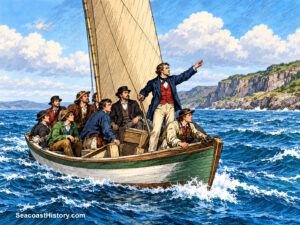
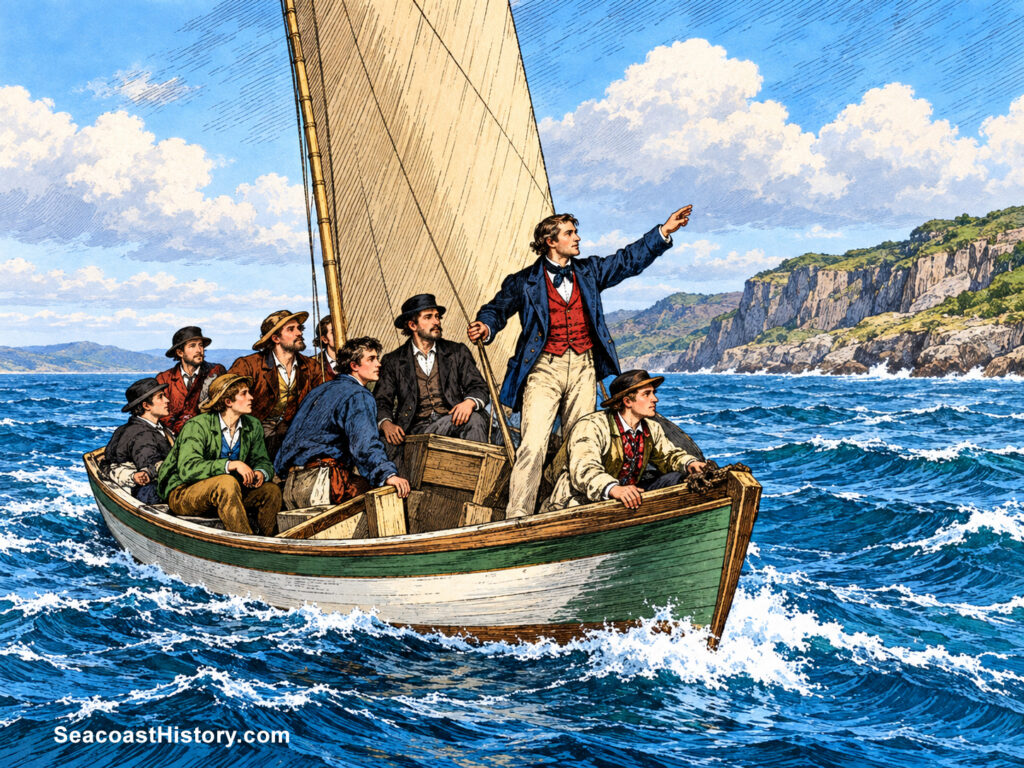
For decades I’ve been moving my copy of this Victorian novel from shelf to shelf. This week, I finally read Kelp, A Story of the Isles of Shoals (1888). What a surprise. Not only was author Willis Boyd Allen born at Kittery Point, Maine, but the
book is stylish, dramatic, and still readable today.
In a nutshell, Kelp is about a Boston family who spend two weeks camping on primitive Duck Island. We rarely talk about Duck, an uninhabited 8.5 acre rock pile. Hunkering off Appledore and Smuttynose, Duck is the northernmost of the Isles of Shoals. It is surrounded by treacherous ledges, including Shag and Mingo rocks, and a tricky ocean current.
Duck was reportedly occupied in the mid-1800s by unknown fishermen who left behind a crude two-room fishing station. Boyd appears to have fashioned his story around a reference in Celia Thaxter’s 1873 classic Among the Isles of Shoals.The “deserted shanty,” Thaxter suggested, did not last long.
The Cilley family may have occupied Duck seasonally in the early 20th century. Pease Air Force Base used the island as a test bombing range in the 1950s and 60s. The Maine Coastal Islands National Wildlife Refuge oversees the island today, and it is permanently off-limits to human visitors. Only seabirds and seals call it home.
SEE: Quick history of the Isles of Shoals
A quick summary of Kelp
Boyd opens the novel with a raging blaze. Boston is burning. Mr Percival, a wealthy businessman, rouses his son Tom. They rush to salvage important papers at the office, but amid the blinding smoke, leave behind $5,000. Tom’s friend Bert arrives late to help, finds the cash, but local police briefly arrest and jail him as a thief.
In thanks for their help, Mr. Percival invites the boys, a brother, an uncle, an aunt, three female cousins, and a dog named Solomon to spend a rustic two-week camping adventure on Duck Island. They travel by train to Portsmouth, NH. After a night at the Appledore Hotel with the Laighton brothers, Cedric and Oscar, the team settles into an imagined shack on Duck where their adventures begin.
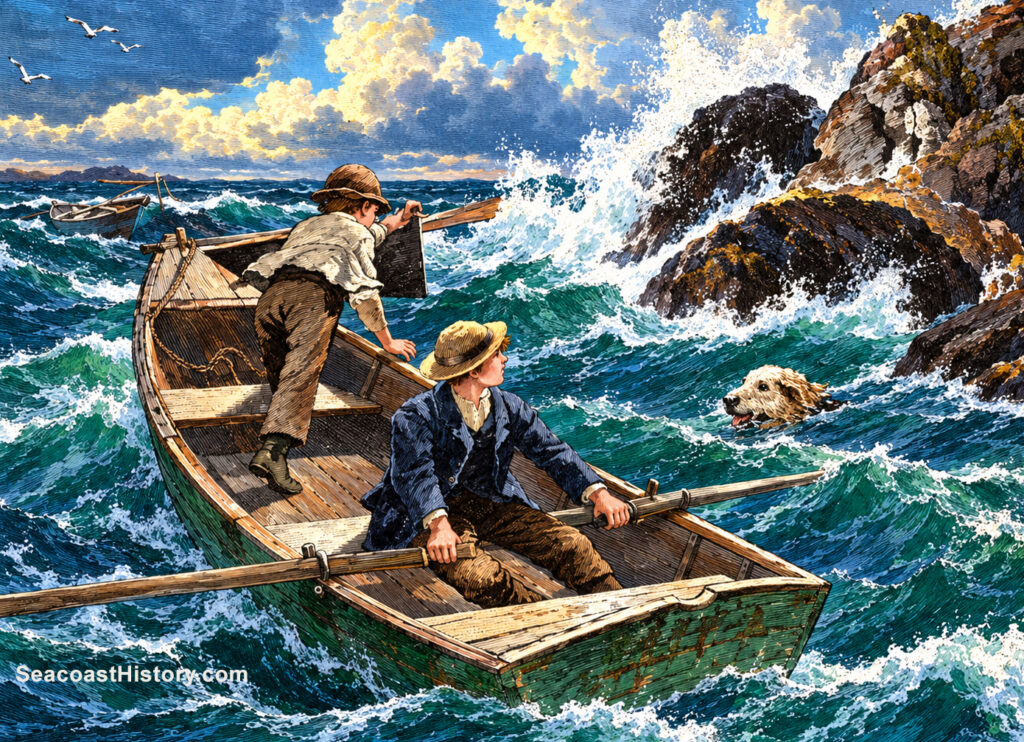
The group makes quick stops at Smuttynose, Star, White, and Londoner’s (Lunging) islands, rich with Victorian details. Mr. Percival and Tom lose their bearings in a sudden fog. Beth and cousin Randolph are trapped on Mingo Rock. A summer squall demolishes their little shelter at Camp Kelp. In between adventures, there is plenty of eating, storytelling, history lessons, poetry reading, and singing.
Inside the author
Born at Kittery Point in 1855, Willis Boyd Allen brought a true sense of the rugged Piscataqua weather, tides, and jagged terrain to his novel Kelp, A Story of the Isles of Shoals (1888). Educated at Harvard, Boyd traded an unhappy career as a Boston lawyer for the life of a prolific magazine writer and novelist. (The fact this father, Stilman B. Allen, is noted as “Kittery’s first lawyer” may have played a role in this decision.)
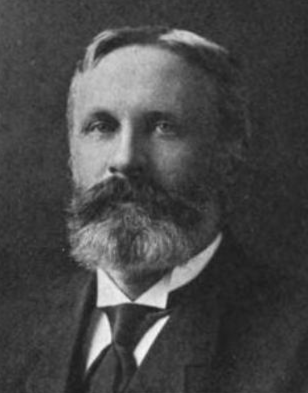
If the work of Kittery author William Dean Howells is sometimes stilted, and Kittery author George Savary Wasson can be downright impenetrable, Allen’s work is refreshingly readable, even modern. His dialogue and description carry the story along while his cliffhanger style keeps the chapters flowing.
While it seems unlikely that Allen spent much time, if any, on Duck Island, he was clearly familiar with life at the Appledore and Oceanic hotels. Although his characters do not meet Shoals poet Celia Thaxter, she was alive at the publication of Kelp, and her book, Among the Isles of Shoals (1873), certainly shaped Allen’s narrative. He repeats her stories of a Native American raid and the death of teacher Miss Underhill, although both are historically inaccurate by modern research. The writer’s attention to detail and occasional character descriptions can feel quite familiar.
At his peak, Willis Boyd Allen often released two novels per year, about 30 in all, with scores of articles appearing in popular magazines. Kelp, like many of his works, fall into the juvenile adventure genre. They show a knowledge of the “bad boy” genre of Thomas Bailey Aldrich and the “human boy” theory of BP Shillaber, both Portsmouth authors Allen would have encountered growing up in the region. Allen, however, is openly religious and his boys more intellectual and far less destructive.
Now and then, Allen can’t resist a burst of Christian moralizing. Kelp, often seen floating in long ribbons around the Shoals, is used here as a blatant symbol that Tom, the main character, is merely gliding through life with no specific goal. This concerns Mr. Percival, his successful merchant father, who takes every opportunity to press his son to figure out what he wants to do with his life. Kelp, Pervial says, is just a lazy thing, drifting through life.
“How can I stop floating, sir?” Tom asks.
“Take your stand as a soldier and servant of Christ,” his father says. “Put your heart into everything your hand finds to do.”
Unlike the work of his contemporaries, Allen made an effort to breathe life into his female characters in Kelp. When cousin Beth hears the legend that no woman has ever set foot on Mingo Rock, despite incredible danger, she is determined to be the first. The girls in Kelp, though less sharply drawn, appear as bold and resourceful as their male counterparts. Allen would go on to edit a series of family-oriented magazines with strong “Christian values.”
Although Allen earned a short 1938 obituary in the New York Times, initial research turns up little biographical material and few reviews of Kelp. The title, perhaps, may be part of the problem. And while few vintage copies are found, the entire book can be instantly downloaded for free from Google Books. A footnote to literary history, Willis Boyd Allen deserves more local attention. A collection of his papers is on file in the UNH Special Collections and at Rice Public Library in Kittery, Maine, for anyone seeking a thesis topic.
(c) 2026 by J. Dennis Robinson. All rights reserved.
 Portsmouth Sailors on the Move in World War I