

Historian John Lord was not happy growing up in Portsmouth in the early 1800s. Although he found the city “beautiful and interesting,” Lord despised the brutal school system of his day. He was bored by puritanical church services and found the city’s wealthy leading families to be poorly educated, hypocritical, and pretentious.
Who was John Lord?
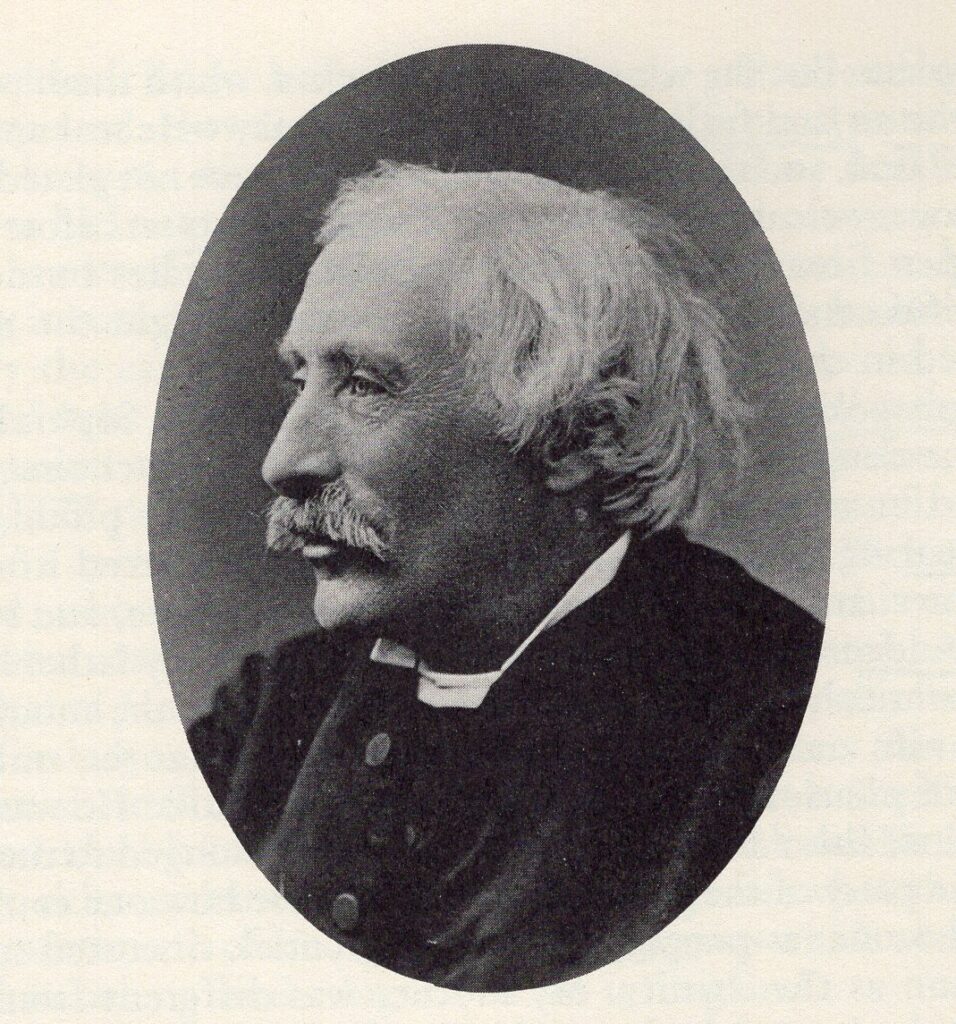
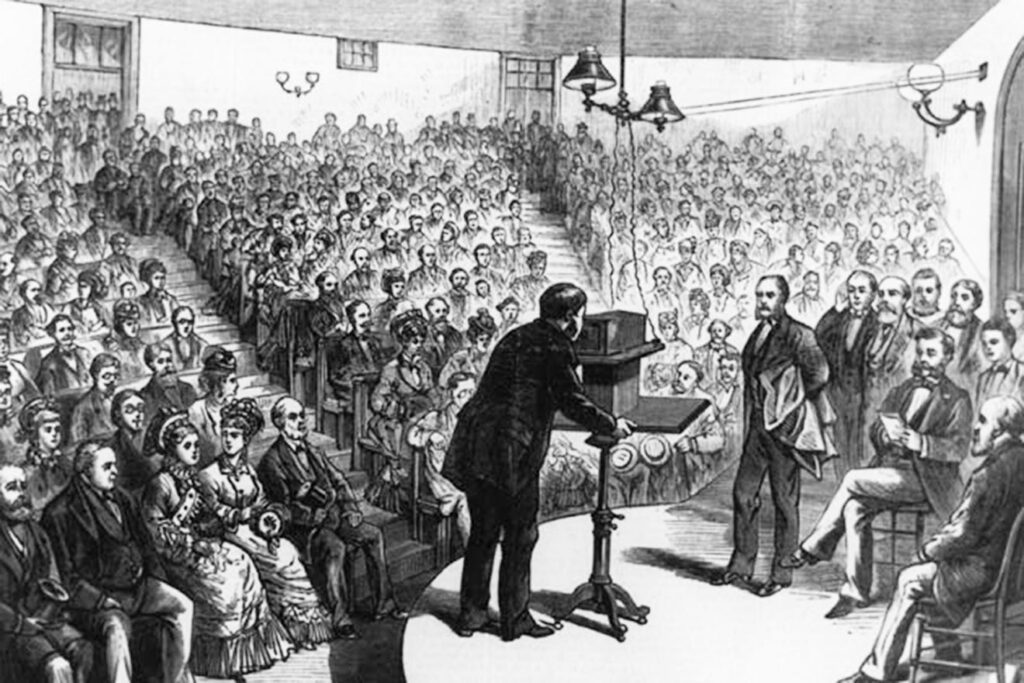
So who was this guy and why does he matter today? Almost forgotten, John Lord was a famous author and public speaker in an age before broadcast media celebrities. He reportedly gave over 6,000 speeches on the Lyceum Circuit. Popular touring lecturers on the circuit included novelist Charles Dickens, philosopher Ralph Waldo Emerson, abolitionists William Lloyd Garrison and Frederick Douglass, suffragette Susan B. Anthony, and comedian Artemus Ward. The Portsmouth Lyceum stood on the site of the current Music Hall in the 19th century. Lord was likely the first American to make his living lecturing about history and he greatly advanced popular knowledge about history.
SEE ALSO: Bad Boy genre started here
Born in Portsmouth in 1810, Lord could trace his heritage back to Kittery, Maine in the 1630s. According to family lore, a distant relative had reportedly been struck by an Indian tomahawk, but she was saved from injury by a silver comb she wore in her hair, a gift of a lover.
Lord’s father studied law at Harvard and was a colleague of Daniel Webster, but he was not a successful attorney, and eventually took over the family shipping business. Lord’s family included a banker, a general, a merchant, and a tavern keeper. His uncle was president of Dartmouth College.
John’s mother, Sophia Ladd, was related to Exeter merchant and privateer Eliphalet Ladd. Her father was a prosperous merchant who dressed in a scarlet coat with ruffles and was “very proud, very overbearing, and very shrewd.”
Lord’s mother and father were, therefore, well-established, but impoverished locals. His observations are those of an intelligent, but poor boy, growing up in Portsmouth during economic hard times. The real estate market had crashed and times were tough. Lord was naturally critical of the few wealthy families that ruled the town. His observations, recorded in an autobiography, have never been published. The manuscript of 548 pages is archived in the library at Dartmouth College.
Reluctant worshipper
Religion in New England was at a low ebb following the War of 1812. The Great Awakening had come and gone. Ministers were still held in high regard, but respect for the puritanical ways of the church was fading. Churches looked “like barns with steeples,” Lord wrote. Portsmouth citizens attended services robotically, mostly from habit or to be seen, than to save their souls or become better citizens. Outside of church, people drank rum and brandy and used profane language.
John Lord’s father did not care much for organized worship, but his mother, Sophia Ladd, was devout. So John was forced to attend church three times on Sundays. The Calvinistic services, Lord later wrote, were dour, formal, and dogmatic, especially to a young boy. The whole system, he later wrote, seemed false and hypocritical.
“I have seen more people asleep in church in one day in old Portsmouth than during the last 10 years of my life,” Lord wrote. And the music played in church, he added, was unbearable.
“Christmas was of no account, except to the Episcopalians,” he noted. “All other people tended to their business as usual…There were no such things as Christmas trees for the children, or presents to relatives or friends.”
John was also required to attend Portsmouth’s first Sunday school at Jefferson Hall downtown. Due to his mother’s strict adherence to the Calvinist Sabbath, John could not read books, go outdoors, or even walk in the garden from Saturday evening through Sunday morning. Entertainment including dancing, card playing, and the theater were considered “absolutely awful.”
Tough times in school
“If I had been more promising,” Lord later wrote, “perhaps I should have been sent to Mr. Harris, a fine scholar with a violent temper, who had an admirable school.”
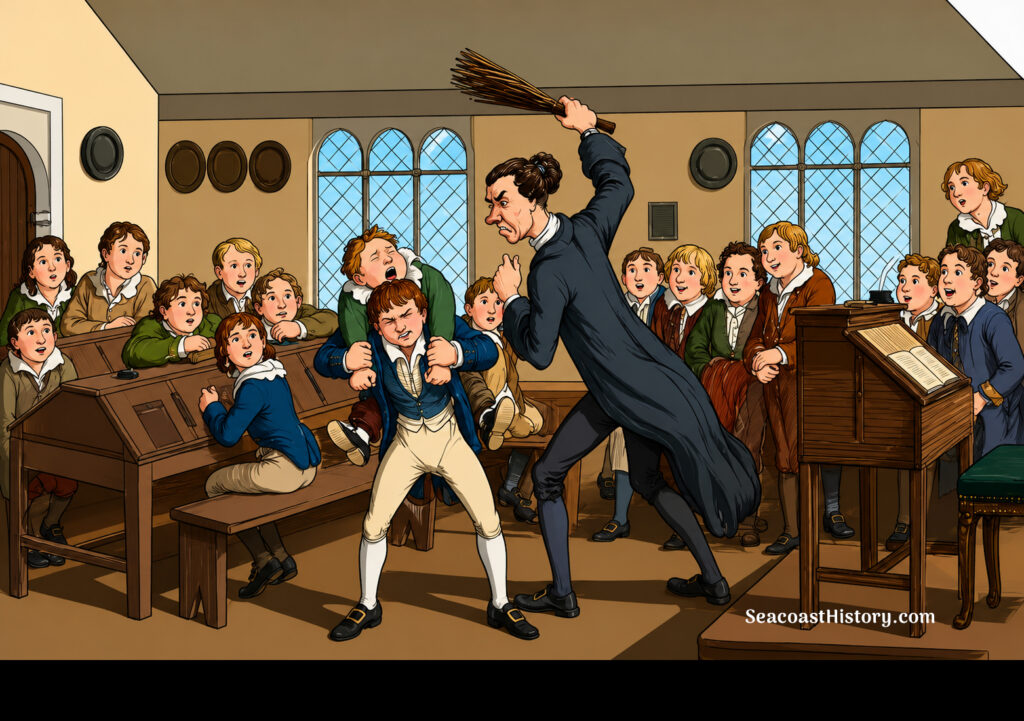
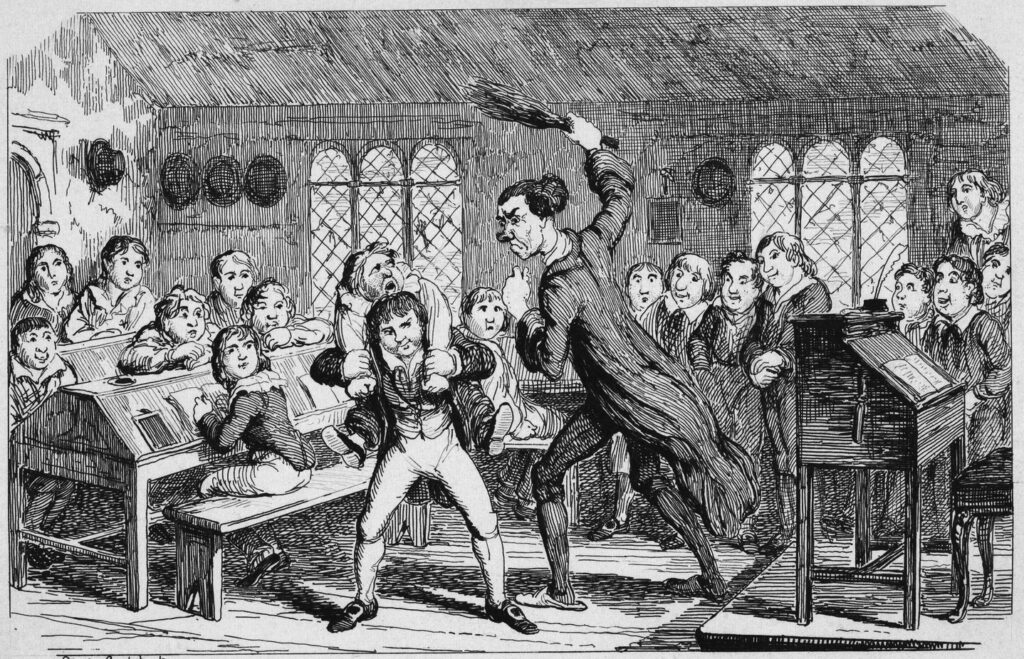
Instead, Lord ended up in the Lancastrian school with 300 other boys. It was run by “a stern, conscientious, and pious tyrant” named Mr. Jackson.
Most of the teaching in the Lancastrian system was done by student monitors who reported progress to the “masterr” who sat up on a high platform. The teacher rarely came down except to punish the boys.
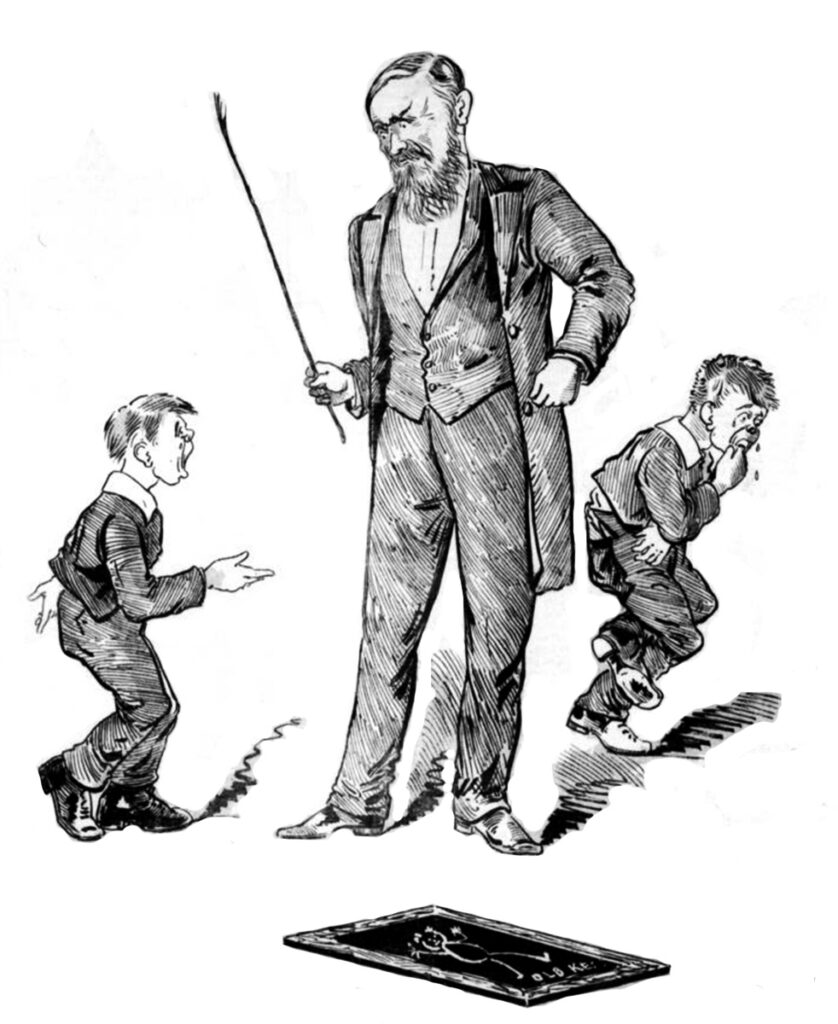
The teacher inflicted heavy blows on the hands of the boys as they stood in a row. He thrashed them with a heavy oak ruler that resembled a “ferule” or “pudding stick.” The boy’s hands became as hard as a sailor’s, Lord wrote. One time he endured a beating so ferocious that the boys carried him out of the classroom on their shoulders like a conquering hero.
Snobs and fools
Lord had even less respect for the wealthy merchant elite that ran the economically depressed city. Town leaders, Lord wrote, “cultivated all the inequality and exclusiveness supposed to belong to the higher classes of England.” To a poor boy with big ambitions, Portsmouth’s first families were uneducated hypocrites and snobs.
Nathaniel Adams, founder of the Portsmouth Athenaeum and author of the city’s first written history, was a “semi-literate” man, Lord later wrote. Rich merchants like Jacob Shaefe and Gov. John Langdon looked down their noses at “traders” and “storekeepers.” Lower class men worked in “stores” and sold “retail.” These were the men who sold dry goods, groceries, and hardware. Above them in the pecking order were prominent merchants who worked in their “counting house” or “office” and sold large quantities of the same goods “wholesale.”
READ ABOUT the Lyceum era in Portsmouth history
There was little of what Lord would call culture in Portsmouth in those days. Art was treated with indifference. Few people had paintings or pictures, except for formal portraits. Poetry, what little there was, followed sing-song rhyming couplets, with few fresh ideas and little inspiration. Wealthy people drove around in carriages and lived in three-story buildings. People talked formally to one another and children were raised to fear, rather than to love and respect their parents. Poor relatives were usually neglected, yet the few older Africans, many who had been enslaved, were treated well, Lord wrote.
The eye of the beholder
John Lord was still just a boy when his father’s legal business failed. The family moved to South Berwick, Maine in 1820 and joined the merchant trade. He went on to attend Dartmouth and came close to becoming a minister, before he found success as a lecturer.
But his perspective still rings true. While Portsmouth is often depicted as an early “social capital,” John Lord saw, instead, a pompous and thin upper crust of families pretending to be grand and sophisticated. But they were more interested in
dinner plates, dinner parties, cheap liquor, and fine furniture, than in the arts or culture, in science or in literature, Lord claimed. Even the intellectuals of Portsmouth, with the exception of the Unitarians, Lord wrote, were “liberal” in thought, but not “progressive” in action.
John Lord himself, some might say, was the snob. He was, admittedly, an iconoclast and a curmudgeon. But he had a keen eye for detail and a valuable critical vision. Often depicted as a genteel merchant aristocracy, Portsmouth would become a blue-collar city of shipyards, shops, breweries, an Air Force base, and a commercial trade port. But mostly, John Lord resented Portsmouth because of the daily beatings by his teacher.
“I do not remember to have learned anything during the three years at that miserable school except mischievous sports,” Lord wrote in his unpublished autobiography. “And I never heard of any other boy who did. The main business of the master was to make the boys young tyrants, hypocrites, and liars.” _
SOURCES: Life of John Lord by Alexander S. Twombly, (1896)Ferenc M. Szasa, and “John Lord’s Portsmouth” by Ferenc M. Szasa, Historic New England, (Fall 1989).
Copyright © 2015 by J. Dennis Robinson, all rights reserved. Revised 2026.
 A Yankee at Mardi Gras