


By Peter E. Randall
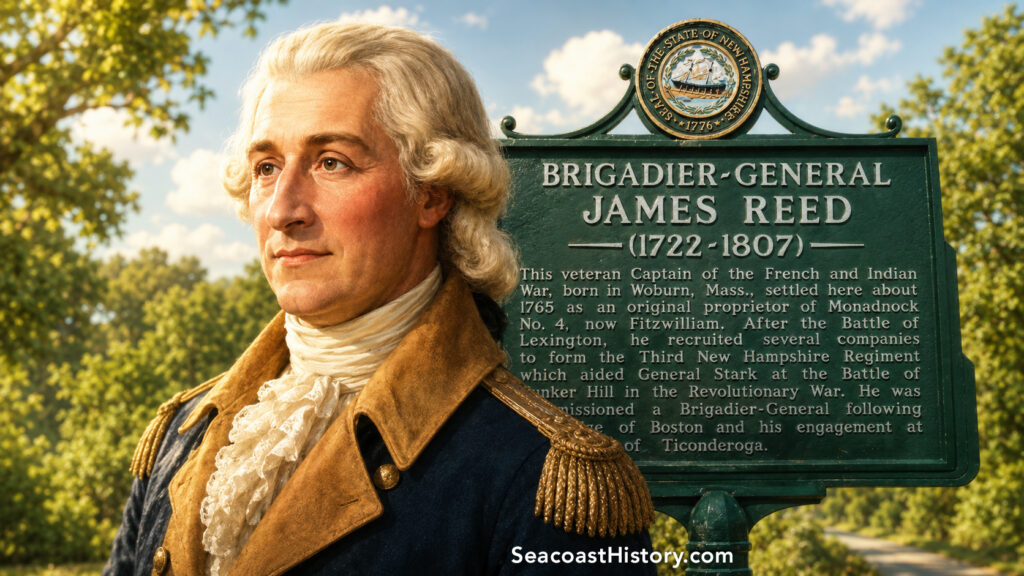
Material wealth and political influence were often determining factors in the selection of officers during the Revolution. New Hampshire was fortunate that most of those selected to lead her troops also had considerable ability. One prominent example was James Reed from the town of Fitzwilliam.
As both a proprietor and an early settler of the town, Reed undoubtedly was the wealthiest and most influential member of the community by the outbreak of the war.
READ: NH forces at Bunker Hill outnumbered others
Born in Woburn, Mass., in 1724, Reed got his military experience during the French and Indian Wars of the late 1750s. In 1765, he settled in Fitzwilliam and five years later was appointed a lieutenant colonel of the local militia. When news of the fighting at Lexington reached Fitzwilliam, Reed raised a company of volunteers and marched to Medford. He soon recruited enough men to have four companies under his command. On June 1, 1775, he was appointed a colonel of a regiment by the New Hampshire Provincial Assembly, and he was immediately sent to western New Hampshire to recruit more men.
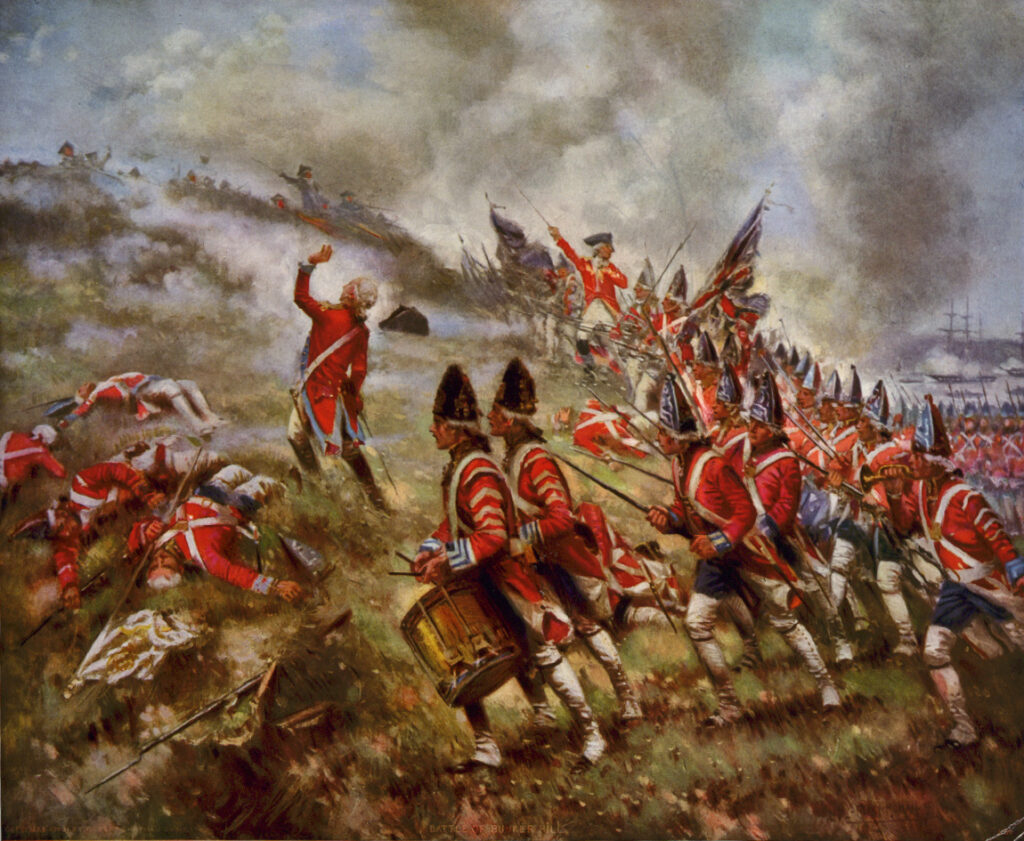
In mid-June, he marched to Cambridge but soon complained of inactivity. He was then ordered to Charlestown Neck and was charged with watching for enemy activity concerning the neck, the ferry, and Bunker Hill. Here, he drilled his men twice daily and issued strict orders on their conduct, even prohibiting swimming on the Sabbath or for longer than one hour on any other day. The men apparently responded well to the strict discipline, for when the Battle of Bunker Hill began, Reed’s men were stationed at the rail fence next to the river, the site of some of the heaviest and most deadly fighting of the battle. Johr Stark’s son Caleb wrote that Reed did not take part in the fight. Evidently, he was ill. Nevertheless, it was the efficient work of his men and of those of Stark and Knowlton that prevented a British rout of the American forces
After Bunker Hill and the British evacuation of Boston, Reed’s regiment was ordered to New York, and in April 1776, they were sent up the Hudson as part of John Sullivan’s brigade to relieve Arnold. Gen. Washington’s trust in Reed was such that he was assigned the task of transporting $300,000 in cash for Gen. Schuyler, undoubtedly the pay for the troops.
The summer of 1776 became a nightmare for the American forces as they retreated south from Canada. Men and officers alike suffered greatly from smallpox, dysentery, and malignant fever. Reed was among those afflicted and became blind as a result. While ill, he was appointed a brigadier general by the Continental Congress. Although severely ill, he was still with his troops at Fort George on September 2 and was later reassigned to Washington’s headquarters, but was too sick to report.
Reed eventually retired from the Army and received half pay until the war was over. He died in Fitchburg, Massachusetts in 1807 at age 83.
© Peter Randall. Originally published in “NH: Years of Revolution,” Profiles Publications and the NH Bicentennial Commission, 1976. Reprinted at SeacoastNH in 1997 by permission of the editor.
 Enoch Poor: Exeter Shipbuilder & Patriot Soldier