


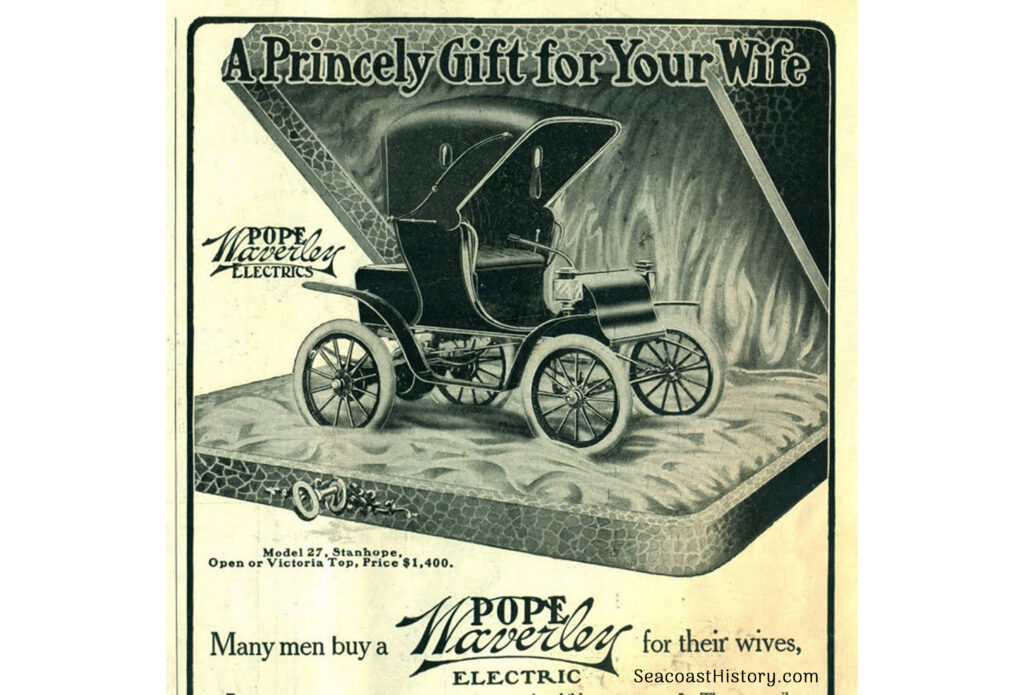
Avoid the holiday rush. Order that new electric car for your spouse today. The newspaper pitching that message appeared 120 years ago.
The Pope Waverley sold for $850-$1,500 in 1905 (an average of about $40,000 today.) Its three-horsepower engine required 24 to 30 batteries. No fancy video screen. No self driving. You controlled the vehicle manually, or your great grandfather did.
Founded by Albert Augustus Pope, a Civil War veteran born in Boston, the firm began as The Indiana Bicycle Company. A larger four-passenger Waverley Coupe sold for $2,250, according to an ad in the Saturday Evening Post. Although cramped by modern standards, the Waverley Coupe ran on two brands of batteries, came with a removable leather roof, and offered a choice of solid rubber or pneumatic inflatable tires.
This historian has ridden in a similar car powered by its original set of Edison-brand batteries. The Bailey Electric had no accelerator pedal. The driver used a lever to shift from 5 mph to 10 mph to 15 mph. The sudden jump in speed on hard rubber tires on a dirt road was a jarring experience, but at 15mph, we felt like we were zooming along. .
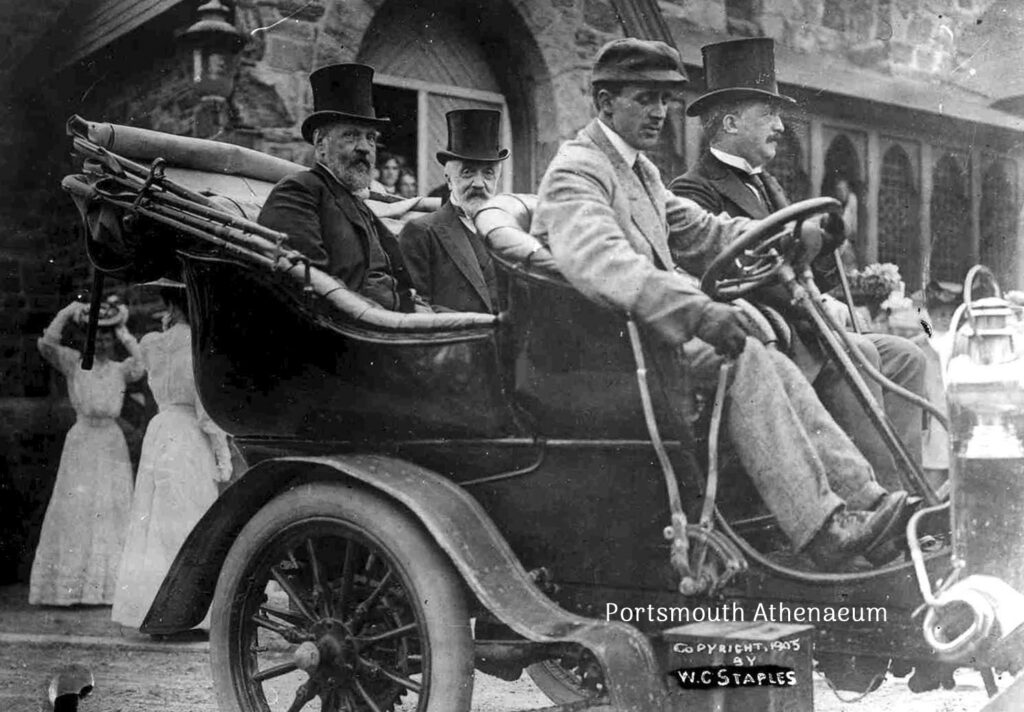
Japanese and Russian envoys to the Treaty of Portsmouth toured the Seacoast in the larger ($3,500) Pope Toledo model in 1905. The company also produced the Pope Hartford, the Pope Tribune, and Pope Robinson models. Pope declared bankruptcy in 1907 and was out of the electric car business by 1916 as gas-powered car companies took over the marketplace.
This ad from a 1905 Harper’s Weekly shows the Waverley in a jewel box. The strange advertising copy suggests that men go to the circus because their children want to go–but end up enjoying themselves. In the same manner, men who buy a Pope Waverley for their wives end up enjoying the ride. Those who “study the electric situation” versus the “gasoline situation,” the ad concludes, will unquestionably agree that the Waverley is “a princely gift for your wife.” The campaign, apparently, ran out of juice.
© J. Dennis Robinson, all rights reserved.

 Timeline: The Life of John Paul Jones
