


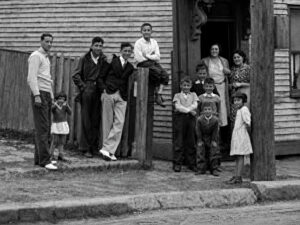
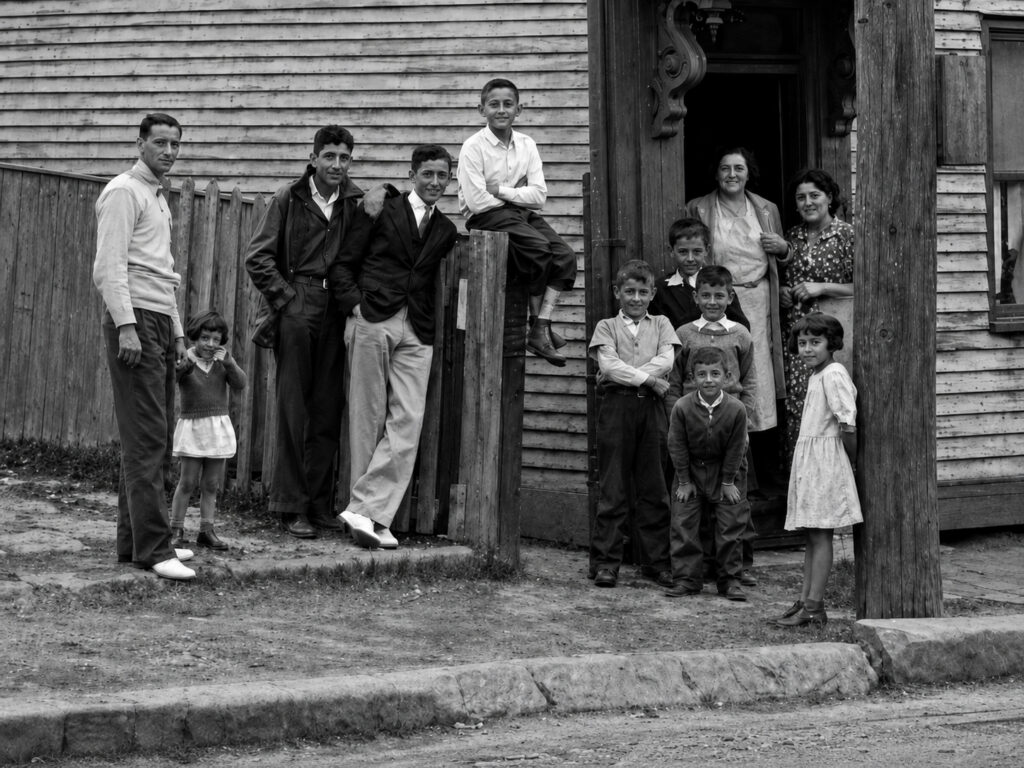
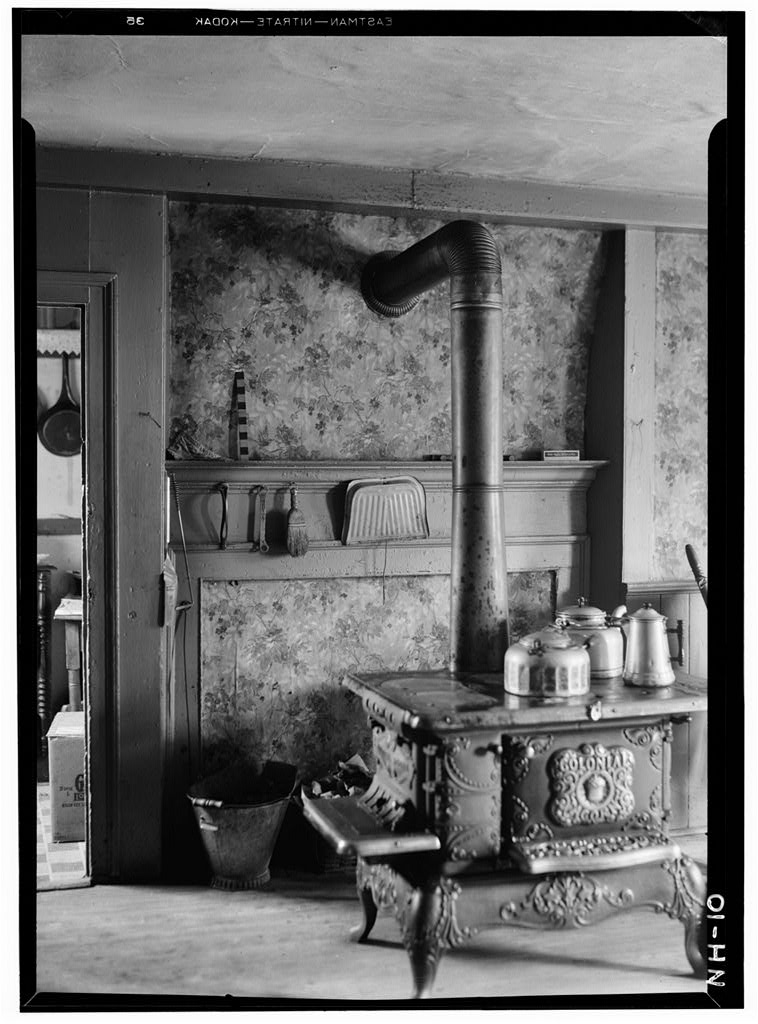
I came close to purchasing a series of fascinating black-and-white photographs of a house that once stood in Portsmouth’s North End. One image showed two families standing outside their duplex at 33-35 Deer Street. Another showed their kitchen with a huge ornate cast-iron stove. This detail shows the Italian family on the left side of the building. (See their names listed below.)
I didn’t bid on the images. They looked hauntingly familiar. As I suspected, they all came from the Library of Congress (LOC) collection. Clever people download these public domain images, print them on glossy photo paper, and then sell them online– again and again. Technically, you already own them.
The LOC has five photos of 33-35 Deer Street. They were all taken in June 1935 as part of the Historic American Buildings Survey (HABS) during the Great Depression. The idea was for the federal government to give architects, draftsmen, and photographers work during hard times. Their assignment was to document a representative sampling of America’s architectural heritage. This information became a sort of database for the preservation movement that came along years later.
READ about the WPA mural project
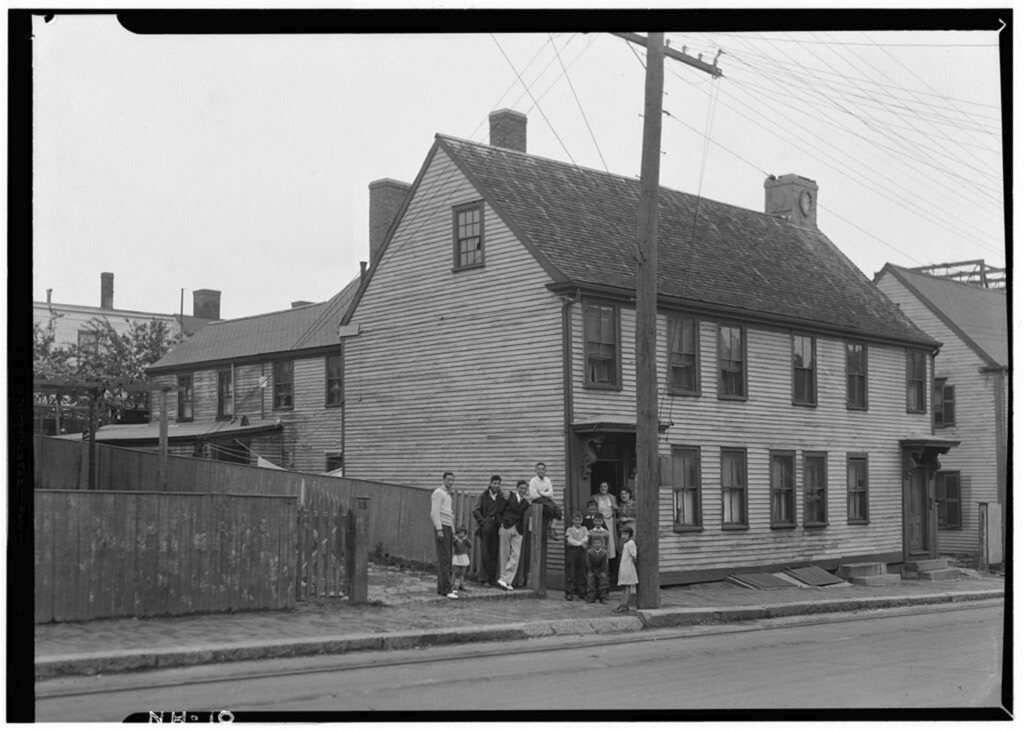
The LOC file includes detailed architectural drawings of the Deer Street house. And if you click on the right spot, you can download the notes taken in 1935 by Eugene W. Clark, who was Deputy Officer at HABS in the 1930s. According to Clark’s typed notes, we are looking at the Joseph Sacco House, built by John Newmarch in 1705.
HABS historian Eugene Clark described the two-story house in his notes as “structurally sound” with “many additions in the rear.” Even after more than 200 years in use, by 1935 the house still contained “excellent First Period stairs.” Years later it would be considered a blighted building and torn down as “slum” housing.
Clark apparently was drawn to the building by a passage in Brewster’s Rambles, a collection of history essays published in the 19th century. Deer Street took its name, according to Charles Brewster, from a tavern with a sign depicting a deer. It was on this street, he reported, that the only Portsmouth woman ever struck and killed by lightning once lived.
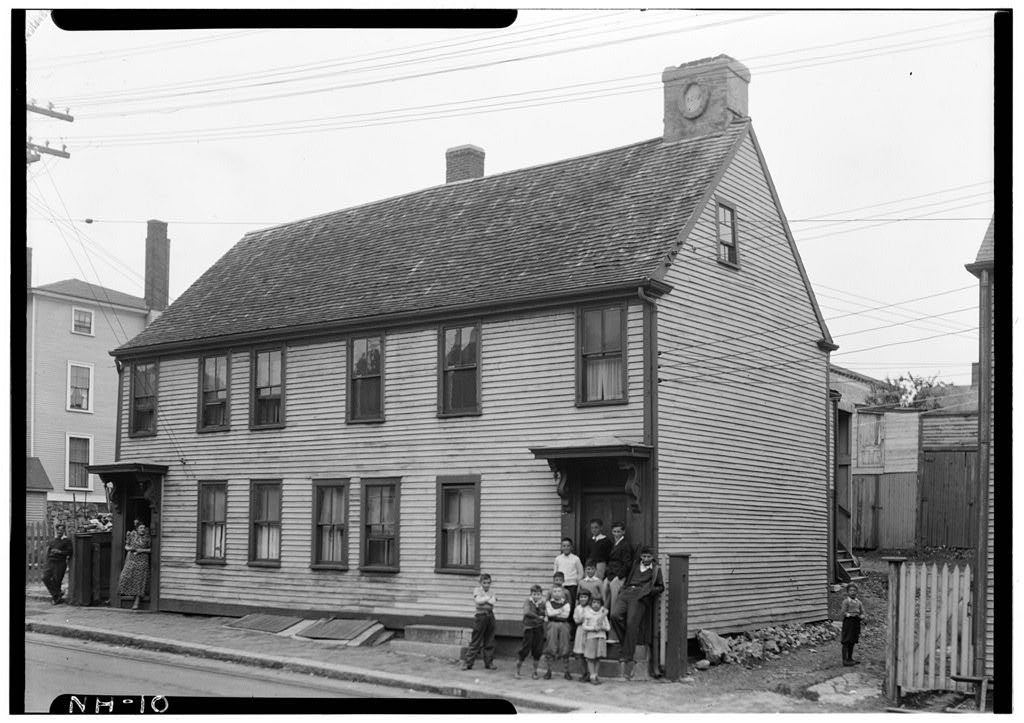
“Passing up Deer Street,” Brewster wrote, “see that old house on the North side. The chimney presents to every passer-by, the record of its age– 1705. It was built in that year by John Newmarch.”
Neither historians nor preservationists, unfortunately, could save the North End from urban renewal in the late 1960s and early 1970s. Except for a baker’s dozen buildings on “The Hill,” the neighborhood disappeared and has since been replaced by modern buildings. But you can still see 33-35 Deer Street at the Library of Congress website. And you can download the hi-resolution images at no charge–and turn them into your own historic house calendar or frame them on your wall.
The photo was taken on June 20, 1935. According to the Portsmouth Athenaeum and Portsmouth Public Library, the photo includes the following former North End residents: Walter Pesaresi, Freddie Tosi, Dorothy Pesaresi, Edmond Pesaresi, Grace Ravaglia, Lucia Procario, Lazarine Tosi, Lincoln Tosi, Adam Pesaresi, Azio Ferrini, and Ted Tryphonopoulos. Azio went on to become a publisher of the Portsmouth Herald, which offered minimal press coverage of the urban renewal destruction of the ethnic North End. I’ve always wondered how the politics of that played out in Little Italy and how the newspaper, after its minimal coverage of the process, ended up building a new office in the devastated region.
READ about our North End Reunion movie
(c) J. Dennis Robinson, 2014-2026.
 Ben Baldwin & The Big Note in 1980