

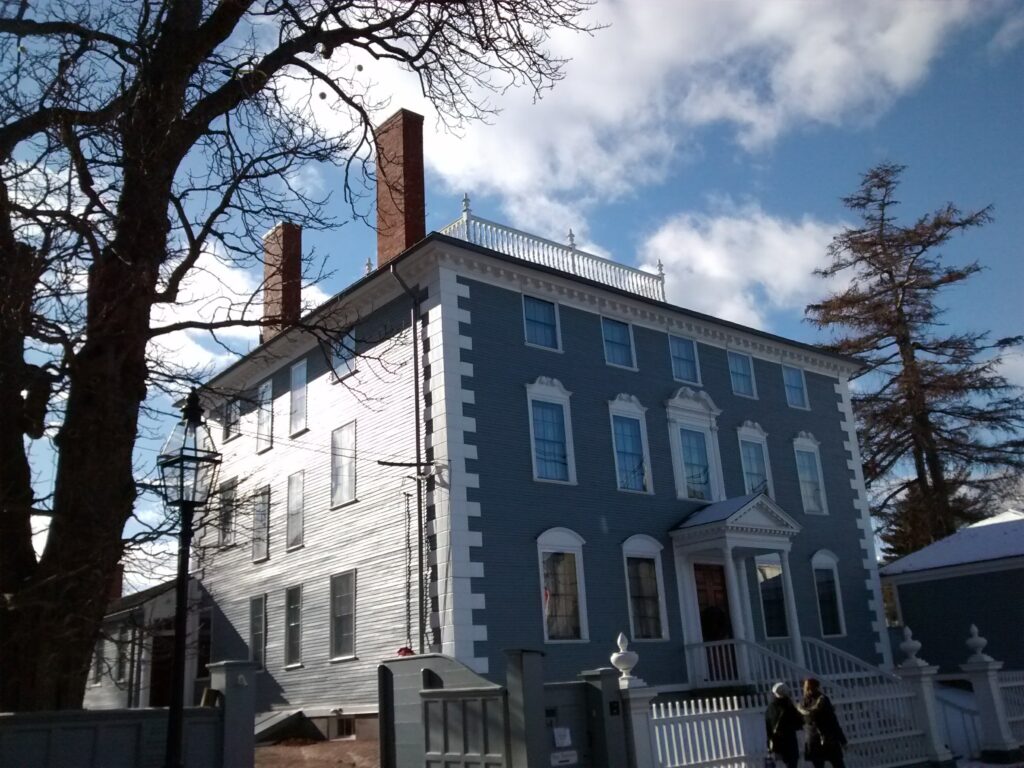
He is best known as one of New Hampshire’s “signers” of the Declaration of Independence. But William Whipple earned his way to the top. As a judge, a general and even acting as the unpopular tax collector, he gave his all to the cause and, eventually, it killed him. His house still stands on Market Street overlooking the river where he plied his trade.
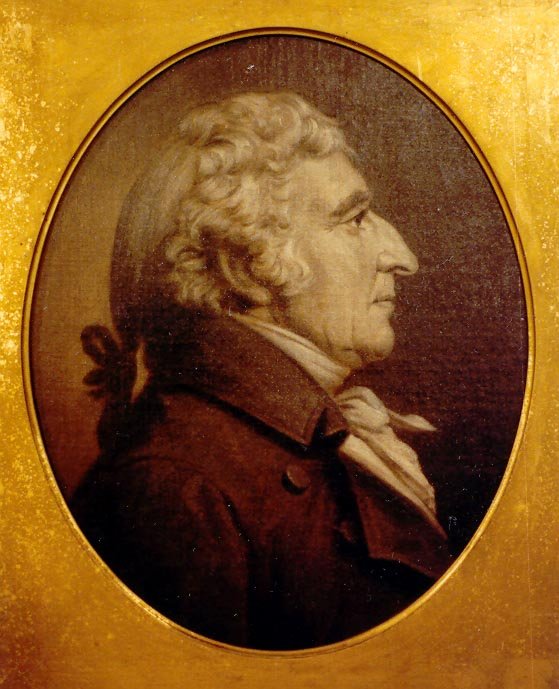
WILLIAM WHIPPLE was considered to have “a discerning mind, a sound judgement, and integrity.” History might have cast him in a bigger role had he been ambitious, but with Whipple the country came first. He was content to play one of history’s difficult supporting roles and he never sought the center of the stage.
Wood, Rum, Slaves
Born in Kittery, Maine, on January 14, 1730, Whipple attended the local grammar school and then went to sea on a merchantman. By the time he was 21 he was a sea captain, plying the Atlantic carrying wood to the West Indies, rum to Africa, and slaves to Portsmouth. In 1759 he left the sea and established himself as a merchant in Portsmouth in partnership with his brother, Joseph. As a merchant, he became an early victim of the British trade restrictions of the 1760s and because of this, an early adherent to the rebel cause in Portsmouth.
Declaration Of Independence
In 1775, he was elected to the Committees of Safety for Portsmouth and for New Hampshire. The next year he was elected as a delegate to the Continental Congress. In Philadelphia he voted for and signed the Declaration of Independence. Whipple served in the Congress until 1779, devoting all his abilities to the politics of waging a revolution. Twice he took leave from Congress to lead the New Hampshire militia against the British. Appointed a brigadier general by the New Hampshire legislature in 1777, he led the state’s militia in the battles of Stillwater and Saratoga. After these monumental American victories, Whipple was one of the officers chosen to negotiate the surrender of Gen. Burgoyne and his army. In the summer of 1778 Whipple led New Hampshire’s militia south to back Gen. John Sullivan in an attempt to capture Rhode Island. The plan never matured and Whipple saw no action.
Taxes & Supreme Court
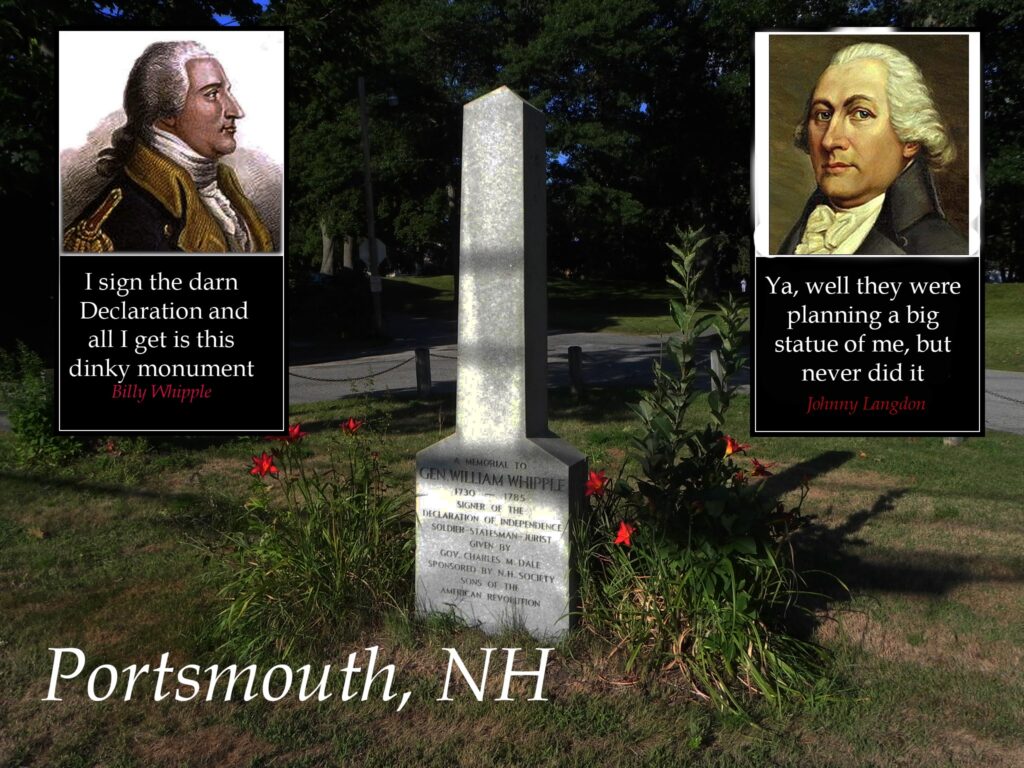
In 1780 Whipple was elected to the first of several terms in the New Hampshire legislature. In May of 1782, Superintendent of Finance Robert Morris appointed Whipple tax collector for the state of New Hampshire. Whipple accepted the difficult and unpopular job because someone had to. His duties were to receive and transmit the state’s taxes, to expedite the collection of these taxes by all proper means and to urge the local authorities to comply with the requisitions of Congress. Times were hard in New Hampshire, and the state was very slow in paying its share to the national capital. In August of 1783, Whipple tried to resign, but Morris would not let him. In January of 1784, Whipple paid $3000 to the treasury, his first remittance. A few months later a serious heart ailment gave him grounds enough to resign.
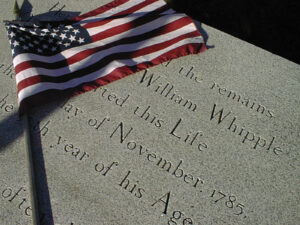
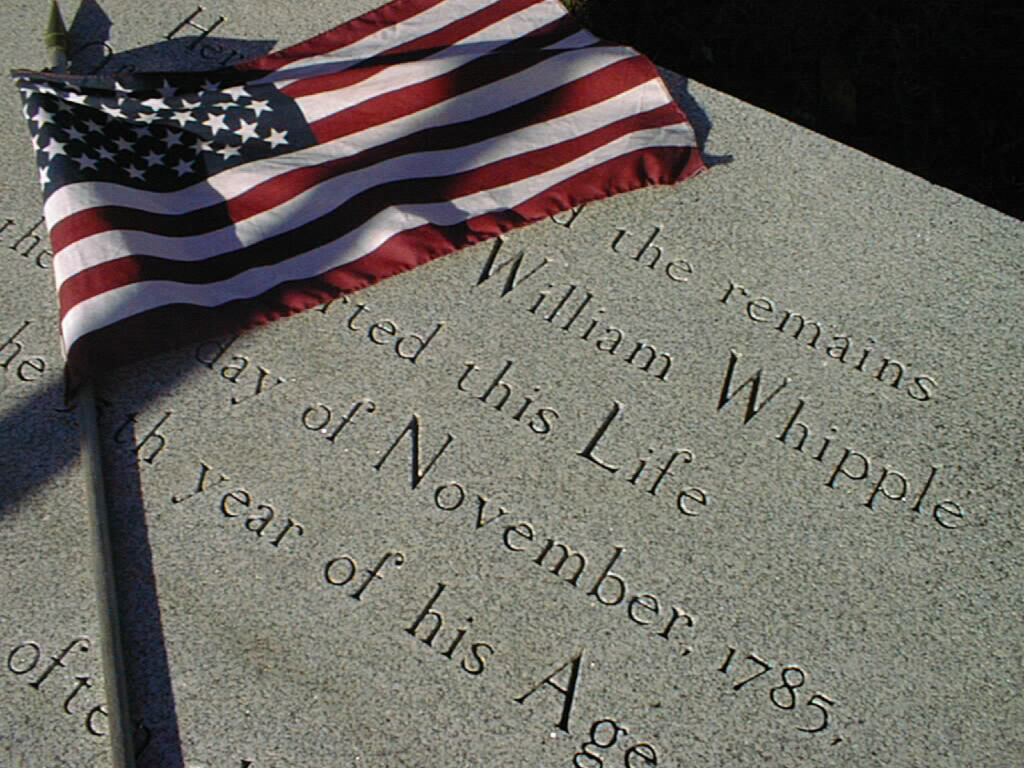
While serving as tax collector and state legislator, Whipple also served as a judge of the Superior Court. He continued to hold this office and ride the circuit with the court until the fall of 1785, even though he often fainted and fell off his horse due to illness. In the late fall his health forced his retirement and he returned home to Portsmouth. He died on November 28, 1785 and was buried in Portsmouth’s North Burying Ground. One of the Revolution’s great champions, Whipple gave everything to the cause and died just before his dream of a strong central government was realized.
By Steve AdamsOriginally published in “NH: Years of Revolution,” Profiles Publications and the NH Bicentennial Commission, 1976. Originally reprinted here in 1997 by permission of the author.
 Still Untangling the Prince Whipple Legend