


(Portsmouth Athenaeum)
After studying and writing about Portsmouth history for 40 years, it appears, I have barely scratched the surface. I recall vague references to Ark Street, but never knew where the name came from until I bumped into this photo.
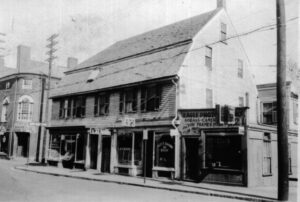
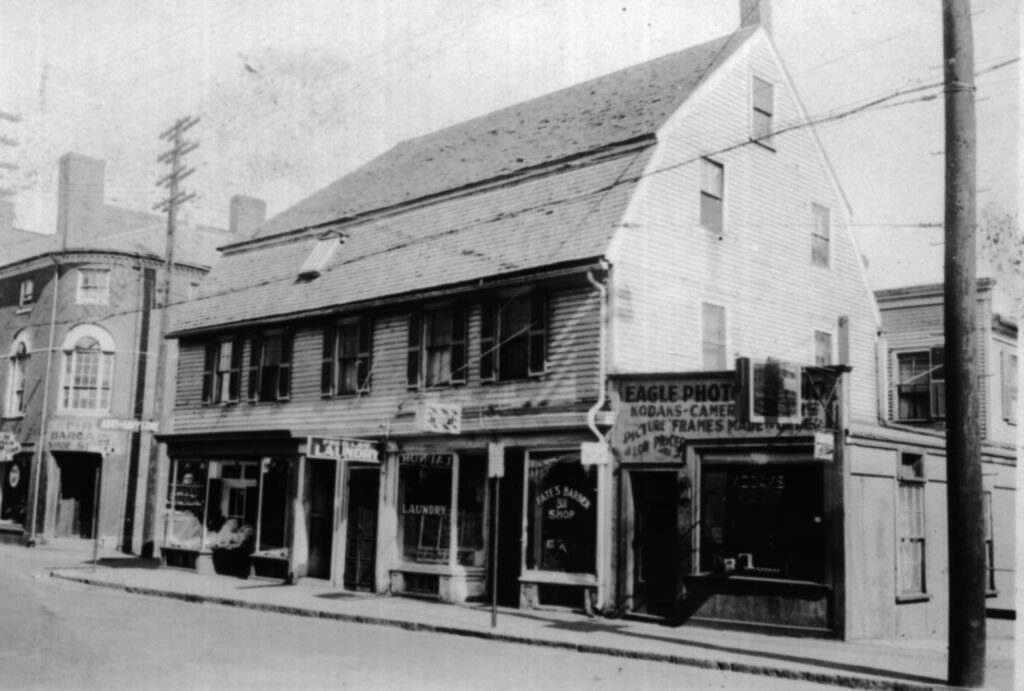
According to Portsmouth Athenaeum records, the Clagett-Hart House stood on the south corner of Daniel and Penhallow streets opposite the surviving Old Post Office and Custom House. It was constructed around 1740, but was severely damaged by a downtown fire in 1761. That was the era of the dreaded Stamp Act on the lead-up to the American Revolution. It was then acquired by Wyseman Clagett. I know that infamous Tory name from the 1940 film Northwest Passage, adapted from the novel by Kenneth Roberts. There is a scene in the film where Clagett shows up at Stoodley’s Tavern, which at that time, was located across Daniel Street at what is now the current Post Office building. (Stoodely’s Taven also burned, was rebuilt, and then moved to Strawbery Banke Museum.)
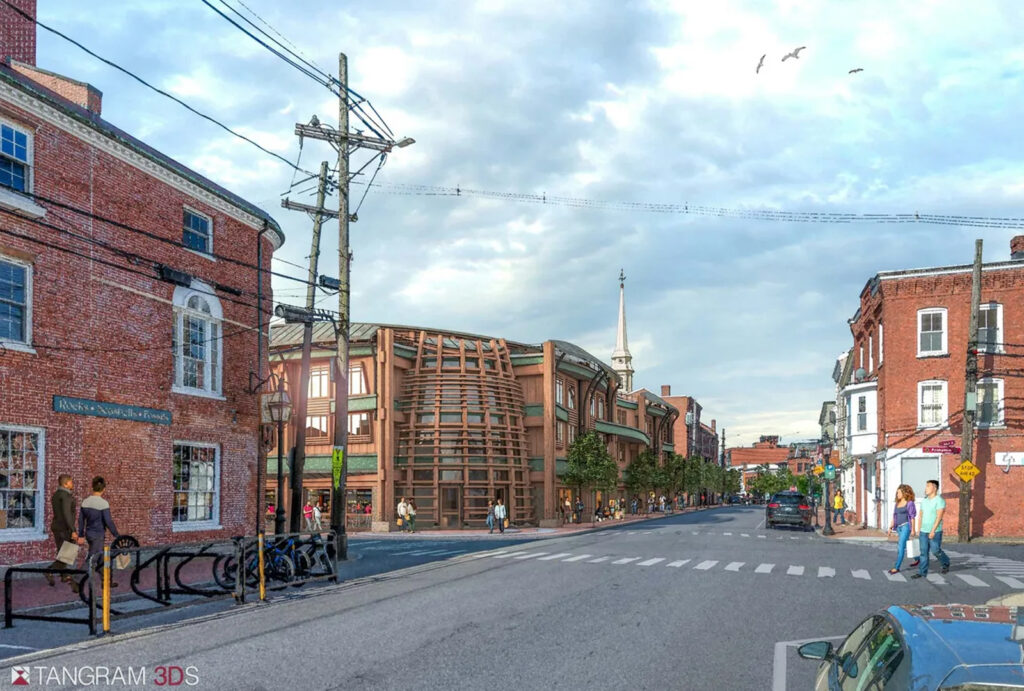
By the mid-1770s, the Clagett-Hart House was owned by Noah Parker. Locals began calling his huge home “Noah’s Ark.” Penhallow Street was, at the time, nicknamed Ark Street. Get it? That’s just a taste of how complex our history, moving buildings, and shifting names can be. It’s also an example of how difficult it is to nail down a definition of “Old Portsmouth,” which is the topic of a story I’m working on. And the story gets even more complex.
In 1791, according to local records, Jacob Sheafe bought the building for his daughter. She married Hugh Henderson. When Hugh died, she married William Hart. They lived in Noad’s Ark until she died in 1845 at the age of 99. The Clagett-Hart House was torn down in the 1960’s and is now a bank parking lot. This picture comes from the mid-1930s, I believe, and shows an early location of Eagle Photo Shop in the building next door.
Copyright J. Dennis Robinson, all rights reserved.
 Gardening at the McIntyre Site