


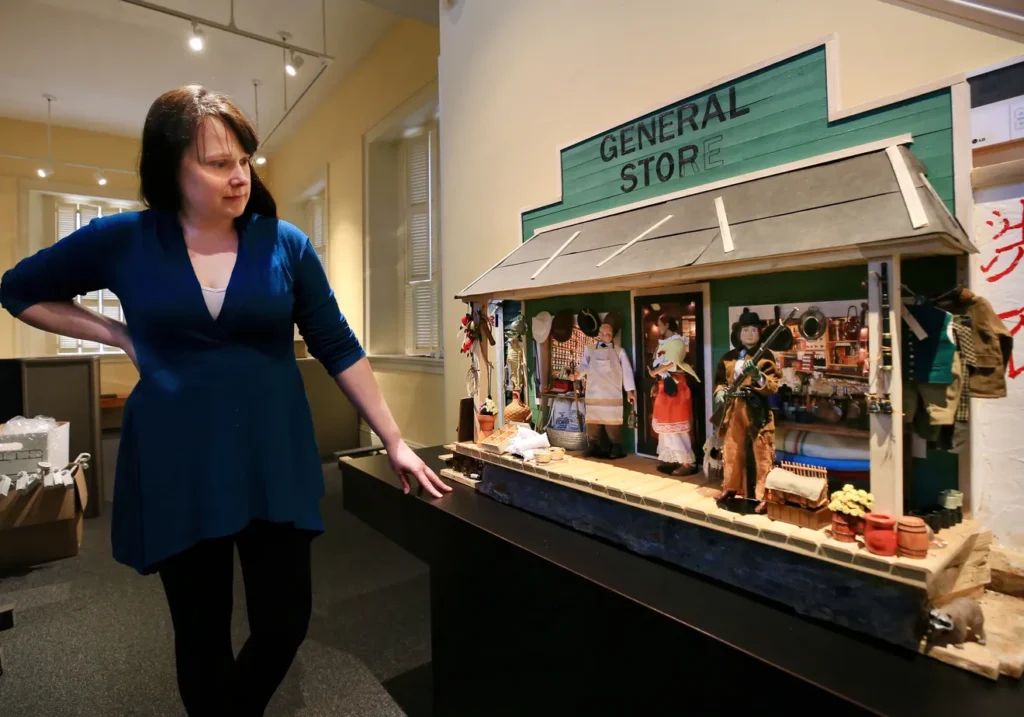
The hardest thing about filling a room with “folk art” is that no one knows exactly what folk art is.
“It’s a term to be struggled with,” said Meredith Affleck, manager of the exhibition at the Portsmouth Historical Society. “New Hampshire Folk Art: By the People, for the People” ran in 2019 at the Academy Gallery, an 1810-era brick building that has served as both a city school and the public library. The exhibition included works from two dozen New Hampshire collections.
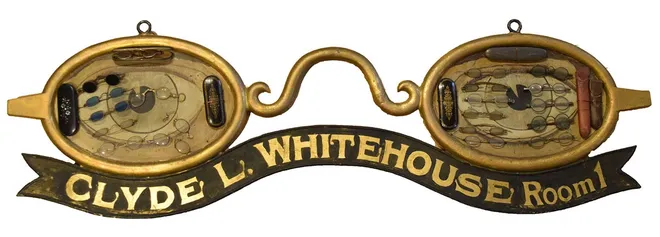
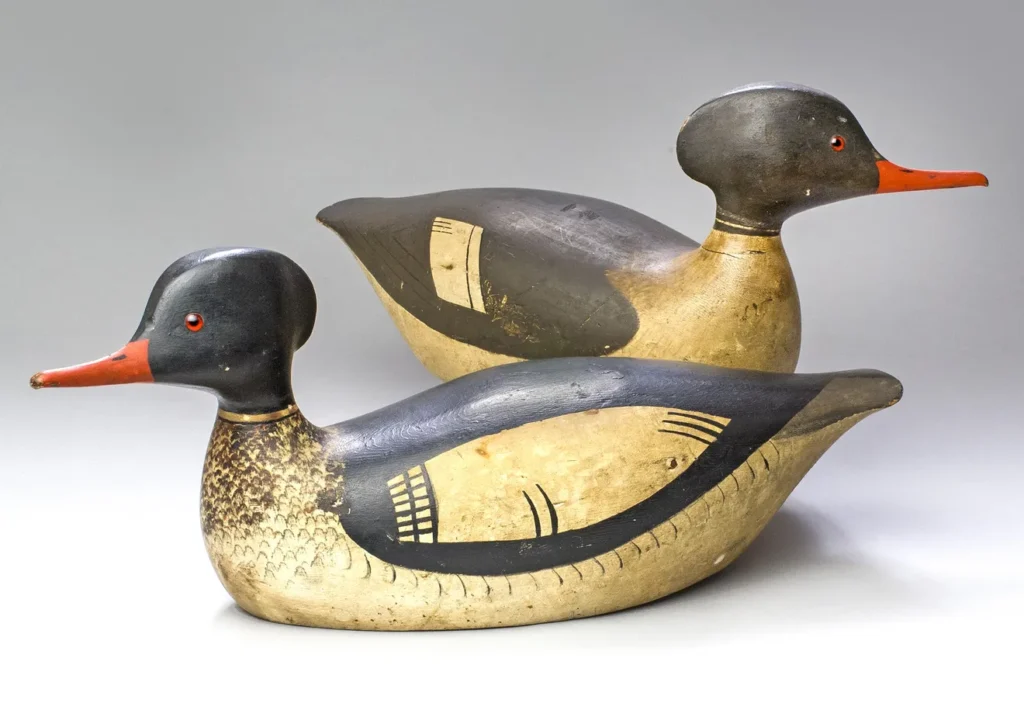
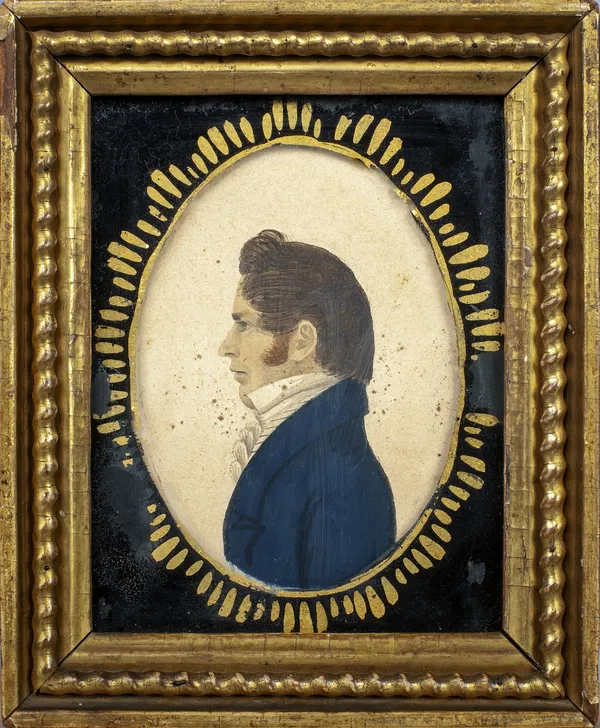
For a year, Affleck, society curator Gerry Ward, staff, and volunteers combed through local items while seeking a definition of the work on display in the show. The chosen works inclu ded a colorful lion painted on a chunk of wood, an optician’s shop sign shaped like a pair of glasses, carved bird decoys, amateur portraits and landscapes, ancient tavern and livery sign s, a colorful crazy quilt, a high chest of drawers, calligraphy, a model of Independence Hall, a scrimshaw walrus tusk, a contemporary pink pussyhat and much more.
Affleck points to a colorful sign for an early temperance society, a group dedicated to reducing the consumption of alcohol. In the mid-1800s one local temperance leader made the dubious claim that 5,000 out of 8,000 Portsmouth inhabitants had taken a “pledge of abstinence from all intoxicating liquors” and that places serving alcohol in town had been reduced from 125 to about 40. The bright red sign is shaped like a drinking cup encircled by a deadly snake.
The message was clear: booze destroys lives. But the sign looks amateurish, crude, and homemade. It is definitely not “fine art” like past Discover Portsmouth exhibitions featuring the professional work of Edmund C. Tarbell, or the breakthrough showcase of paintings by Gertrude Fiske.
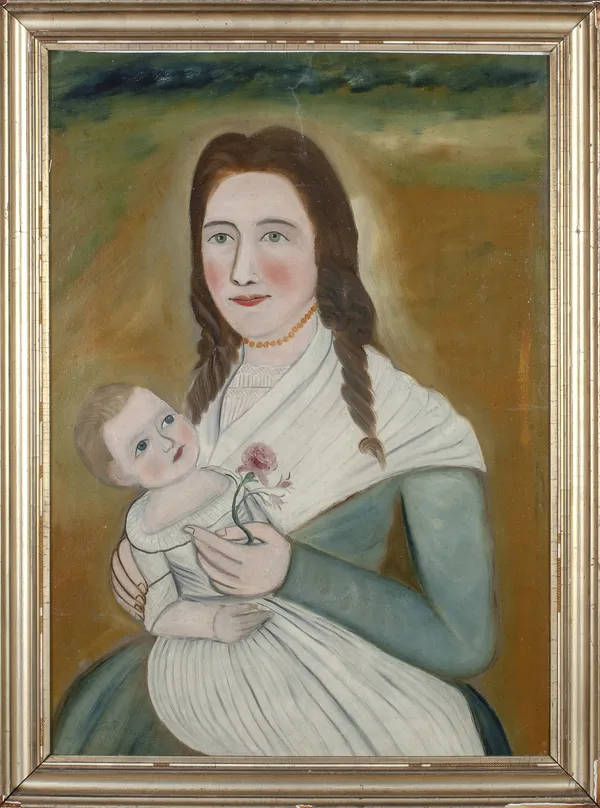
“Folk art includes objects of aesthetic value that are not in the fine art school of thought,” Affleck says, taking a swipe at a working definition. “It’s made by ordinary people who may have excellent skills in their class, but are not classically trained.”
“Ordinary people,” as opposed to what, demigods and superheroes? The definition quickly begins to crumble.
What about classically trained artists whose work is still ordinary? What about brilliant and famous artists and craftspeople like Rose Labrie who were self taught? If Picasso had painted the bright red temperance sign would it still be folk art or worth a million dollars and analyzed by scholars?
“A lot of the objects in this show are things that belonged to people who wanted to add some aesthetic beauty to everyday objects,” Affleck says. This definition applies to objects like weathervanes, wooden “fire boards,” figureheads on ships, dishware and clocks. Indeed, one popular class of folk art includes utilitarian items that have been decorated.
“We’ve got a patriotic mermaid,” Affleck suddenly adds. “She was found at the municipal dump in Sunapee and rescued from oblivion. She’s got a trumpet and a flag and a manatee tail that looks like it was painted with shiny silver radiator paint. She’s got whacky proportions and it’s just fun and amusing.”
So folk art is funny? And is it funny because it’s bad art?
“The good-bad argument is really a question of your point of view and your taste,” Affleck continues. “It’s in the eye of the beholder. What is great about things that fall under the slippery title of folk art is that it is all very approachable. This is the antithesis of out-there abstract modern art that a lot of people don’t understand.”
It’s clear that Affleck is enjoying putting this show together. She grew up in Andover, Massachusetts. At college, she majored in both French and Studio Arts.
“I’ve always been interested in doing this kind of work. I had planned on being an art history major,” she says. But as a young adult, to support herself, she first found her way into the corporate world for 10 years. “I decided I was not going to get another job that was just a job.”
Affleck spent some time as a starving artist, then an internship at Discover Portsmouth expanded into a part-time job as manager of exhibitions and programming.
“I really enjoy enriching the lives of people,” she explains, “which is why the museum world and exhibition design in particular appeals to me. I can find ways to communicate these really high level art concepts to people who don’t otherwise find his sort of thing approachable. And I feel that we have a lot to learn from our past.”
A few items in the exhibition are contemporary, but most of the items on display this year are from three centuries of our past. But this time the collection comes from all across the state. “New Hampshire Folk Art” features artifacts from more than two dozen private and museum collections – from Dover, Exeter, and Portsmouth to Manchester, Boscowen, Hopkinton, and Lebanon.
“We are not going to try to re-define the term ‘folk art’ with this show,” says curator Gerry Ward.
To do so, Ward wrote in the introduction to the exhibition catalog, “can lead the unwary into a scholarly semantic quagmire from which there can seem to be no escape.”
Despite countless books on the topic, folk art at Discover Portsmouth will remain a “tossed salad” of adjectives – amateur, ethnic, affordable, utilitarian, whimsical, decorative, handmade, cultural, ceremonial, traditional, unique, informal. It can include anything from cupcakes and scarecrows to Christmas cards and finger painting. Some say it is simply undefinable.
But Affleck won’t give up.
“Folk art is all about figuring out what you like,” she says. “For me, if it has form and shape and color and it gives me the warm fuzzies when I look at it, then it has value.”
“When I was in college and looking at a lot of art and studying it, my mother said, “If you like something – get it!’ Because that’s the point of art. Ultimately, these are just objects that bring the viewer joy.”
Copyright 2019 by J. Dennis Robinson, all rights reserved.
 10 Things I Didn’t Know about The Music Hall