




He wrote at least 20 books, all set in his beloved town of Exeter, New Hampshire. But his fame lasted only a lunchtime. Today, few outside of rural Exeter recall the name Judge Henry Augustus Shute (1856 – 1943), better known as “Plupy.”
Henry “Plupy” Shute was an impressionable adolescent when the first “bad boy books” of American literature appeared soon after the Civil War. The groundbreaking autobiographical novel, Story of a Bad Boy, by Portsmouth’s Thomas Bailey Aldrich (1869) must have knocked young Plupy’s socks off, if indeed he wore any. Aldrich’s rascally hero, Tom Bailey, did awful things. Tom lied, stole, threw rock-hard snowballs, set off huge explosions, ran away from home, and set other people’s things on fire. But Tom Bailey was a new kind of hero because he never got caught. Growing up bad, Aldrich claimed, was the way all boys learn to be good.
Mark Twain, a friend of Aldrich, took the genre to its highest form with tough kids like Tom Sawyer and Huckleberry Finn. Henry Shute clearly followed in the footsteps of these highly original writers, tapping the tales of his Exeter boyhood into a seemingly endless flow of stories that appeared in books and magazines for 25 years. In an era before television, Shute’s boy adventures functioned like the cartoon version of the literary works by Aldrich and his friend Mark Twain.
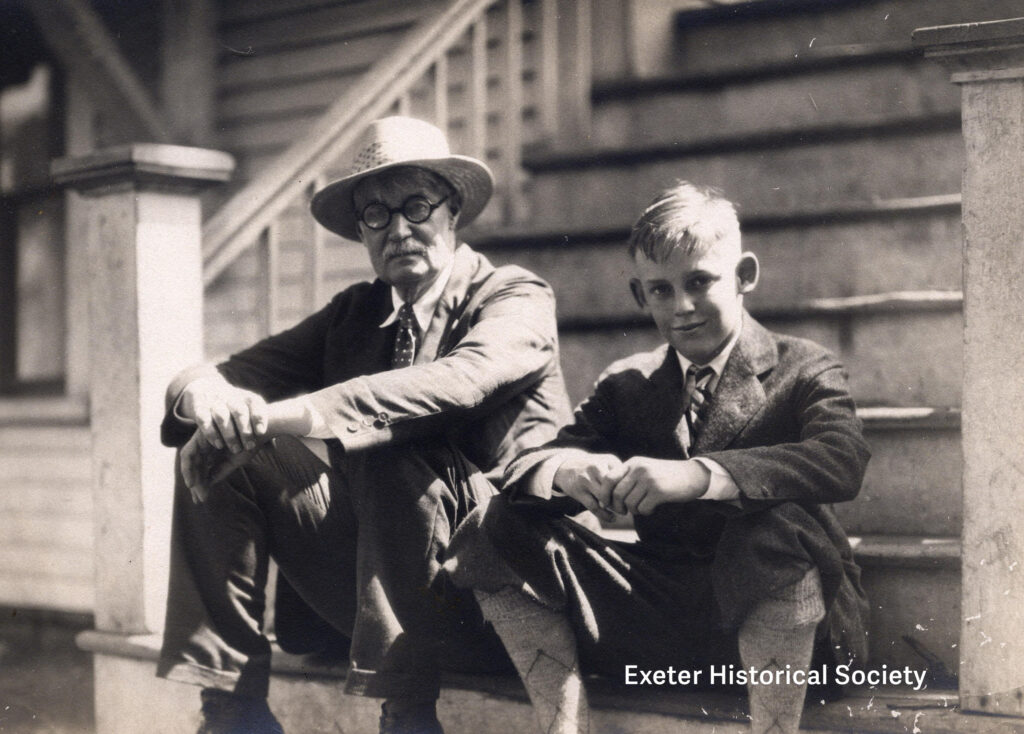
Shute was popular in his day, but not immediately. He was 40 years old before he began submitting his boyhood tales to the Exeter Newsletter. His friend, newspaper editor John Templeton, encouraged these reminiscences. The reading public was, at first, less than enthusiastic. Templeton turned a few of these stories into a small book in 1897 when Shute was judge of the Exeter Police Court, meting out justice mostly to Exeter boys and young men. It was a position he held for 50 years.
Like Aldrich’s hero Tom Bailey, Shute named his main character after himself, using a childhood nickname. Shute surrounded his protagonist “Plupy” with a gang of rambunctious boys nicknamed Newt, Beany, Pewt, Nibby, Bug, Fuzzy, Skinny, Whack, and Boog. Many of his characters were fashioned after real Exeter personalities like editor Templeton. In 1901, borrowing another idea from Aldrich and Twain, Shute began writing, not only with the voice of a young boy, but with the appropriate misspellings and poor grammar. Parents and teachers complained that Plupy was a bad influence on boys, but Shute’s irreverent humor was the formula for commercial success.
Both Twain and Aldrich lost their fathers when they were boys. They traveled widely and found early success as authors. Henry Shute, by comparison, had a happy middle-class home life. He emerged as an author in middle age, and stuck to his hometown like glue on a toilet seat. He attended the town’s public schools, then graduated from Phillips Exeter Academy and from Harvard. Despite his prolific career, he considered his writing as a hobby and his literary success as a “gigantic joke.”
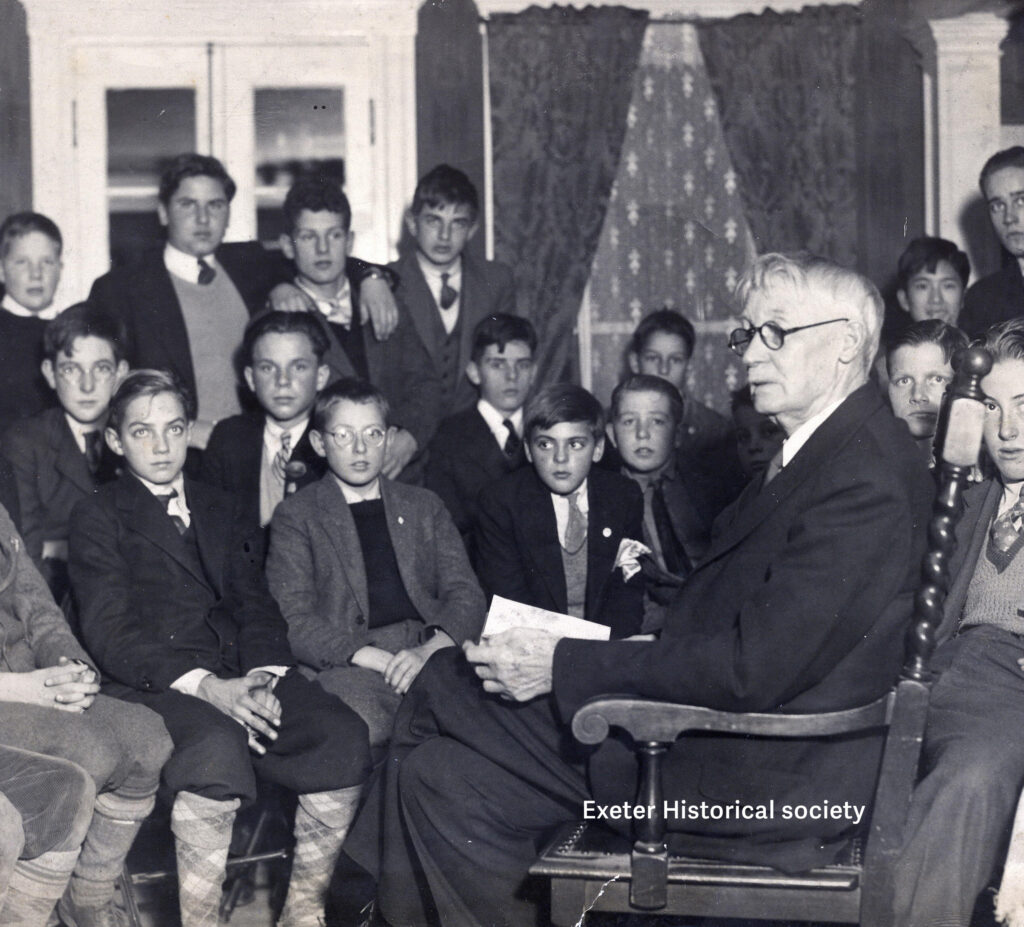
His greatest joy, besides being “an Exeter boy,” was playing clarinet and performing with the Exeter Brass Band. For decades, Judge Shute joined the summer concerts at the Exeter Bandstand in the center of town across from the law office on Water Street that he shared with his son. If the reading public loved the fictional Plupy Shute, the citizens of Exeter loved the real Plupy more. Although his soap opera style rarely rises to the level of satire or social commentary, his self-deprecating sense of humor can still be entertaining.
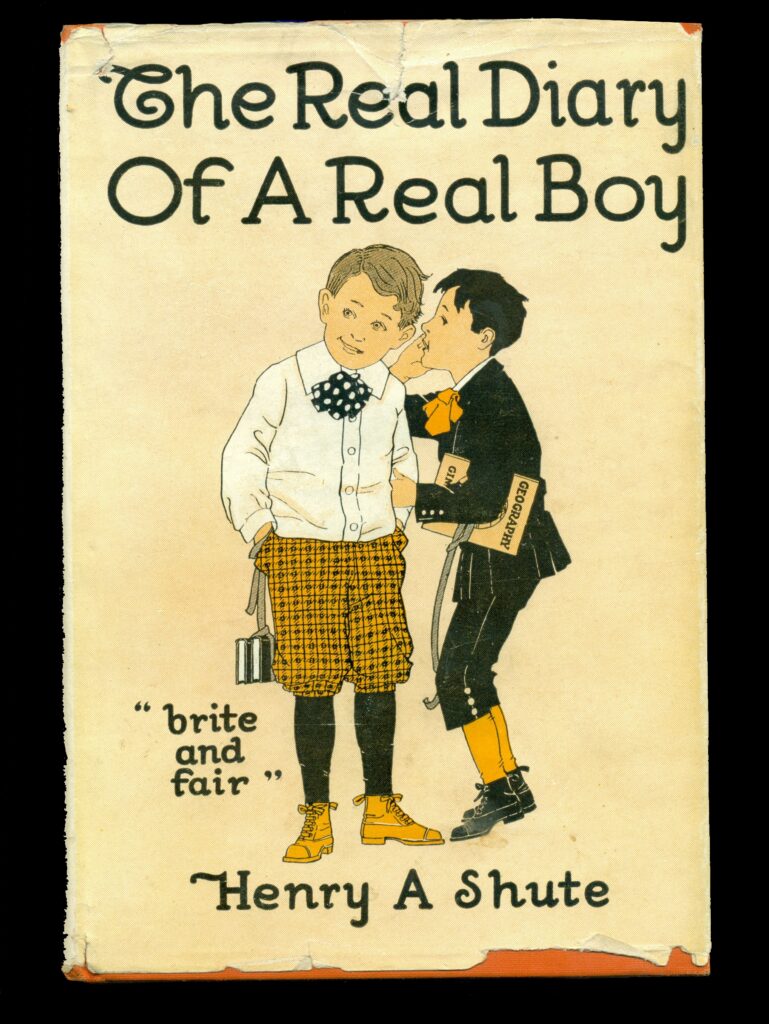
Judge Shute claimed he had discovered his childhood diary (spelled “diry”) in a trunk in the attic. His crude writing style was so convincingly boyish that many readers believed it was real. When these stories were collected into The Real Diary of a Real Boy (1902), the book became an instant bestseller. As the twentieth century dawned, Shute’s work appeared widely in national magazines like Boys’ Life and The Saturday Evening Post. As technology advanced, industry boomed, immigration increased, and cities expanded, a wave of nostalgia washed over the Atlantic states and spread westward. This “colonial revival,” expressed in everything from art to architecture, imagined the past as the best of times. The wild Roaring Twenties, Prohibition, the Great Depression, and two world wars that followed only proved to some that the modern era was a dark and dangerous place. Many white Americans longed for the rural, Anglo-Christian simplicity of the “Good Old Days,” whether these days had really existed or not. Plupy and his street gang rode the nostalgia wave to success. And, like the Young Rascals of the movies that followed, they also represented the lost innocent days of youth, appealing to both children and adults.
Unlike Twain, little of Shute’s work is remarkable today. The vernacular writing grows quickly tiresome to modern eyes and, despite a good deal of fighting and mischief, the stories are often flat and predictable. In one 1905 story in the Saturday Evening Post, for example, Plupy writes about his boring summer in Exeter to his friend Beany, who is out of town. Plupy complains to Beany that there is nothing to do but swim and fish and hang out with the same tiresome friends. When his friends decide to put on blackface makeup and perform a Negro “minstrel show,” Plupy is left out of the cast. The show is so bad, that no one attends anyway. In 1905, this was funny stuff.
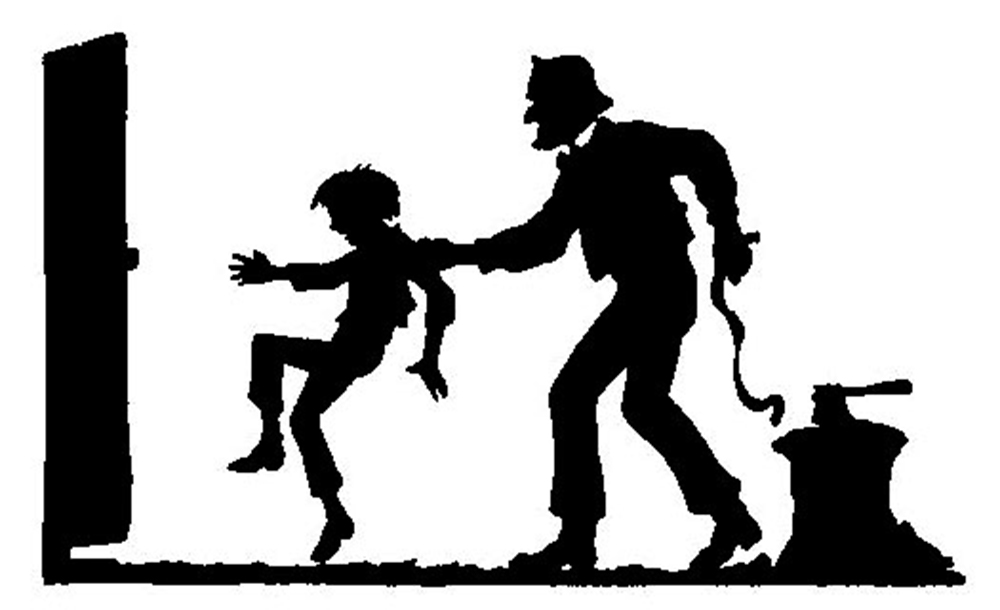
Shute, whose left leg was weak due to a childhood bout of polio, suffered the pangs of peer rejection like his fictional counterpart. He did not shy away from depicting the cruelty and bigotry of his fellow vandals. The boys often preyed on animals, the weak, and the elderly. They smoked corn-silk cigars, rang doorbells and ran, removed gates, overturned outhouses, started fires, set off fireworks, and poured “peppersass” into the cream cakes at the local bakery. Henry Shute, who had been a mediocre student as a boy, preferred the company of Exeter fellows to his Ivy League classmates. He did not excel at Harvard, preferring to spend weekends at home in Exeter with his pals.
A single paragraph from the 1905 Saturday Evening Post demonstrates why Shute’s writing is both lovable to some and forgettable to others. Plupy wrote to his friend:
“Fatty is going to have a party. most of the fellers are invited xcept me and the girls two. Fatty is mad with me because I told Tady that he said things about the paddys that got him a licking. Fatty will be sorry he dident invite me to his party. i woodent have went if he had invited me. i don’t care for his party ennyway. did you ever catch a bull frog with a peace of split bamboo. if you havent you dont know what fun is. i wood ruther do that than go to a party. i dont care for Fattys old party ennyway. When are you coming home. Wright soon. Yours very respectively, Plupy”
Most of Henry Shute’s writing revolved around his bad boy gang, culminating in a final book in 1929 entitled Plupy, the Wirst Yet. An armchair therapist might point out that Shute borrowed many of his bullying tales from his father and, in turn, teased his own son for being too proper and mannered. Shute’s characters rarely strayed from Exeter (sometimes called Elmtown), yet the author did flirt with other topics.
In 1907, he published A Profane and Somewhat Unreliable History of Exeter. An avid gardener, Shute chronicled his agricultural efforts in two minor classics entitled Farming It (1909) and The Real Diary of the Worst Farmer (1920). Among the best known passages from this “minor classic,” farmer Shute made this entry in his dairy diary: “June 3, 1910: Bought an air rifle known as a thousand-shot rifle. Not having a dog, I tried it on the cow at fifty yards.” Humor changes from generation to generation.
Shute also wrote briefly about his legal life in The Country Lawyer (1911). With income from his books, attorney Shute was reportedly lenient when it came to billing his own customers. In his early years as an Exeter lawyer, he wrote that his many clients fell into three categories: “those who wish to pay, but cannot; those who can, but won’t; and those who cannot and wouldn’t if they could.”
Like Twain and Aldrich, the lean, six-foot man retained a boyish appearance throughout his elder years. Never fond of school, church, or authority in general, Shute reportedly “swore like a pirate,” except in the presence of women. Even as the city judge, he retained a lifelong love of childish pranks and practical jokes, many of them harsh and verging on sadistic by modern standards. And it is in that very dichotomy that Shute best defines his birthplace. Exeter, at the turn of the last century, was an oasis of education at Phillips Exeter Academy. The private school was surrounded by a tough working-class Yankee village of farmers and factory workers scraping out a living. As lawbreaker and lawyer, both judge and juvenile delinquent, Henry Shute walked comfortably and humorously in both worlds.
For a man who came late to literature, the “Mark Twain of Exeter” left many books and more friends behind. At his death in 1943, during the worst of World War II, the town of Exeter closed schools and businesses to allow townsfolk to attend his funeral. One Boston newspaper obituary predicted that Plupy Shute “will go on living in American hearts, eternally, like Huck Finn and Tom Sawyer.” Not so, it seems. But he remains eternal in Exeter, at least, and hometown celebrity was good enough for Henry Shute.
SEE ALSO: The Kittery Kid
Copyright © 2014 by J. Dennis Robinson, all rights reserved.
 First Ladies Visit Wentworth by the Sea in 1948