


If miraculously granted a second lifetime, I might happily spend it studying the history of Old York. It might take decades to unravel the founding century of a town first named Agamenticus, then Bristol, then Gorgeana, before the name was changed to York, Massachusetts, in 1652. Some called it “Old York,” to distinguish the early village from New York. It became part of Maine, of course, along with the rest of the state in 1820. Heck, historians aren’t even certain where the name “Maine” came from.
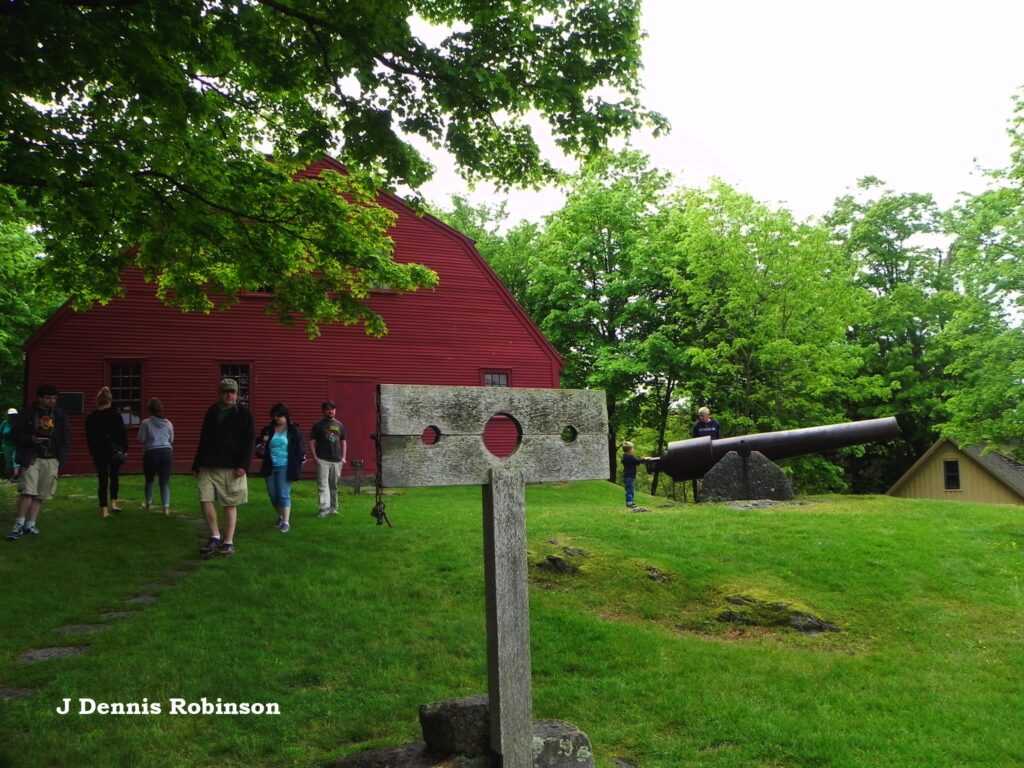
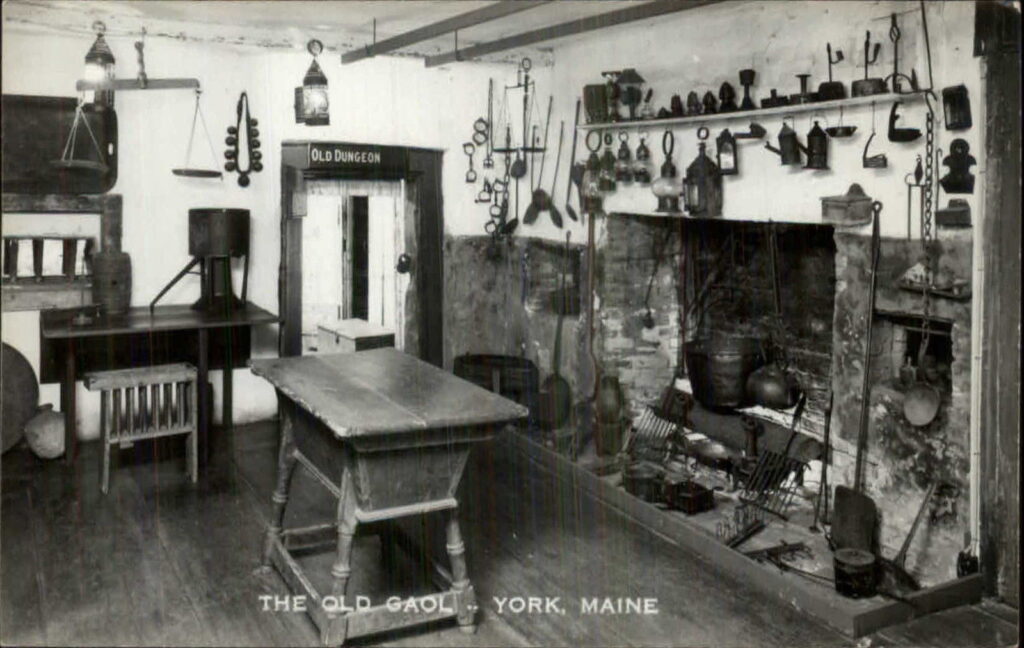
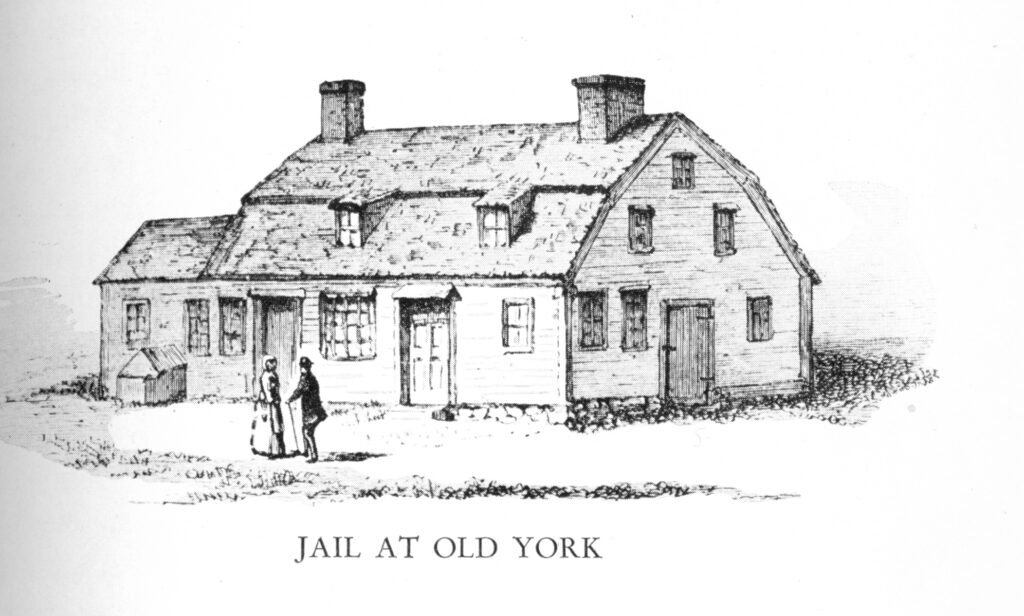
With that second lifetime unlikely, I visit the Museums of Old York as often as possible. The crude colonial prison cells inside the Old Gaol still generate a 17th-century vibe. For at least 100 years beginning in 1900, the colonial jail overlooking York Village was a grandmother’s attic of local artifacts. Now the best of those items, and treasures culled from the entire museum campus, are being studied and displayed.

Joel Lefever was on the scene at the opening day of “The Best of York” exhibit in the upstairs gallery of the new visitor center. Joel is the executive director, and this show is his baby. Over the last six months, he has culled through the Old York collection, pulled out some true gems, and immersed himself in their stories.
Joel is a furniture scholar. He grew up in Holland, Michigan, not far from Grand Rapids, the “furniture capital of the world.” He wrote his master’s thesis on the topic and was thrilled to find an important and largely unknown collection of furniture and other fascinating artifacts at Old York. A lot of the items, many donated in 1900 to create the Old Gaol Museum, had “lost their stories,” the curator says.
Everyone knows about exquisite furniture once made by Portsmouth craftsmen–or you should. Used copies of a gorgeous 1993 book, aptly titled Portsmouth Furniture, edited by Brock Jobe of Historic New England, is now selling second-hand for between $150 and $350.
“There is something about how the craftsmen designed things in Portsmouth that really set furniture apart from how they did in New York and other places. There was a delicacy, a vibrancy, that is just different,” Joel explains.
If Portsmouth was far from the hub of the action at colonial and revolutionary Boston, then rural Maine was the hinterland. So there is no book about York furniture makers. Not yet, anyway. But a close study of a cluster of locally-made furniture, seen together for the first time at this 2016 exhibit, may tell a different story.
The curator points to a handsome piece described as the “Great Chair.” Once exhibited at the Old Gaol, it is attributed to Thomas Donnell (1636-1698), a York fisherman who opened a woodturning shop in 1670. That was 20 years before the infamous “Candlemass Raid” by Native Americans in 1692. At least 200 locals were killed or captured, and their houses were burned.
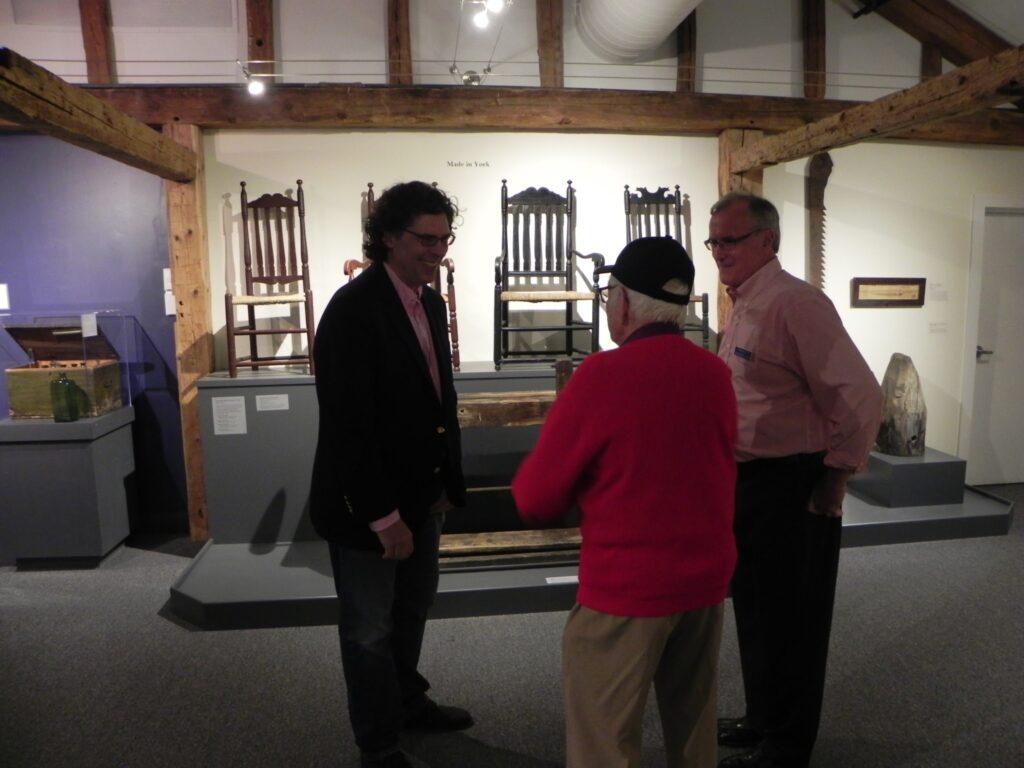
Descendants of the Donnells’ family still fish off the York coast at least 380 years after their patriarch, Henry Donnells, arrived in the New World. That is one heck of a lineage. Henry’s son Thomas and his son John carried on as woodworkers. In his research, Joel Lefever has identified a distinctive mushroom-shaped design–a flattened ball atop a cone– that he calls the “York finial.” The Donnells’ family ran their woodturning shop, turning out furniture with their signature finial, almost to the American Revolution.
This research links York to some of the earliest furniture craftsmen in the nation. Joel was telling me how important it is for Museums of Old York to rediscover the town’s history, and to “give back” to the community. Locals who donated artifacts get back stories.
Smack in the middle of our conversation, in walked members of the Donnells’ family. The curator darted over to greet them. It is their story, after all, that is at the heart of this new exhibition.
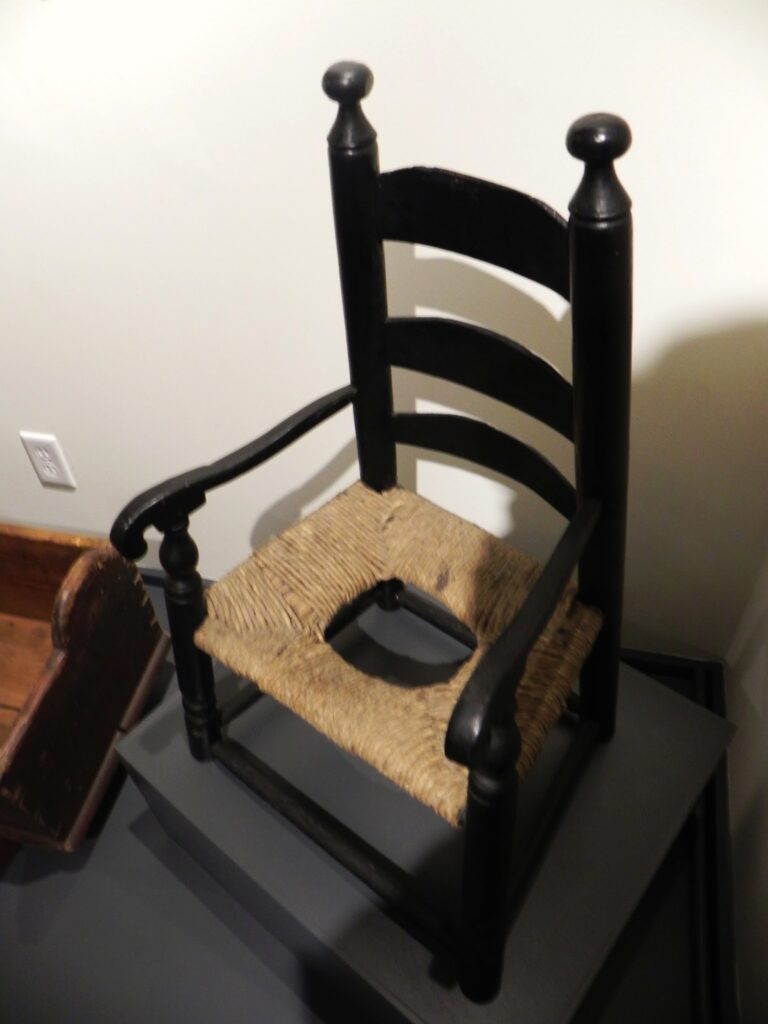
I wander over to a piece of furniture made around 1700 at the Donnells Woodshop. It bears their signature mushroom-cap finial. The child’s high chair has been painted black. It was reportedly owned by Rev. Samuel Moody, who came from Newbury, Massachusetts. An earlier Moody was the first minister at Portsmouth, while another Moody preached to the “heathen” fishing families at the Isles of Shoals in the 1600s.
I have an old book about the Moody family. So I knew that Sam Moody fought in the New England raid on Fort Louisbourg in Canada. Legend says Rev. Sam Moody handed his York ministry over to his son, Joseph Moody, as he marched off to Canada in 1745. The chair on display had been cut down, and a circular hole cut in the seat to create a “potty” chair for baby Joseph Moody, known to history as “Handkerchief Moody.”
Here, the story gets weird. Legend says that Joseph Moody had an unknown mental disorder or nervous condition. This disability forced him to turn his back to the congregation when he preached. To prevent people from seeing his sinful face, he reportedly wore a black veil covering all but his mouth at all times, a sort of 17th-century Batman. The truth, more likely, is that “Handkerchief Moody,” following the death of his wife, covered his face with a white handkerchief for a time. But he recovered and carried on his preaching in the customary fashion.
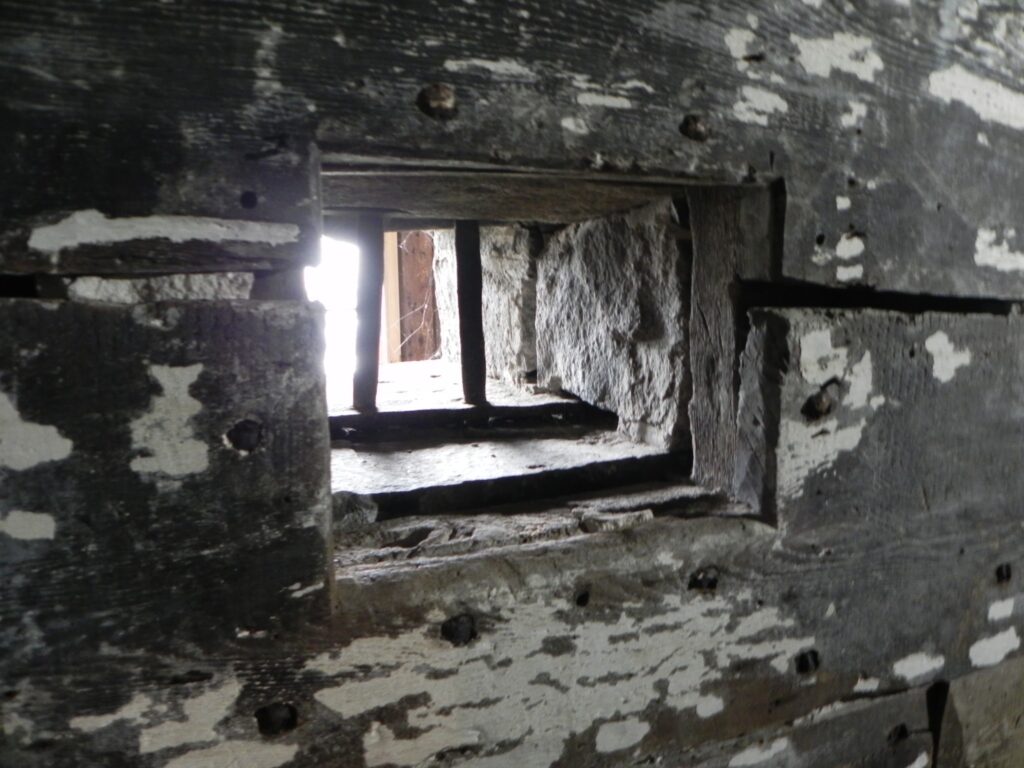
New England author Nathaniel Hawthorne, however, wasn’t satisfied with the facts. In his grim short story, “The Minister’s Black Veil,” (first published in 1836) Hawthorne wrote about a preacher who kept his face covered day and night. The minister in Hawthorne’s story is ostracized as townspeople gossip about the dark sin he must be hiding.
Like the Moody chair, each item in “The Best of York” exhibition tells a story. And in York, the early stories are often dark and strange. That is not what the town’s founder, Sir Ferdinando Gorges, had intended. Like Captain John Mason, the “founder” of Strawberry Bank in New Hampshire, Gorges intended his colony to function like a medieval kingdom. He wanted to make a profit, but he also imagined a population of happy, productive, fun-loving settlers.
But Gorges and Mason both died without ever seeing their New England colony. Their feudal plantations were financial failures. The profitable Royalist plantation that Gorges envisioned was taken over by dour Massachusetts Puritans, and all but wiped out by Indian raids. Thomas Morton, exiled from Massachusetts by the Pilgrims of Plymouth, is buried somewhere in York.
The Native American servant, Patience Boston, was executed at York in 1735 for the murder of a young boy. She spent time in the Old Gaol, and her story was written by none other than Samuel and Joseph “Handkerchief” Moody.
Rev. Shubael Dummer, who founded the First Parish Church of York, was killed in his own doorway by Natives as he was about to mount his horse to visit a sick parishioner in 1692.
Some say that Passaconaway, the beloved Pennacook sachem, is buried atop Mt. Agamenticus in York. He certainly is not, but the legend binding York to the peaceful Indigenous leader remains.
See what I mean? York’s dark history offers a cast of largely unknown characters. Their stories rise up from the earth with each intriguing artifact.
Copyright © 2016 by J. Dennis Robinson, all rights reserved.
 York Museum Has Come a Long Way Since 1901
Leave a Reply