




Most of what we know about poet Clara Anetta Lynn comes from her 1929 obituary in the Portsmouth Herald. A lifelong resident of the city, “Aunt Clara” was a woman of “high ideals and kindly nature” and “no little literary talent.” Lynn was nearly deaf in a town where struggling or eccentric poets were often praised and published by admiring patrons.
Clara Lynn attended church regularly, but could not hear the services. In later years she could make out the words to sermons, news, and shows played loudly on the radio. An avid reader, never married, she was enthralled by romantic tales of Portsmouth history. These stories were often the inspiration for her bouncy rhythmic verses. Her books, two in prose and three in poetry, appear to have been supported by the kindness of friends and fans.
Fame at last
Lynn was 21 when her only novel, Marion’s Day-Dreams, appeared in 1880. Four decades later she made headlines again when her patriotic poem, “Portsmouth by the Sea,” was selected as the official lyric to the city’s 300th anniversary song. Sung to the tune of “Columbia, the Gem of the Ocean,” Lynn’s poem was published as sheet music to be performed on parlor pianos and by school children across the city.
Old Portsmouth, God made you an altar,
Where men laid their wealth and their life,
Gave all they possessed to defend you,
Endured war, privation, and strife.

Suddenly famous within the city limits, Lynn produced four of her five books in the last decade of her life–Poems of Ye Olden Times (1923), Days of Auld Lang Syne (1927), and Poems about Portsmouth (1929). Her poems dramatized, for instance, the myth of the USS Ranger flag, a dance aboard Old Ironsides, a ghost at St. John’s Church, the groom who abandoned Margaret Sheafe, and the upturned canon at the door of the Portsmouth Athenaeum. She told tales of the Moffatt-Ladd House, the Tobias Lear House, the Old Steam Factory, the Liberty Pole, the Plains Tavern, and many other historic sites.
“A friend has gone, not easy to replace,” an anonymous admirer wrote after Clara Lynn’s death. “In the history of Portsmouth, particularly in colonial houses, she received inspiration for her best work.” A lover of children and flowers, Clara Lynn’s deathbed wish was that her friends be rewarded in heaven for their efforts to prevent cruelty to animals.
An inspired invalid
James Kennard Jr. wrote one book. A collection of his essays and poems appeared two years after his death in 1847. Privately printed by his friends the leather-bound Selections from the Writings of James Kennard, Jr. is extremely hard to find today, but available online at Google Books.
Similar vanity books of this era are often painful to read. Published out of sympathy or to raise funds for an invalid writer, they tend to be cloying, self-pitying volumes filled with badly written religious poetry. James Kennard, however, was the exception to the rule. His poems are often lively, original, and well-crafted.
His thrilling “Ballad of Jack Ringbolt,” for example, centers on a dying Portsmouth sailor. Born at sea, the ancient sailor begs his comrades not to bury him in the earth. Honoring his request, his friends sew Jack Ringbolt’s corpse into his own hammock, weighed down by 42 pounds of lead. Rowing the body to the mouth of the Piscataqua River, they toss it overboard where Jack sinks into 20 fathoms of dark swirling water. The sailors are stunned when the flaming corpse of Jack Ringbolt rises to the surface and, propelled by unseen forces, speeds out to sea and disappears beyond the horizon.
A life of constant pain
Although an avid reader, young Jim Kennard was more active than studious. His father, a ship captain, was often away from home. At 15 James took a job as a junior clerk in a local drygoods store, but within a year his right knee grew stiff and lame.
James traveled south to Florida and South Carolina in hopes that warmer weather was a cure. Disgusted by the institution of slavery he observed in the South, Kennard later published an essay in which he proposed that African Americans were “our only truly national poets.” The southern climate seemed to help, but when he returned to Portsmouth, the pain in his leg grew worse.
While a patient at Massachusetts General Hospital in 1837, James and his doctor decided that the only release from constant pain was to remove his leg. “He then took his last walk with the doomed limb,” Kennard’s biographer wrote, “and quietly submitted to the knife.”
There was a brief respite, even a burst of hope. After returning to Portsmouth, James decided to become a doctor. To be “useful” to society, he contributed weekly essays and poems to his friend Charles Brewster, editor of the Portsmouth Journal, but always under a pseudonym.
Then his left leg went lame and the devastating pain returned. James lost the use of his elbows and wrists. He became so sensitive to the pain that he could no longer ride in his “wheeled chair” or be carried up and down stairs at home. Confined to his “couch of pain” he read, consumed volumes of literature, and wrote. With only the use of two or three fingers in his right hand, he wrote essays and poems and letters and prayers — until his eyes went.
First one eye, then the other became so sensitive to light that the young author had to live in almost total darkness in his upstairs room. Friends helped out willingly, his mother and his sister too, reading and transcribing his work. And then it was his ears, stinging so badly that any voice above a whisper was like the crash of the North Church bell. The sound of carriages passing by on the street below was almost more than he could bear. “To see how I live,” he wrote to a friend, “Just shut up your eyes, chop off your hands, and try it.”
Slipping into darkness
By 1845, Kennard was so crippled that his body, according to a witness, was “almost immovable as if carved out of a rock.” Two years before his own death, James’ mother died and his father grew constantly ill. The crippled poet, wracked with seizures, coughing and inflamed joints, and unable to move or feed himself, was left to the care of his sisters and friends — and to an ever-faithful nurse. Among his poems is a loving ode “To Nancy.” In reality, Nancy Sherburne was an elderly unschooled cook who became a godsend to the dying poet. Unitarian minister Andrew Peabody described Nancy reverently.
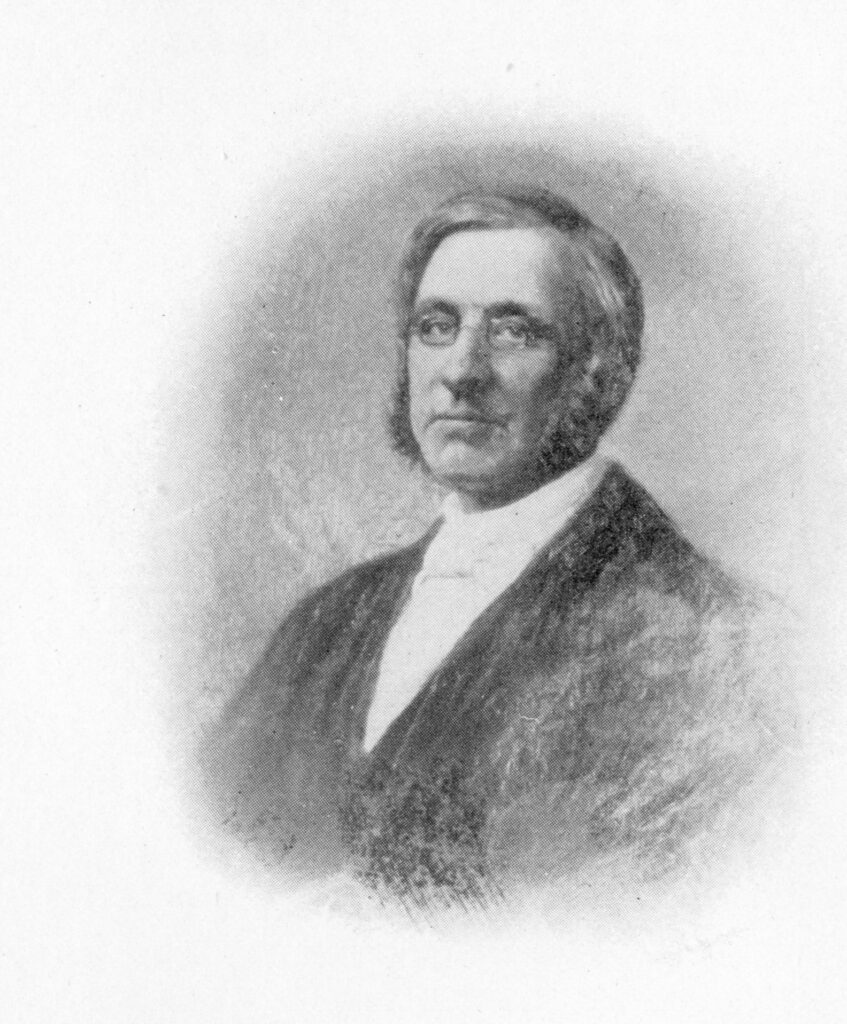
“She lifted him as if he had been an infant, and with a grasp as gentle as it was firm. There were frequently times, when even the adjustment of his pillows by a less skilful hand than hers would have given him excruciating torture, and the hour- long process by which alone he could be conveyed from his bed to his chair, a process as delicate as if his frame had been strung with threads of glass, demanded more than a common man’s strength, and all of a woman’s love.”
To the astonishment of all, no matter how difficult life became, James Kennard never complained. His darkened room was constantly filled with friends who came, one wrote, not out of sympathy, but to be uplifted by his conversation and wit and unflagging optimism. Refusing to dwell on his own condition, James kept abreast of his friends’ activities and offered endless encouragement and advice. Despite a stabbing pain in his one remaining eye (as if the “socket was filled with red hot iron”) he would ask to have his shade lifted so he could see the face of a visitor.
“Yet we have never known a happier person,” Rev. Peabody wrote. “A word of discontentment, murmuring, or repining never escaped him. His countenance, though thin and wan, bore no trace of grief or care, but to the very last wore an expression, not only of serenity, but even of joyousness”
On the morning of July 28, 1847, after years of unspeakable agony, poet James Kennard, Jr. of Portsmouth enjoyed a few blissful hours without pain. Then at age 32, he died peacefully.
“Annie,” he told his sister shortly before his death, “I have been very happy and am glad to live, but this is buying life hard.
Rev. Peabody described his friend this way: “Never did the spirit achieve a more entire conquest over the body. Never can the independence of the soul on the mortal frame have been more fully manifested. Never can more of heaven have been witnessed on earth.”
Copyright © 2017 by J. Dennis Robinson, all rights reserved.
 The Abduction of Mehitable Goodwin
Leave a Reply