



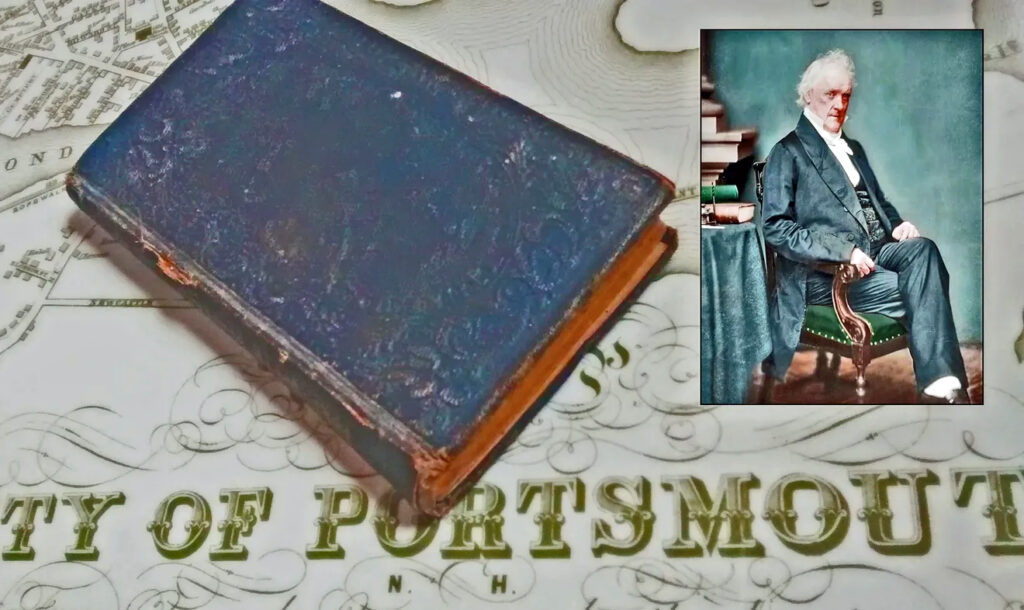
Turn the Wayback Machine dial to 1860. James Buchanan Jr., considered among the worst U.S. presidents, is on his way out. Slavery is legal. Southern states have begun to secede. The administration of Abraham Lincoln and the start of the Civil War are on the horizon.
Meanwhile, back in sleepy little Portsmouth, NH, the latest City Directory is hot off the presses. The 1860 Portsmouth Directory reads like a telephone book before telephones. It lists the address of every resident and business by street, and then again alphabetically. The fragile pocket-sized volume also includes a summary of local clubs and organizations, a directory of Portsmouth vessels and city officials, the latest town ordinances, and a smattering of advertisements.
Publisher Charles W. Brewster was the longtime editor of the Portsmouth Journal newspaper. The first volume of Brewster’s collected essays on local history, “Rambles About Portsmouth,” (1859) is arguably the most important book about the city ever produced. There had not been a city directory since 1856. “While no pains have been spared to make the Directory correct,” Brewster wrote in his 1860 introduction, “it will not be surprising to find errors in a work where they can so easily creep in.”
I had not opened my delicate copy of the directory until today. As I did, both front and back covers fell off in my hands. The city had passed many new ordinances since the 1856 edition. Here, summarized by yours truly, are three updated regulations from 160 years ago. We can assume that these helpful regulations are still on the books. Any Portsmouth residents who break these rules are subject to heavy fines of up to ten dollars that will be collected by the City Marshal.
(1) Occupants of buildings are required by law to clear the sidewalk in front of their establishment and to spread sand, salt, or ashes “to prevent the same from being dangerous.”
(2) No person shall erect a swine pen or privy over the South or North Mill Ponds, or anywhere that will cause “offensive substances” to be discharged or drained into either salt pond.
(3) Firemen may not charge individuals for their services.
(4) And no one is permitted to bury a person in a city cemetery on a spot that requires a previously buried body to be removed.
Copyright 2020 by J. Dennis Robinson
 An Open Heart Vintage Valentime