

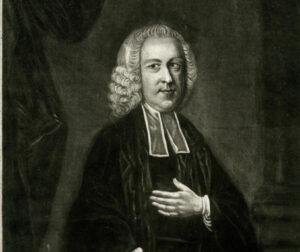
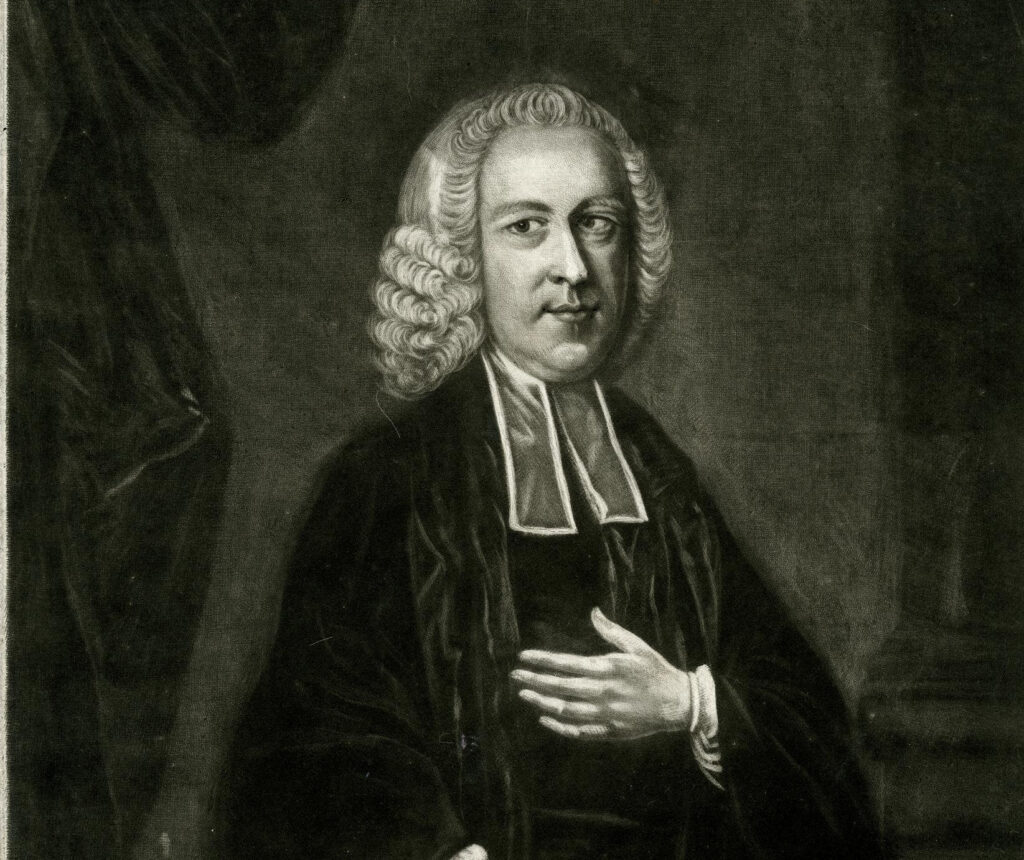
The debate is building. Was Rev. George Whitefield (1714-1770) our “forgotten founding father” who paved the way for a democratic United States? Was he America’s first celebrity and the greatest Christian evangelist since the biblical Apostle Paul? Or was he a kindly workaholic and a talented actor, addicted to celebrity?
Arguably the most famous man in mid-18th-century America and the United Kingdom, Whitefield denounced corrupt and lazy religious leaders. Initially banned from preaching in churches, the English-born evangelist took his dramatic ministry to the public in open fields, courtyards, and marketplaces. Gesturing wildly, weeping openly, and with a voice like a lion’s roar, Whitefield, the reformer, exhorted crowds to “Come to Jesus” and be born again. As a key figure in the First Great Awakening of religious fervor, he made seven transatlantic trips to America and reportedly preached 18,000 sermons.
“I had never heard of this guy,” conservative talk show host Glenn Beck said on his Fox News show Founder’s Fridays. But after studying up on George Whitefield, Beck concluded: “There probably wouldn’t have been a Revolution if it wasn’t for this guy…He’s the guy who taught America — stand up for yourself as an individual.”
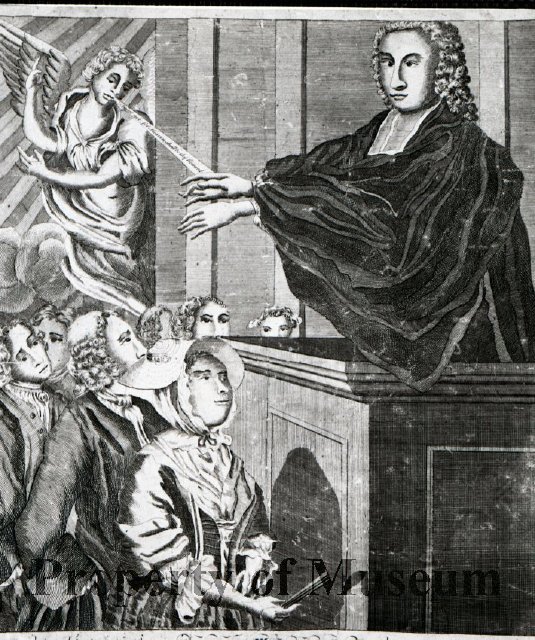
The 21st century revival of Whitefield among Christian conservatives is often linked to Benjamin Franklin who observed and admired the itinerant preacher. “He is a good man and I love him,” Franklin once wrote of Whitefield. But Franklin was never a convert.
While Whitefield was undeniably pious and enormously philanthropic, he was no revolutionary. As he matured, Whitefield recanted his attack on traditional Christian churches and apologized. As early as 1744, he made it clear that he was not a “separatist” and would never set up his own church. Whitefield also made it clear in letters to church leaders that he was a “zealous friend” of King George. When he spoke to thousands of spectators, Whitefield reminded American viewers to be obedient to the Crown. Like many contemporaries, Whitefield ridiculed Catholicism as “mere superstition” and prayed that members of the Jewish faith would find their way to Jesus. While claiming that Africans might also have souls, Whitefield lobbied in favor of southern slavery and advocated for the Christian conversion of all “infidel” Native Americans.
The end is near
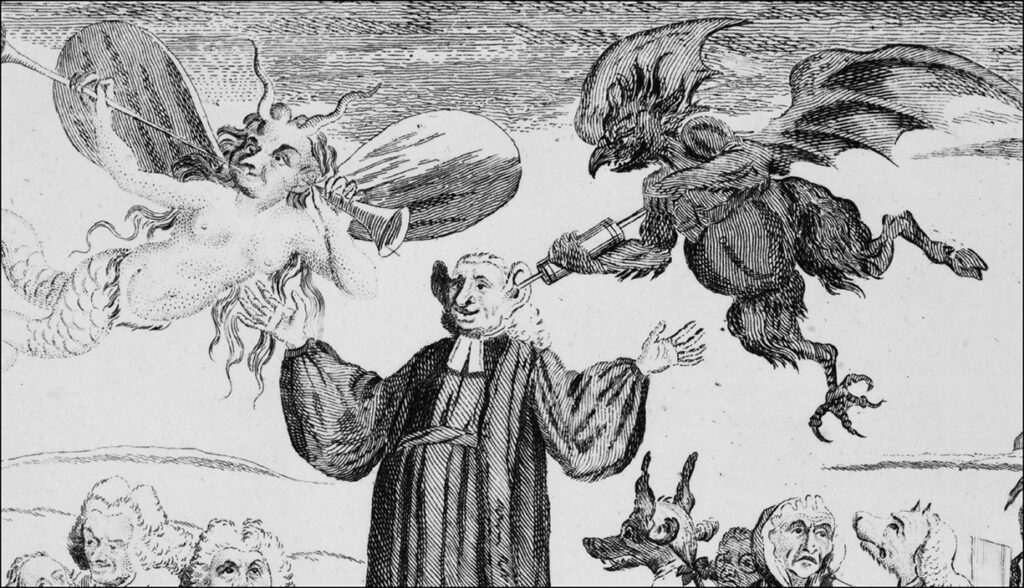
Constantly travelling by horse or carriage in all weather, George Whitefield was plagued with periods of poor health. He was dispirited by detractors who sprayed his followers with water, urinated at them, and threw rotten eggs and dead animals. He was lampooned in the press as the quack “Doctor Preachfield” and, because he was cross-eyed, satirized on the London stage as “Dr. Squintum,” an agent of the devil. Whitefield was seriously beaten by thugs twice.
By his final trip to America in 1769, the preacher looked older than his 55 years. Benjamin Franklin offered to put him up to recuperate at his Philadelphia home, but on condition that Whitefield not attempt to save his deist soul. The invitation “was not for Christ’s sake, but for your sake,” Franklin told his dying friend.
But Whitefield would not slow down. Briefly “blessed with bodily health,” he traveled to Georgia, where he had founded an orphanage three decades earlier. He continued to preach daily while en route to Philadelphia, New York, and Boston. It was during this last New England tour that Whitefield converted 22-year old Benjamin Randall from New Castle, NH. Randall went on to found the Freewill Baptist denomination, now centered in Tennessee and claiming 300,000 members in 40 states.
By mid-September 1770, Whitefield was preaching again in the seacoast region. Crowds were large, protestors were scarce, donations were generous, and most churches welcomed him indoors. Then, while preaching in Newbury, MA on September 17, Whitefield wrote to a friend: “I was taken in the night with a violent flux.” A serious asthma attack forced him to return to Boston to recover.
But days later he was back in the seacoast, preaching in Kittery, York, and giving four sermons in Portsmouth for ministers Rev. Samuel Haven and Rev. Langdon. Whitefield was deathly ill when he left Portsmouth on horseback Friday with plans to preach on Sunday at Newburyport, MA, before moving on to Haverhill.
Another Whitefield convert, Rev. William Rogers, begged his longtime friend to stop at Exeter en route. Rogers had been an early convert, establishing his church in Exeter following Whitefield’s first visit in the early 1740s.
“Sir, you are more fit to go to bed than to preach,” an observer told Whitefield as he prepared for the 15-mile ride to Exeter. The minister clasped his hands together and replied in prayer, “Lord, Jesus, I am weary in my work, but not of my work.”
Legend says that it was in Exeter during Whitefield’s earlier visit that a man came to his sermon with a pocket full of stones. But the protestor was so moved by the dramatic preacher from England, that the stones fell from his hands. “I came here today with the intention of breaking your head,” the man later confessed to Whitefield, “but God has given me a broken heart.”
This time, however, the famous evangelist was too sick, at first, to speak at all. On Saturday afternoon, September 29, the preacher with the “thin visage” and “decayed body” could only rise from his seat at the pulpit and stand in silence in front of a large crowd. “The spirit was willing,” one Exeter observer later wrote, “but the flesh was dying.” A stone marker in his honor stands today in Exeter.
Eventually, Whitefield spoke. “I have outlived many on earth,” he told those gathered for what would be his final sermon, “but they cannot outlive me in heaven…I shall be in a place where time, age, sorrow, and pain are unknown.”
Within a few hours, Whitefield’s words would turn prophetic. “Death had let fly his arrow, and the shaft was deeply enfixed,” the Exeter observer wrote.
On to Newburyport
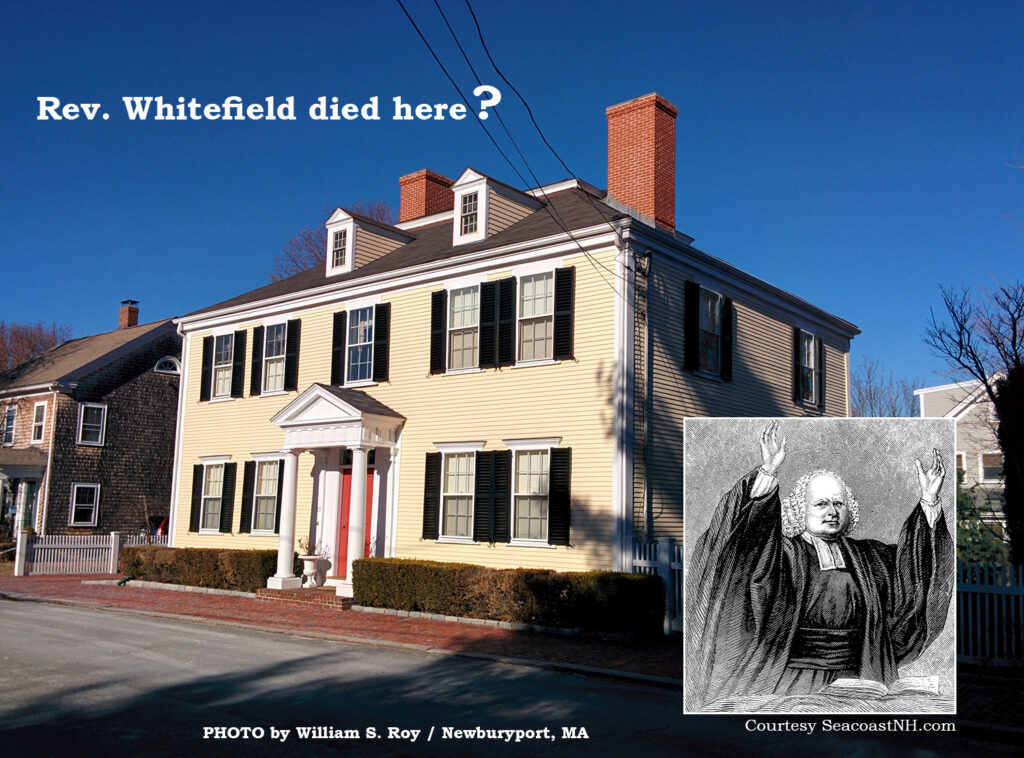
Whitefield dined with the Gilman family in Exeter and, accompanied by another convert named Jonathan Parsons, made his final journey to Newburyport, just over the Massachusetts border. At the parsonage of the Old South Church, Whitefield ate and spoke very little. Another popular legend tells us that, on retiring to bed early, Whitefield found a large gathering of admirers at the bottom of the stairs. They begged him to speak. He stood on the stairs with a lamp in his hand and addressed those present. In another version, holding a candle, Whitefield spoke until the candle had burned itself out.
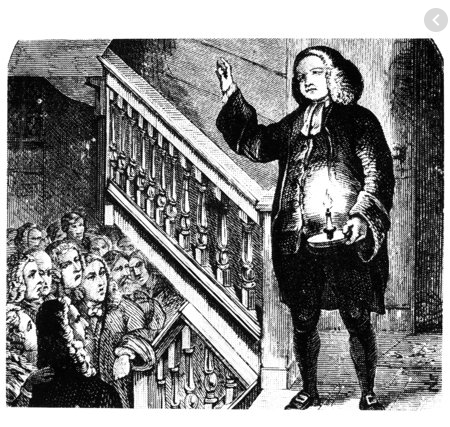
A friend from Boston named Mr. Smith accompanied Whitefield on his seacoast journey and recorded his last hours. At the home of Rev. Parsons, Whitefield slept fitfully, waking for sips of gruel, cider, and lavender water. His asthma bothered him, he told Smith, and he needed two days’ rest before he could preach again. Awake at 4 a.m., Whitefield told Parsons, “I am almost suffocated,” and went to the open window, gasping for air.
“I am dying,” Whitefield finally said, but Parsons held out hope until the doctor arrived. After feeling Whitefield’s clammy hands and weak pulse, the doctor said, “He is a dead man.” Although he breathed his last at 6 a.m., the men tried for another hour to revive the preacher. In the morning, hearing the news, crowds gathered outside the parsonage. Elders from the First Presbyterian Church held a prayerful wake, many recounting tales of Whitefield’s unique and dramatic open-air preaching.
Henry Sherburne of Portsmouth sent the influential Rev. Samuel Haven to Newburyport with an offer to bury George Whitefield at his family crypt in New Hampshire. A delegation from Boston made a similar offer. The situation briefly grew tense, according to a Boston newspaper, when the people of Newburyport refused to allow the corpse to be taken away.
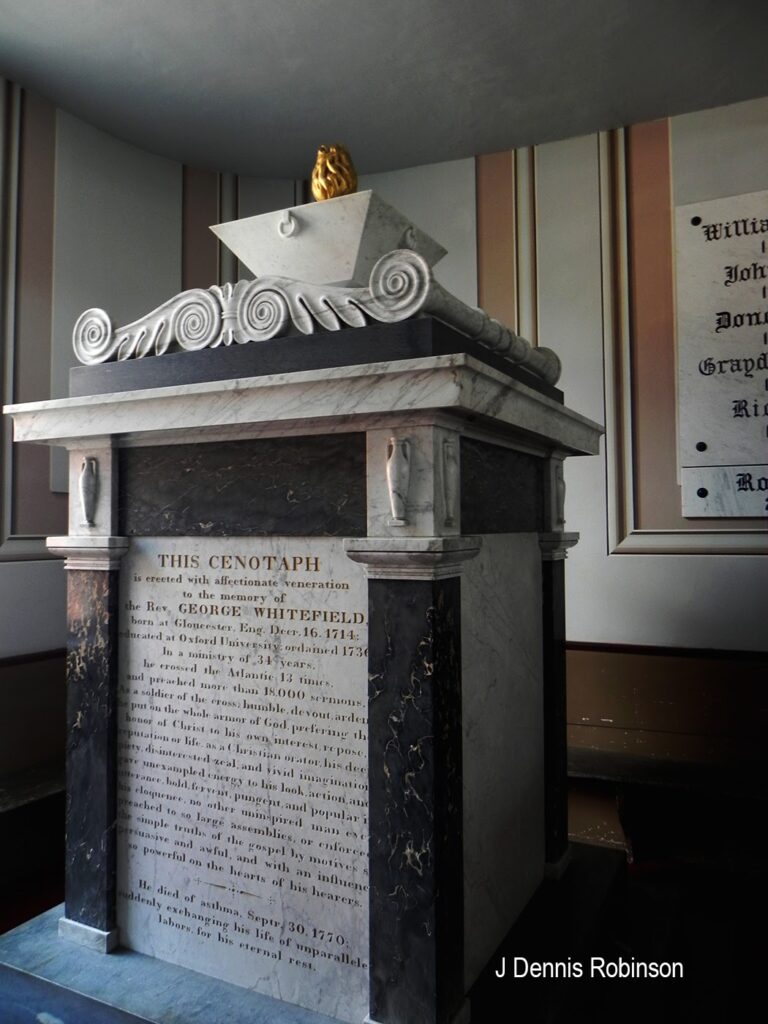
Whitefield was buried in a crypt beneath the pulpit in the Old South Church where his friend Rev. Parsons presided. He remains there still, although his body has gone to dust and the original crypt has been renovated and moved slightly. Among the early pilgrims to the tomb was future vice president Aaron Burr, whose father had been a supporter of Whitefield. Whitefield was buried in his gown, cassock, wrist bands, and wig. A young Burr, along with Benedict Arnold and other soldiers, stopped to pray over the bones of Whitefield on their failed expedition to overthrow Quebec in 1775. Curiously the group reported finding little of Whitefield’s body remaining just five years after his death. They took portions of his cloak and wristbands from the casket as souvenirs.
Yet in story after story, through the early 1800s, penitents solemnly viewed Whitefield’s bones. Rev. Parsons and another Presbyterian minister were later placed in coffins flanking Whitefield in the crypt. Thousands of visitors toured the crypt in the decades after Whitefield’s death. In special cases, the church sexton would leave the lid of Whitefield’s casket ajar. Visitors reported removing and handling the preacher’s skull that one delegate described in 1834 as “perfect, clean, and fair.” An overly enthusiastic tourist stole “the main bone of Whitefield’s right arm” and shipped it to a friend in England. Horrified by the sacrilegious act of his friend, the Englishman returned the bone to Old South Church in a box still n display. The recovered bone was carried in a parade and ceremoniously placed back in the coffin.
In a report published in London in 1845, a curious tourist to New England asked to see the room in Newburyport where Whitefield had died. (The house is privately owned today.) The sight-seer then visited the crypt at Old South Church. “That is the man,” the sexton said, lifting the coffin lid. “For all I knew,” the observer wrote, “the heap of dirt, the skull, and the loose bones, might have been anyone else’s.”
Anglican minister J.C. Ryle wrote in the late 19th century that “nothing makes the little town where he died so famous as the fact that it contains the bones of George Whitefield.” To locals, probably not. Whitefield has finally found his way onto the list of historic sites at the Newburyport Chamber of Commerce. But the average resident of Portsmouth’s sister city may have no clue that the superstar of the First Great Awakening is entombed there.
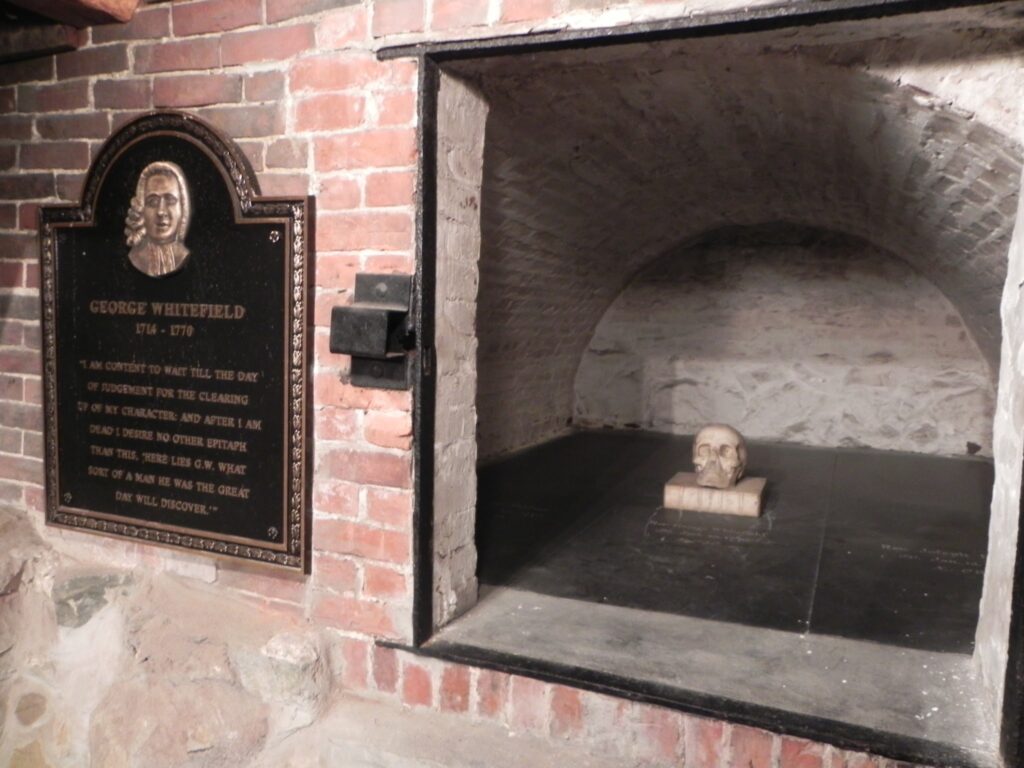
Still thousands of the faithful, often from southern states, find their way to the crypt beneath Old South Church, where a plaster copy of Whitefield’s skull stares out from what looks like a brick pizza oven. Meanwhile, the late “Dr. Preachfield” is being quietly reborn as an icon among Libertarian politicians and fundamentalist Christians who fear that modern “deconstructionist” historians spend too much time on the “negatives” of American history — like slavery and the treatment of Native Americans. So was Whitefield really the “spiritual founding father” of the American Revolution? The answer, increasingly, depends on whom you ask.
Copyright © 2015 by J. Dennis Robinson, all rights reserved.
 Zen and Danger: Sculling on the Piscataqua