


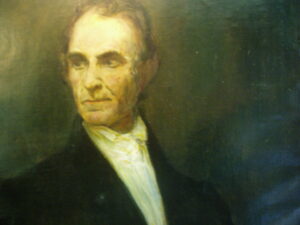
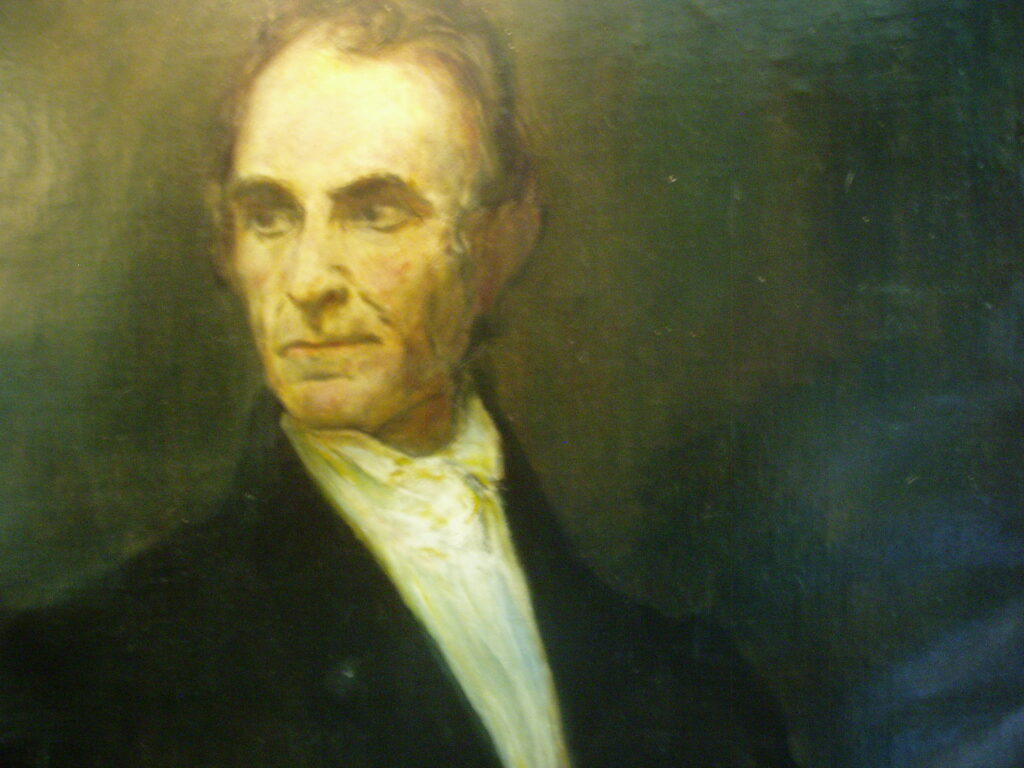
NOTE: Couldn’t love the two Whittier House museums more. This essay followed a visit to Amesbury, MA in 2012.
John Greenleaf Whittier is dying again. When he died the first time in 1892, Whittier was an American idol, one of the best-read, most-loved poets in the nation. The author of “Snow-Bound” and “Barbara Fritchie,” “Maud Muller,” and “The Barefoot Boy” was a household name. But that famous name, like the romantic poetry of his era, is fading fast.
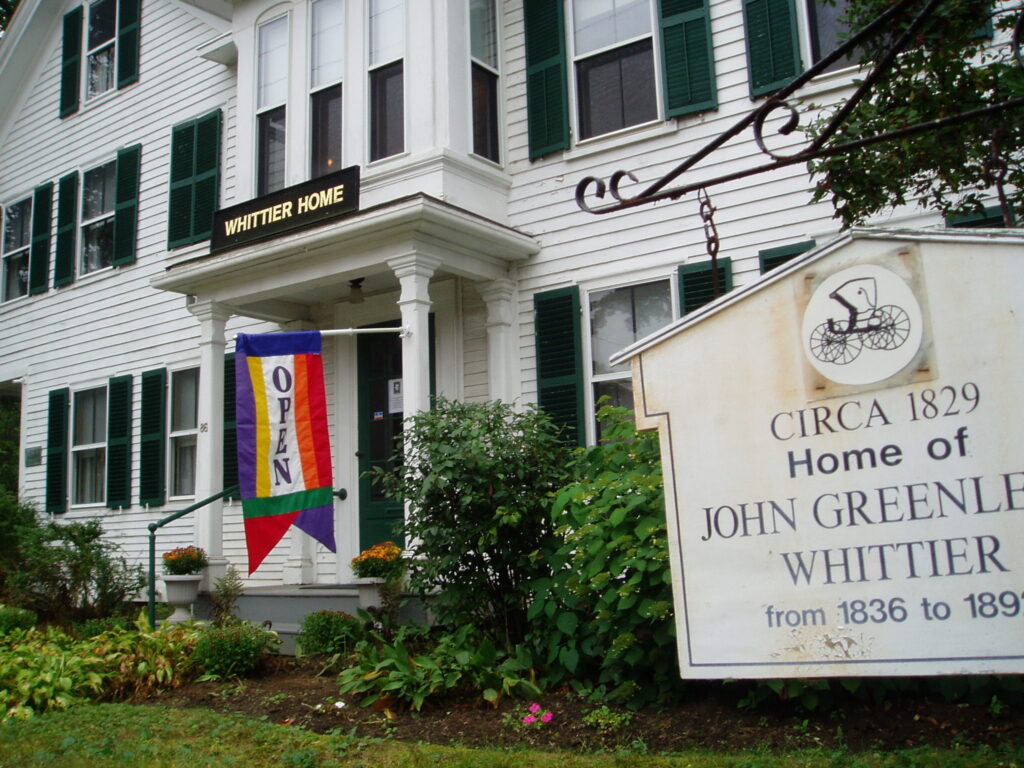
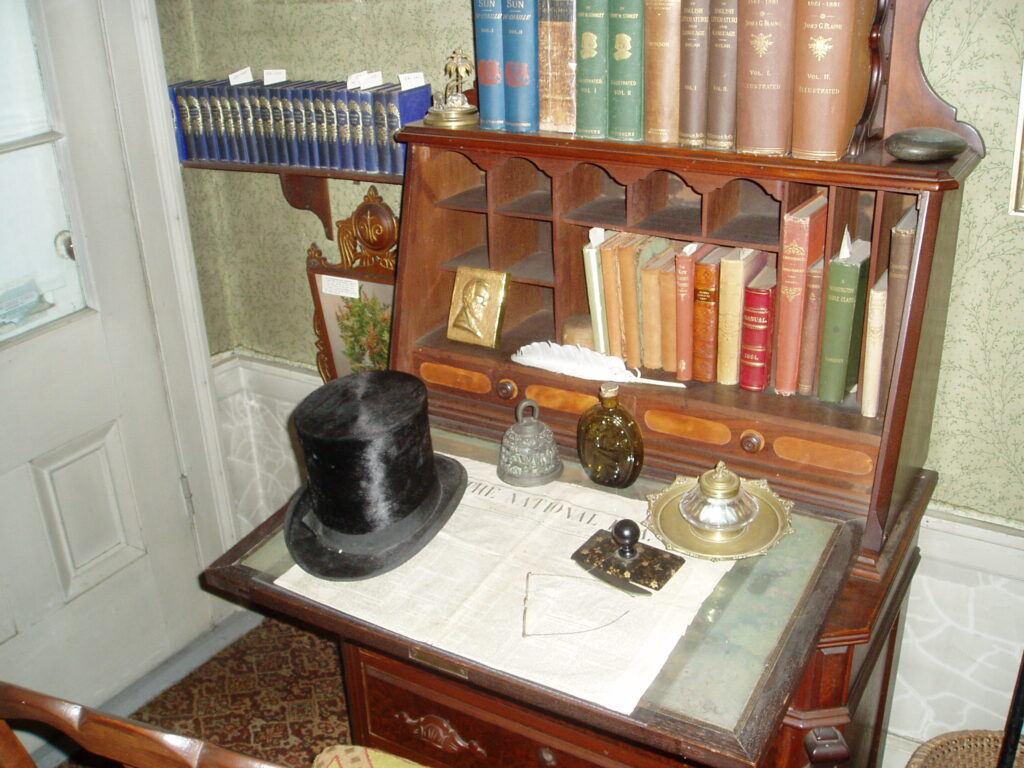
An estimated 5,000 mourners passed by Whittier’s open coffin in the parlor of his home on Friend Street near the Quaker church in Amesbury, Massachusetts. The room is just as he left it. His wire-rimmed glasses and ink bottle still lie on the tiny drop-leaf desk that seems too small for the lanky poet. His precious books, many inscribed by the most famous English and American authors of his day, are still in place, as are the portraits hung against the worn and somber wallpaper.
Tea at Mr. Whittier’s
“The wallpaper and carpeting were installed in 1847,” a guide at the Whittier Home tells us. We have come, a friend and I, to talk about Whittier’s deep connection to the New Hampshire seacoast and the Isles of Shoals. “Mr. Whittier liked to lie down on that couch for a little nap,” the guide tells us. “But he always left his hat near the side door so that he could slip out if he saw someone coming.”
Few American literary shrines feel more authentic. Whittier’s walking stick and boots are propped behind an ornamented Victorian wood stove. There is no escaping the feeling that the once popular New England abolitionist, newspaper editor, and author is just about to step in from the hallway carrying a cup of tea, squeeze into his familiar alcove, and settle back to work.
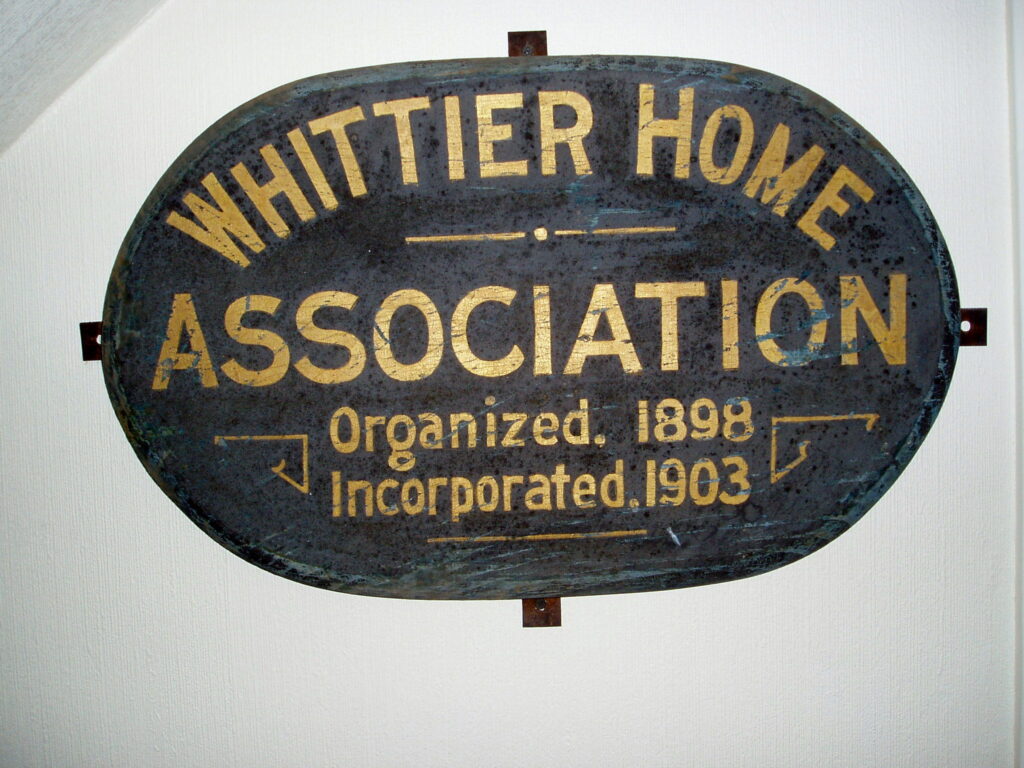
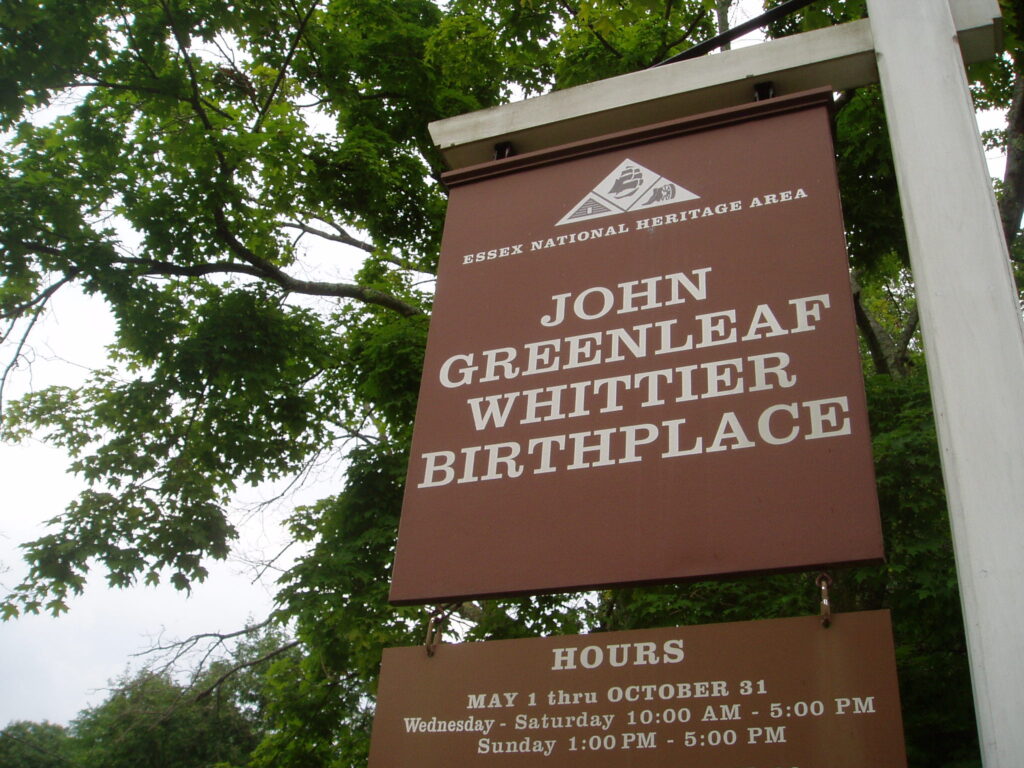
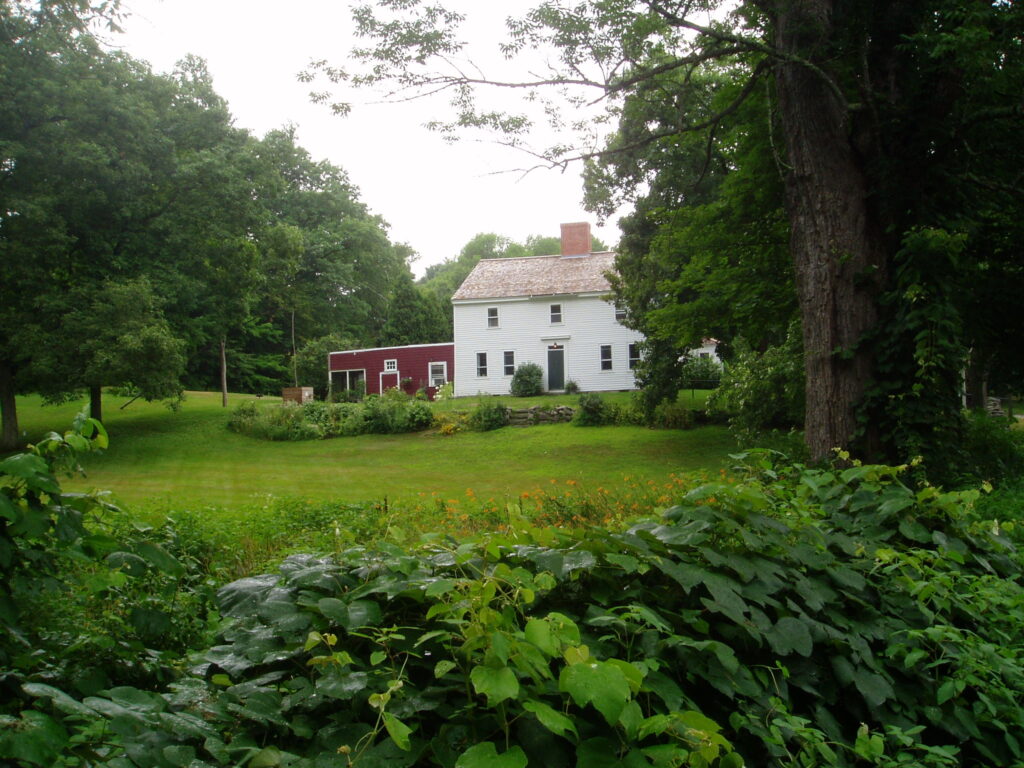
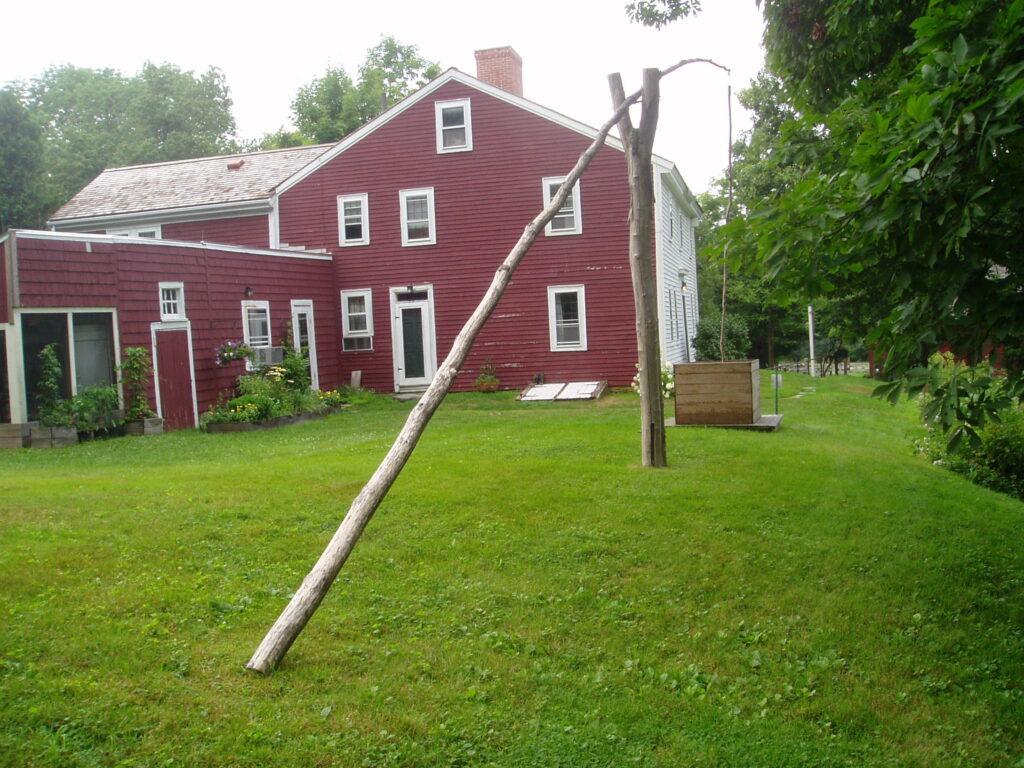
The “ladies” of the Whittier House don’t have meetings, they have teas. We were supposed to give our talk in the garden that had been meticulously groomed for the event. But rain and thunder forced as many as 50 guests to squeeze into the largest of the small rooms in what is now a museum. The “ladies” had sett up a picture-perfect table of cucumber sandwiches and cookies on silver trays in what was once the bedroom of Whittier’s mother. The bachelor poet lived 53 years in the Amesbury house, nursing his mother and sister whose portraits still hang on the walls. Whittier was born in nearby Haverhill where the beautifully pastoral Whittier Homestead has also been preserved as a museum.
Mourning the master
On September 10, 1892, Amesbury was draped in black. Church bells rang and schools closed. After viewing Whittier’s corpse, members of the funeral party filed into the back garden. Portsmouth poet Celia Thaxter was among the grieving members of the crowd, as was author Sarah Orne Jewett of South Berwick. An astonishing photograph shows them squeezed in among hundreds of mourners who filled every inch of the garden for the memorial service.
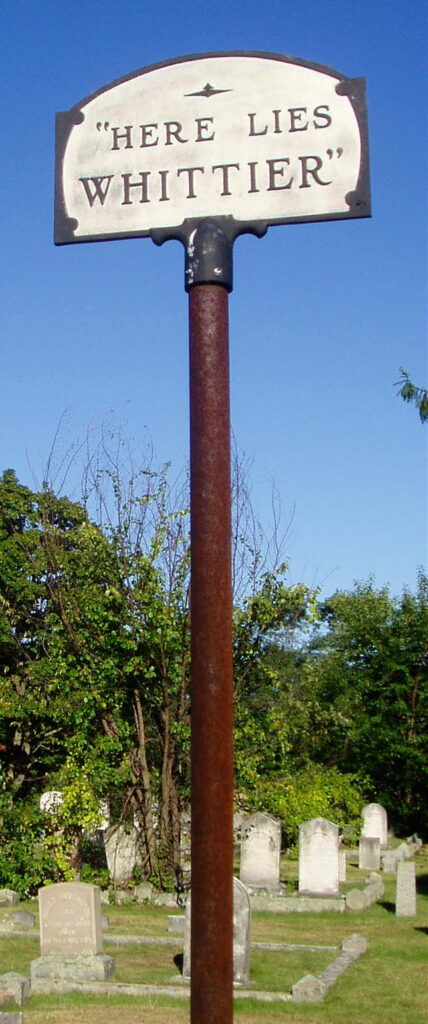
It was James T. Fields of Portsmouth, later a successful Boston publisher, who made Whittier wealthy. An editor and staunch abolitionist in his early years, Whittier didn’t become a bestselling author until “Snow-Bound” appeared at the end of the Civil War, turning him into the Victorian equivalent of a rock star. An enthusiastic traveler, Whittier often visited the White Mountains and the Isles of Shoals.
As an advocate of women’s rights, he mentored a host of female writers, including Annie Fields, Edna Dean Proctor, Lucy Larcom, as well as Ms. Thaxter and Ms. Jewett. He pushed them to become published poets in a male-dominated field. He corresponded with them, encouraged them, and critiqued their work. It was Whittier who, as early as 1864, was pressing Celia Thaxter to write her most enduring work, Among the Isles of Shoals. And Whittier, in turn, transformed many of the local legends he learned from Celia into popular poems about devils, witches, and ghosts.
Whittier’s folksy poems of rural family life, both moral and patriotic, became especially poignant as America throttled forward into the hi-tech twentieth century. His nostalgic tales of “Tenting on the Beach” in Hampton, or stopping by a South Berwick spring for a drink of fresh water in “Maud Muller”were reminders of simpler less hectic days. School children memorized his poems. Monuments and plaques appeared in towns throughout New England where Whittier set his poems.
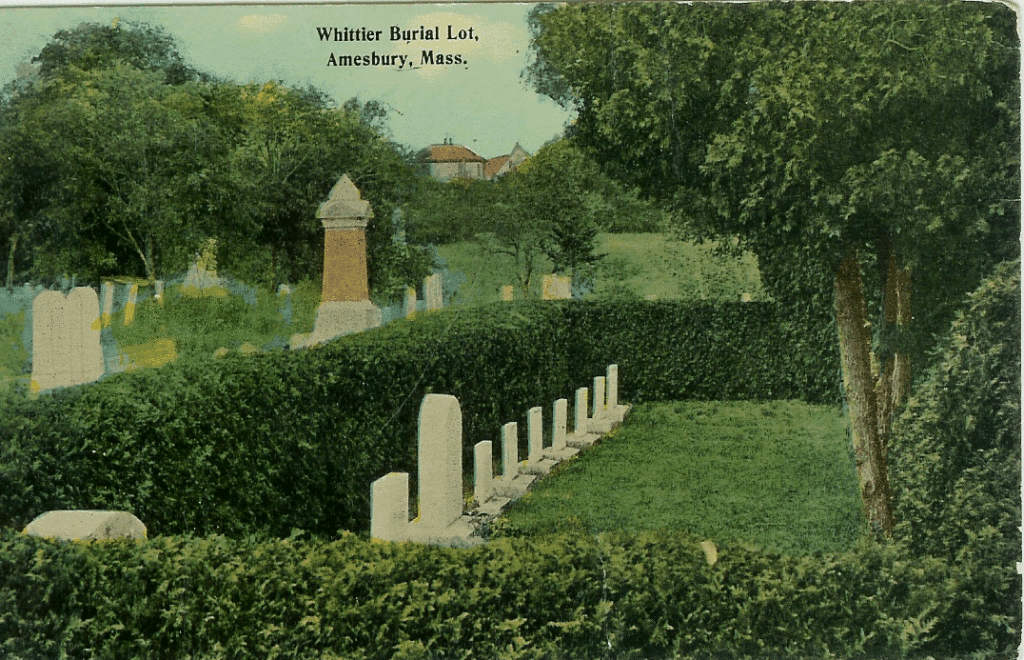
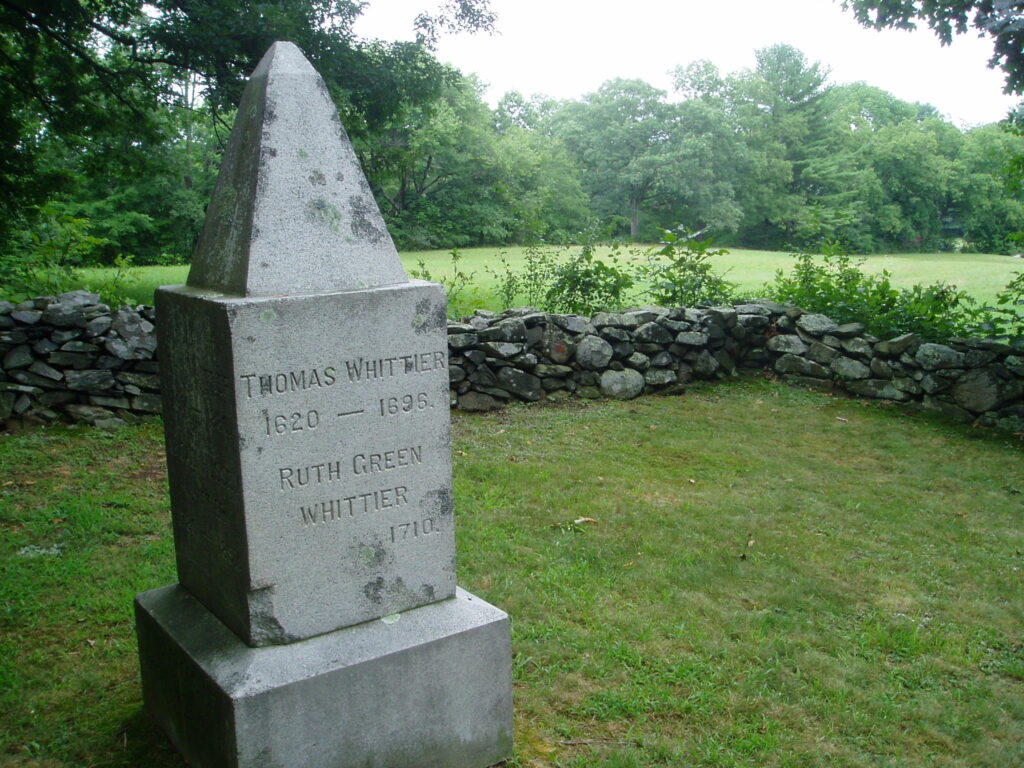
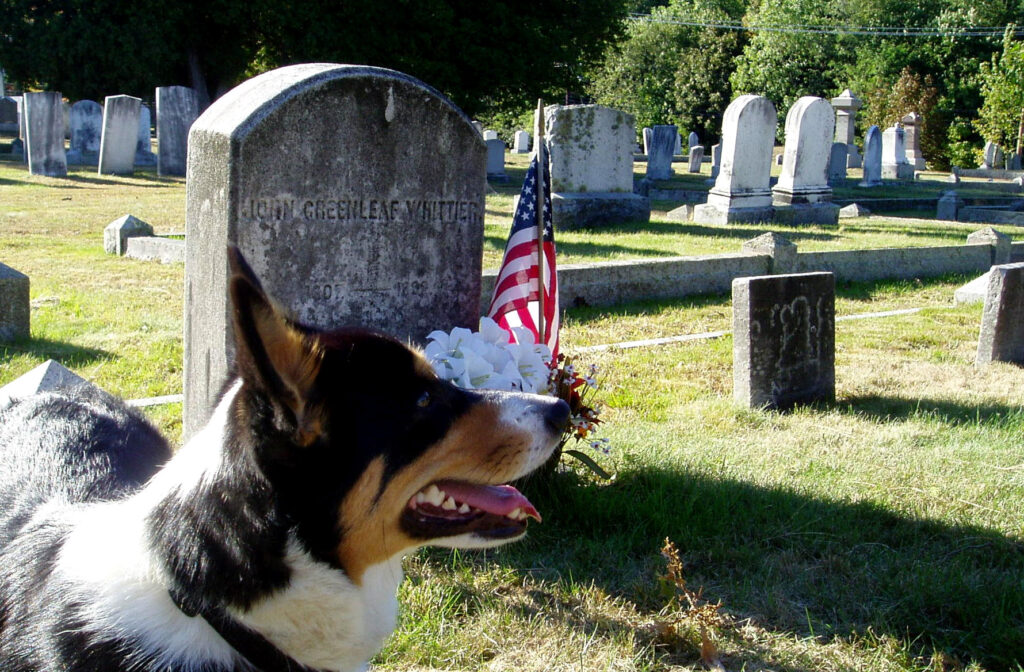
Trending downward
In 1907, on the centennial of his birth and 15 years after his death, John Greenleaf Whittier was still a popular figure. Amesbury, Haverhill, Newburyport, Boston, and other cities including Whittier, California held elaborate memorial ceremonies. Booker T. Washington, the African American author of Up from Slavery, was the keynote speaker in Amesbury. Although unable to attend the celebration, President Theodore Roosevelt wrote to express his own “peculiar affection and reverence for the Quaker poet.”
Despite two wonderful historic house museums, we are losing Whittier again. His reputation is dying and his name increasingly evokes a cocked head and a curious stare. He is often confused with his graybeard contemporaries Walt Whitman and Henry Wadsworth Longfellow, both of whom enjoy more respect from scholars and teachers of American literature.
A quick look at Google sets the sad scene. Google Trends tracks and compares the frequency of words searched by users from 2004 to the present. Horror writer Edgar Allan Poe, for example, is six times more popular than Henry David Thoreau (On Walden Pond) and Nathaniel Hawthorne (The Scarlet Letter). And how does John Greenleaf Whittier compare? There are not enough searches on Whittier in the last decade, according to Google, to generate any statistics at all. The “immortality” that his eulogists promised in 1892 is slipping away.
The End is Near
It will be a shame to lose Whittier again. What fame remains is often focused on his role as an abolitionist long before the Civil War, his deep-set moral principles, and his support of women’s rights and writing. But his strong rural American voice still resonates in his poems. Many of them are highly readable and entertaining today since Whittier was a simple poet of the common man. In one ballad, Gen. Jonathan Moulton of Hampton, NH attempts to trick the devil out of his gold. In “The New Wife and the Old,” Moulton’s dead wife appears beneath his bed to grab her wedding ring away from his new bride.
And let’s not forget that we owe Whittier special attention because he died right here in the New Hampshire seacoast. Too weak to travel far, even to the Isles of Shoals, the elderly Whittier vacationed close to Amesbury in the summer of 1892. He stayed at a Georgian-style estate called Elmfield in Hampton Falls, NH. Like Whittier, the owners of the home were Quakers who could trace their American ancestry to the mid-1600s.
From his simple room on the second floor Whittier had a view of the gardens, the marsh and the distant beach. He often sat in a wooden rocker on a small balcony reading. He wrote his last poem here at age 84. A final photograph shows him on the balcony, a tiny figure drinking in his last view of the seacoast scenery.
SOURCES: Whittier-Land by Samuel T. Pickard (1904) and John Greenleaf Whittier: A Biography by Roland H. Woodwell (1985). Copyright © 2012 by J. Dennis Robinson, all rights reserved.
 Why Portsmouth Went to Virginia in 1907