



Someone had to make a film about the dramatic 1939 rescue of he men aboard the Portsmouth-built submarine USS Squalus. That someone turns out to be California director James Keach. His made-for-TV movie “Submerged” (2001) premiered on NBC-TV. It’s based on the Peter Maas bestseller “The Terrible Hours,” and not to be confused with a Steven Siegel action film of the same name.

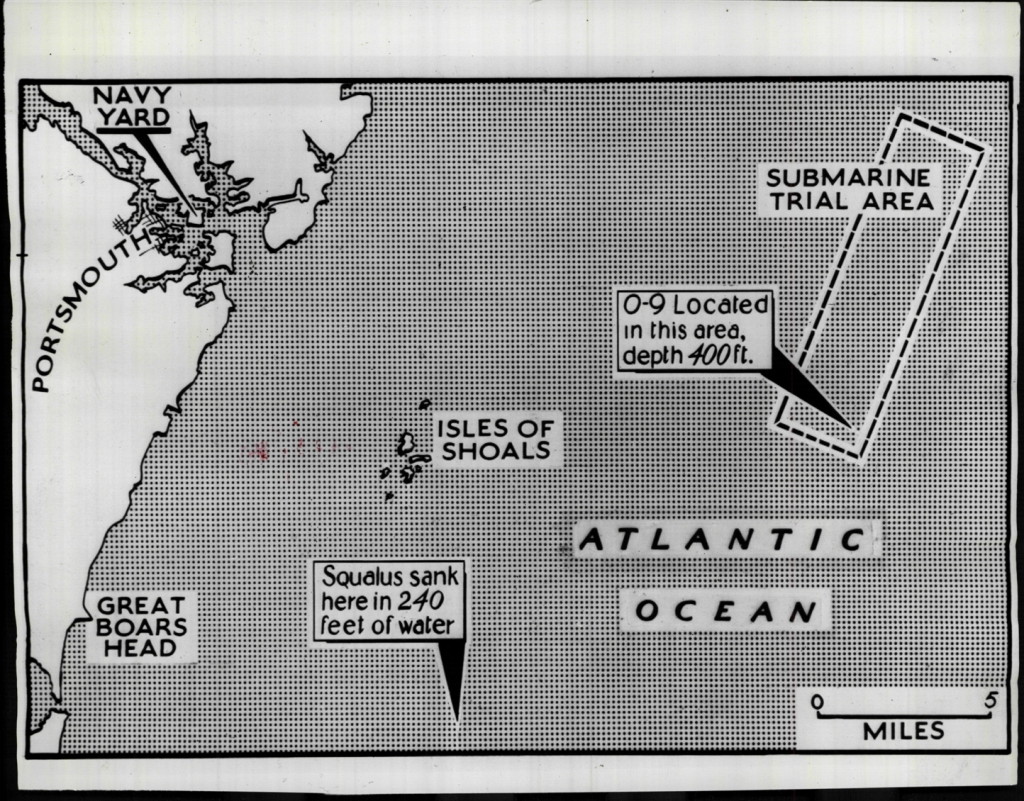
Squalus sank mysteriously in 240 feet of frigid Atlantic water on a test dive off the Isles of Shoals. Twenty-six men from our local shipyard drowned when the engine room flooded. Billed as the only successful submarine rescue, the Squalus story centers on Swede Momsen, an iconoclastic Navy engineer, who designed the diving suits, escape hatch, and diving bell that facilitated the rescue of all 33 surviving crewmen.
Every old-timer around here knows the story — how the submarine was miraculously located by a signal flare in overcast weather, then found using a grappling hook, dragged in choppy seas by a towboat.
Breathing chlorine gas at twice the normal pressure, the crew survived 27 hours underwater with barely enough air. Momsen’s untested diving bell worked in four arduous trips to the ocean floor. During the final dive, the cable frayed to a single strand. We know that 114 days later, after three attempts, naval engineers finally raised the Squalus. The refit diesel sub was later recommissioned as USS Sailfish in time for the American entry into World War II.
What people around here don’t know is the story behind the film. It took some doing, but this writer eventually reached the director by email. A Yale Drama School grad and a classically trained actor, James Keach is best known as Jessie James in the film “Long Riders.” His brother, Stacy Keach, played outlaw brother Frank James. Three Carradine brothers, plus Randy and Dennis Quaid, play other outlaw siblings in the film.
In 2001, Keach lived in Malibu with wife, Jane Seymour, best known as Dr. Quinn, Medicine Woman, and as the James Bond girlfriend Solitaire in “Live and Let Die.” Then, 50ish, the couple had young school-age twins. Keach was formerly married to the sister of singer Judy Collins. But enough gossip.
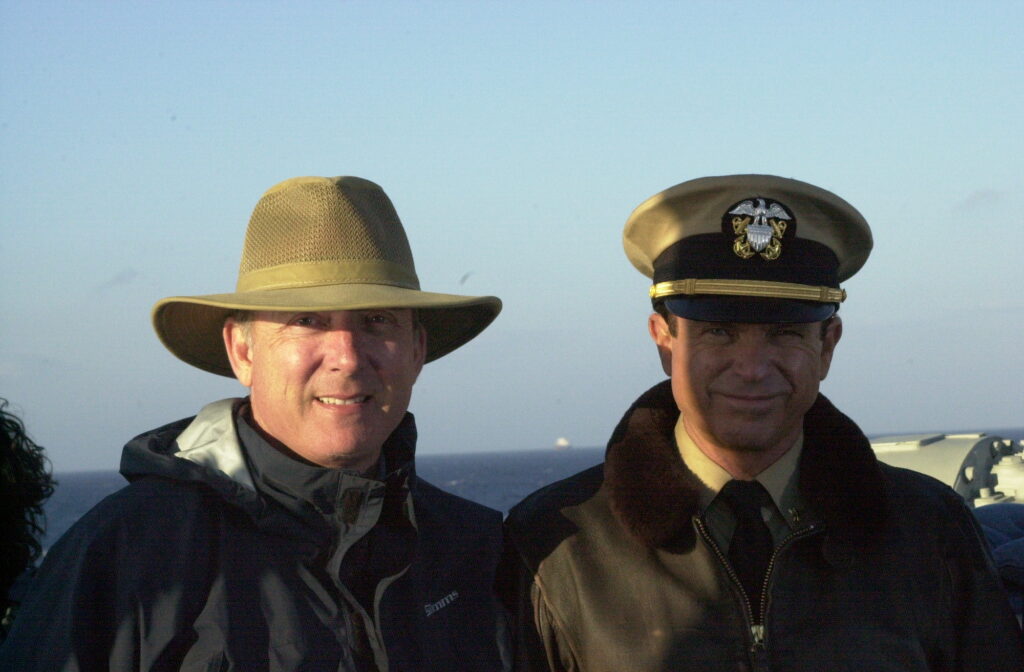
In Hollywood, work is life, and James Keach works. Besides three dozen screen and TV credits, plus theater work, he writes, directs and produces features that often include his wife Jane. Keach’s producer-friend, Stan Brooks, purchased film rights to the book “The Terrible Hours” and shopped it around town. NBC took on the project for $5 million. Brooks’ company Once Upon a Dream, hired Keach’s company, Catfish Productions. Keach signed veteran actor Sam Neill to play Swede Momsen, and the wheels began to roll.
“I’ve done a lot of movies with history in them,” Keach told me by phone a few days after the TV premiere of his Squalus film. “What we really want to do is honor the men we depict.”
I think Keach succeeded. The Navy brass and the Squalus survivors who saw an advance screening of the film in Washington DC agreed. “Submerged” tells the tale straight, relying largely on its inherent drama. The plot sails very close to the facts. The film submarine looks like the Squalus. Sam Neill’s doggedly daring Momsen is a true hero.
Some local armchair film critics and historians were less kind. Navy wives and girlfriends, they say, didn’t dress up and give their partners a big send-off each time they left for a four-hour sea trial as in the film. Momsen was not testing his diving bell (which was more pear-shaped than the one in the movie) at the Portsmouth Yard on the day the Squalus sank as the film implies. Momsen didn’t dive into the Atlantic and hook a rope onto the sinking diving bell. Okay, okay! Shakespeare mangled facts like a pitbull when it served his dramatic goals.
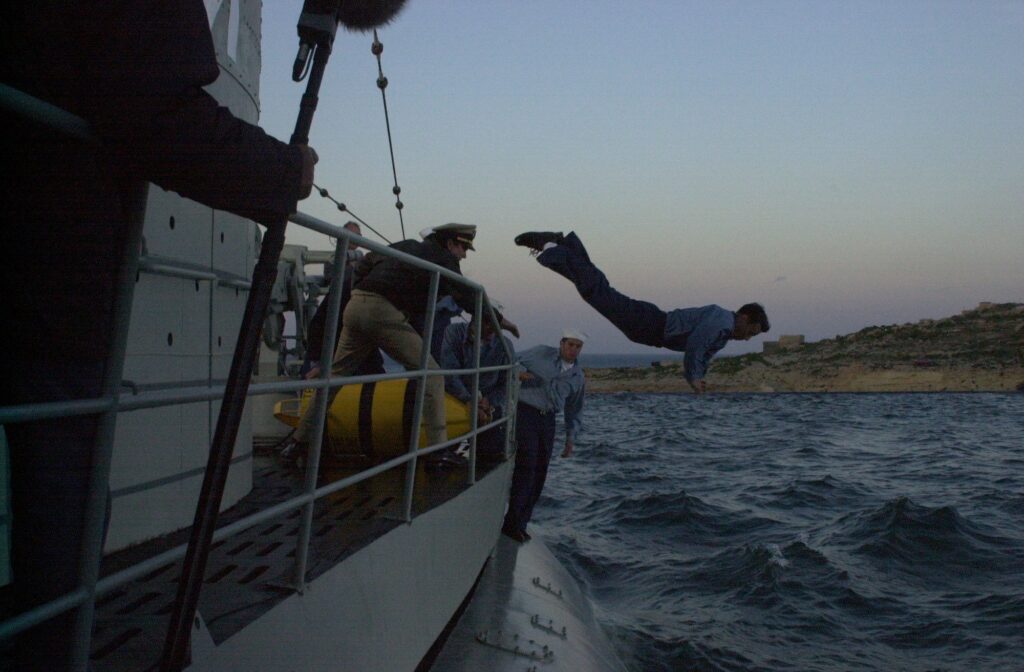
When you’re shooting pre-WW II submarines at sea with only weeks to deadline, Keach says, $5 million runs out fast. “It’s all cost connected,” he says. “Making movies is expensive, as you know. You have to be insane to shoot something in the open ocean. You have no control. When you’re in a tank, you create the waves. I’d like to shoot in Portsmouth, if you had a tank.”
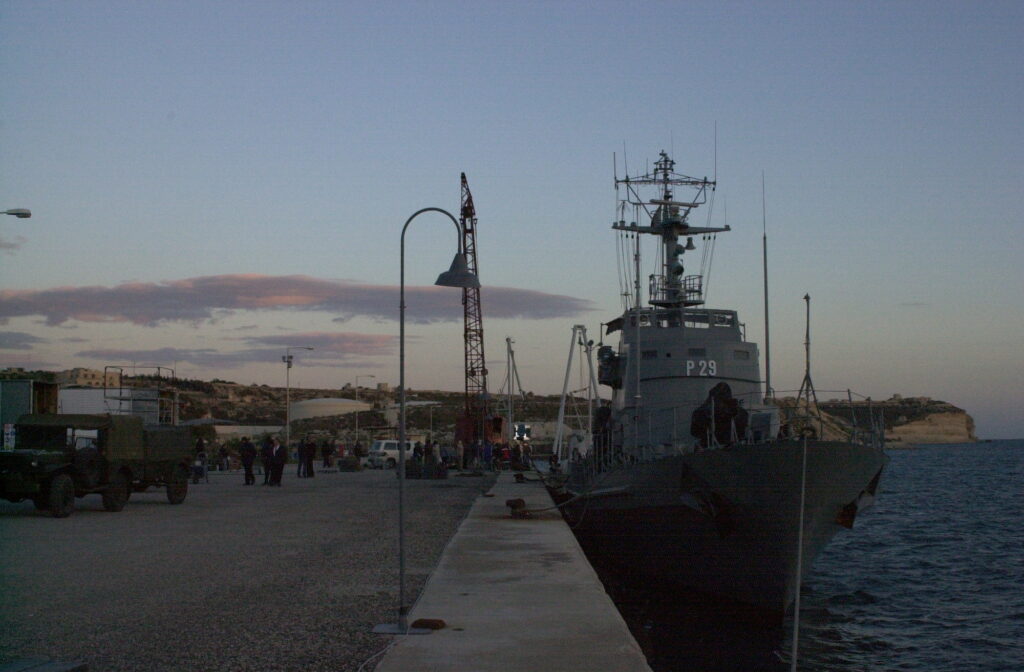
The tank he’s referring to is a massive watery movie set. Keach shot his ocean scenes in three tanks at Mediterranean Studios in Malta. The sets are so close to the ocean that, from the right angle, the actors appear to be at sea instead of in a giant swimming pool. The movie submarine Keach used was recycled from a recent Hollywood production, “U-571” starring Matthew McConaughey and Harvey Keitel. The interior shots used recycled sets from the same film in a nearby studio in Rome. That’s why the opening scene of “Submerged” looks nothing like Portsmouth, NH. It isn’t. Again, the local critics whimper.
“The budget for the party for the movie “Pearl Harbor’ cost as much as our whole film. Really!” Keach says. “That film cost more than the Japanese spent on the invasion itself.”
So “Submerged” joins a growing catalog of films drawn from real-life Seacoast New Hampshire history — but shot somewhere else. That list now includes: The Last Detail, Freak the Mighty, Weight of Water, Northwest Passage, To Die For and others. Only “A Separate Peace,” adapted from the John Knowles novel about Phillips Exeter Academy, was actually filmed locally and it was a critical flop.
“We all know that Momson was somewhere else,” Keach says in response to the Portsmouth history nit-pickers. “In order to tell the story, If you have too many locations, it becomes too episodic and you lose any sort of story sense.”
It’s the same with characters, he says. A hundred, maybe 200 people were involved in the Squalus movie, counting the crew, families, and rescuers. But drama is the condensation of people, events, and ideas into a flow that audiences can follow. Aristotle made that clear in his ancient writings on the nature of theater.
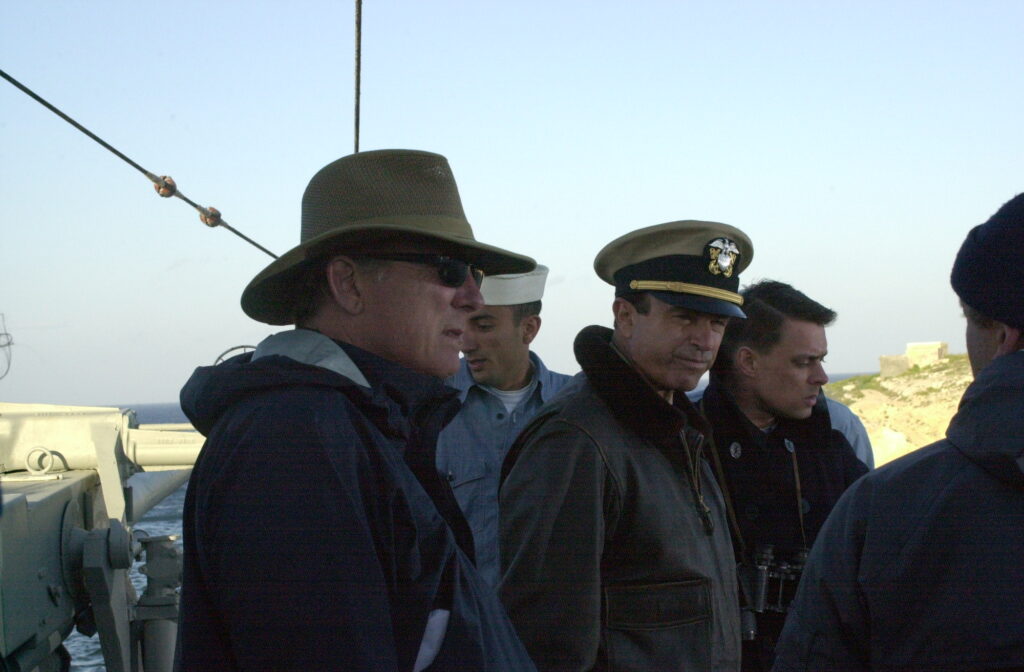
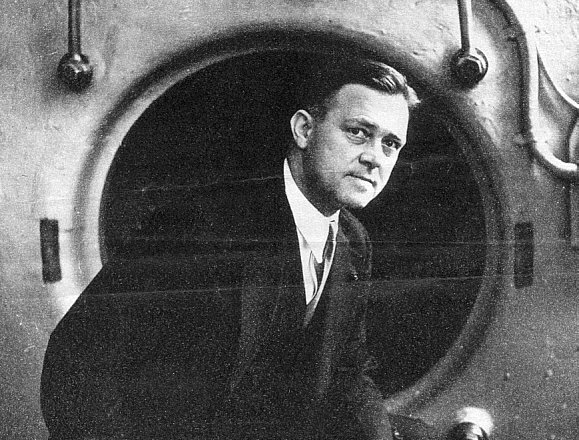


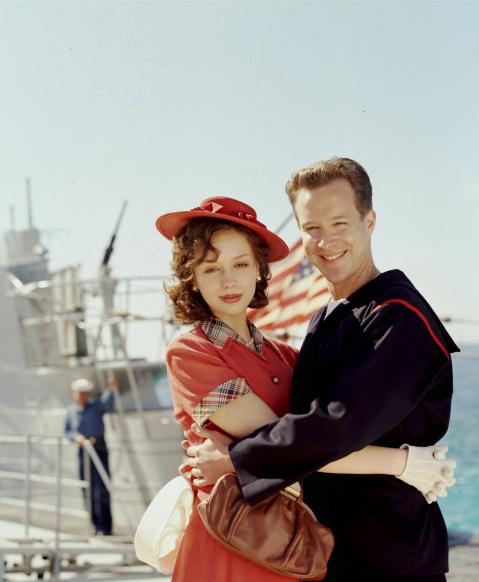

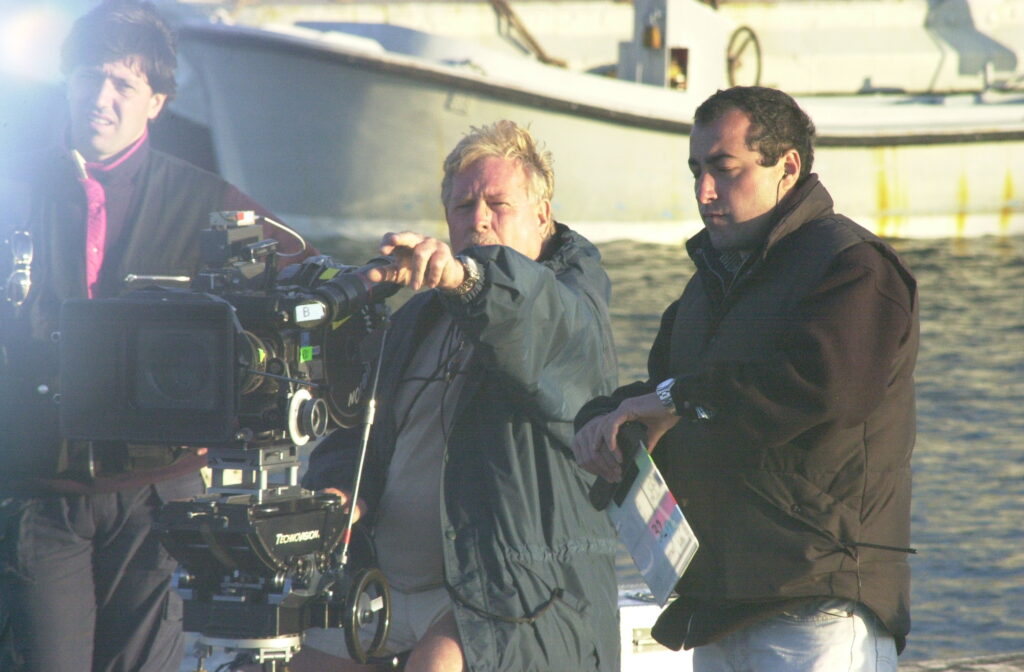
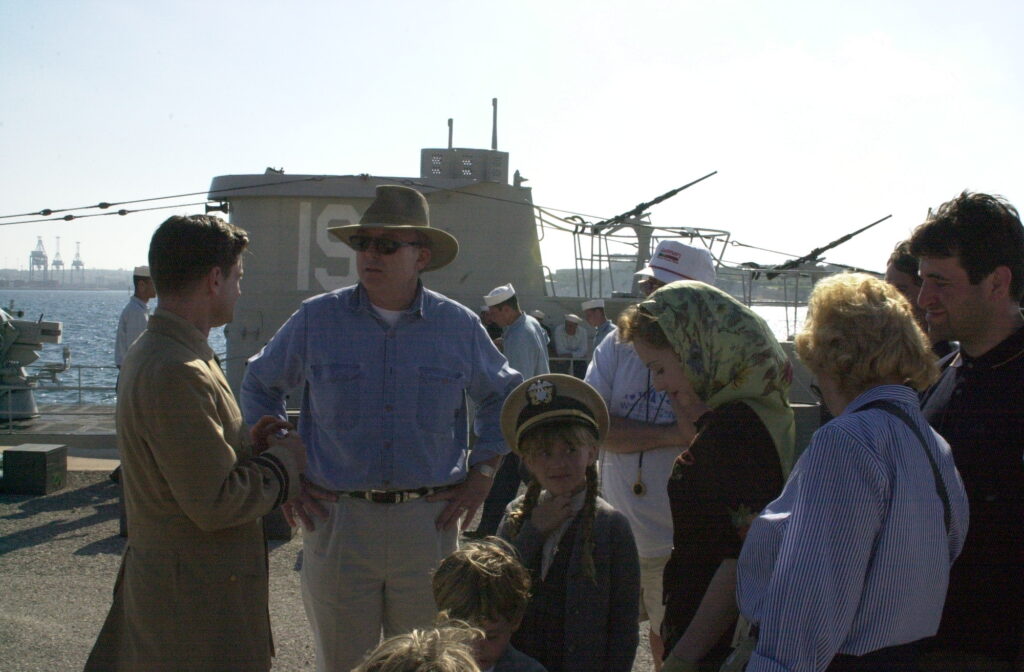
The same goes for TV. The Squalus story, Keach notes, is actually three stories. The wives wait for news at the officer’s club while the men wait aboard the sub to be saved, while Momsen’s team tries to solve the puzzle and overcome amazing obstacles. There is also a fourth story of the news media coverage, which Keach’s budget did not allow for.
“The thing that really bothers me is that we didn’t have numbers of boats in the water and that the story wasn’t all over the news. To get 30 or 40 boats in the water? I said that’s what I want. I really wanted more, and they said — James, we cannot afford to do it. OK, I said. All right.”
In Hollywood, work is life, and James Keach works. A television docu-drama of this size, according to a Hollywood production assistant I spoke with, takes at least two months to post-produce. That’s the phase where all the titles, footage, computer graphics, music and audio are glued together. “Submerged” was assembled in two weeks. That’s because NBC decided to run their made-for-TV movie against two other made-for-TV movies in what is called “sweeps” week. That’s when the viewer ratings are tested and the winner gets the advertising gravy. It’s a bloody battle for numbers. “Submerged” was up against a retelling of the Anne Frank story, a Mary Tyler Moore film, the Sopranos on HBO and the birth of Scully’s baby on X-Files.
According to Variety, Keach’s film fared admirably against the competition. It didn’t win, but it didn’t get hammered either.
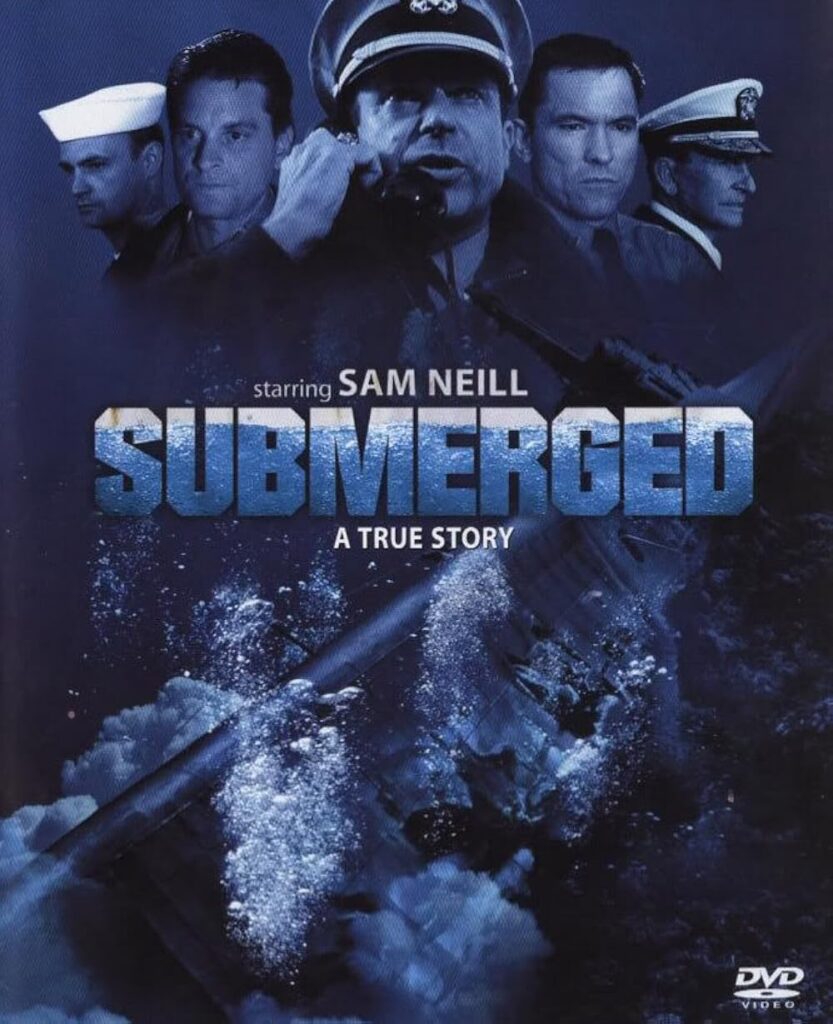
Then like the Squalus, “Submerged” sank quickly from view. The day after its May premiere on NBC TV, the movie was nowhere to be found, even in the network’s own online database. But it will resurface. The USA Network has purchased the rights to broadcast it five times. The video version cannot be far behind.
“When you get to make a good story,” Keach says, “it lives on. The network says we had 12 million viewers. That’s a lot of people!”
That’s a lot of people who saw, in a powerful way, for the first time, pretty much the truth of what happened on May 23, 1939, just a few miles off the Isles of Shoals. I knew the story, but now I know it better. I can finally visualize the way the frightened crewmen and their wives waited helplessly worlds apart, while one man cheated Fate.
At the Washington screening of “Submerged”, Squalus survivor Gerald McLees of Portsmouth sat next to Keach’s wife Jane Seymor.
“He was really cool!” Keach says. “My son Kailin played him in the movie. All through the screening he was saying — That happened. That didn’t. That happened. That didn’t. He was great.”
A movies based on history is not a documentary. I suppose there are hard core Hawaiian historians complaining even now that Ben Afflick’s character didn’t make love to his girlfriend exactly the way it’s depicted in the summer blockbuster “Pearl Harbor.” Me, I’m just glad the G-rated movie “Submerged” exists, imperfect as it may be. Can you imagine the state of New Hampshire, or the city of Portsmouth or the Navy Yard coughing up $5 million to teach our kids their own maritime history? I’m not too proud to offer thanks to NBC and the gang.
Copyright © 2001 by J. Dennis Robinson, all rights reserved.
 The Ballad of the Squalus