


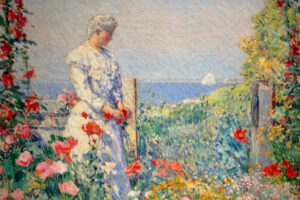
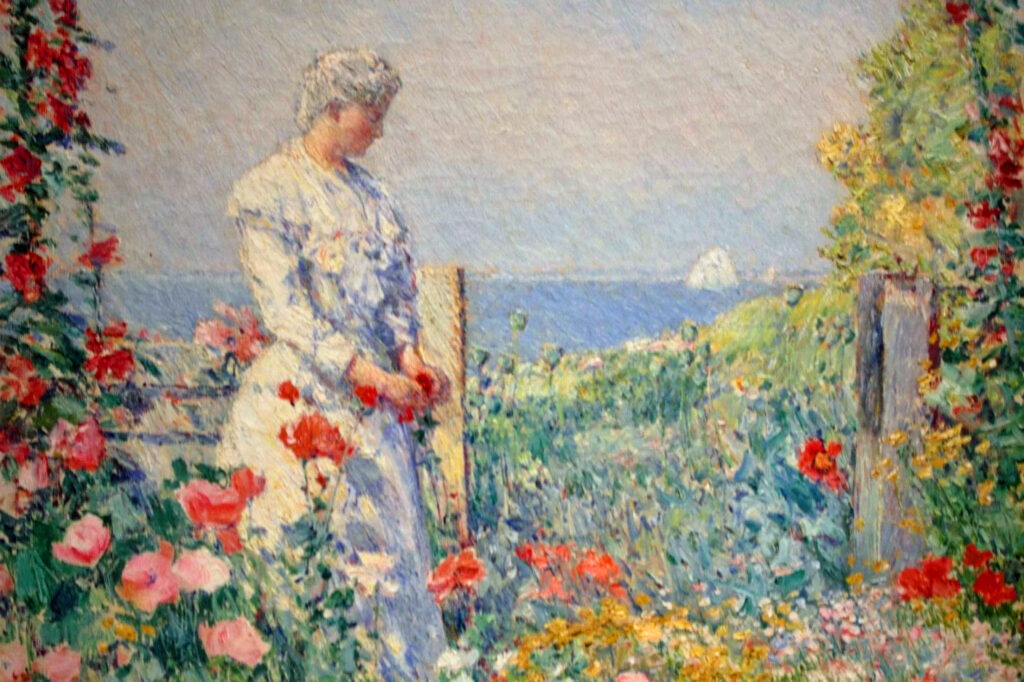
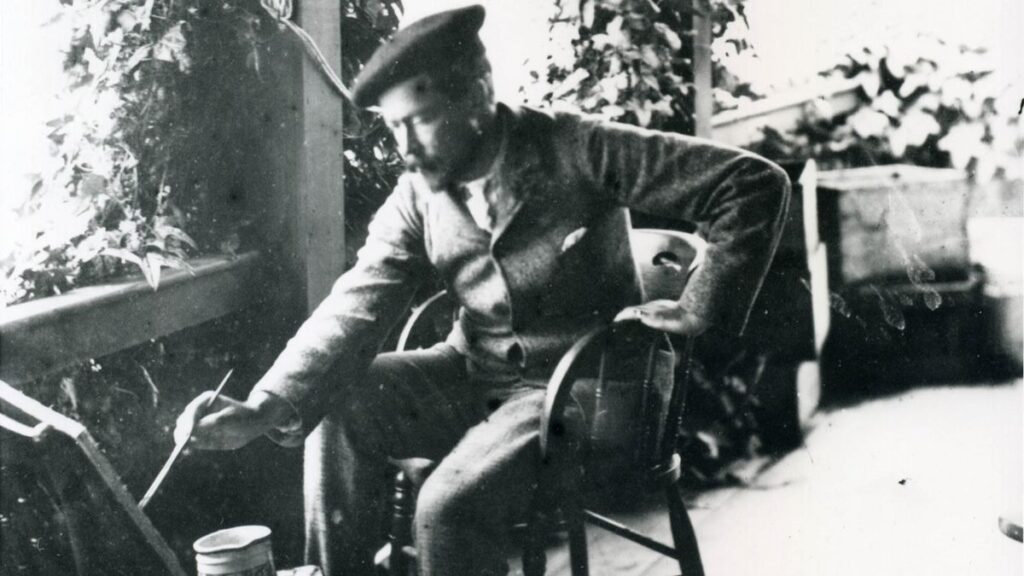
Gardeners, history buffs, and art lovers were ecstatic. The much-anticipated exhibit on Celia Thaxter’s island garden opened in 2016 at the prestigious Peabody Essex Museum in Salem. Massachusetts. American Impressionist: Childe Hassam and the Isles of Shoals featured more than 40 works by the Boston painter who spent decades summering on Appledore Island, just off the Maine and New Hampshire coastline.
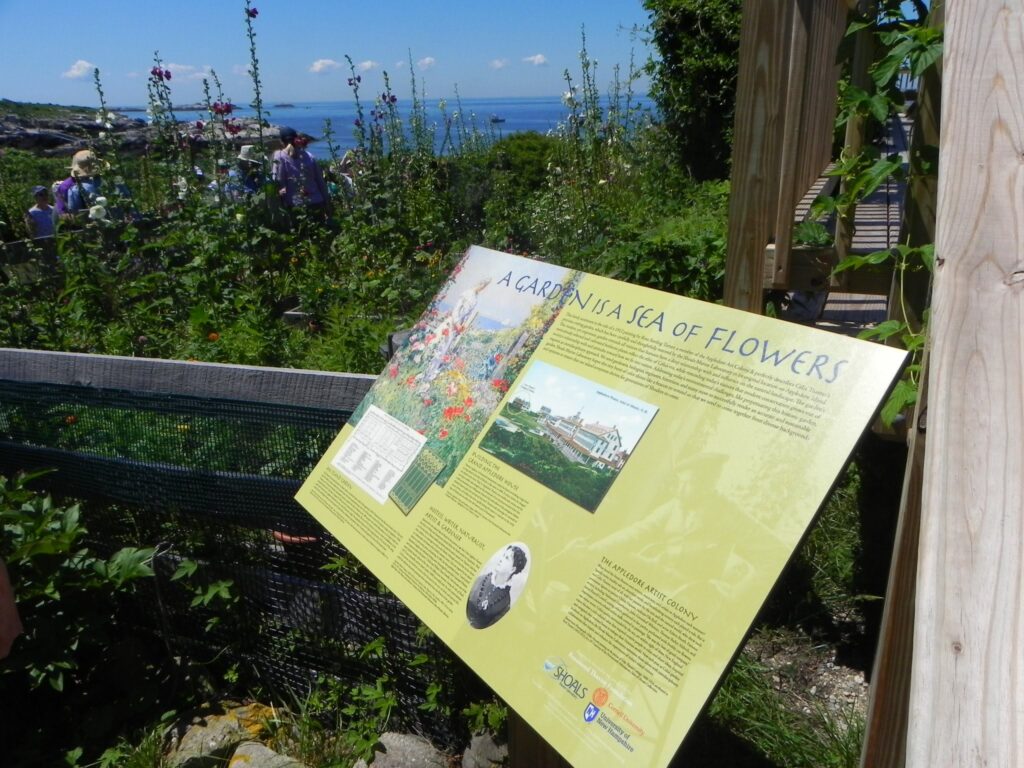
Childe Hassem illustrated Thaxter’s beloved book, An Island Garden (1894). The rare exhibit of his Appledore paintings, according to PEM, represented nothing less than “the pinnacle of American Impressionism.” Thaxter’s island garden is so well known that Appledore volunteers have been reconstructing it, petal by petal, for nearly 50 years.
(Author photo)
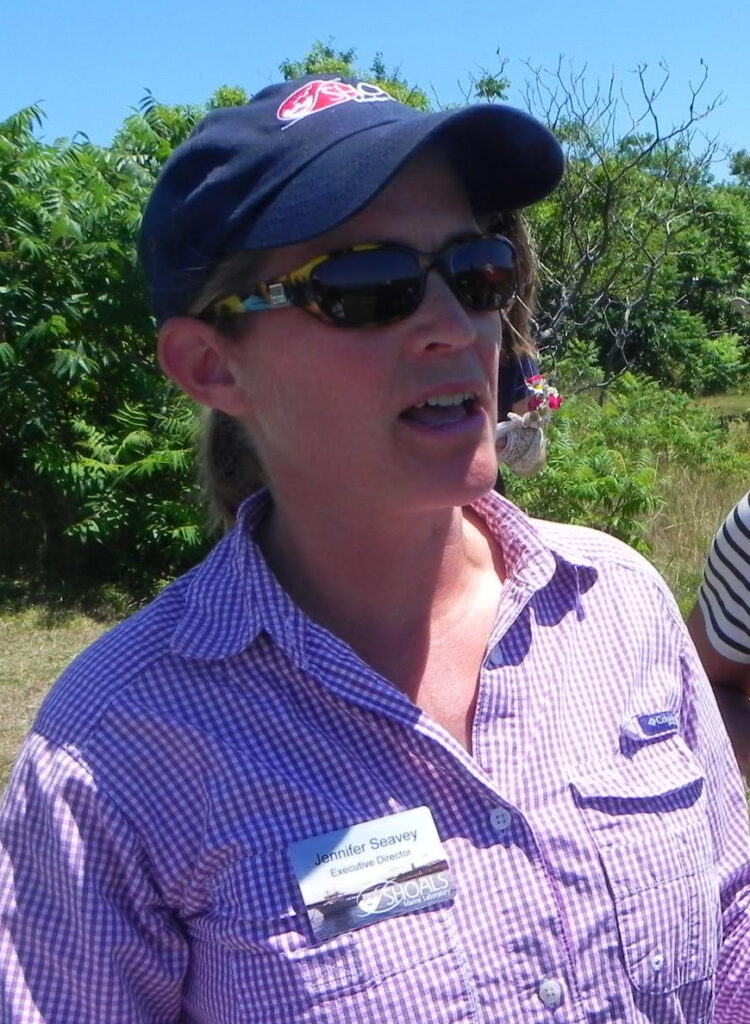
But Dr. Jennifer Seavey saw something else here. For the former executive director of the Shoals Marine Lab on Appledore, Celia’s historic garden is one big science project.
“I think the garden serves a few important roles at SML,” Seavey says.
For one, it reminds summer students in the marine biology program that the seemingly wild and pristine island has been heavily influenced by human habitation. As many as 500 Victorian tourists and staff once occupied the hotel and cottages that dominated Appledore. These visitors had a huge impact on the island ecology.
The garden is also a great teaching and learning tool for engineers, horticulturists, marine scientists, botanists, and archaeologists. Keeping the garden going, Seavey said, provides an ideal opportunity for students in various fields to work together to solve complex problems. The ability for scientists to communicate across disciplines, the director says, is critical in today’s world.
“Celia Thaxter was a fantastic naturalist and her son Roland was a successful scientist,” Seavey points out. Celia was not just a static symbol of the hotel era at the Shoals and a literary icon, but “a living, breathing woman,” according to Seavey. The island poet was an early member of the Audubon Society and an activist in the protection of endangered birds.
Today the Shoals Marine Lab, a collaboration of UNH and Cornell University, has turned Appledore Island into an outdoor and underwater classroom featuring prominent instructors and hands-on field research. Thaxter, who preferred birds and flowers to her family’s summer tourists, would be pleased.
How it got there
Born in Portsmouth, Celia Laighton Thaxter was four years old her parents packed off to the isolated Isles of Shoals in 1839. She was married at age 16, just three years after her iconoclastic father, Thomas Laighton, opened the spacious Appledore Hotel in 1848. Her private “cutting garden” was located at the front of Celia’s cottage beside the bustling grand hotel. The flowers, artfully arranged, brightened her parlor, where famous musicians, actors, intellectuals, writers, and artists gathered to share their work.
As the summers passed and Celia’s fame as a writer grew, the evolving garden became a place of solace for her, especially during years of tumult and tragedy. Celia talked to her flowers, wrote about them, and painted pictures of them on ceramics that she sold to the visiting tourists.
“Flowers have been like dear friends to me,” she once wrote.
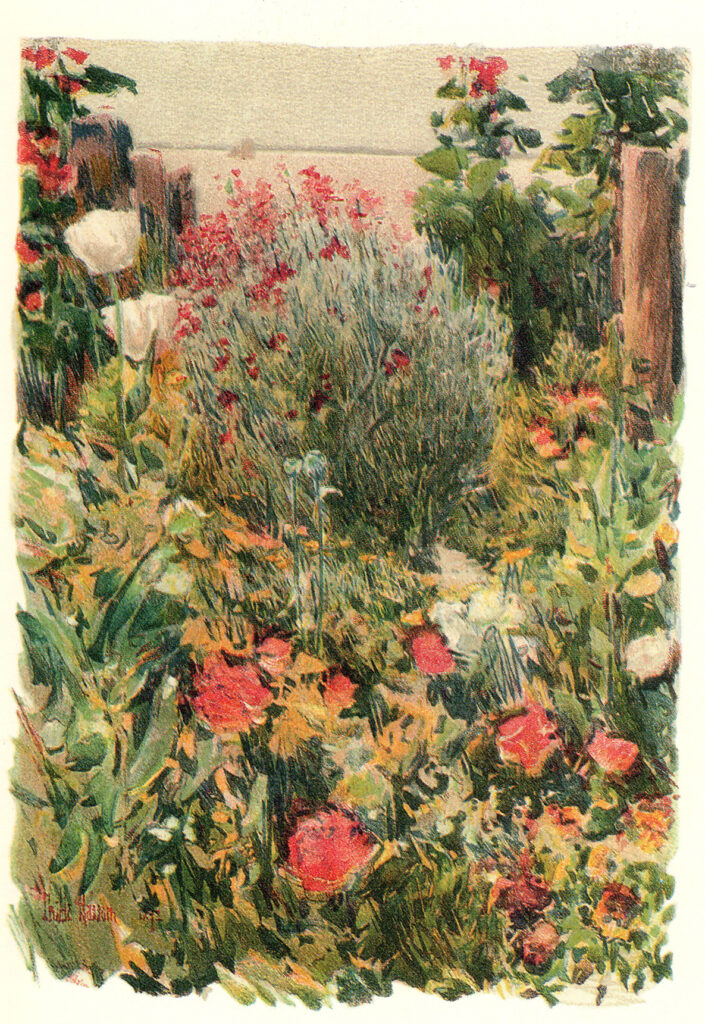
Eventually her island garden consisted of 1,600 plants, carefully selected, and placed in the same spots year after year. Her colorful oasis on a wild rocky island was, she wrote, “the fruit of much sweet and bitter experience.” It was her garden and the otherwise barren Shoals that inspired artists like Childe Hassem.
Visitors continually asked Celia to “tell us how you do it.” Eventually she gave in, and with great difficulty, produced her book, An Island Garden. The book appeared just before her death in 1894, with illustrations by the up-and-coming Boston painter Childe Hassem. Celia was buried “under a mount of blossoms” in the Laighton family plot just behind her cottage. The cottage and hotel burned in 1914 and the island was largely abandoned.
Garden revival
“It seems strange to write a book about a little garden only 50 feet long by 15 wide,” Celia Thaxter wrote, “but then, as a friend pleasantly remarked to me–it extends upward, and what it lacks in area is more than compensated by the large joy that grows out of it.”
For half a century after the hotel burned in 1914, Appledore was dominated by seagulls and poison ivy. Then came Dr. John M. Kingsbury, a professor at Cornell University. Kingsbury inspired the creation of the Shoals Marine Lab, now celebrating its 50th year in cooperation with the University of New Hampshire.
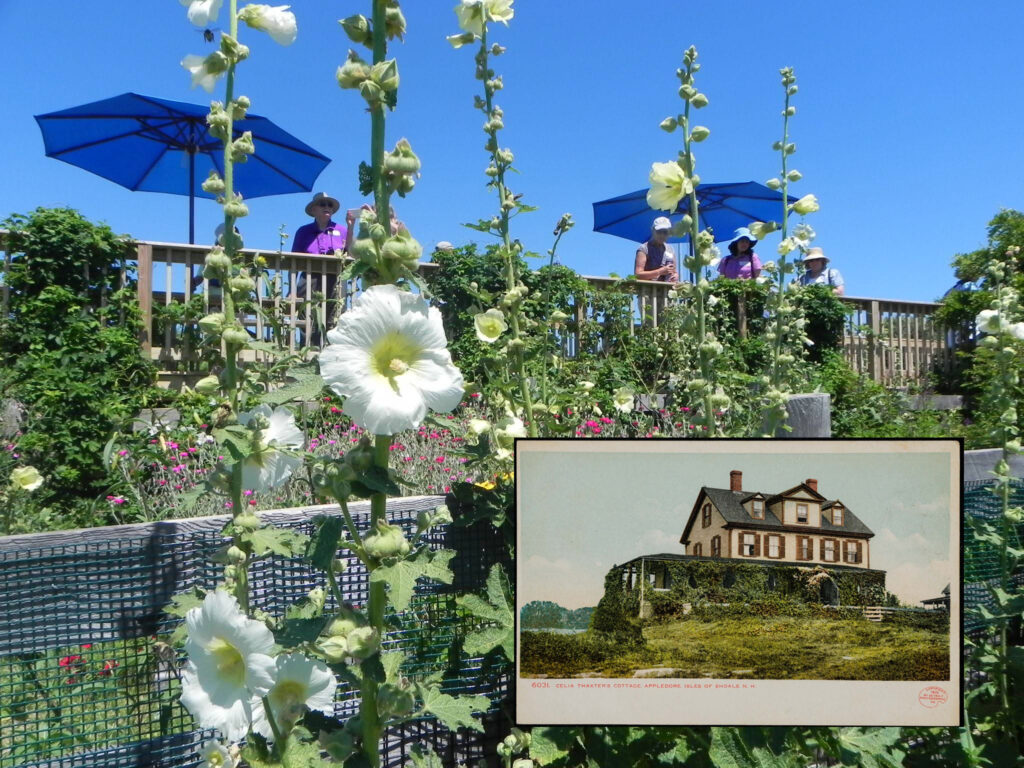
A botanist and gardener, Kingsbury was drawn to Celia’s An Island Garden. By the 1970s, using archival seeds from Cornell, volunteers had created a reproduction of Celia’s garden in front of the ruined foundation of her former cottage. Celia Thaxter’s poetry, meanwhile, was being rediscovered, and a growing number of visitors wanted to view the garden site. The Rye Beach Garden Club volunteered to keep the garden alive and formal tours began in the 1990s.
Today the garden is maintained by the Shoals Marine Lab. A half dozen summer tours departing from New Castle– priced at $100 (including lunch)– immediately sell out each year. Proceeds from the guided tours support the garden project.
One big science project
In the film The Martian, actor Matt Damon plays a botanist abandoned alone on Mars. He has only a few months worth of air, water, and food, but the rescue party is four years away. To paraphrase Damon, his character has to “science the heck” out of his tiny environment in order to survive.
While respecting the romantic beauty and cherished history of the garden project, Jennifer Seavey is also sciencing the heck out of Celia’s tiny garden on the offshore island ecosystem. Her goal is to “pull the garden toward the mission of the lab, which is about education and research.”
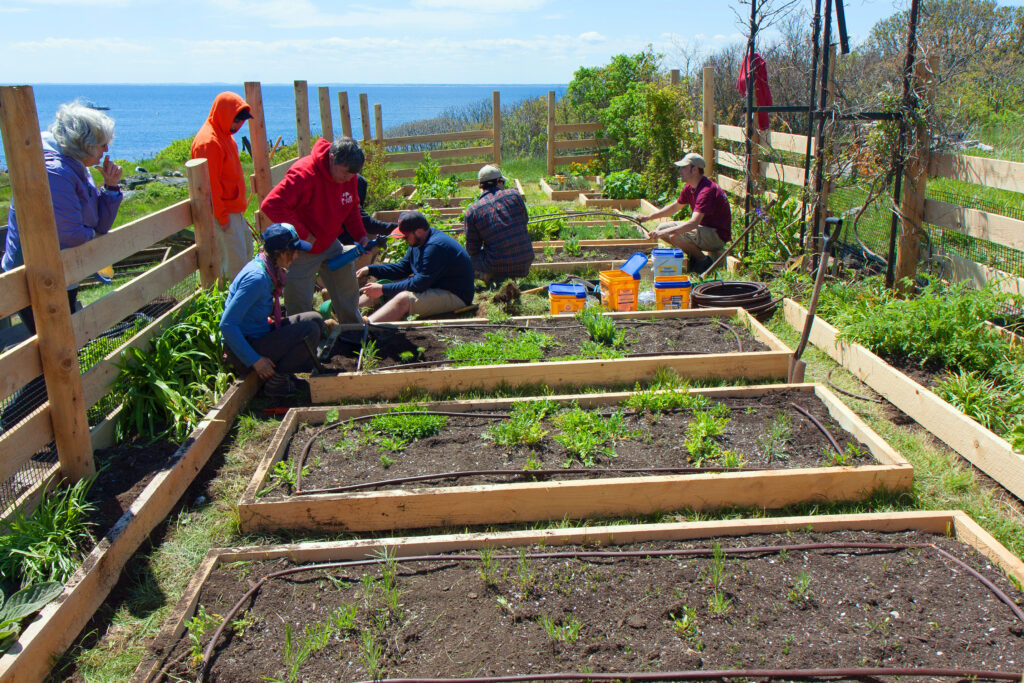
Today the heritage seedlings are nurtured in the spring by the UNH Horticulture Dept. The plants are transported by car and by boat for annual replanting by a small army of volunteers and students.
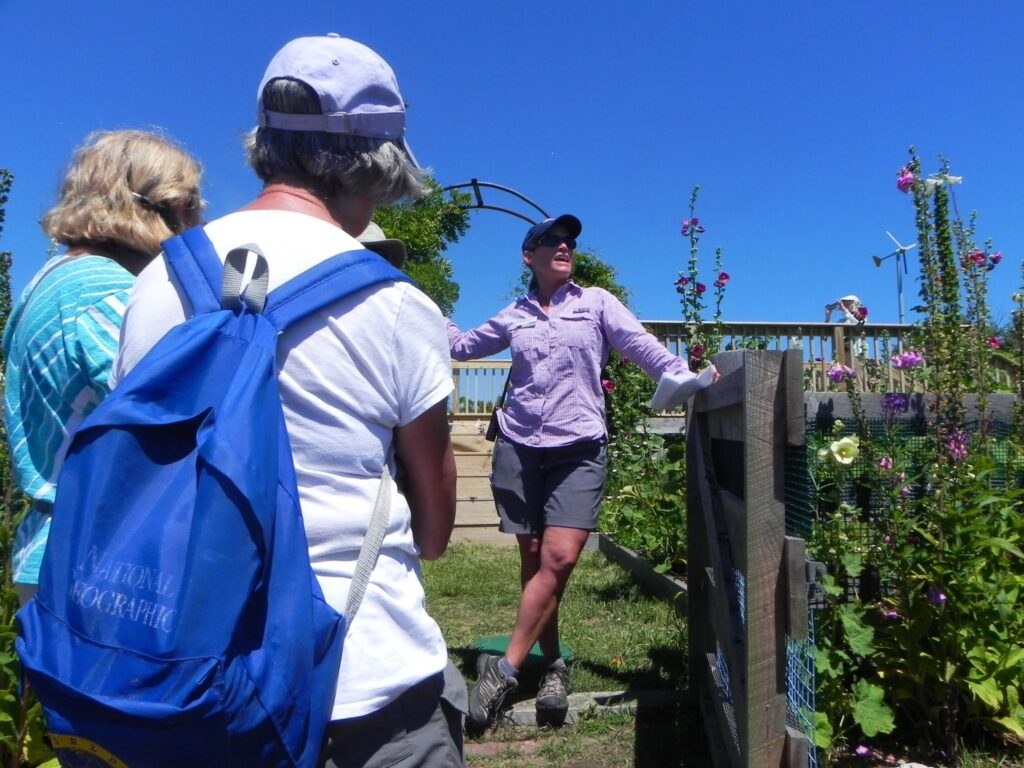
“Every plant is historically accurate,” based on Celia’s writings, Seavey says. “I wanted to anchor the garden in a very methodical way.”
Through five years of research, interns have scientifically calculated the amount of water the garden requires. Rainwater is then collected to meet that specific need. The water runs down a metal roof, picking up nitrogen-rich gull poop.
“The cool thing is that it takes the garden off the precious water in the island well. The garden is no longer in competition with people,” Seavey says with obvious pride.
The drip irrigation system that feeds the plants is operated by a solar powered pump that turns on early and late each day when evaporation levels are low, further conserving the water.
“The majority of our power is now coming from solar,” Seavey adds. “We’re not 100 percent solar yet, because we still lack enough battery capacity to store what we make. Our students are currently studying battery capacity to see what is most affordable, efficient, and ecological.”
Seavey wonders how the Laighton family was able to supply the daily water, food, and sanitation needs of hundreds of summer guests seven miles from the mainland in the age of sail.
The lessons learned here today, while sustaining Celia’s garden, may have further value. Our planet is an island too–a blue bubble with a fragile atmosphere hurtling through space. The bubble gets more crowded and more fragile every year. We will survive, or not, based on creating sustainable systems like those being explored and tested at Celia’s island garden.
Copyright © 2016 by J. Dennis Robinson, all rights reserved.
 Lady Bird Johnson Flies Through Town