


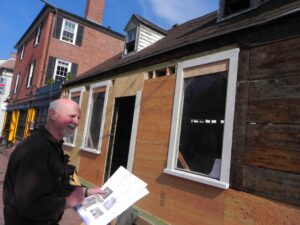
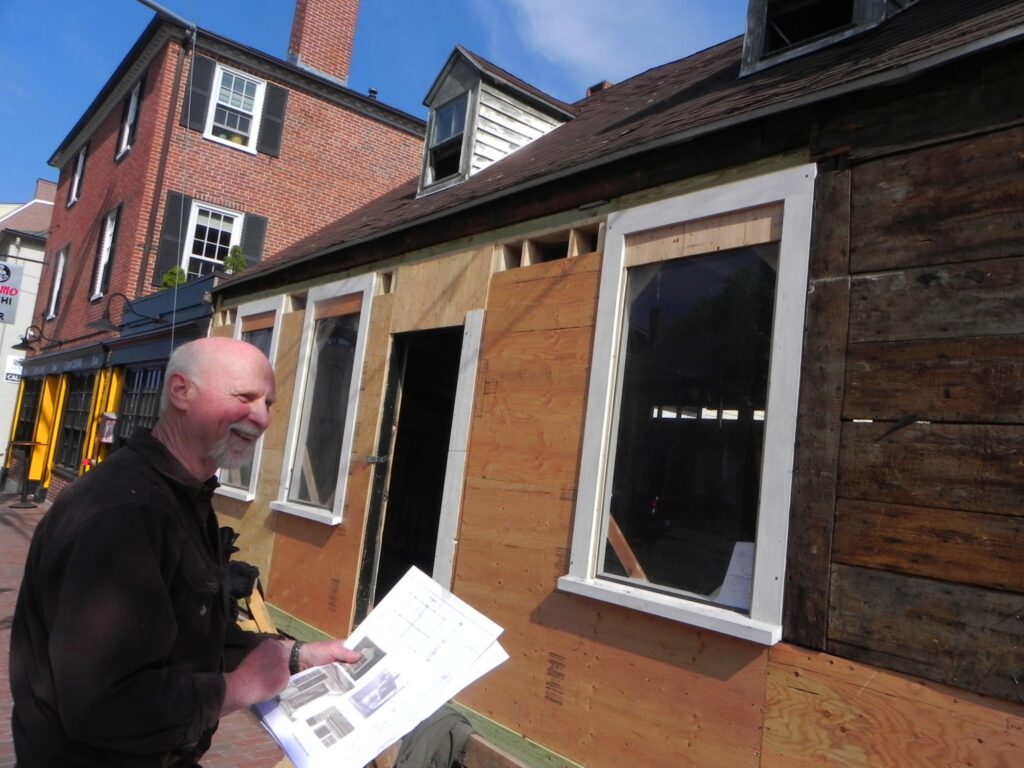
We almost lost 102 State Street. Dozens of potential buyers wanted to flatten the old wooden cape. And why not? It squats low and defiant between towering brick buildings like a sumo wrestler, refusing to budge. It reminds passersby of an earlier downtown Portsmouth, where craftsmen and their families lived and worked in the same cramped space. It breaks the monolithic brick streetscape and refuses to be assimilated.
“I had a feeling it was very old,” says Karen Bouffard, “but I didn’t know much about it.”
The building appeared to be doomed. As a real estate broker, Bouffard knew this was a classic “knock down.” Developers would likely raze the old cape and replace it with a four-story brick building. That would fill in the gap that had existed for two centuries — and turn a tidy profit. Downtown condos are selling for over a million dollars these days.
To maximize their investment, however, developers need to maximize space. The new building would have to move up and backwards, filling the small grassy courtyard at the rear of 102 State. Potential buyers may have been leery of demolishing one of the oldest surviving wooden structures in the heart of the city. The property sat for months “forlorn and uncared for,” according to Bouffard.
“So I bought it,” she says.
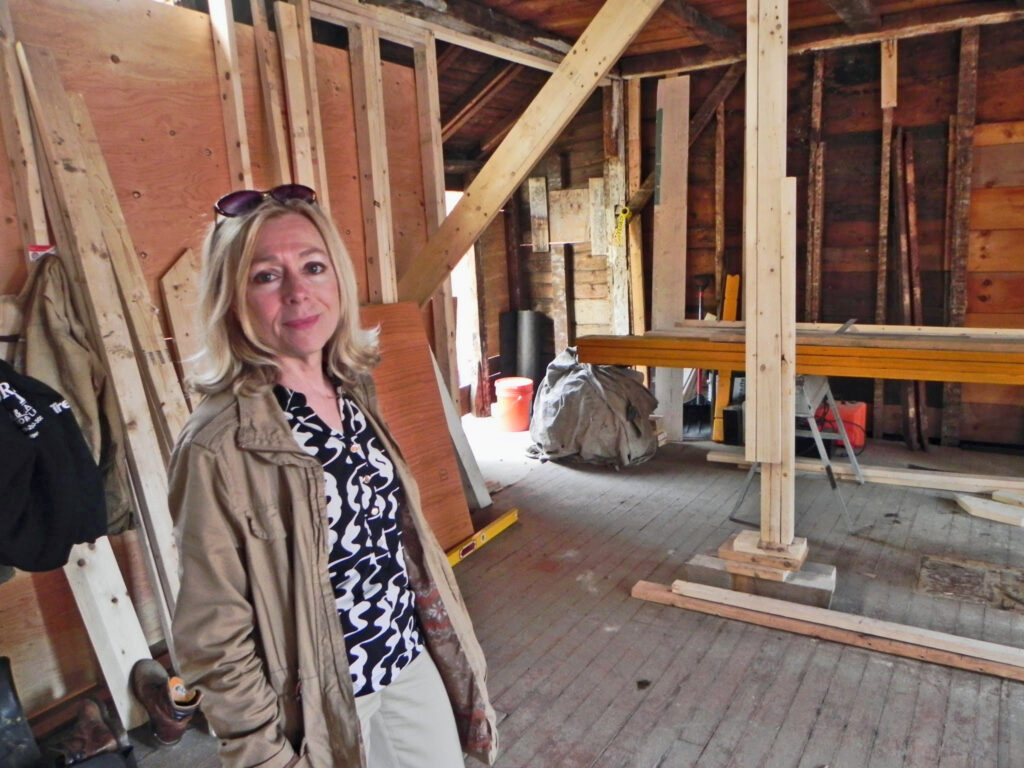
Stepping up for history
“I’m not doing this to sell it,” Bouffard explains. The property seemed to call out her name. She decided, almost against her better instincts, to save 102 State from the wrecking ball of progress.
“I like old buildings and I love history,” she adds.
Born in Portsmouth, raised in Kittery, Bouffard has watched the city evolve with a mixture of joy and trepidation. She remembers the excitement as a child of crossing the Memorial Bridge to explore the city, especially to ride the elevator at J.J. Newburys. Today Bouffard is on the board of the Wentworth-Gardner House and the incoming president in 2016 of the Portsmouth Athenaeum.
“I bought my first pair of skis in this old building,” she recalls, “back when it was Putnam Sports.”
The little building at the base of Chapel Street was the 1960s home of Dick’s TV, run by the husband of former mayor Evelyn Sirrell. Locals may remember it as the office of an auctioneer, of designer Scott Jillson, or as Mad Lydia’s Waltz. Online searches usually bring up a more recent tenant, Canine Cupboard Gourmet Dog Treats. But the story goes much deeper.
When 102 State went on the market last year, real estate promoters dated the building to 1800. That meant it had miraculously survived all three devastating downtown fires at the turn of the 19th century. But how? The third fire swept up State Street, flattening wooden buildings, and leaving only blackened chimneys, and stopping only when it reached the river. A follow-up law, The Brick Act of 1814, required that the city center must be rebuilt using only fire-resistant brick. The 1800 date, therefore, was wrong.
“I doubt very much that any digging was done on the history before the sale, ” Karen Bouffard says. It was only after purchasing the property for $365,000 that she began her own research. As it turns out, the little shop was brimful of tales.
Meet the Drowns
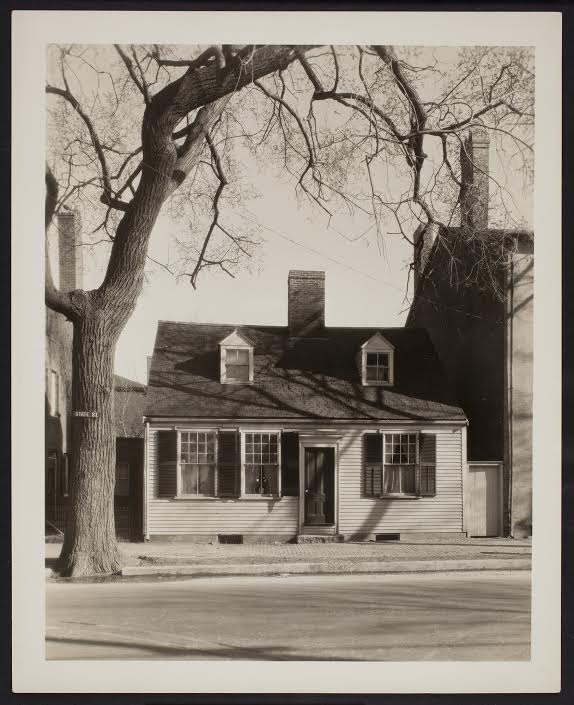
“One look at Charles Brewster’s Rambles About Portsmouth tells all,” Bouffard says.
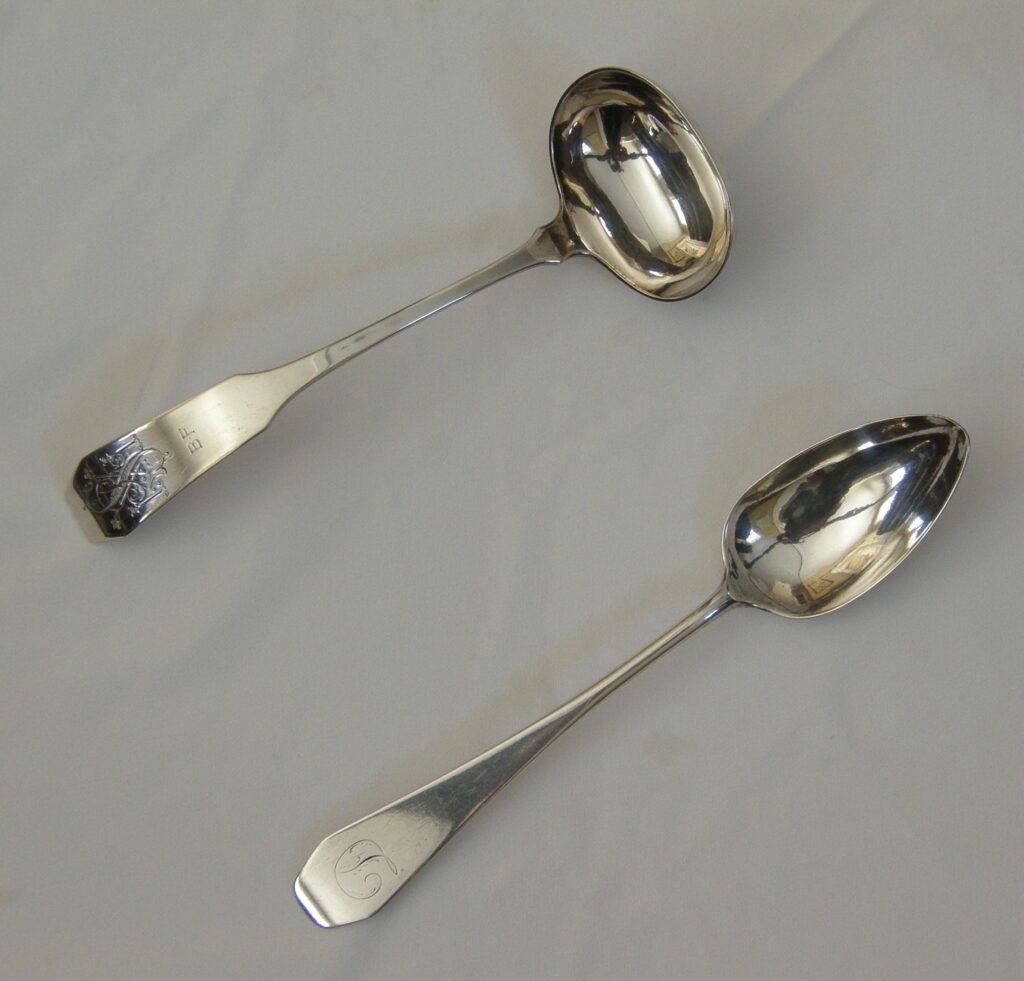
According to Brewster and to Bouffard’s research, the previous house on this small lot did burn in the Great Fire of 1813. Built in 1791, it had belonged to a prominent Portsmouth silversmith named Samuel Drowne. Back then, Buck Street, as it was known, was dominated by two-story wooden dwellings with shops on the bottom floor. Drowne, the son of a prominent minister, had been a leader in the 1774 raid on Fort William and Mary in New Castle. Prompted by a Boston silversmith named Paul Revere, that local event helped spark the American Revolution. The Drown family–they dropped the letter “e” after the Revolution–were important local artisans whose work is still recognized and collected today. Samuel’s brother Benjamin and his sons also crafted silver and gold.
One son, Thomas Pickering Drown, and his wife Mehitable, occupied the State Street house that burned in 1813. The family was almost ruined by the fire. Their shop, their inventory, and their home were swallowed up. Yet records indicate that, with State Street flattened as if by a bomb blast, the Drowns were quickly back at work. An ad in the NH Gazette days later noted TP Drown’s move into a “temporary building on his former stand.”
In another newspaper announcement, Drown offered his “sincere thanks to the inhabitants of Portsmouth…for their benevolent exertions in saving a proportion of his property in the late fire.” Drown hoped that, in a few days, he would be able to gratefully acknowledge each favor with some small gift to those who wished to visit his stand.
“Talk about spirit,” Bouffard says.
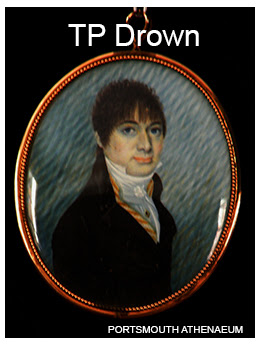
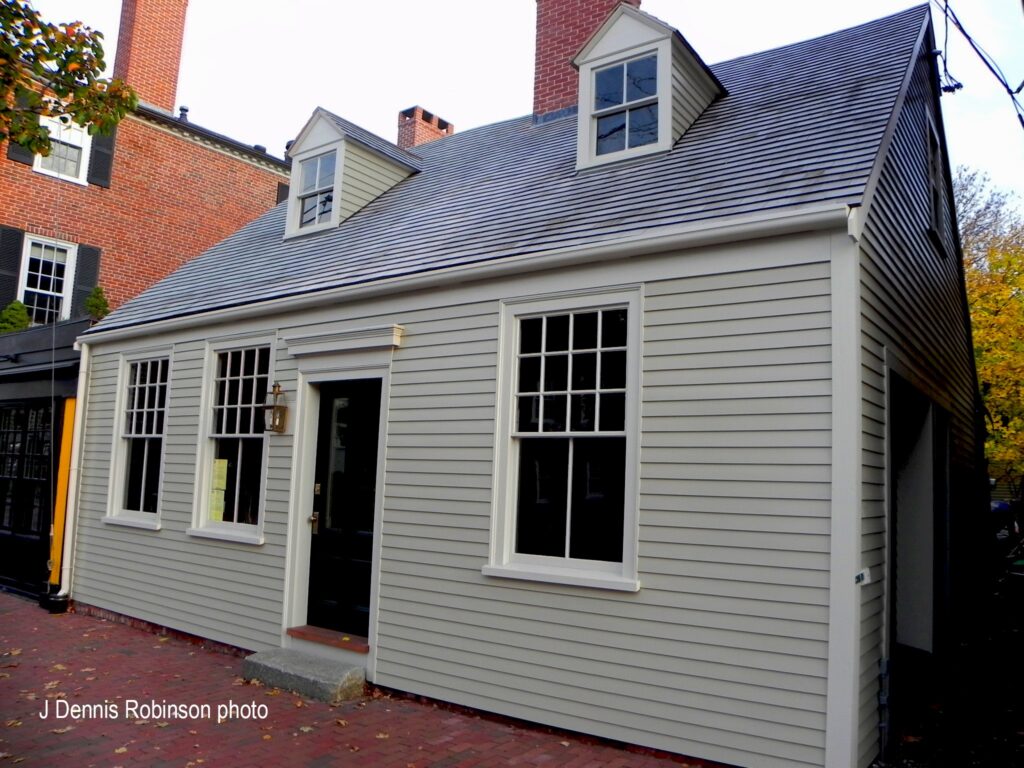
The Drowns hoped to rebuild, but the new Brick Act was soon in force, and the cost of bricks was prohibitive. To make matters worse, Samuel Drowne had taken out a loan for $1,500 that he could no longer pay back. But there was one exception. If the replacement building stood no more than one-story with an attic, it could be made of wood. The low elevation would make it possible to put out a fire that usually started from burning embers on the roof. Soon the Drown House was sandwiched between two brick structures. But “Old Portsmouth” was gone and the city center would never look the same.
“What we see today is the wooden house the Drown family built immediately after the fire when the city was in ruins,” the new owner concludes. “Drown was allowed to build in wood by special exception.”
Two centuries later, the Drown House is still the exception to the rule in a city dominated by brick. The Brick Act, however, was deemed unenforceable and soon faded from the books. Samuel died the following year and Thomas never recovered from his losses and moved away. Bouffard’s research shows that the building was soon sold to an Italian confectioner, Dominick Peduzzi, as an investment property. Peduzzi is known for holding the city’s first Catholic services in his shop at the corner of Fleet and Congress streets. He added the dormer windows to the attic floor.
Dream team
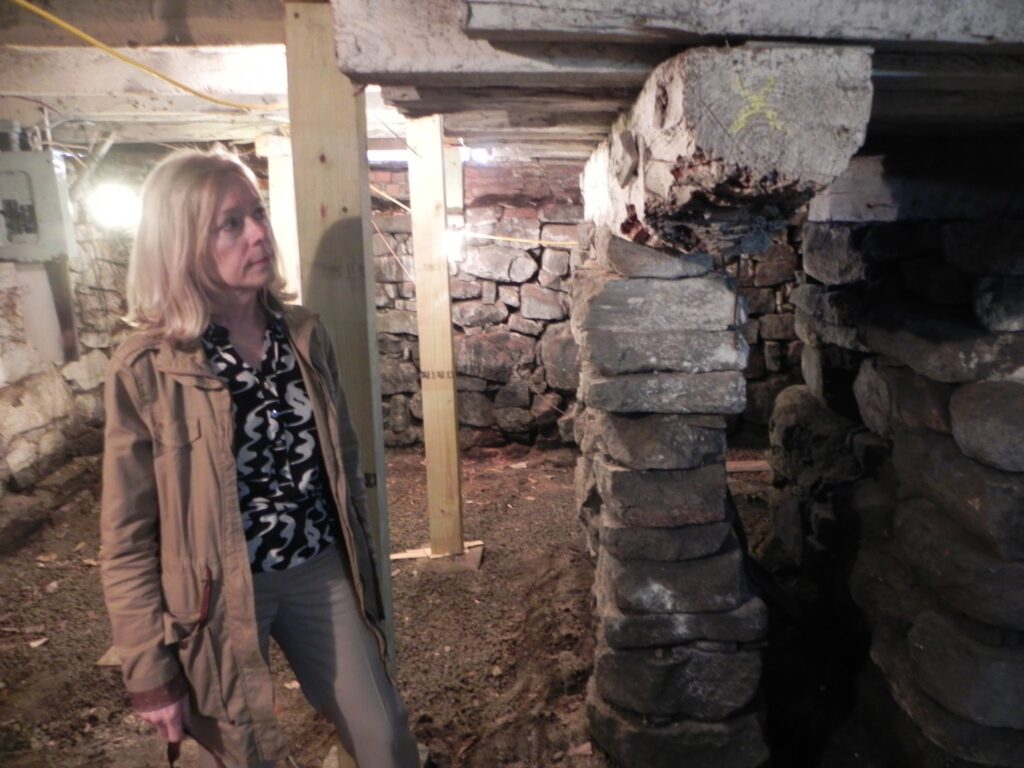
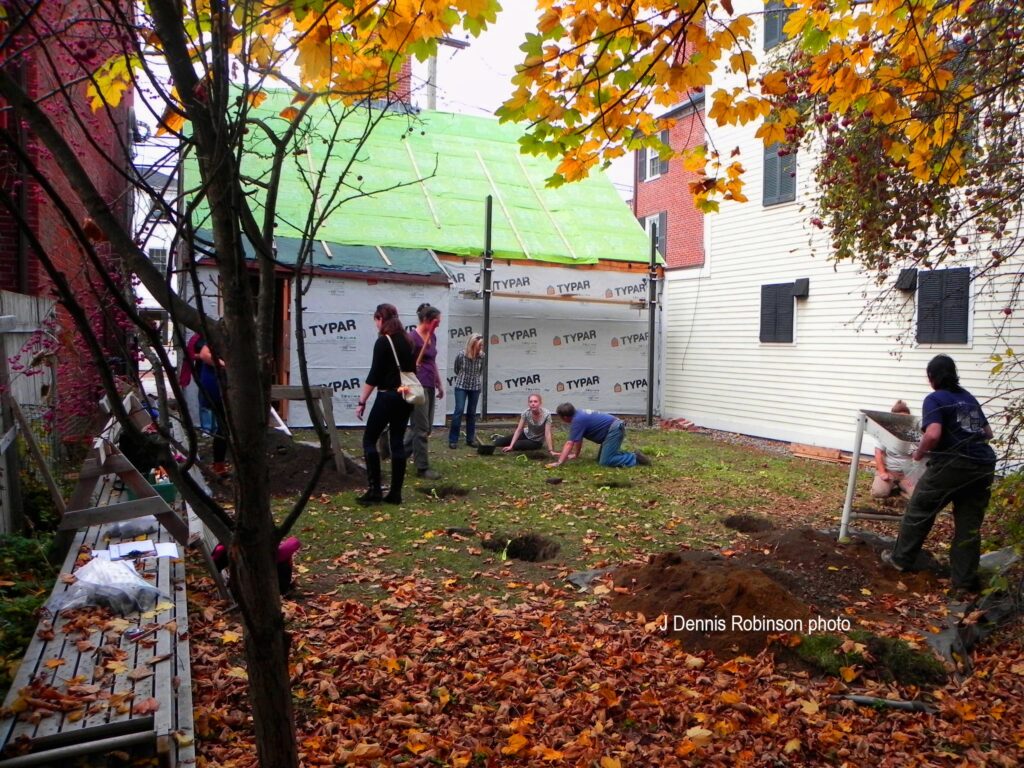
-Work continues at 102 State Street. A commercial and residential space are planned. Forensic work, carefully peeling back layers of time, has revealed the original floor plan and window/door arrangement. The new owner has chosen design elements as faithful to the original as possible, she says, while still meeting modern-day code requirements.
To do so, Karen Bouffard has gathered what she calls a preservationist’s “dream team.” Architectural historian Richard Candee and Brick Act scholar, encouraged her early efforts to save the building. Anne Whitney is the architect. Carpenter John Schnitzler has long been associated with restoring buildings and wooden fences at Strawbery Banke Museum and other historic houses. Carpenters Carl Aichele and Henry Irons have been doing historic rehab “since the beginning of time,” Bouffard says. And historic mason, John Wastrom, “has touched nearly every historic brick in the city–twice.”
Bouffard does not sermonize. “My thought about historic properties,” she says after some urging, “is that they are what makes Portsmouth special.” She mourns the many buildings razed by urban renewal. She sees no particular merit in taking buildings down, and then building modern replicas.
“I didn’t want to see this structure lost like those before it,” she says.
Asked whether the satisfaction of saving one small building is worth the enormous effort and expense, Karen Bouffard pauses, and then sums up. “You take,” she says, “and then you must give back.”
Copyright © 2015 by J. Dennis Robinson, all rights reserved.
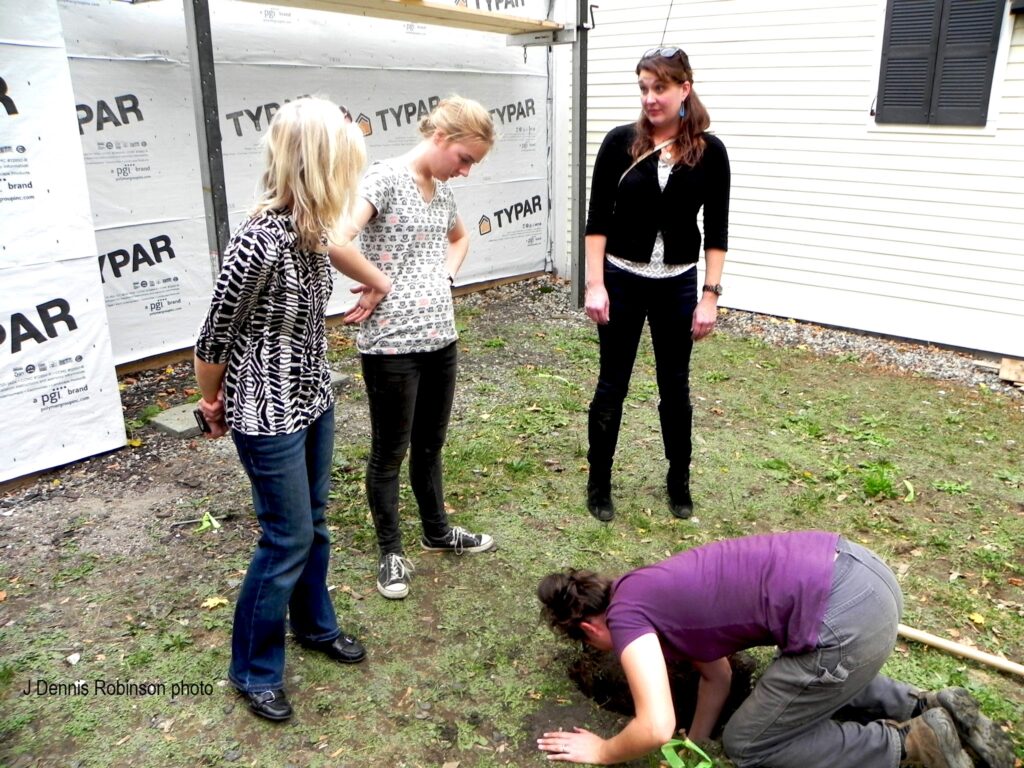
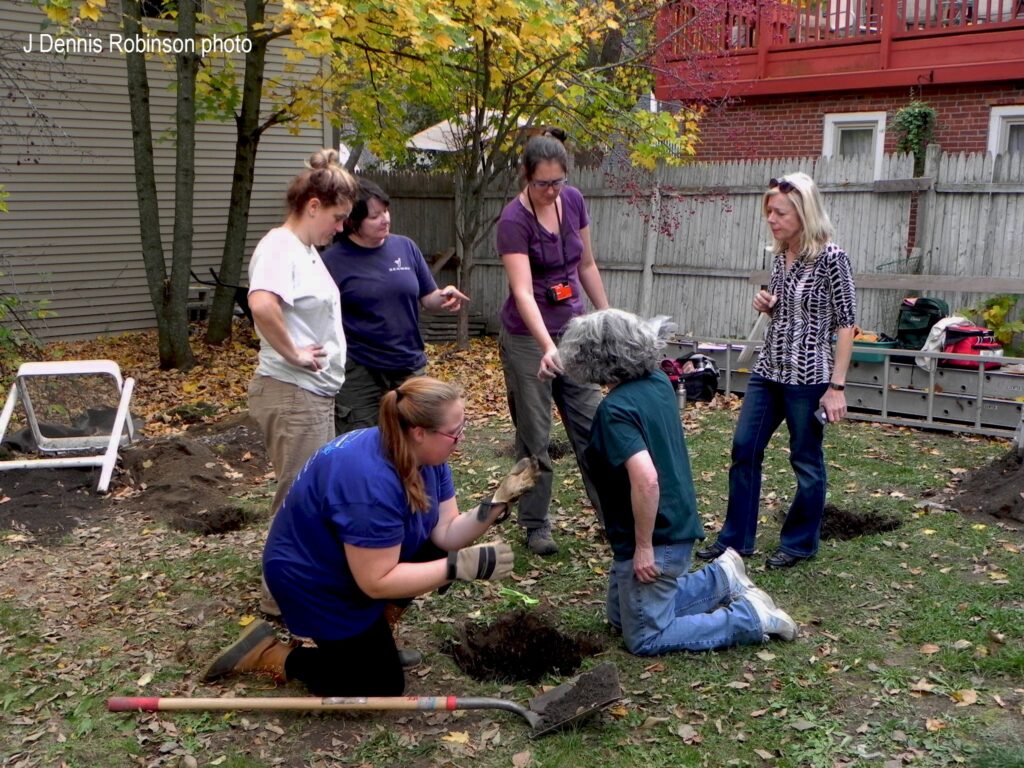
Scrapbook of images during construction and archaeological research at the drown house in 2015 by the author.
 Which Bartlett is Bartlett Street?