


The Wentworth Hotel, built in 1874, has no real connection to the wealthy NH royal governors for whom it is named. The 1760 Benning Wentworth mansion is visible, however, from the hotel windows facing Little Harbor. The name was suggested to the founding Campbell family by Rev. John Albee. A historian and poet, Albee picked the name because it sounded aristocratic and wealthy.
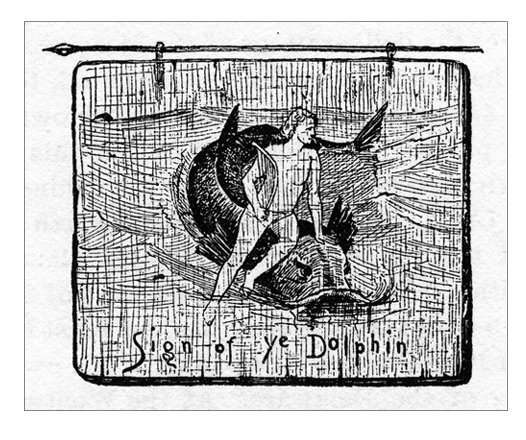
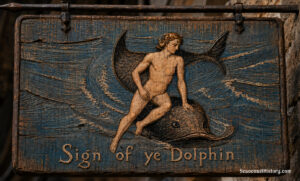
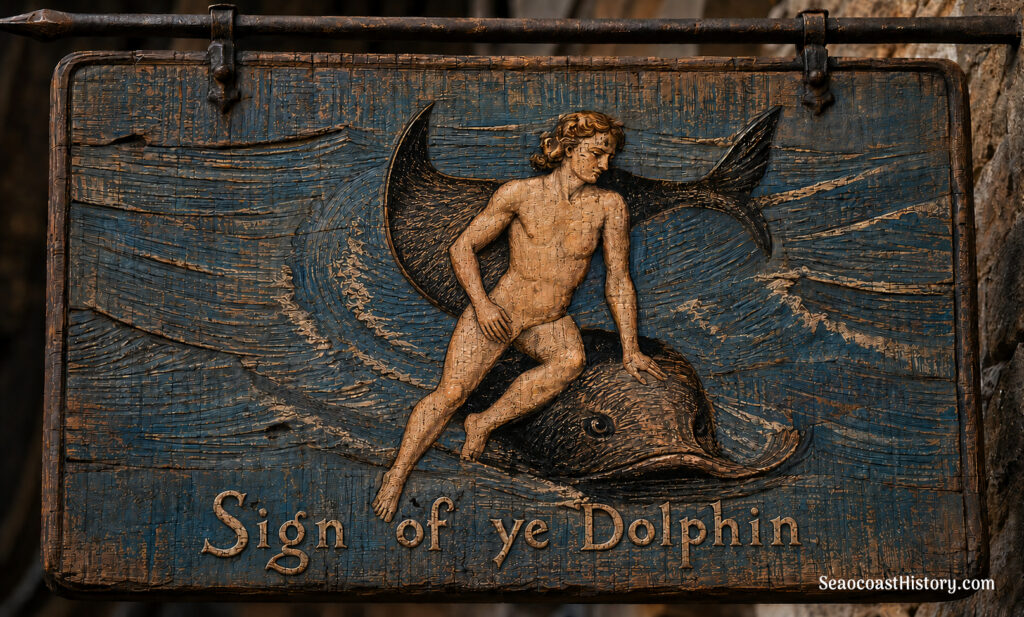
Years later, while writing his 1884 history of New Castle, Albee discovered that the first “ordinary” or tavern on Great Island was owned by Samuel Wentworth in the 1600s. The original inn and eatery was the first licensed to brew and sell beer and was known as The Dolphin. Albee’s book included an illustration for the imagined sign. It showed a mature Cupid riding a dolphin.
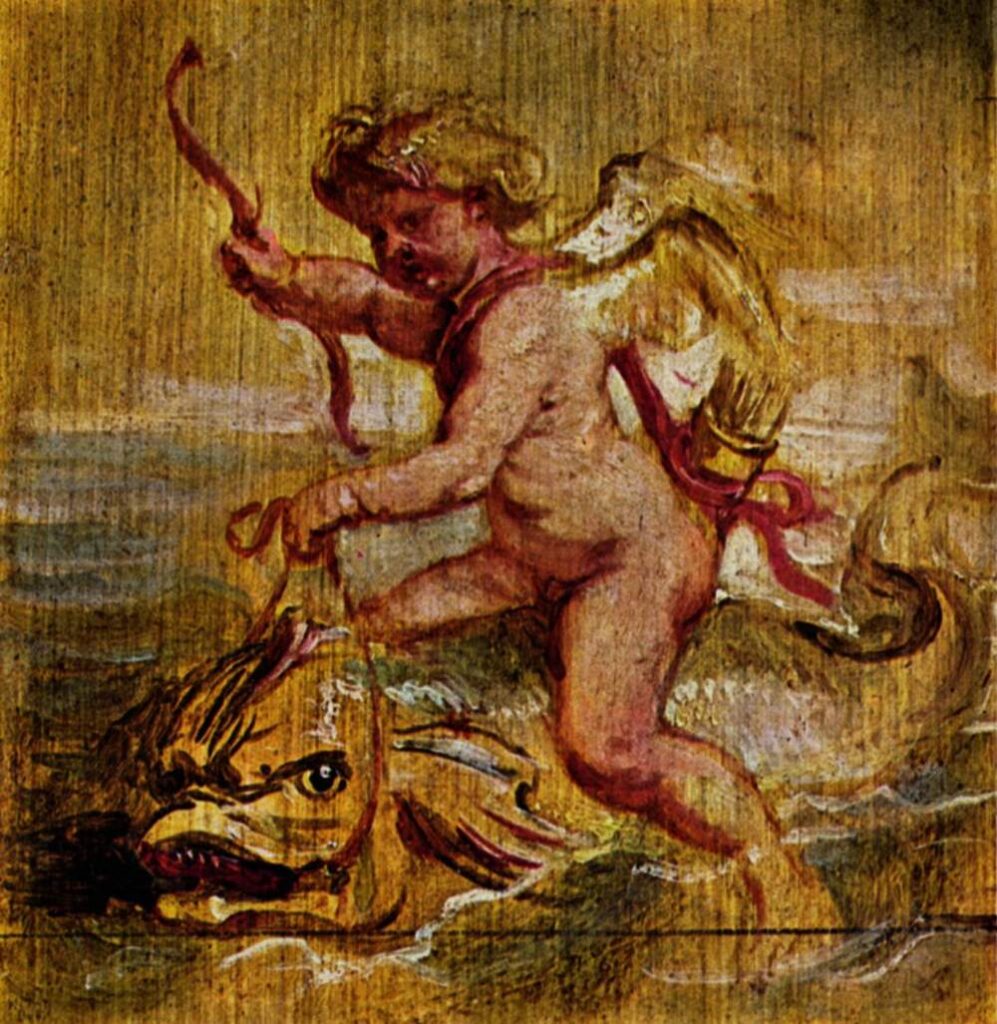
The horrific image of the dolphin as a sea monster was a common theme often seen in early maps. This illustration is similar to a painting of a boy on a dolphin by Peter Paul Rubens from about 1638. Albee’s illustrator, then, gets points for historical accuracy.
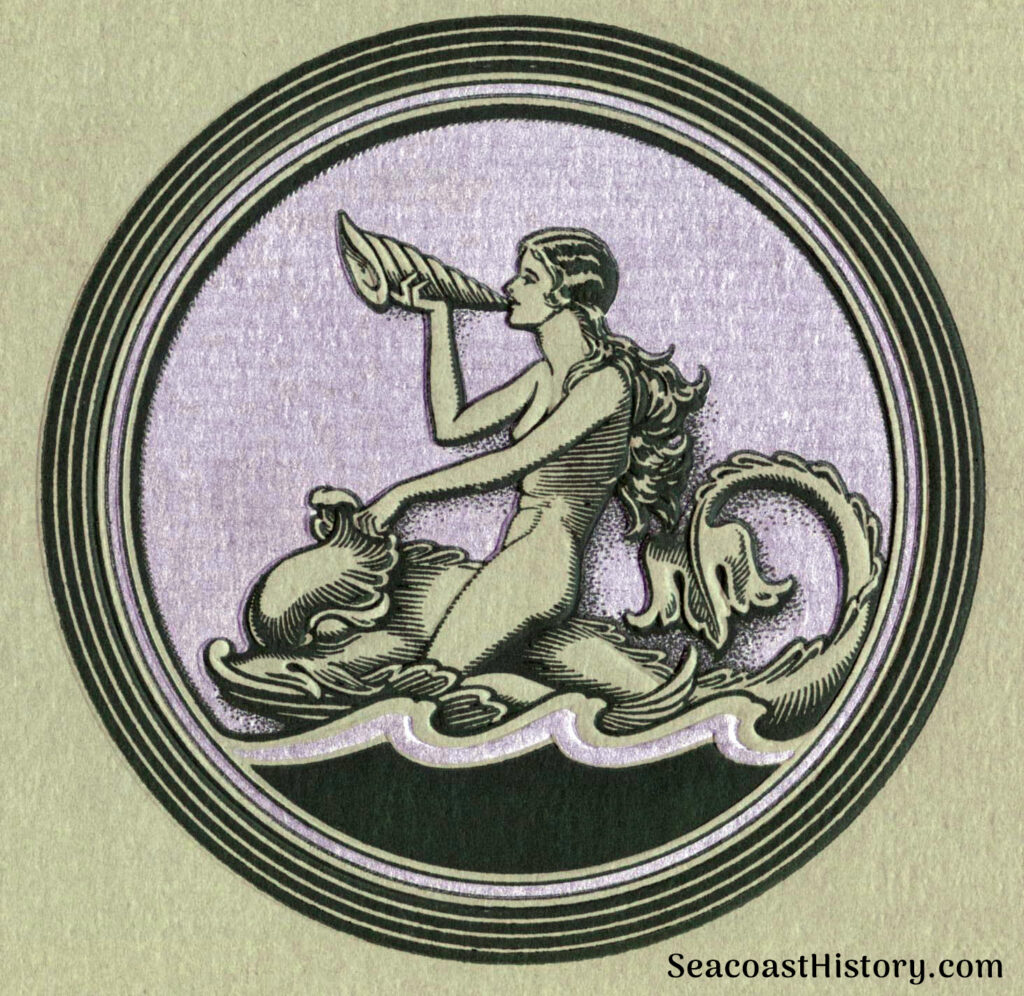
During the early 20th century, the newest owner “rebranded” Wentworth by the Sea. Someone had a copy of Albee’s book. The promotional team revived the dolphin-as-monster imagery popular in Renaissance art. An Art Nouveau interpretation showed a naked female figure instead of a male cherub. Her design harkens to a Greek sculpture of the goddess Nike riding a dolphin.
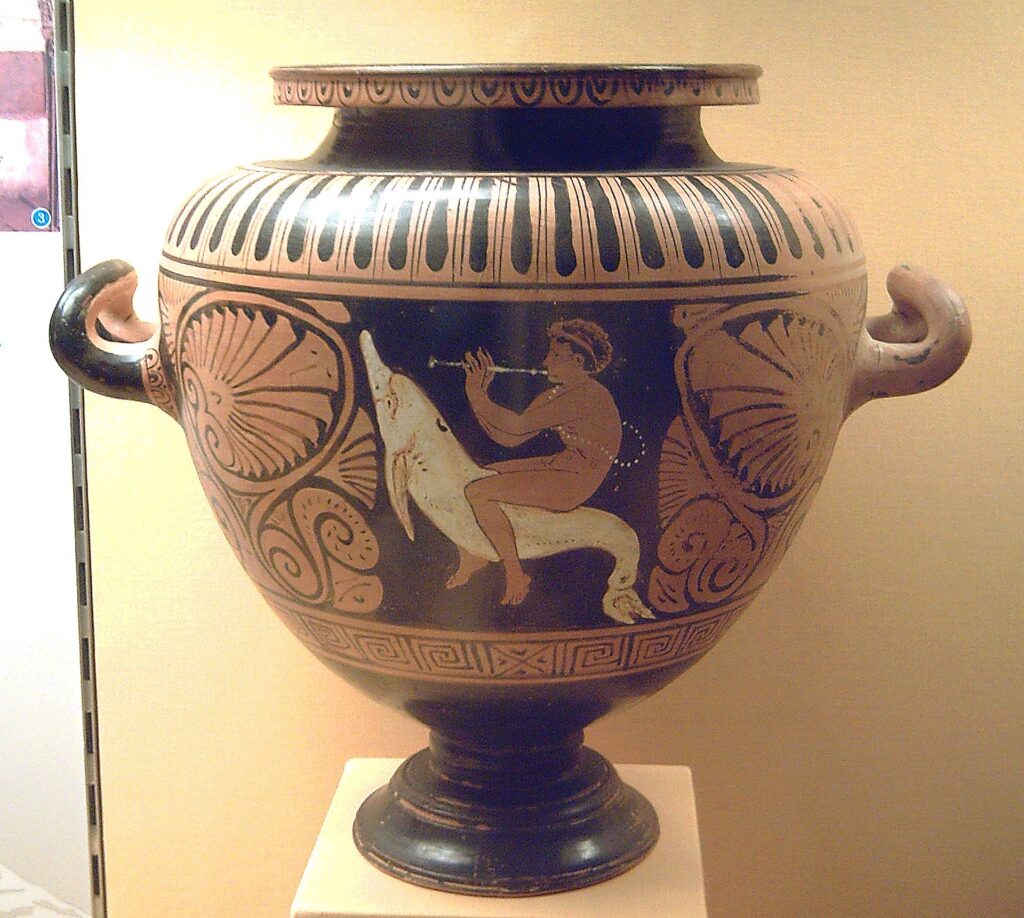
This image was more appealing to the “Roaring Twenties” generation. Despite the “dry era” of Prohibition, the hotel was known as an exclusive oasis where the rich and famous could still get liquor. We can see from an early image in a Madrid museum (bottom) that the concept dates back to at least 340 BC. Instead of a flute, the 20th-century figure is playing a tune on a conch shell.
SEE MY BOOK: New Castle: New Hampshire’s Smallest, Oldest & Only Island Town.
Note (top) that ChatGPT struggled to interpret the 1884 illustration from Albee’s book. While AI was able to depict the image as a wooden painted sign, it could not fathom the perspective of the figure sitting on what was an early and inaccurate depiction of a dolphin. It took half a dozen attempts to show Cupid holding his bow, which I eventually removed, and could not replicate the serpentine shape of the fish in water.
What we have here is a 19th-century illustrator who adapted an ancient meme that was later picked up and revised by a 20th-century advertising agency. All of this is based on a single reference that the Samuel Wentworth tavern was known as THE DOLPHIN. Everything in this historic chain of images is speculative. And yet, the art helps us visualize the concept and reminds us of the Wentworth family lineage in early New Hampshire history.
(c) 2026 J. Dennis Robinson/SeacoastHistory.com(Images from the author’s collection)
 Small Puddle Dock Stores, Big Memories