

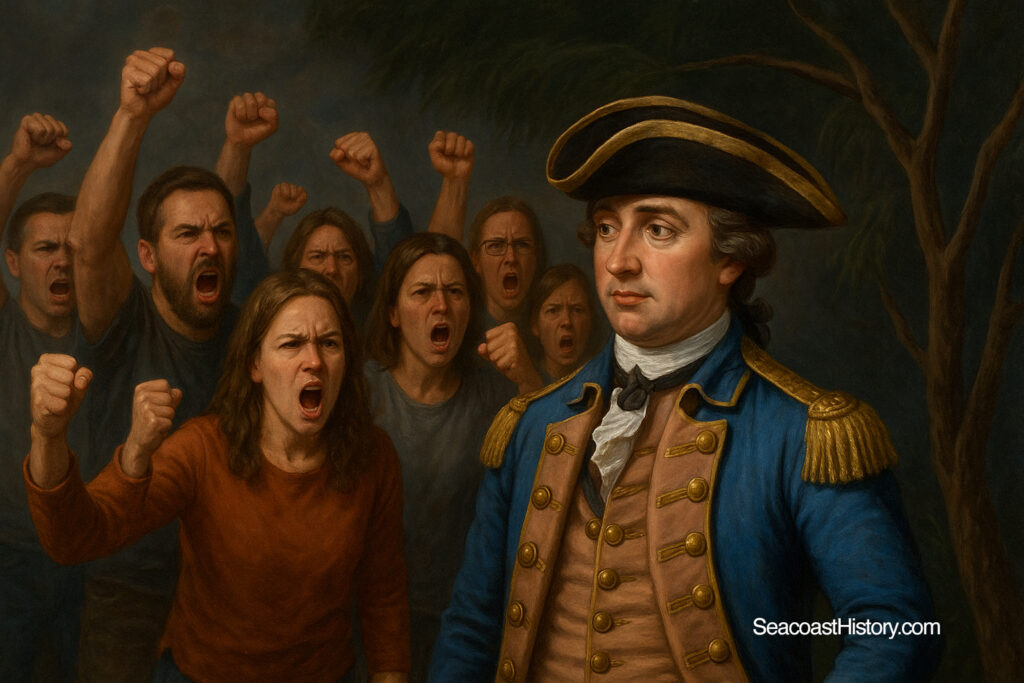
We Americans often memorialize our heroes with a fervor that borders on idolatry. Think of the gleaming white memorial shrines to Washington, Jefferson, and Lincoln in Washington, DC. We demonize our villains like Benedict Arnold with equal vigor. Either way, fallible, flexible people are petrified into stiff statues and imaginary paintings.
Our knowledge of American history, therefore, is often more symbolic than logical, more a collection of legends than facts. According to Smithsonian.com, a recent student survey at Texas Tech University showed how out of touch we are with our past. Many students polled could not answer such basic questions as “Who won the Civil War?”, “Who is our vice president?” and “Who did we gain our independence from?” The same students, however, had a voluminous knowledge of pop culture trivia. Only 18 percent of eighth graders have a basic proficiency in U.S. history. Their parents, too, may be historically “illiterate.”
It falls to teachers, therefore, to make history exciting and fun, starting at the earliest grade levels. And it is up to us historians and history writers to provide teachers with history books that break through the dusty stereotypes. Our job, if we want to save American history, is to jackhammer beneath the bronze and marble and plaster statues to expose the flesh and bones beneath — heroes and villains alike.
Which is exactly what New England author Nathaniel Philbrick has done. In his earlier book Mayflower (2009), Philbrick challenged us to take an unvarnished look at the men and women of colonial Plymouth, MA. In Bunker Hill (2013), he recreated the siege of Boston through the eyes of those who were there. In Valiant Ambition (2016), Philbrick is guaranteed to turn any dull history of the American Revolution into a rollicking classroom debate.

When you really think about it, Philbrick implies, George Washington and Benedict Arnold were a lot alike. Get real, we reply. Everyone knows Gen. Washington won the Revolutionary War while Gen. Arnold was the traitor who sold us out to the British.
That’s true, Philbrick taunts, luring us in, but dig deeper. Washington, the former Indian fighter, made deadly mistakes too. Before being appointed head of the Continental Army, he had never commanded a large force before. He barely escaped the British at New York in 1775, where historians agree, he never should have been. He cheated fate at Valley Forge and was defeated at the Battle of Brandywine in 1777.
Like Benedict Arnold, one of his favorite and most successful generals, Washington was inclined to attack, though he lacked Arnold’s military skills. Arnold initially distinguished himself for his bravery and intelligence in combat, like the capture of Fort Ticonderoga and the Battle of Saratoga, where he was gravely wounded. Had Arnold been promoted in rank for his valor, a decision championed by Washington, instead of being passed over by Congress, things might have gone the other way. Had he not been wounded, had he not fallen in love with Peggy Shippen (the daughter of a Loyalist sympathizer), had he not been subjected to an embarrassing court-martial, and had he not lost his personal fortune fighting for the American cause–we might be packing the kids off to tour the Benedict Arnold Memorial. Or would we?
Nathaniel Philbrick does not attempt to exonerate Benedict Arnold for his sins. Arnold chose to spy for the British for money. He lobbied George Washington for command of West Point, intending to hand a decisive military victory to the British. The historian unravels the discovery of Arnold’s treachery with the high drama it deserves.
Indeed, this seems like a story we already know. But Philbrick goes deeper. He is less interested in who was good and who was evil than in understanding what caused Washington to stick to the patriot cause and Arnold to give it up. The author looks for those reasons within the character of the two men, but also within the context of the times. The names and dates and body counts must be accurate, Philbrick knows, but they are there to serve the greater purpose of history, which is to understand who we Americans really are.
The historian’s job is to drag us, kicking and screaming, out of our comfortable 21st-century mindset and into a world we can barely comprehend. We need to see the horror of battle in which volunteers were literally starving and freezing en route to die for a nation that did not yet exist and for a cause that was both vague and unpopular. We need to know that the Continental Congress, unable to raise money through taxes, was largely impotent. We have to recall that communication about the war was agonizingly slow and frequently inaccurate. We can’t forget that the thirteen colonies were no more united than the very different nations of the modern European Union. Continental dollars paid to soldiers were all but worthless. We need to remember that neither Washington nor Arnold knew who was going to win the war. And if the not-very-United States won, few believed it would last.
Arnold was far from the only businessman, soldier, or politician who tried to profit from the war. He later claimed he was, in fact, saving America by bringing a speedy end to a protracted and bloody insurrection that could not be won. Based on the way the war was going, he might have been right. By 1780, the year Arnold sold his soul to the British, Washington had not seen his Virginia home at Mt. Vernon for five years. Washington, too, was close to desperation over a seemingly lost cause.
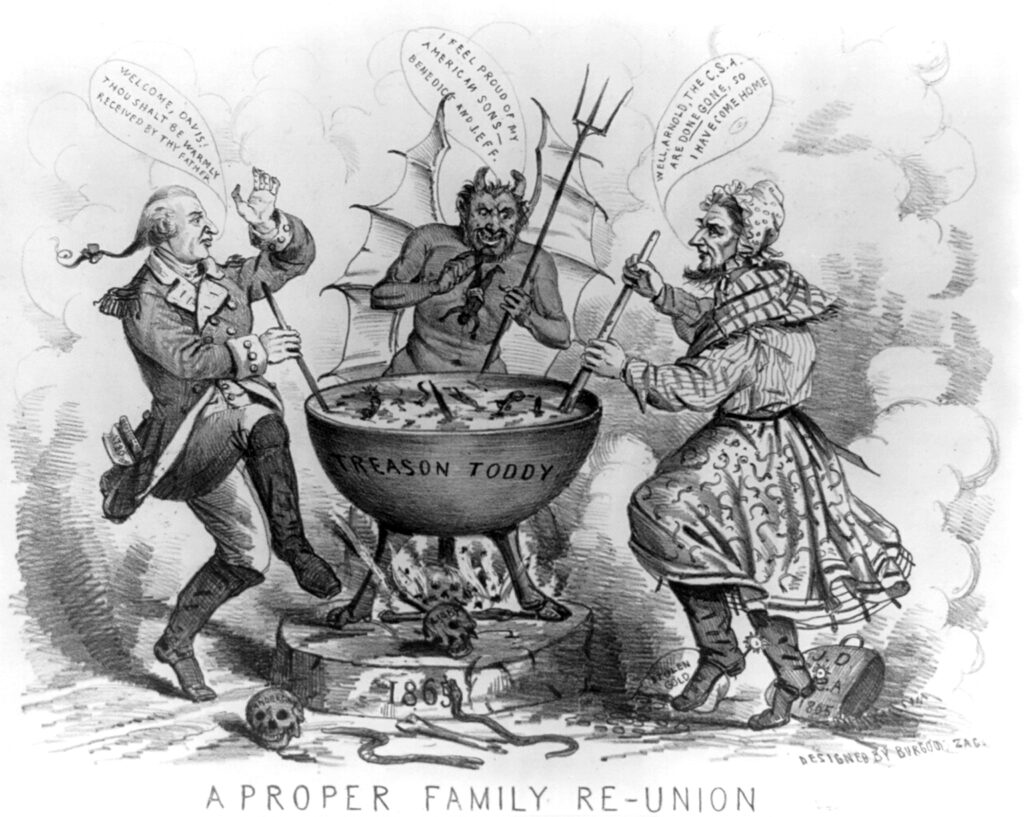
Both men were vain, ambitious, aggressive, obsessed with honor, spurned by Congress, and inspirational to the soldiers who served under them. So why is one memorialized and the other despised today? In large part because America won the war. Or as Washington predicted, the British eventually just packed up and went home. Arnold was very nearly right. The real answer, Philbrick indicates, goes deep into the personality of the two generals who set out to be heroes.
In Valiant Ambition, Philbrick tosses out a second theoretical grenade. How much did Benedict Arnold help us win the war? He certainly helped in the beginning as a successful general. But it was Arnold’s villainy, Philbrick argues, that helped a disconnected, exhausted, and often indifferent nation to define itself under a single flag against a common enemy. Without Darth Vader, in other words, Luke Skywalker can’t save the day.
As every great teacher knows, learning is not about what students cover, but what they uncover on their own. If we’re going to “save history,” we need to make it as compelling as pop culture. Instead of slogging through the battles of the American Revolution, why not ask kids to write an essay on the Benedict Arnold Memorial in Washington, DC? Watch them Google it on their phones, and watch their parents freak out. It is in the wild, unforgettable debate that follows, not through textbook legends and myths, that kids will discover America.
Copyright 2016 by J. Dennis Robinson, all rights reserved.
 John Paul Jones, the Ranger, and an Unhappy Piscataqua Crew