


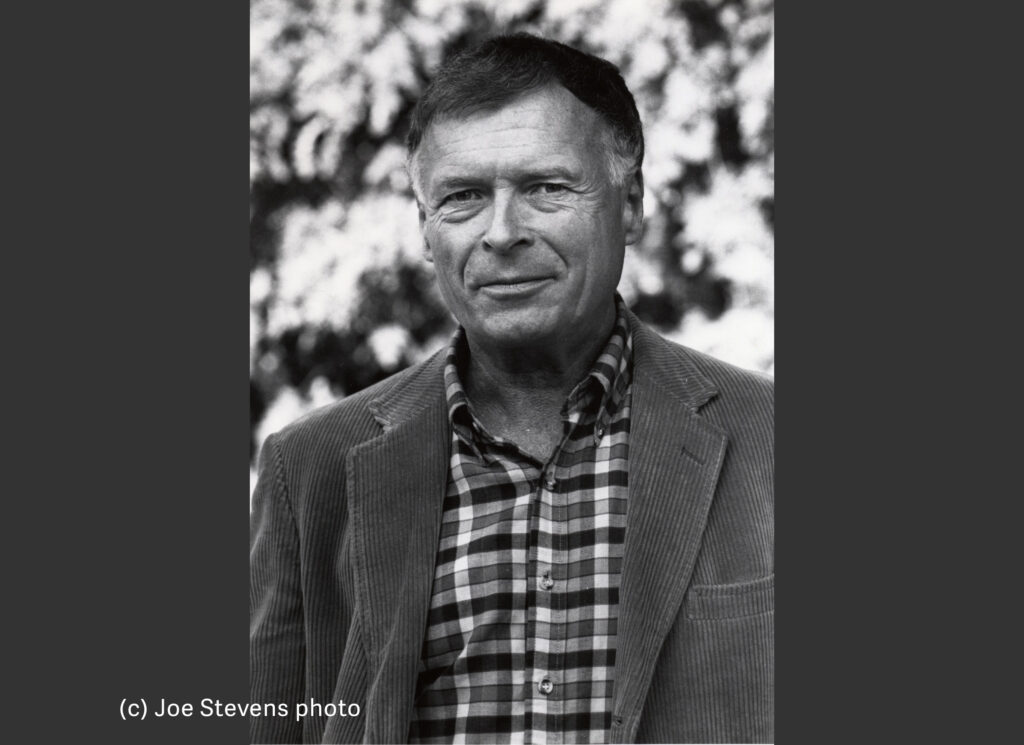
It was standing room only at the Jay Smith memorial at the Portsmouth Music Hall in 2002. Although Jay could be a standoffish host, he sure brought people together. With the Press Room, Jay Smith created a womb for the rebirth of Portsmouth culture. Everybody who had an ounce of talent– writers, artists, musicians– gravitated there. We drank there, performed there, dated and split up there. We chatted, laughed, grieved, sang, and played darts there. If you were looking for someone on a Friday night, in an age before cell phones, you checked the Press Room first.
What most people didn’t know, prior to Jay Smith’s demise of a heart attack at age 65, was that he also created the Portsmouth Music Hall. He was the anonymous lender who risked his savings to back a loan during the critical era when the historic theater almost became condos. He was a “player” in the renaissance of the city as people know it today, back when Portsmouth was changing from a gritty seaport to a cultural hotspot. He did it quietly, sometimes grumpily, as a bar owner and a building restorer, and a silent philanthropist. He celebrated it openly with his rich singing voice at the Friday night hoots, held in his own bar, in his own building. Even when he sold the Press Room years ago, he returned to drink, and argue, and sing.
The memorial service was like old home week for those of us who have lived and worked downtown for the last few decades. Cormac McCarthy and Sammie Haynes, Sarah Bauhann, Larry Garland, Harvey Reid. It was just another hoot, except the man who made it all happen was missing.
While writing a history book about the Music Hall a few years ago, I spoke with community leader Jameson French about the theater’s financial crisis in the late 1980s.
“I will give you a line of credit on my trust fund for up to $250,000 if you can negotiate with the FDIC,” Jay Smith told French. “I don’t have a family, Jamey. I can do this; just don’t let anybody know.” The newly formed nonprofit Friends of the Music Hall was able to pay off their mortgage and repay the anonymous loan.
“I don’t think the Music Hall would ever have made it if that hadn’t happened,” French told me. Jay Smith later gifted much of the money back to the theater. The identity of the lender remained a secret until it was revealed at the memorial gathering in his memory at the Music Hall.
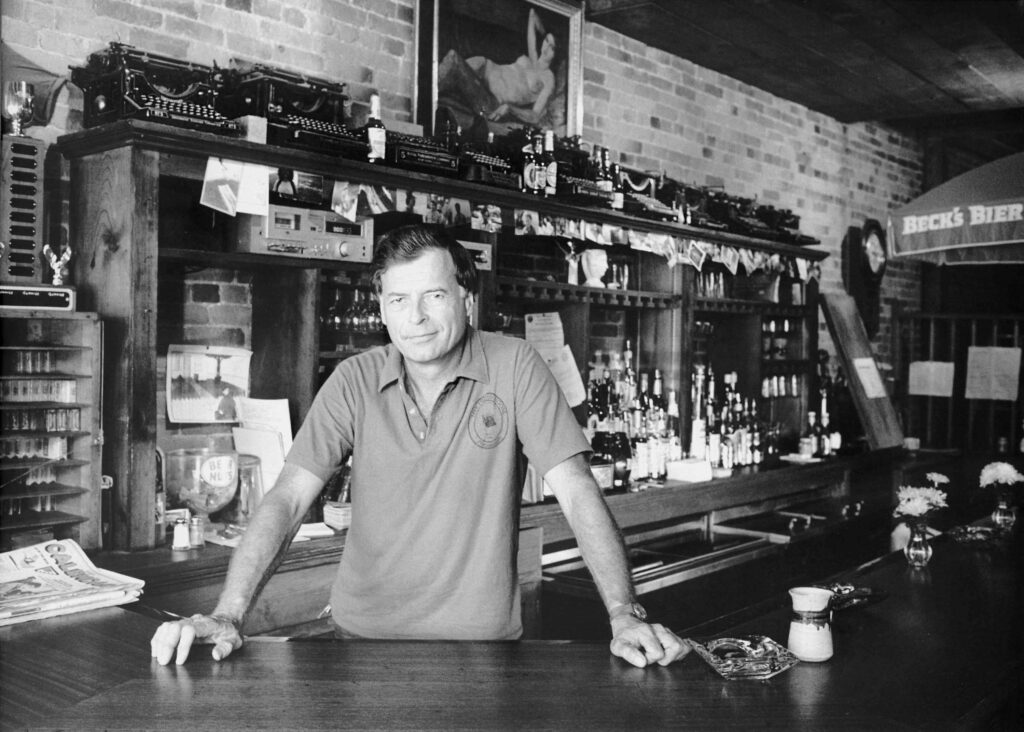
If you’re young, or moved to Portsmouth recently, there’s no good way to tell you this story. The amazing thing about the Press Room now is how much it looks like it did 20 years ago or more. If there is an “American pub,” this was it. Our lives flowed in and there like the tide. And always, there was Jay, standing like a salty pillar in the harbor, a drink in one hand, his jaw fixed, his eyes fluttering back and forth between ecstasy and grim resolve.
Someone at the ceremony said he had never seen Jay without a drink, a hammer or a musical instrument in his hand. He restored downtown buildings with inherited money that came from who knows where. He said almost nothing about his past, even to his most intimate companions, of whom there were few. When a female friend wanted to own a house, but didn’t have the money, he bought it outright, letting her slowly pay him back. And yet, judging from his vintage attire and car, he didn’t waste money shopping.
I remember Jay back in the early 70s when he battled Aristotle Onassis and the Seabrook Nuke plant while working for Publick Occurences, a tiny Newmarket weekly. That was in his journalist phase. I wrote and he took photographs for the articles. When he wrote, dammit, he was better than me. He was the only club owner to consider featuring the Austin Street Singers, a band I played in during the late 70s. Like Jay, the band was eccentric. One Groundhog Day we performed only songs about groundhogs. (Ain’t Nothing But a Groundhog, by Elvis Presley, for example). It was risky. Jay loved it, and asked us back to play on Fourth of July and Christmas.
Although I talked to Jay Smith often over 25 years, I don’t think we had a real conversation until 2000 AD. For some reason his shield dropped. I heard it clunk to the ground. We had shared so many tides, I guess, that it was time to talk. I called him on the phone for advice on real estate. I used him as the background source for articles. We argued about historic preservation. We served on a committee to rebuild the Old Statehouse. When I announced I was getting engaged, he confessed he had a crush on my girlfriend. He was talking openly, like I’d never known him to talk before. And then the curtain fell.
I wouldn’t say we were friends. It was more of a mutual admiration society. I liked what he did. He liked what I did. What he did became manifest as speakers and musicians flowed on and off the Music Hall stage on a Tuesday afternoon. Jay was, for lack of a mightier term, our stage manager. For a generation, he created environments where we acted out our lives. He made this city a better place to grow older in.
Now and again, when he had a few large drinks, Jay got up on the stage and belted out a tune. His “Danny Boy” made angels weep. And so we wept on Tuesday, for the man who brought us all together in Portsmouth. Thanks for building the Press Room, Jay. Thanks for saving the Music Hall, and for all the memories you fostered. You are heartily missed.
(c) J. Dennis Robinson. Updated in 2026.
 NH’s Un-Constitutional Summer of 1998