

“To everything there is a season,” according to Hebrew and Christian scripture, including “a time to break down, and a time to build up.” The unanswered question these days is exactly how that wisdom applies to three Portsmouth properties — to the Carey Cottage at Little Harbor, to the former St. Pat’s School on Austin Street, and to the McIntyre Building smack downtown.
Debate over the approaching demolition of the historic 1887 summer cottage and the 1906 Catholic school building has been spirited. Opponents of the proposed McIntyre site redevelopment, meanwhile, have gone so far as to suggest that the city should scrap its current plans, pay more attention to public input, and return to the drawing board. What’s remarkable, from a historian’s point of view, is how orderly, resourceful, and well-mannered these battles have been–especially considering the state of politics these days. A lot of very wise and caring people are making their voices heard on both sides. Kudos to us all.
What tugs at the historian’s beard, however, is the simultaneous whine of the Chicken Littles who interpret every change as the End of Days for the “Old Town by the Sea.” While it’s undeniable that behemoth buildings of dubious architectural interest are on the rise in the city, their existence in no way eliminates Portsmouth’s passion for preservation or our status as a heritage destination.
The good news
Let’s remember that very few American cities have as many historic house museums open to the public per capita as Portsmouth, NH. A recent online rating lists us as number 15 among America’s “most historic” cities along with St. Augustine, FL and Williamsburg, VA, not to mention Boston, Philadelphia, and Baltimore. Those, however, who perpetuate the myth that Portsmouth has the most late 18th and early 19th century homes, should take a trip to Salem, or Newburyport, or Newport.
Remember also that pretty much all of the historic house museums created here in the 20th century were “saved” thanks to funds from wealthy families who didn’t live here. The good news is that once we preserve a building, it stays preserved. With the exception of the Tobias Lear House, birthplace of George Washington’s secretary, every museum opened here since 1908 is still open. And if the current plan to sell the Lear House goes through, it will be better preserved and more accessible to the public than it has been for the last two centuries.
And let’s not forget the relatively recent revival of the 1878 Music Hall, the 1810 Portsmouth Academy (now Portsmouth Historical), the 1817 Portsmouth Athenaeum, the North Church steeple, and many more endangered structures.
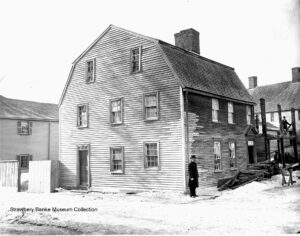
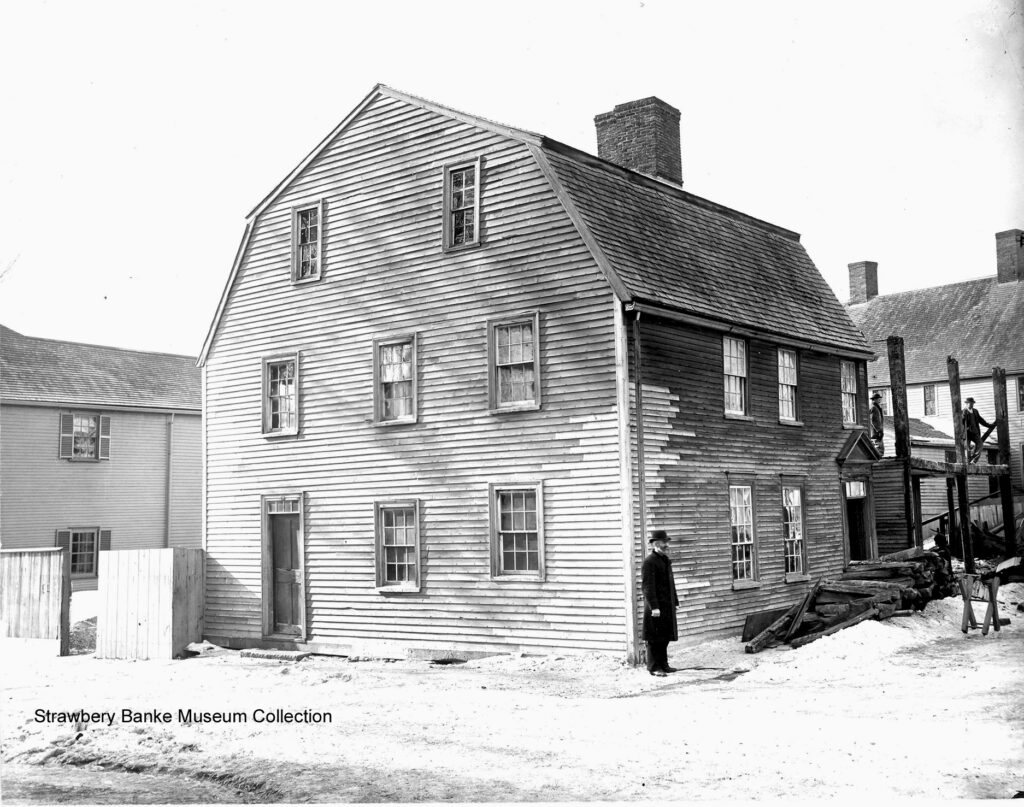
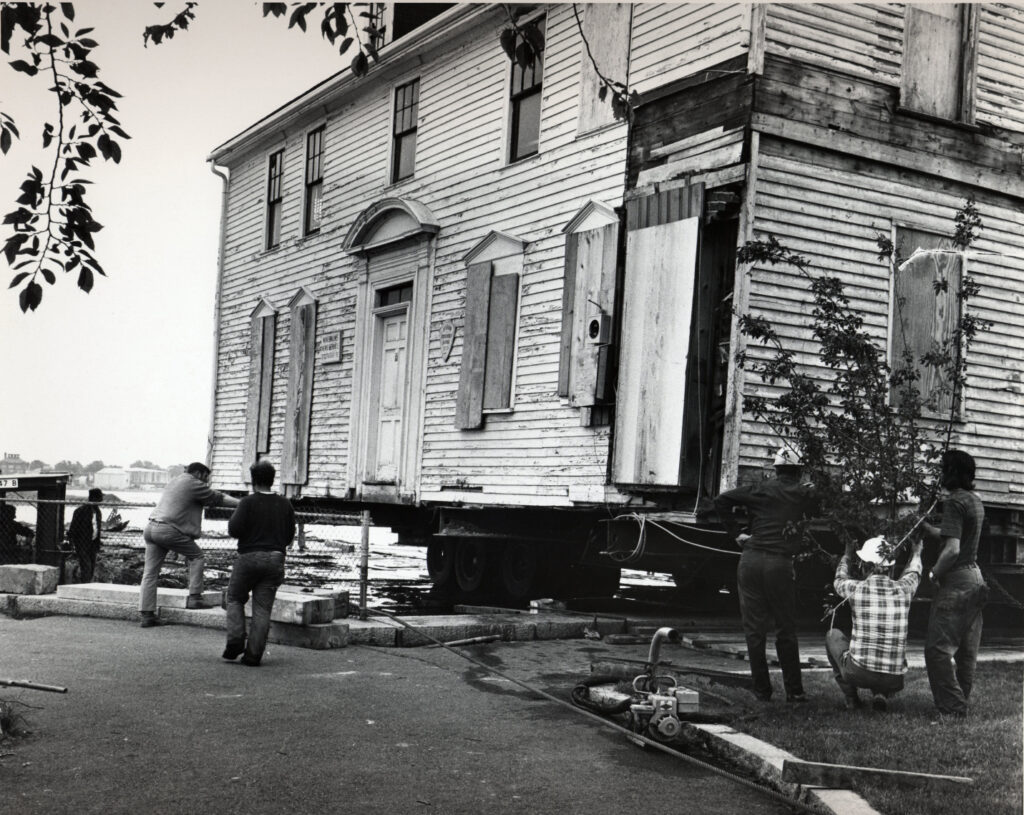
Portsmouth has torn down a ton of beautiful old homes in the name of progress. But it has also moved many to safer locations. Case in point, the Joseph Whipple House still stands on Middle Street, the Oracle House was moved from Haymarket Square to Marcy Street, and the Joshua Wentworth House was shipped by barge from the North End to the South End. Stoodley’s Tavern, the Daniel Webster House, and Gov. Goodwin’s mansion are alive and well at Strawbery Banke Museum.
And while Creek Farm, at this writing, remains on the demolition list, private citizens continue to step up to restore and repurpose downtown properties. Kindly consider, for example,the old wooden Drown House on State Street, the elegant 1905 YMCA Building on Congress, the towering brick Larkin-Rice House on Middle, or the Sail Maker’s House on Court Street, to name a few.
The bad old days
When George Washington visited Portsmouth in 1789 he was largely unimpressed with the squat two-story architecture. “There are some good houses,” the president wrote in his journal, “but in general they are indifferent and almost entirely of wood.” Then came the three devastating fires that burned hundreds of downtown buildings in the early 1800s.
Like any city, Portsmouth has growth spurts. It happened during the city’s maritime heyday in the 1700s. It happened again as Portsmouth rebuilt in brick after the devastating fires. It happened again after the Civil War when we got many of the towering buildings that define the city center — the Rockingham, the Music Hall, plus the Odd Fellows, National, and Franklin blocks on Congress Street.
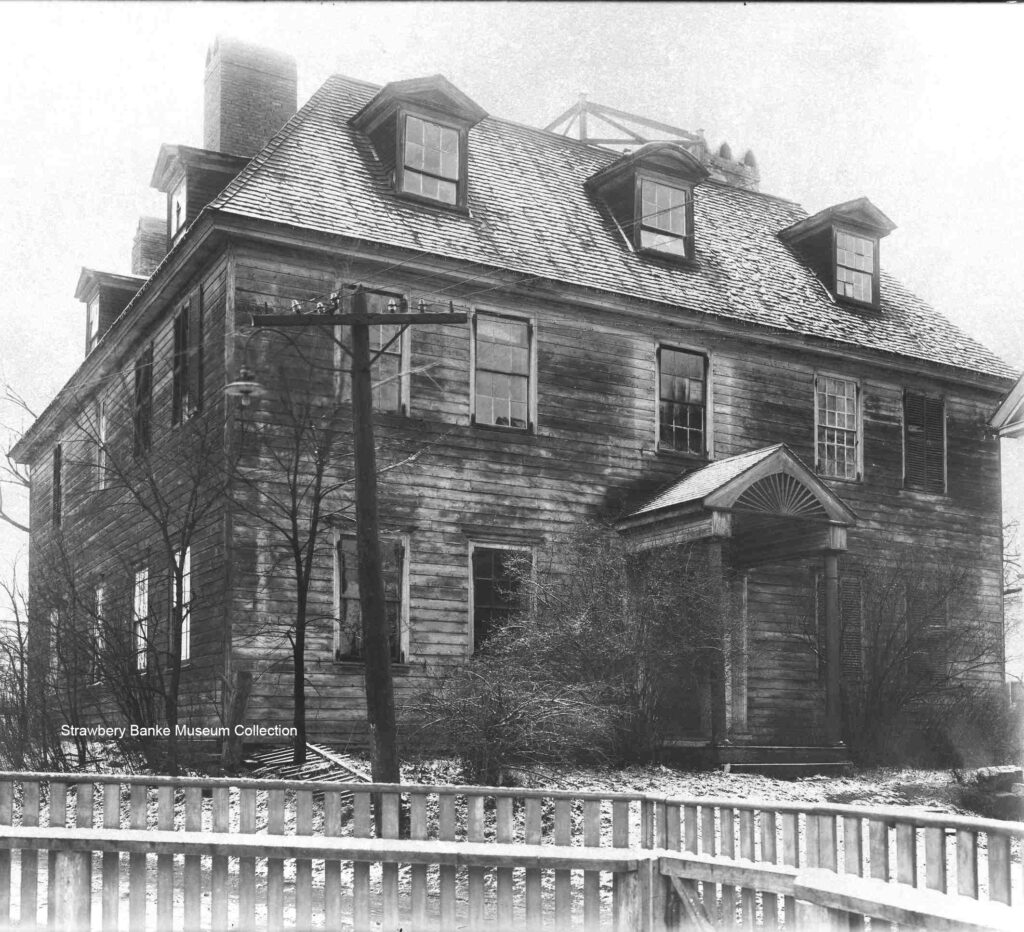
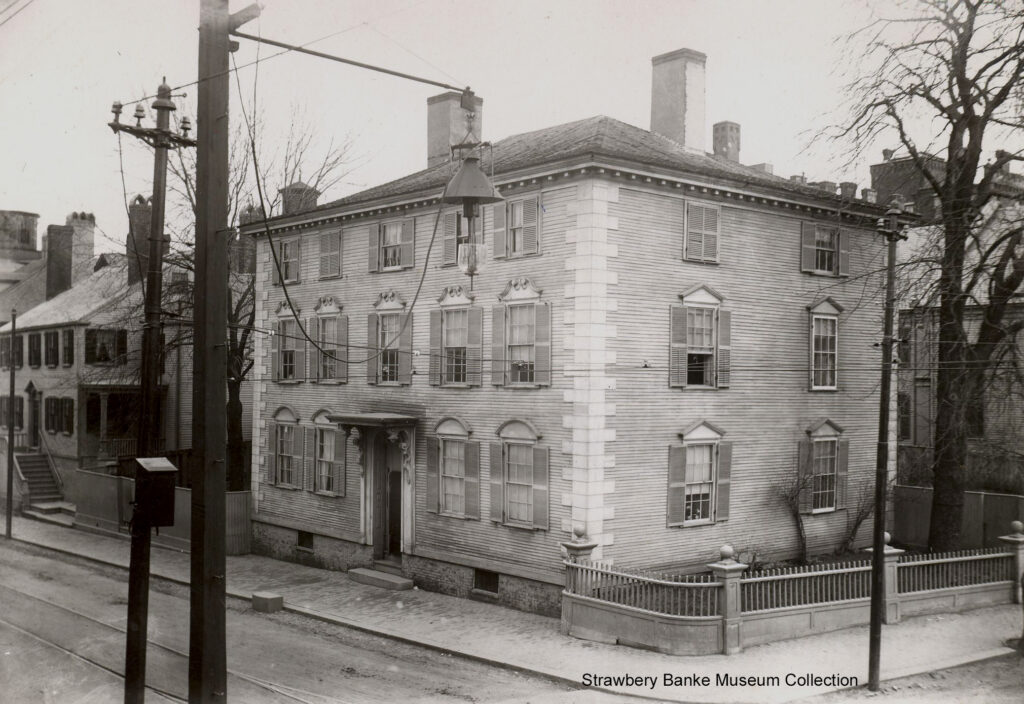
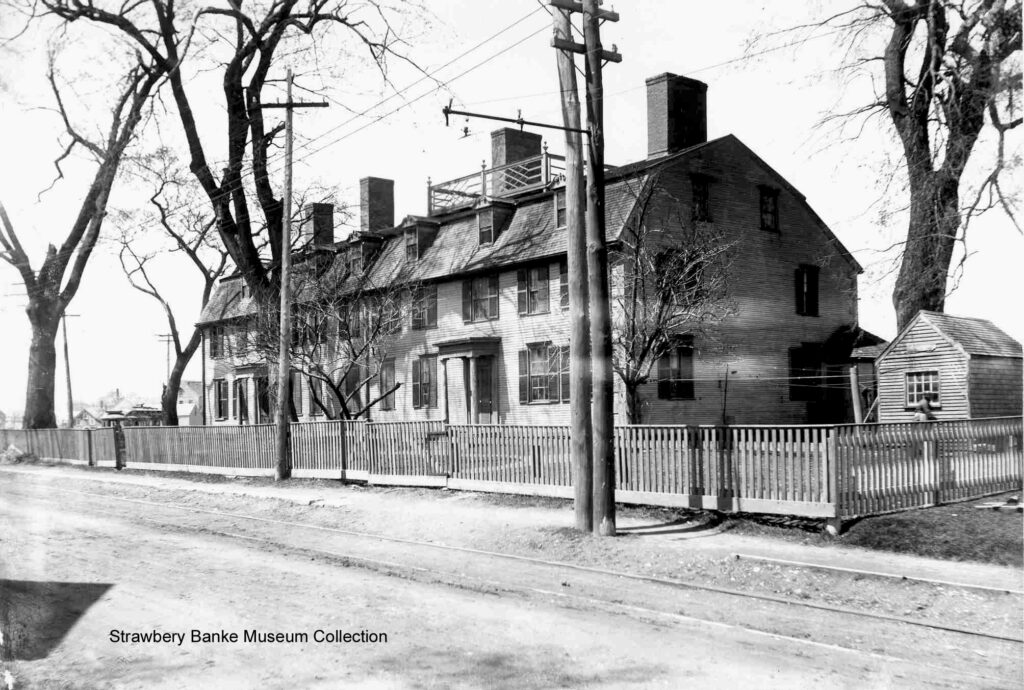
We also lost a lot of great old homes in the process. Once considered among the finest mansions in the Piscataqua region, for example, the George Jaffrey House stood at the crest of a low hill on Daniel Street, the site of the McIntyre Federal Building today. Built around 1730, the dilapidated mansion was torn down in 1921.
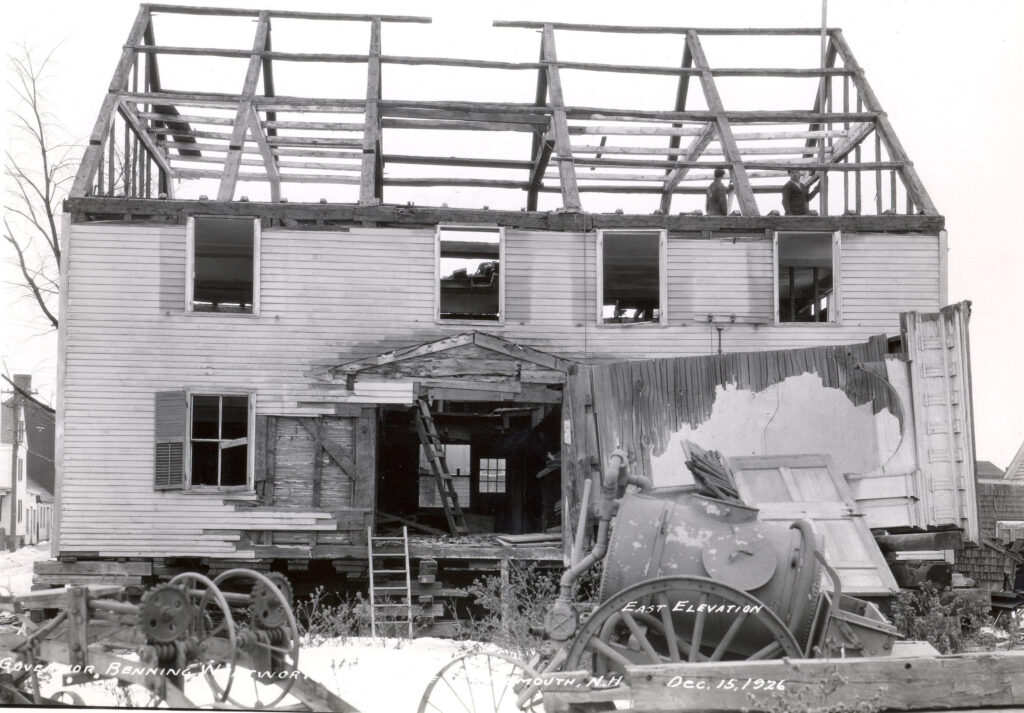
Five years later, in 1926, former bordello owner “Cappy” Stewart demolished the 1700-era home of New Hampshire Lt. Gov. John Wentworth that stood on what is now the parking lot of Strawbery Banke Museum. Royal governor Benning Wentworth was born there. He sold off the carved interior to the Metropolitan Museum in New York.
An extraordinary property once stood on the south side of the North Mill Pond, home to Planet Fitness, 3S Artspace and towering construction today. The Meserve-Boyd House was begun in 1749 and later boasted one of the finest formal gardens in New England. Shipbuilder George Raynes purchased the sprawling mansion in 1832 and it survived until 1938.
And one more for the road. The 1765 mansion of Charles and Mary Treadwell stood at the corner of what is now Middle and Congress streets, across from Portsmouth Historical. It was torn down in 1951 by owner Charles Dale, a former Portsmouth mayor and NH governor. Dale replaced the historic landmark with a bowling alley, now Jumpin’ Jays Fish Cafe.
Out of sight and mind
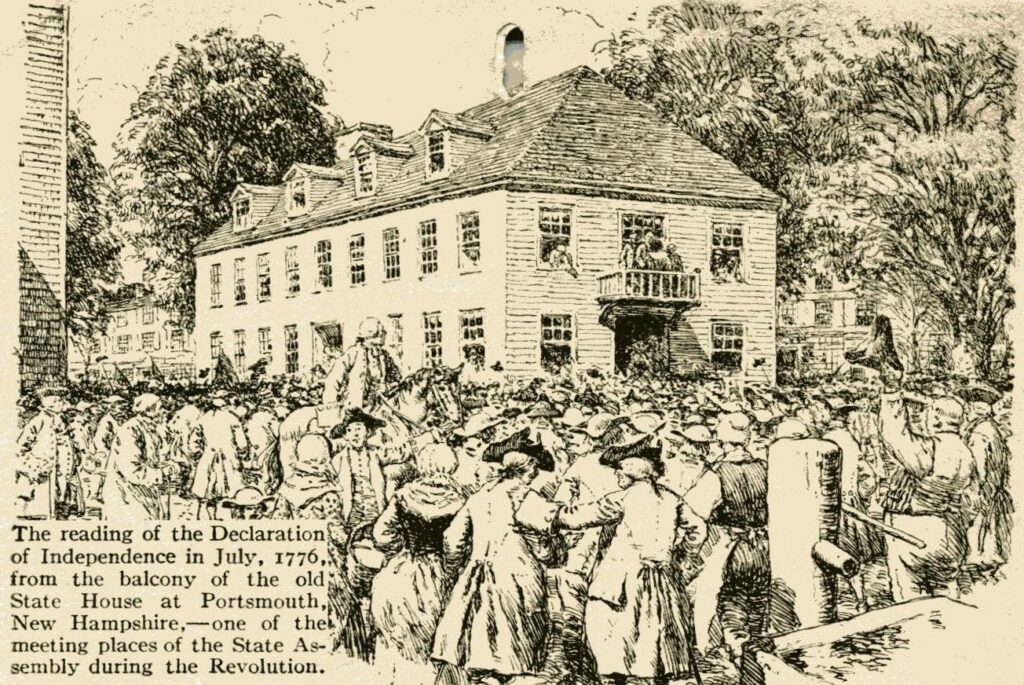
The 1760-era New Hampshire state house once stood in the center of Market Square. In 1836 the town paid Capt. Israel Marden to break the iconic structure into pieces and haul it away. There were no dissenting petitions, rebuttal websites, protest signs, or public hearings. If you wanted to knock down a building, all you needed was a sledge hammer and a crowbar.
What the doomsayers fail to consider is that–thanks to historic zoning regulations, public awareness, city oversight, and preservation advocates–tearing down old buildings has never been more difficult. Once upon a time Portsmouth residents believed in progress more than they believed in preservation. But we’ve learned from our mistakes. For this city to flourish, you can’i have one without the other
We mourn what we remember fondly. We are shocked by changes that impact us more than changes that impacted our ancestors. Nothing strange about that. But history, for those who are listening, reminds us that we’ve been here before. And despite a hail of acorns, the sky is not falling.
Copyright 2019 by J. Dennis Robinson, all rights reserved.
FOR MORE INFO see HIstoric Portsmouth by James L. Garvin (revised by Susan Grigg, 1995) and Lost Example of Colonial Architecture by John Mead Howells, 1931 (reprinted 1963).
 Puddle Dock: A Neighborhood Lost