


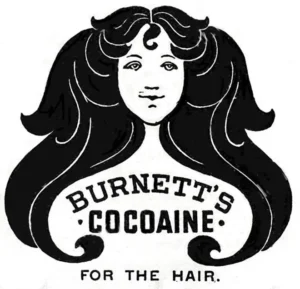
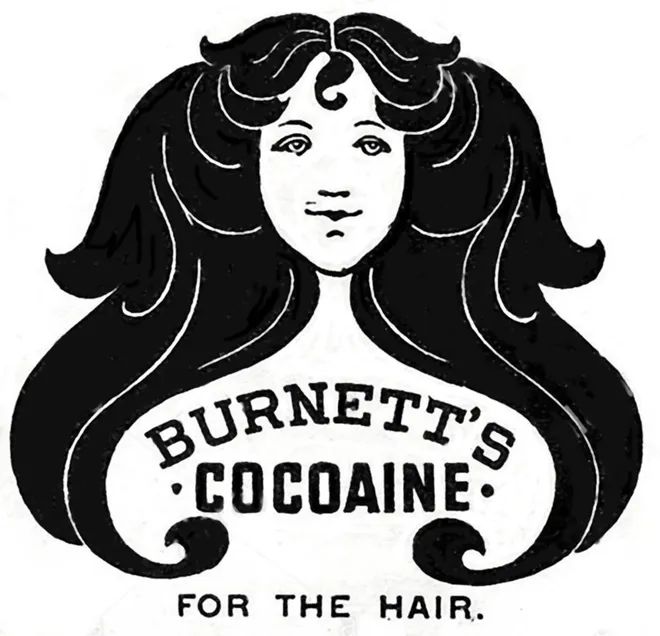
Even Google got confused. Type “Cocoaine” into your search engine and it will blink and ask, “Did you mean cocaine?” Spell checkers are boggled too. But if you persist, there is a lot to learn about Burnett’s Cocoaine, a hugely popular hair dressing manufactured in Boston. It sold for decades in glass bottles, both small (50 cents) and large (one dollar).
A widely promoted Cocoaine advertisement from the 1890s looks like a poster for the hippie rock musical “Hair.” It shows a smiling young woman with thick flowing locks. The text reads: “Absolute cure for dandruff. Soothes all irritation of the scalp. The only preparation that makes the hair grow by nourishing the roots”
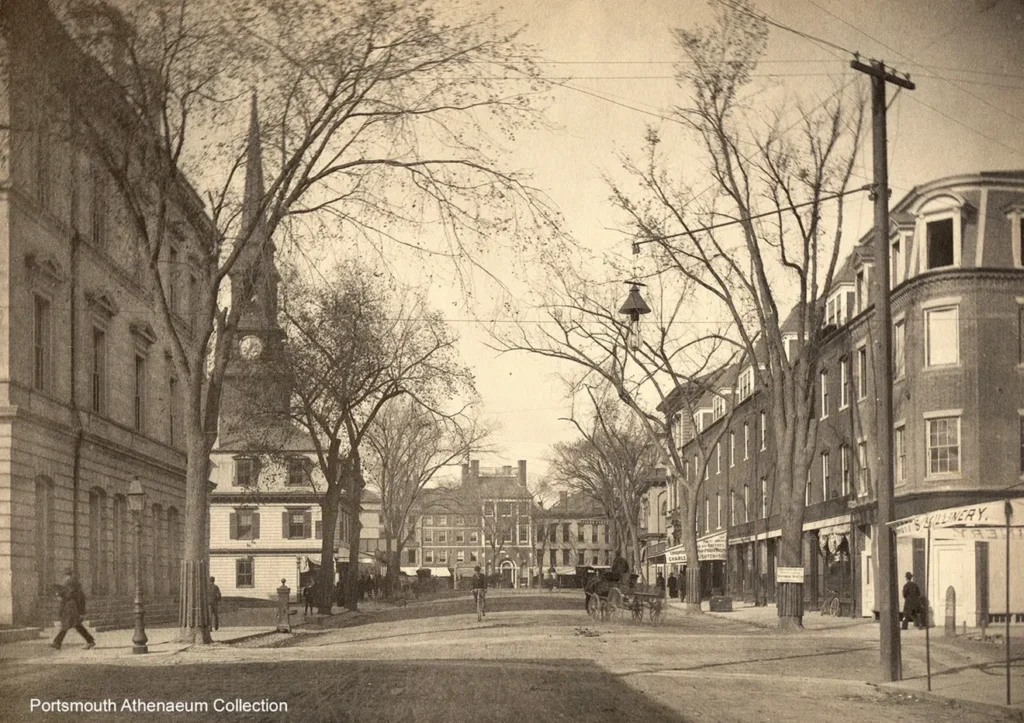
Back in the day, you could pick up a bottle of Cocoaine from Charles E. Laighton & Sons located in the Exchange Block on Pleasant Street in Portsmouth, just a few doors down from the modern Rusty Hammer restaurant. The Laightons specialized in choice teas and coffees, preserves, jellies, canned fruits, pickles, olive oil, mineral water, fancy crackers and cheeses, catsups, sauces, chutneys, canned goods, and Havana cigars. They also offered a complete line of lotions, potions, and extracts from the Joseph E. Burnett Company – including the ever-popular Cocoaine.
Clever branding
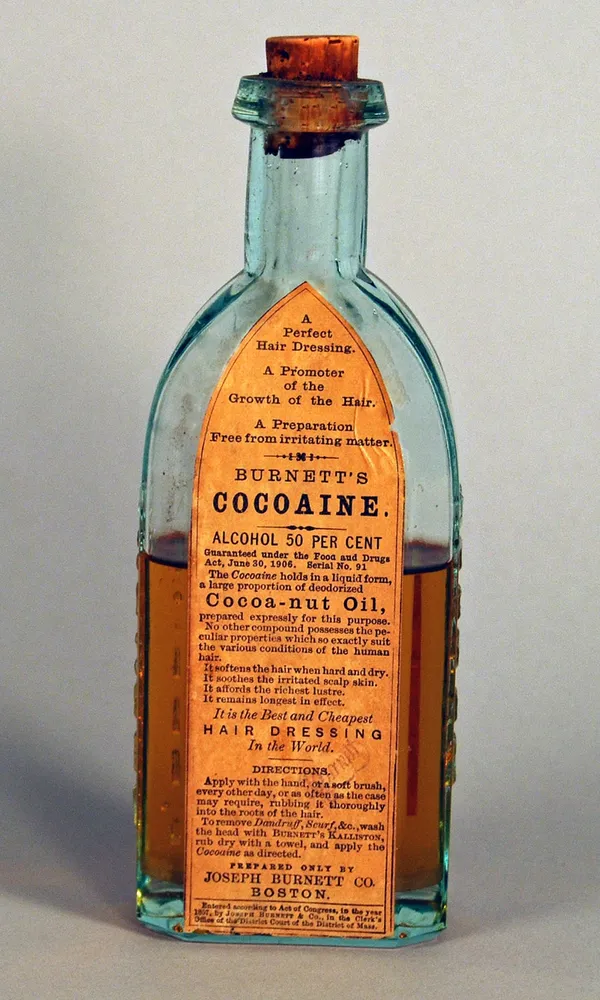
Here’s the catch. Cocoaine did not contain a drop of cocaine. Like the equally popular soft drink Coca-Cola, the clever brand name blatantly referenced a well-known drug, an extract of the coca plant. Imported from Europe and considered a medical marvel, cocaine was trendy and legal in the late 1800s and early 1900s. It was a frequent ingredient in “patent medicines.” These unpatented, unregulated potions sometimes included arsenic, mercury, silver, lead, or opiate ingredients like heroin, cocaine, codeine, morphine and laudanum.
(Smithsonian Museum)
For the record, Coca-Cola really did contain cocaine (plus the sweetness and caffeine extracted from the cola bean) when it was introduced in 1885 by an Atlanta pharmacist named John Pemberton. While that fact may not appear in the Coke company history today, it is clearly spelled out on the official government website for the National Institute on Drug Abuse for Teens.
Like Pemberton, Joseph Burnett (1820-1894) of Southborough, Massachusetts, was also a trained pharmacist with an entrepreneurial spirit. A graduate of the Worcester College of Pharmacy at age 17, he is best known as the man who introduced premium liquid vanilla extract to the American marketplace. He later added almond, lemon, peach, orange, rose, clove, celery, nectarine, and other flavors.
Burnett’s other branded products, also available at Laighton’s store, included Jamaican Ginger (for cramps, indigestion and sea sickness), Burnett’s Unrivaled Cologne Water, Kalliston (for healthy complexions), and a secret remedy for hayfever and asthma. While Burnett’s Cocoaine contained no opiates, like so many other quack products of the era, it was 50 percent alcohol. Its active ingredient was “cocoa-nut oil,” a step up in grooming from greasy animal fat hair tonics – but it did not prevent hair loss as promised.
“Child killer” drops
With his considerable fortune, Joseph Burnett built a stone mansion in his hometown of Southborough, where, due to his philanthropy, he is still revered as a local hero. While his empire seems to have been built on harmless products, other unregulated medicinal cures posed serious hazards to a naive public.
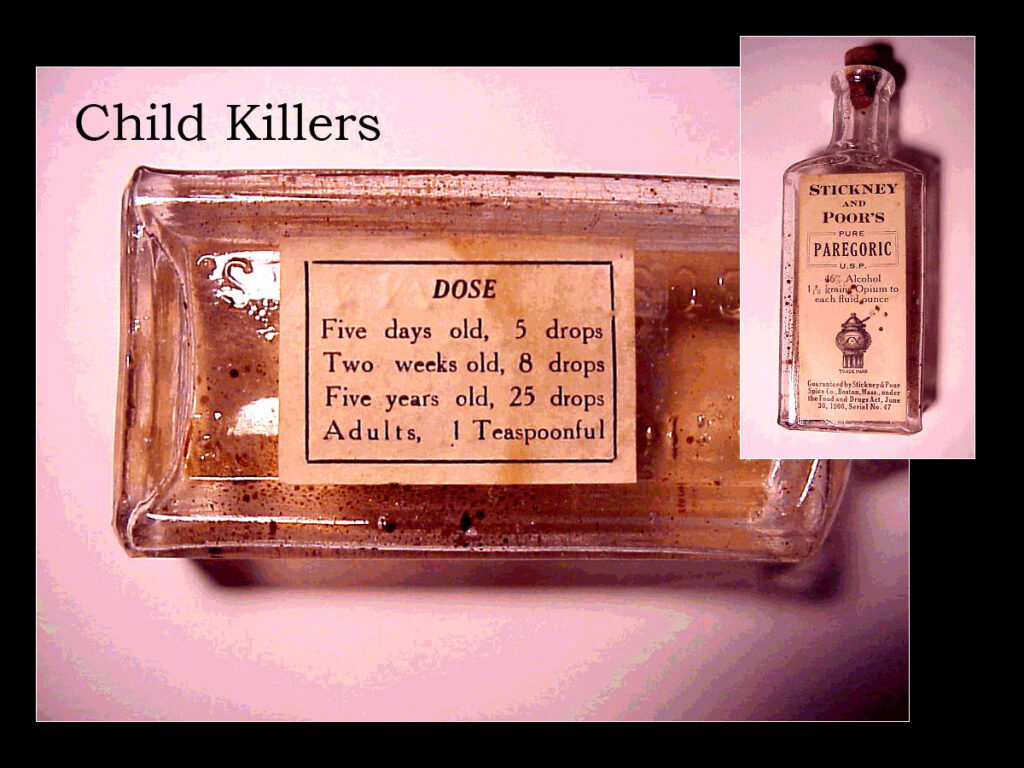
Stickney & Poor, for example, got its humble start in 1815 when Boston grocer William Stickney began grinding mustard seeds by hand and delivering the spice to customers in a wicker basket. By the Civil War, using steam-powered machinery in its Charlestown factory, the company’s familiar yellow-and-red mustard box was an American icon. Widely promoted with colorful advertising and a team of aggressive salesman, Stickney & Poor became a household name for a wide range of peppers, exotic spices, herbs, yeast, ground coffee, and even patent medicines.
A bottle of their Pure Paregoric, for example, was a potent cocktail of opium and alcohol. Five drops of the soothing liquid was recommended in the Victorian era for crying babies as young as five days old. Twenty-five drops could put teething infants or restless children quickly to sleep, sometimes permanently. Such drugs, described as “child killers,” were eventually taken off the market in the early 20th century. John R. Poor, by the way, briefly invested his fortune in the burgeoning seacoast hotel business. After buying out the property of fishing families on the Isles of Shoals, Poor built the Oceanic Hotel on Star Island in 1873. Soon after it burned in 1875, Poor sold his rebuilt Oceanic Hotel to the Laighton family of Appledore Island nearby.
Wonder drugs
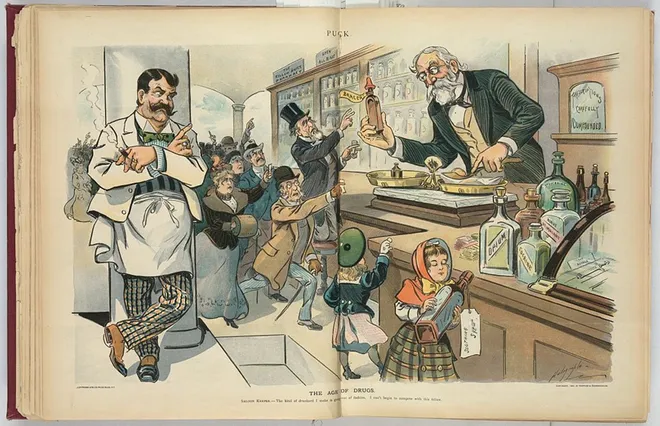
The problem was much bigger than patent medicines. Opium extracted from poppy plants has been used as a medicine and recreational drug for thousands of years. In the United States, the derivative morphine administered to countless Civil War soldiers often led to addiction. In the 1860s, one Portsmouth newspaper casually listed opium as just one more export of Turkey, along with silks, coffee, and dried fruits.
An 1874 ad in the Portsmouth Times proclaimed the benefits of Prof. D. Meeker’s “Painless Opium Cure” as “the only successful remedy of the day” for restoring the nervous system to a healthy condition. Curiously, the newspaper ad directly below offered a quick cure for addicted “opium eaters” wishing to kick the habit. A year later a footnote in the Portsmouth Times considered opium to be only “somewhat dangerous” for treatment of constipation. Laudanum, another opiate, was frequently prescribed to women for a wide range of complaints from menstrual cramps and nervousness to insomnia. By 1880, fully 60 percent of addicted opiate victims in America were women.
Part of the problem, then as now, was that the addictive wonder drugs flooding the market often successfully and effectively reduced pain. They worked as a numbing or dulling agent, but they did not cure the problem. Early in the 20th century, the Portsmouth Herald reported on the effective use of cocaine applied topically to a young girl stung by a wasp. In the same newspaper, Dr. George F. Shrudy waxed rhapsodic about the use of cocaine as an anesthetic on the human eyeball during cataract surgery, a practice still used today.
With no effective alternatives, doctors regularly over-prescribed opiates that were being manufactured at greater speeds. Newspapers and magazines spread the word through advertising and editorial pages. Meanwhile, a growing culture of mind-enhancing drug use added a romantic spin to the problem. Opiate users included famous writers, the rock stars of the era, including Jules Verne, Charles Dickens, and Edgar Allan Poe, not to mention the fictional Sherlock Holmes. Famed inventor Thomas Edison advocated the healthy benefits of Vin Mariani, a European drink made from wine and cocaine. Sigmund Freud, the “father of psychoanalysis,” and former President Ulysses S. Grant were among the most famous addicts of the day.
A crisis dawns
As with our current opioid crisis, 19th century politicians and the media were slow to react to the problem among poor and marginalized people, and focused instead on the plight of largely privileged white Americans. By 1888, a brief article in the Portsmouth Herald began: “There is no longer a doubt that the opium habit is the cause of as much insanity, suicide, and murder as the whiskey and beer habit.” And far worse, according to the writer, was a new wonder drug called “cocaine.”
As evidence of a rising drug crisis, the Portsmouth Times reported an astonishing 16 patients had been treated for cocaine addiction at New York’s Bellevue Hospital over the previous few months. The patients, the newspaper noted with alarm, were “generally persons of wealth and distinction, the majority of them being physicians.”
By the mid-1890s, as the dangers of addiction became inescapable, many patent medicine manufacturers began changing their tune. Ads in the Portsmouth Herald for Dr. Pierce’s Golden Medical Discovery, for instance, promised “nerve strength” rather than a nerve stimulant for people with felt “a bit shaky.” The 1900-era ad for Dr. Peirce’s concoction reads: “It does not brace up, but builds up. It is entirely free from alcohol and from opium, cocaine, and other narcotics usually found in so-called nerve medicines.”
But not all private manufacturers were on the up-and-up. In 1906, under President Theodore Roosevelt, the Pure Food and Drug Act took a swipe at preventing “the manufacture, sale, or transportation of adulterated or misbranded or poisonous or deleterious foods, drugs, medicines, and liquors.” It was a start.
By 1909, the Portsmouth Herald editors had come to the conclusion that “Cocaine and opium are the two great drug dangers of the world.” Since cocaine was the most dangerous of the two drugs, the newspaper editors reasoned, and since cocaine was imported – then it should be possible to trace and destroy imported cocaine. Stricter laws and more border patrol were needed. Only doctors and druggists should be allowed to distribute cocaine, the editors added. Any healthcare professionals who abused this privilege should be banned from prescribing drugs. “Let this be handled so that [cocaine] will never attain the proportions of the deadly opium craze,” they wrote.
The 1914 Harrison Act, also called the “Opium and Coca Leaves Trade Restrictions Act” began the process of regulating opiates imported to the United States. More regulations followed. Cocaine lost its luster until its revival as an illegal recreational drug in the Swinging 1960s. But the development of new chemical opioids had just begun. The story of our current crisis looks hauntingly similar to the one begun soon after the Civil War.
Former state legislator Joe Diament of Newfields sees a connection between the opiate problems of our ancestors and the heroin crisis today. Diament directed an adolescent drug program in Portsmouth. He was New Hampshire’s Director of Alcohol and Drug Abuse services and ran the acclaimed Odyssey House treatment programs on the seacoast for nearly 20 years.
“The current opioid crisis only became a crisis,” Diament says today, “when Big Pharma brought it into the white community. Heroin has ravaged people for a long time, but since the visibly ravaged weren’t white, politicians just paid it lip service.”
Copyright 2019 by J. Dennis Robinson, all rights reserved.
 Two Visits from the Prince of Wales 100 Years Apart