


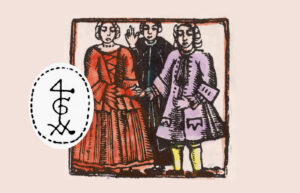
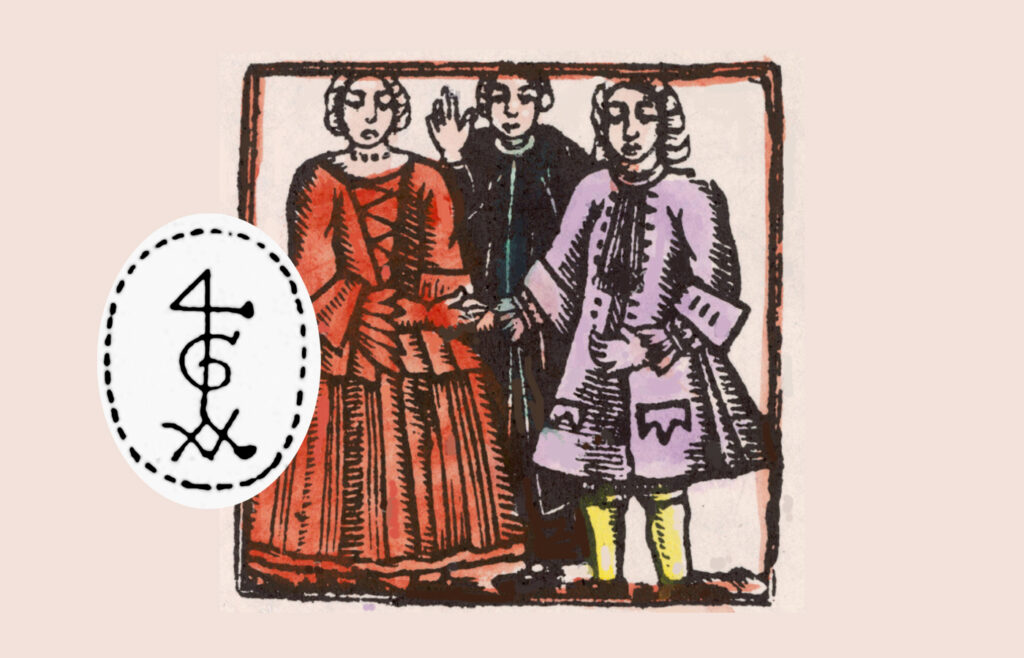
NH’s first female resident from England, Amias Thompson Maverick, lived here for over 50 years. So why haven’t you heard of her?
When I finish my time machine (the flux capacitor is still buggy), I’m headed right to Odiorne Point in Rye, NH, circa 1623-26. That’s when the famed David Thompson (also Thomson) set up his fishing outpost in a fearsome wilderness that would become New Hampshire. We know his wife, Amias, and four-year-old son John lived with David. There was also a small group of fishermen, names unknown to history, and likely several anonymous servants living in a fortified trading post facing the distant Isles of Shoals. David blips in and out of local history until he disappears and was likely dead by 1627-28. His wife, Amias Thompson, the first European woman to settle in New Hampshire (and later Massachusetts and Maine), gets almost no attention from historians.
The Thompsons rate only a few public sentences, here and there, remembered largely by genealogists (often incorrectly) and by obsessed local history writers. Yet Amias, research shows, was witness to key events of the era. Married in Plymouth in 1613, she had four children. Two girls died young. A third daughter, Priscilla, stayed behind in England in 1623. Her father, William Cole, was an important shipwright and merchant in Plymouth, England. William leased a second-floor apartment to the newly wed Thompsons. It is from that lease we discovered that David was not a fisherman by trade, but a licensed apothecary and healer.
In England, Amias certainly knew Sir Ferdinando Gorges, the governor of Plymouth, England, who operated the Council for New England. These investors hoped to profit by doling out land they did not own in the New England region of America. Most of these colonies, effectively licensed by King James, thought the Council, failed quickly. Amias may have known Captain John Mason and Captain John Smith, who partnered with Ferdinando Gorges. While living at Pannaway, Amiasthe met both William Bradford and Edmund Wilson, the two famous Pigrm leaders from Plymouth Colony in Massachusetts. Robert Gorges, son of Ferdinando and the first governor of New England, was also a guest in the Thompson house in Little Harbor. So was explorer Christopher Levett, settler Phineas Pratt, the infamous trader Thomas Weston, and hot-tempered Pilgrim enforcer, Miles Standish.
By 1627, the Thompsons had moved from Little Harbor on the Piscataqua River to Boston Harbor. This was just before the Great Migration of 20,000 Puritans to the region. When David died (we don’t know how or when), Amias quickly remarried Samuel Maverick, an early resident of Boston Harbor. They lived on Noddles Island, now part of Logan Airport. Amias and Samuel had three or four children. Her first son, John Thompson, briefly inherited Thompson Island, now the site of an Outward Bound program for Boston city youth. Among the visitors to the Maverick home on Noddles Island was John Winthrop, leader of the Massachusetts Bay Colony. Winthrop coined the phrase “the city on the hill.” The Puritans were distrustful of the Mavericks’ loyalty to the King and the Church of England. wdid not appreciate the fact that the Mavericks were. Puritan forces eventually loyal to the Church of England, and eventually forced them to move away. Samuel Maverick, for the record, was the first Massachusetts man to purchase enslaved Africans.
Born in Plymouth, England, around 1695, Amias Cole Thompson Maverick was certainly a woman of status and property. She is mentioned in early records, including in a note by Puritan John Winthrop. In his 1633 journal, Winthrop noted that Maverick, his wife, and their servants helped the Indians when a small Massachusetts tribe was all but wiped out by smallpox. Amias “went daily to them, ministered to their necessities, and buried their dead, and took home many of their children,” Winthrop wrote.
Pilgrim William Bradford mentioned Amias among the contributors who paid to send lawyer Thomas Morton out of the Massachusetts Bay Colony for getting too friendly with the Indigenous locals. Morton, as we learned in an earlier column, was abandoned on the Isles of Shoals, where he was saved by the Indians of the York, Maine, region, before catching a ship back to England. Morton, best known for dancing around the pagan maypole, later returned to New England. Morton appears to mention Amias in his satirical book, New England Canaan.
We last see Amiasin Maine (then part of Massachusetts). She is listed among the important parishioners at a church in Saco, following the death of her second husband. She died there in 1672.
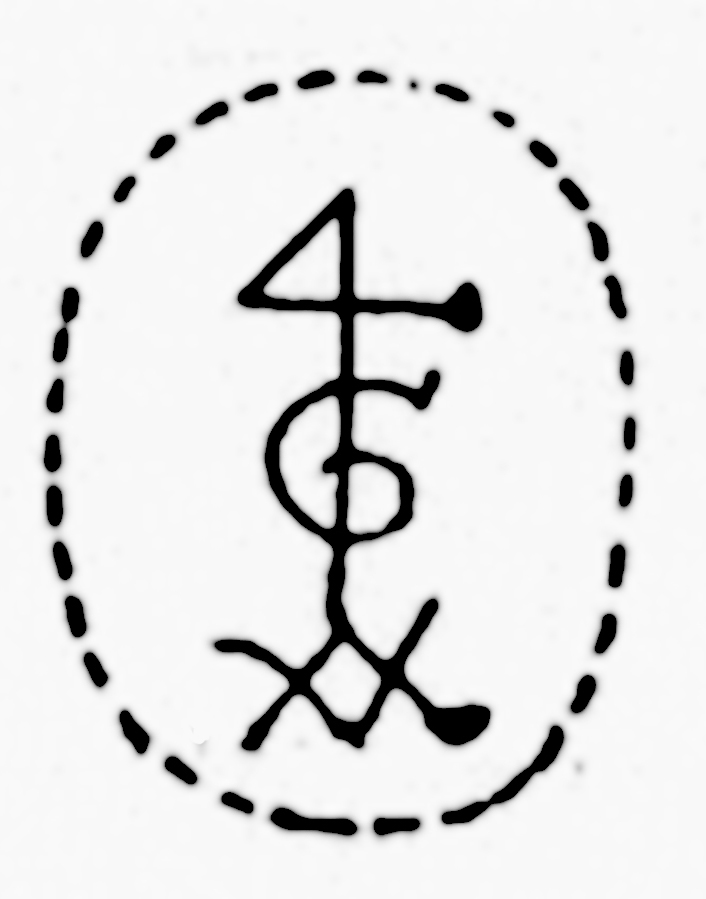
What we don’t know about his fascinating founding female would not yet fill a book. I’ve done my best to highlight her in hopes of attracting professional historians. A letter she wrote from Noddles Island to her father, William Cole, in 1633 bears her signature and a curious seal. Historians continue to debate what it stands for or whether it was her seal at all. Does it have Masonic connections? Did David Thompson belong to a secret society? Inquiring minds–although very few of us– are burning to know.
© 2026 by J. Dennis Robinson
 Inside “The Nation’s Oldest Newspaper”