


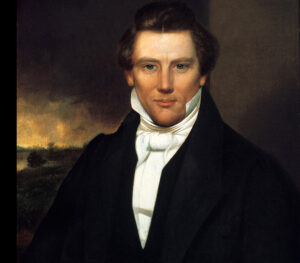
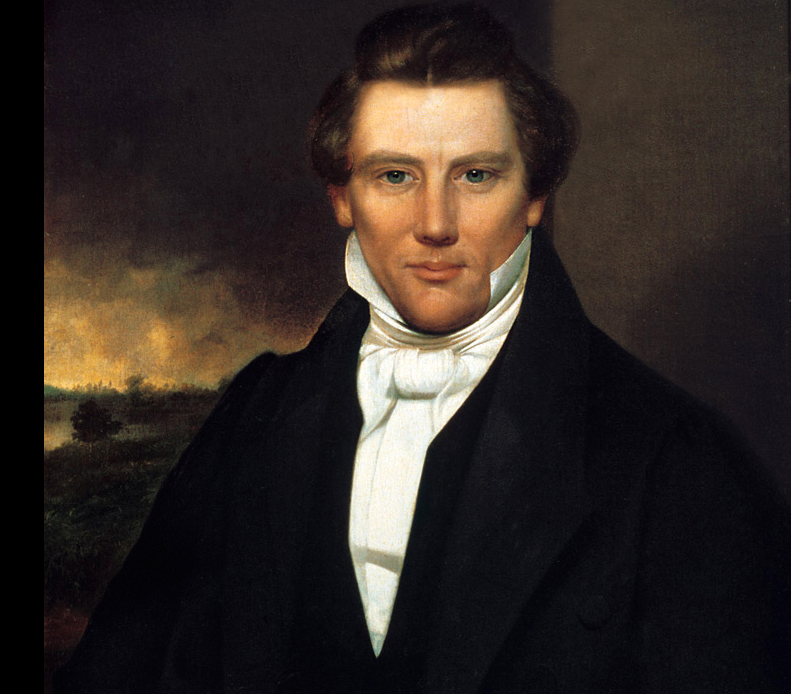
Mitt Romney’s twice-failed bid to become the first American Mormon president of the nation was big news. The press dubbed his Republican run against former Baptist minister Mike Huckabee as a “Holy War.” Fundamentalist Republicans argued that Mormonism is not Christianity at all, labeling it a “cult.” Romney, in response, said he would not be ruled, as president, by the leaders of the Mormon church, a faith numbering six million members. Joseph Smith Jr., the founder of the Mormon religion would have been horrified by Romney’s assertion that he “will serve no one religion” if elected. That’s because Smith himself wanted to become the first Mormon president in 1845.
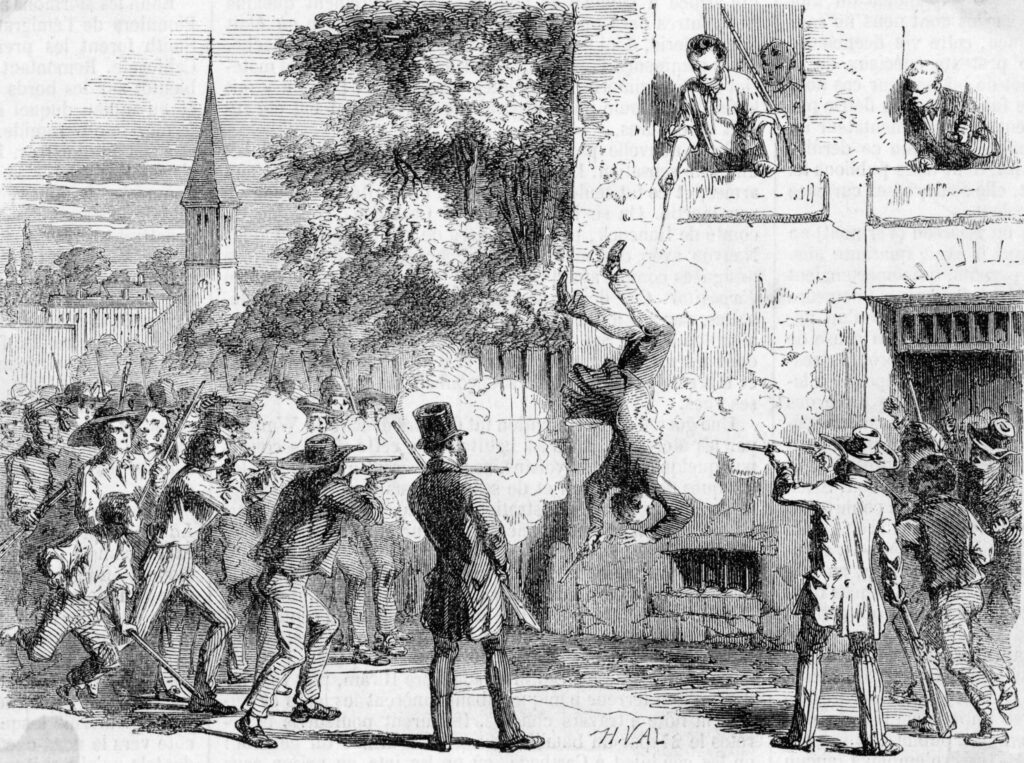
Smith, who began having visions as a teen, reportedly discovered a series of metal tablets in New York written by an ancient American tribe. In 1827 Smith translated the “golden plates” into the Book of Mormon using a mysterious “peep stone”. His Church of Jesus Christ of the Latter Day Saints was founded three years later, and despite persecution of its members, grew rapidly. On January 29, 1844, “The Prophet” Joseph Smith announced his own bid for the presidency. Smith’s goal was not to separate church and state, but to merge politics and religion into one American “theodemocracy.” Smith’s bid for the presidency failed, however, and that same year, in 1844, he was arrested for treason and assassinated by a mob while in jail in Carthage, Illinois.
“We never selected our president based on which church he went to. That would be a very sad day if we were ever to do so,” Romney told ABC News in 2007. But despite the candidate’s view that it is un-American to judge a person by his religion, critics have been asking probing questions about Mormonism since its founding days. Among those skeptics was a young woman from Portsmouth, NH, named Charlotte Haven (1819 – 1899) who met Joseph Smith and described him candidly in her letters home.
Charlotte Haven of Portsmouth, NH
A brilliant and spirited young woman, Charlotte was born into one of Portsmouth’s most elite families. Her grandfather Rev. Samuel Haven had been minister of Portsmouth’s South Parish church. Her uncle Nathaniel Haven, Jr. was a prominent freethinking Unitarian and Portsmouth newspaper editor.
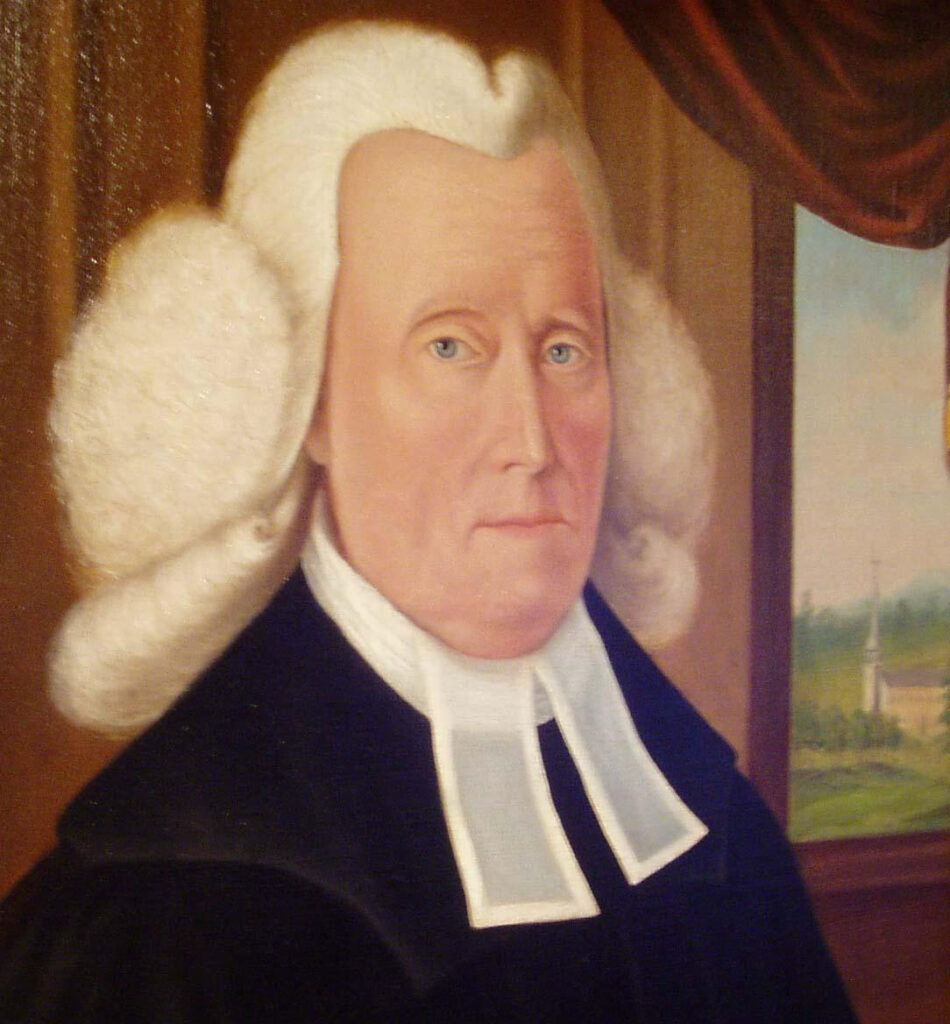
Strawbery Banke Museum
In her twenties Charlotte traveled West looking for adventure. She arrived in the Mormon town of Nauvoo, Illinois on the eastern bank of the Mississippi River in the winter of 1843. The temperature was five degrees below zero, Haven wrote, as she traveled the last leg of the journey, bundled in layers of flannel and animals skins. She was saved from a frigid death, she wrote, by leaping from the carriage just before it tumbled into the icy river. Charlotte lodged for over a year with her brother, Jesse Haven, who was doing business with the Mormons, and his wife, Martha, who was about to have her first baby.
Recently attacked and driven out of Missouri for their beliefs, a few thousand Mormons resettled in Commerce, Illinois, a city they renamed “Nauvoo” (the Hebrew word for “beautiful”). Another 10,000 converts quickly arrived, attracted by Mormon missionaries from the ranks of poor factory workers in the British Isles and the American East. In her etters home, Charlotte describes the “city of fanatics” in vibrant and often cynical detail. Arriving in the City of Saints she sees “such a collection of miserable houses and hovels I could not have believed existed in one place.” Although she loved the scenery and respected the Mormon inhabitants, Charlotte was unimpressed by their leader Joseph Smith, Jr, who was not only the spiritual leader of the community, but its mayor, police chief and head of the local militia.
“Joseph Smith is a large, stout man, youthful in his appearance,” Charlotte wrote to her mother in Portsmouth, “with light complexion and hair, and blue eyes set far back in the head, and expressing great shrewdness, or I should say, cunning… I, who had expected to be overwhelmed by his eloquence, was never more disappointed…his language and manner were the coarsest possible. His object seemed to be to amuse and excite laughter in his audience. He is evidently a great egotist and boaster.”
In Nauvoo
During her year in Nauvoo, Charlotte Haven visited with Smith and his wife at their home, rode with him in his carriage, attended Mormon services, events and parties, and even invited “The Prophet” to dinner at her rented home. Her opinion of Smith as “the greatest egotist I ever met” did not waiver. Rather than elevate his subjects with great speeches, Charlotte saw Smith’s public lectures as designed “to corrupt the morals and spread vice.” On one of Smith speeches she wrote:
“Can it be possible that so many of my poor fellow mortals are satisfied with such food for their immortal souls? for not one sentence did that man utter calculated to create devotional feelings, to impress upon his people the great object of life, to teach them how they might more faithfully perform their duties and endure their trials with submission, to give them cheering or consoling views of a divine providence, or to fit them for an eternal life beyond the grave…”
Charlotte’s lively account of life in Nauvoo – just prior to the Mormon exodus to Salt Lake City, Utah — was first published in 1890 by a California magazine. Although unknown in her hometown, Charlotte’s detailed and candid observations as an outsider have found their way to the very heart of Mormon scholarship. When a controversial set of six bell-shaped brass plates with strange writing appeared in Nauvoo, for example, Charlotte was an eye witness. These so-called “Kinderhook Plates,” that Smith declared were similar to those on which he based the Book of Mormon, were later proved to be a 19th century hoax. Charlotte also toured the house of Joseph Smith’s mother, Lucy Mack Smith, who displayed a set of mummies. Haven wrote:
“Then she took up what seemed to be a club wrapped in a dark cloth, and said ‘This is the leg of Pharaoh’s daughter, the one that saved Moses.’ Repressing a smile, I looked from the mummies to the old lady. but could detect nothing but earnestness and sincerity on her countenance.”
The elder Mrs. Smith then displayed a rolled manuscript that she claimed was “the writing of Abraham and Isaac, written in Hebrew and Sanscrit.” Whether this document was the source that Joseph Smith used to translate the controversial “Book of Abraham” is a topic of endless debate among historians today.
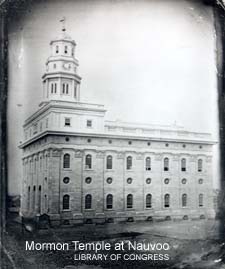
Haven also describes the building of the large Mormon temple at Nauvoo with its massive stone baptismal font and its railing supported on the backs of 12 carved oxen. On the Mormon practice of baptizing the souls of the dead, Charlotte is skeptical to the point of sarcasm. During a frigid day in April she and a friend came across an outdoor baptismal ceremony in the Mississippi. She writes:
“So these poor mortals in ice-cold water were releasing their ancestors and relatives from purgatory! ..and you can imagine our surprise when the name George Washington was called. So after these fifty years he is out of purgatory and on his way to the ‘celestial’ heaven!”
On the topic of plural marriage, Charlotte was unforgiving. When Elder Brigham Young, the future “Mormon Moses,” arrived from a missionary journey with another wife, Charlotte poured her feelings about polygamy into her letters home:
“I cannot believe that Joseph will ever sanction such a doctrine, and should the Mormons in any way engraft such an article on their religion, the sect would surely fall to pieces, for what community or State could harbor such outrageous immorality? I cannot think so meanly of my sex as that they could submit to any such degradation.”
Charlotte Haven was apparently unaware that Joseph Smith was privately practicing plural marriage and had taken a total of 33 (some historians go as high as 48) wives. She moved away from Nauvoo the year before Joseph Smith’s presidential run and assassination. Charlotte Haven later joined a socialist utopian community before settling in California.
No matter where she went, whether living in the West Coast or among the Mormons along the Mississippi, Charlotte Haven never forgot her Yankee upbringing or her days in Portsmouth. Responding to a holiday letter from her sister, Charlotte wrote from Nauvoo:
“O, what fine times you are having this season, with so many parties, balls and sleigh-rides! So much gayety for sedate old Portsmouth is quite a novelty!”
Copyright © 2007 by J. Dennis Robinson, All rights reserved. Primary Source: Charlotte Haven, “A Girl’s Letters from Nauvoo, 1843,” Overland Monthly 1890 & 1891.
 Ode to Portsmouth on Her 400th