

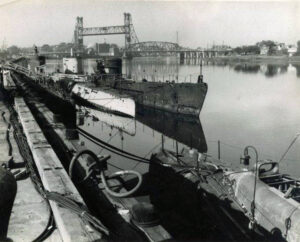
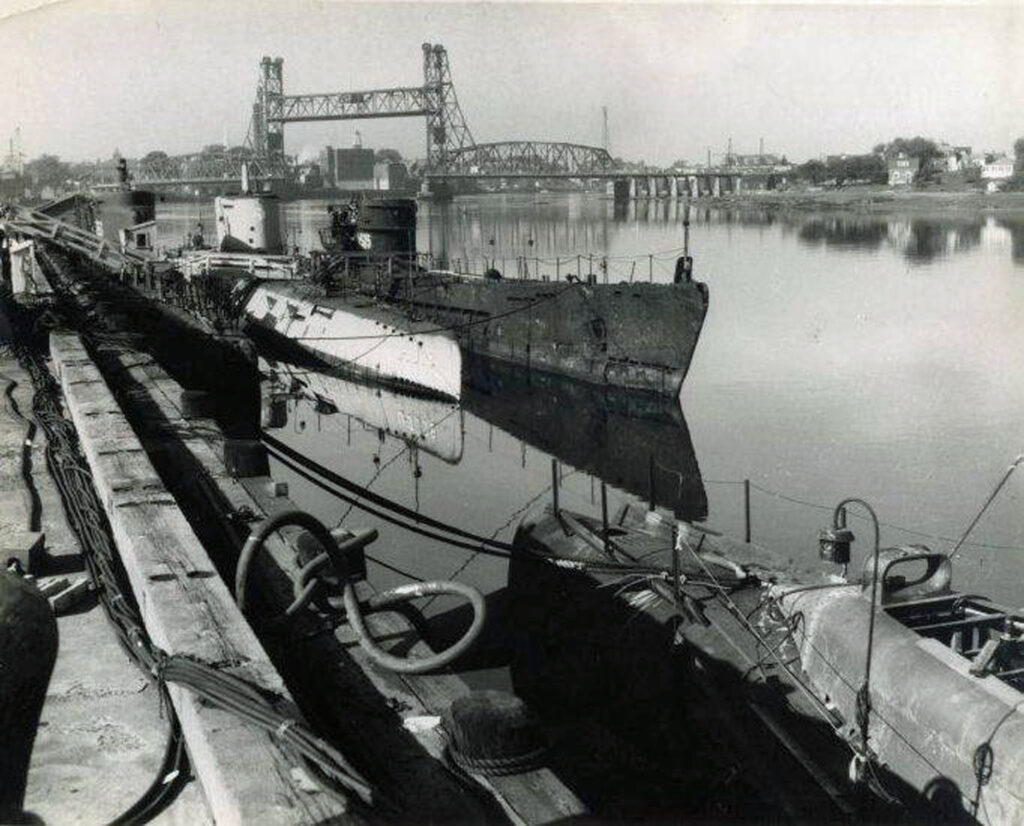
Portsmouth Naval Shipyard was the largest American submarine base on the Atlantic coast when Nazi Germany surrendered on May 7, 1945. “The Yard” became the natural site for the surrender of up to at least seven German U-boats operating in the region at the end of World War II. Local excitement and media coverage increased as, one by one, the worn German U-boats were towed into Portsmouth Harbor. German prisoners were housed briefly at the “Castle,” a giant naval prison that still stands abandoned in the harbor today. At the time, German U-boats were considered the most sophisticated underwater technology on earth.
What Really Happened?
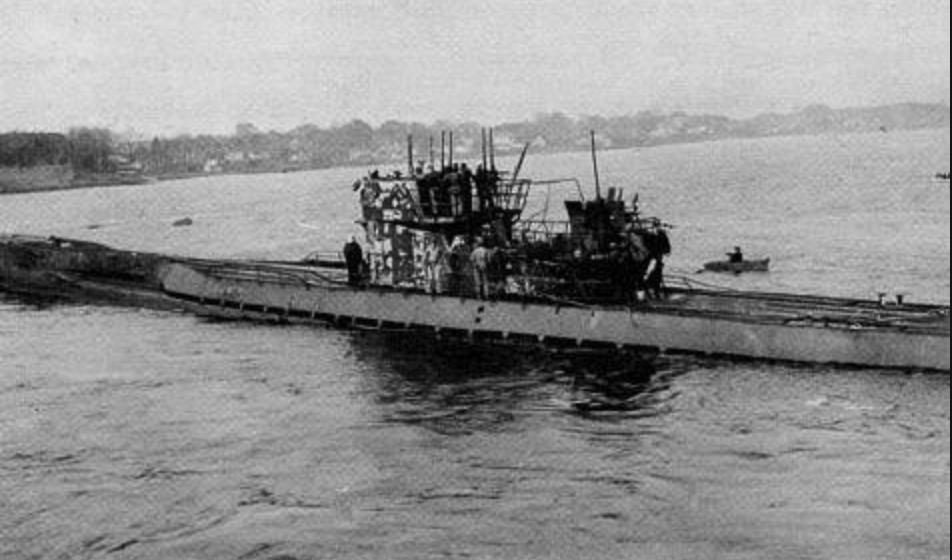
Four U-boats arrived at PNSY over five days. The city was shot through with drama as locals clamored for details about their Nazi foe, long vilified in the national media, now defeated and at hand. Souvenir hunters did a healthy business as residents rubbernecked for glimpses of the crewmen and their high-tech, but battered German subs. German seaman were required to reveal the secrets of their boats, which were later refit for use by the United States Navy. The flow of news from the large visiting press corps kept the story alive with details of battles, suicide, and espionage in the clash of cultures at the end of a long war.
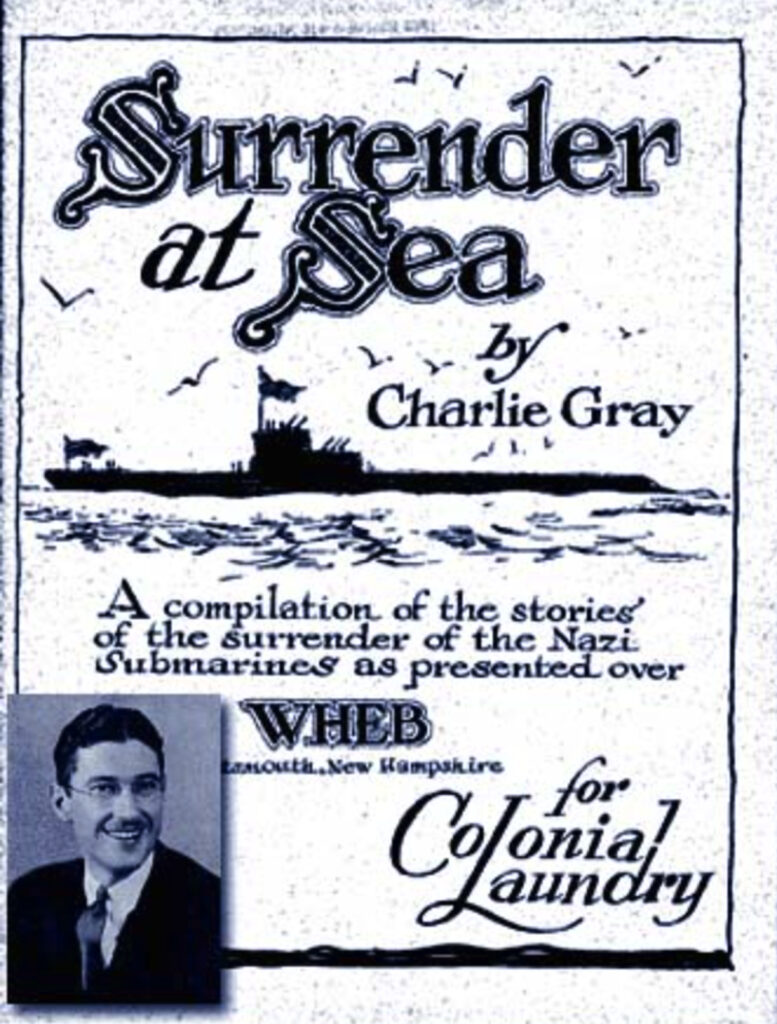
One of the U-boats, famous for its super-quiet engines, was placed on display in Portsmouth Harbor for visitors to tour. It languished in the Piscataqua for almost a decade until it was acquired by the Museum of Science and Industry, and removed to Chicago in 1954 where it remains part of the museum display. Always ready to turn a political or news event into a souvenir, the local radio station produced the following booklet. –JDR
READ THE STORY DAY BY DAY
“Surrender at Sea”
By Charlie Gray
Daily Updates Condensed from WHEB Radio Evening News, Portsmouth,NH
May 15-21, 1945
The First U-boat Arrives
May 15, 1945
Having surrendered in the North Atlantic to Allied forces the week before, the 245-foot German U-boat was towed into Portsmouth Harbor and moored near the Revolutionary War Fort McClary. The Navy tug US Dekanisora with dozens of members of the press met the sub off the Isles of Shoals. A large patch of green water, dyed with chemicals, was the spot marked for the rendezvous.
Three German officers with “surly expressionless faces” were seen on deck and a near accident occurred when the U-boat cut across in front of the press tug, missing by about 15 feet and angering the tug captain.
The official surrender took place at Kitt’s Rock Buoy, one mile out from Whaleback Lighthouse at the entrance to the harbor at 4:25pm. After the ship arrived at the navy yard in Kittery and publicity photos were taken, 27 crewmen and four officers were removed to the naval prison by bus.
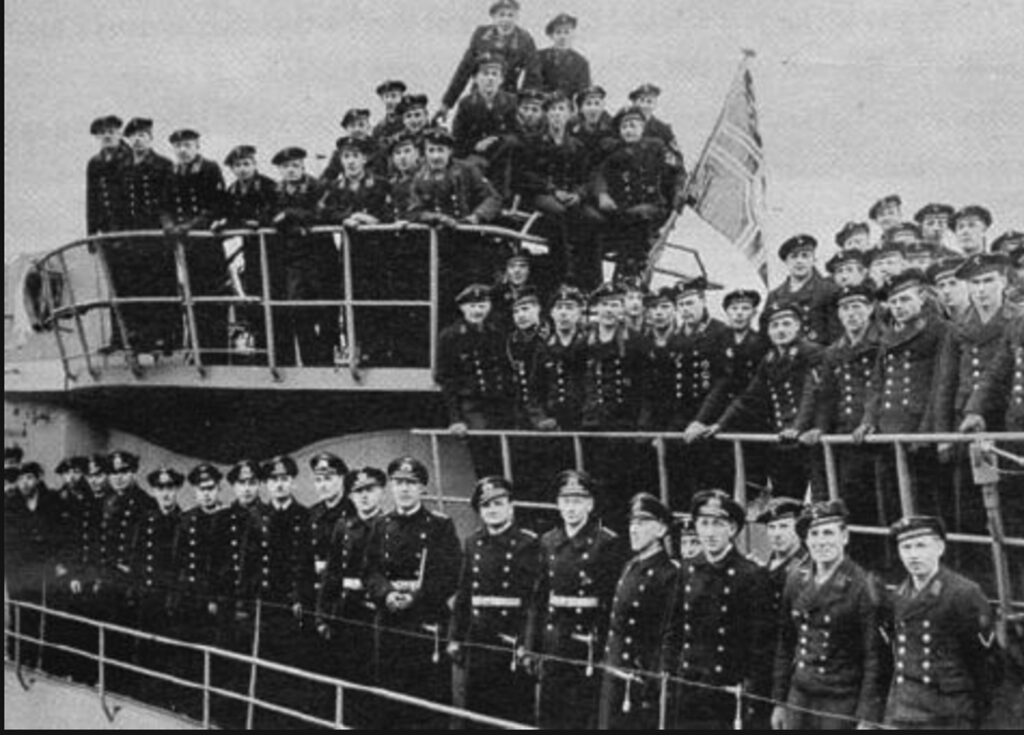
Two More Subs Surrender
May 16, 1945
Two more surrendered U-boats arrived in a less formal process this day. The U-873 arrived in Portsmouth Harbor at 2pm and the U-1228 arrived that evening.
A reaction of “unbounded excitement” occurred in the evening when a UPI teletype revealed that another German sub had been captured in the Newfoundland area with three high-ranking German officials and two dead Japanese scientists aboard. Fritz Steinhoff, captain of the 305-foot U-boat 873, now already in harbor, announced that he would give a press concfered soon.
Interview with Nazi Crew
May 17, 1945
Portsmouth radio news reporter Charlie Gray scooped the world with his morning radio report of an interview with German U-boat commanders, Oberleutnant Albert Finster, aged 29, was described by local radio as a “typical dyed-in-the-wool Nazi” when he said there was no difference between a good German and a good Nazi. The submarine lieutenant stated that England was to blame for the war and that his native town of Hamburg had been ruined by Allied bombing. When shown a copy of German war atrocities in Life magazine, ship’s cook Reiner Landgraf, 20, of Leipzig said the pictures were faked. The crew member stated that his ship had fired no torpedoes at Allied targets in its brief career.
In the morning 58 men aboard the U-1228 were brought to Portsmouth Yard. Reporters observed that this crew appeared healthier than earlier men. This sub, unlike the earlier two, was immaculate, according to USN Comndr. J. Kincair Kimmell. Kimmell told reporters that the U-873 had fired on a tanker while in waters off Norway within the last two weeks. Six of the ship’s 15 torpedoes were missing at the time of capture.
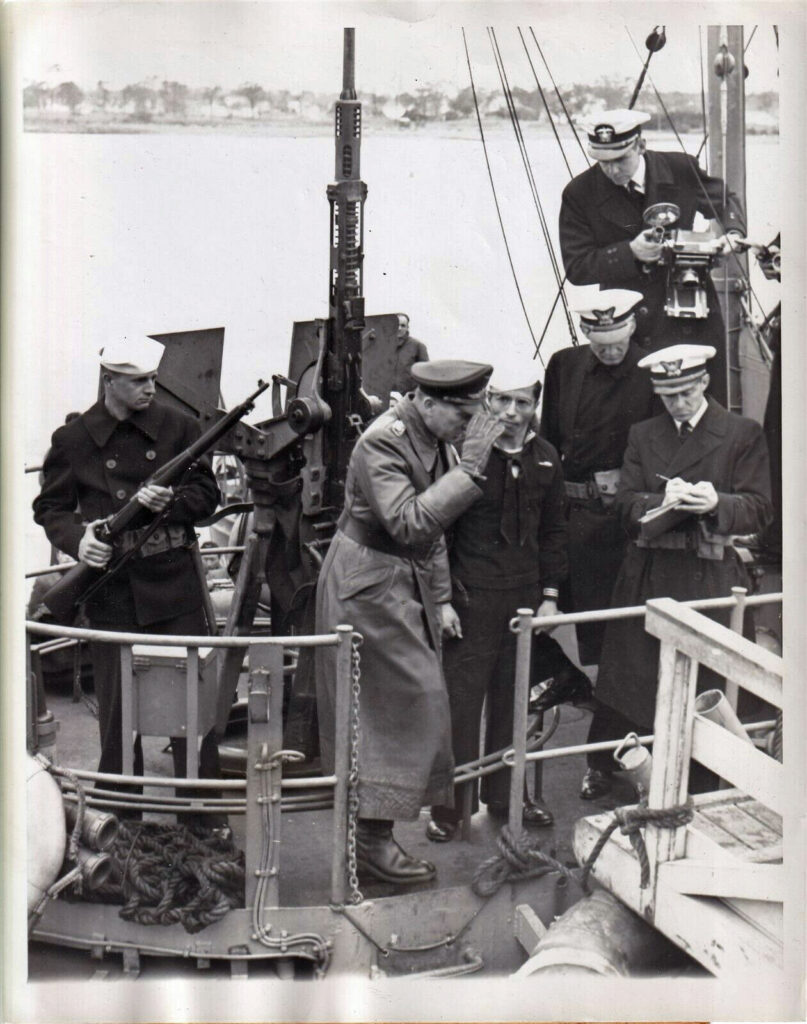
Rampant Speculation
May 18, 1945
Awaiting the arrival of the fourth captured submarine, reporters openly speculated on the rumors that the sub contained upper echelon Lufwafer officers and two dead Japanese aviation experts. (Note: The Japanese, it was later reported, committed suicide after drinking Luminal. A civilian V-2 rocket expert, three Luftwafer generals, hidden uranium oxide and chemicals stashed in the hull — all originally headed for Japan during a period when the war was continuing in the Pacific.)
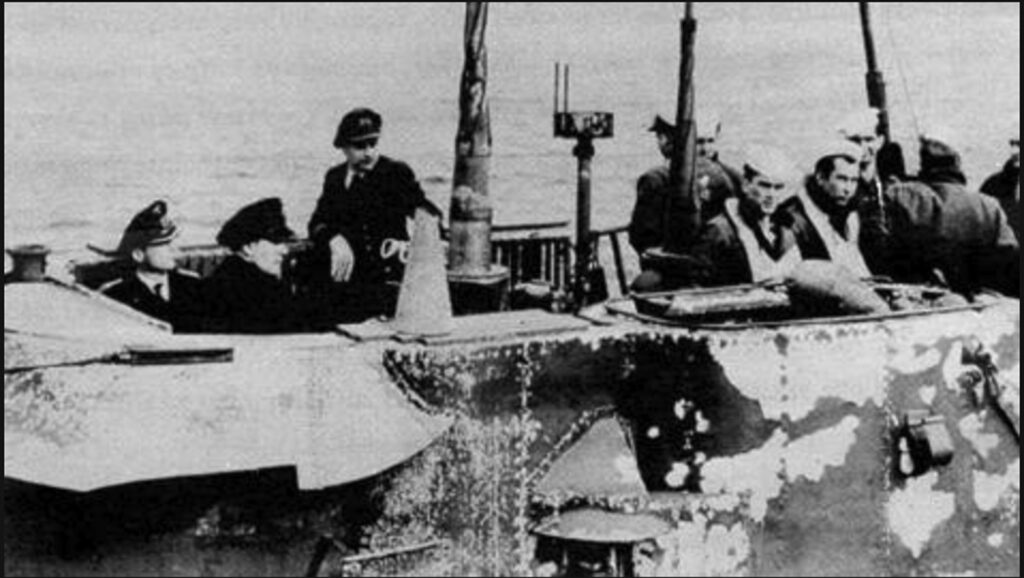
The Big Prize Arrives
May 19, 1945
The 1,600-ton U-234 arrived at the lower harbor or Portsmouth at 7:30 in the morning. Key prisoner Luftwafer leutnant Ulrich Kessler was described as “a typical Hollywood version of a German general.”
“He wore a long leather greatcoat,” the WHEB evening news report continued, “which reached to his ankles, highly polished leather boots and an Iron Cross which hung tightly about his neck. He posed for newsreel cameramen and seemed to be enjoying the publicity he was receiving. He was tall and wore white gloves.”
After the crew was transferred to the Portsmouth Naval Prison by the Coast Guard, the captured sub was carefully searched for the bodies of the Japanese scientists, but they were not found. The crewmen, wearing “nondescript” uniforms, were described as generally well-fed, ruddy and sporting new haircuts. In a story that went unreported on the radio, crewmen claimed that they had been “victims” of the Norwegian Underground while docked there, since many of the sailors had received venereal diseases from prostitutes.
The local press relished in reports from the Naval Prison that Oberleutnant Barndardelli, skipper of the U-805, had complained about the food, refused to eat cafeteria style and dine with his own crewmen. The reporter then detailed the menu for the prisoner’s meal — lamb stew, steamed rice, lettuce and tomato salad, pickled beets, onions, cornbread and butter and stewed peaches and tea. The prisoners were transferred to Washington soon after.
Then the following news appeared on the wires from the first of the German prisoners already transferred to Boston: The skipper of one of four surrendered German submarines now at Portsmouth, New Hampshire, has committed suicide in his cell at the Charles Street Jail. Army authorities said that Kapitanleutnant Fritz Steinhoff, commander of the U-873 broke his spectacles and used a jagged piece of lens to slash one of his wrists.” Steinhoff was taken to a Boston hospital where he died.
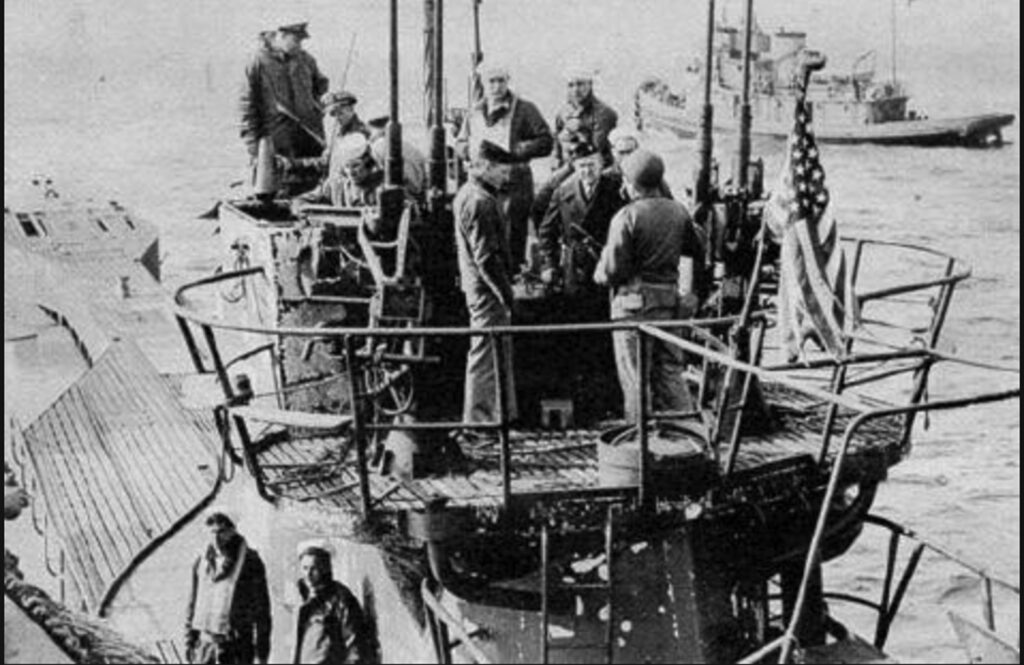
Off to Washington
May 21, 1945
Prize captive Generalleutnant Ulrich Kessler spoke to reporters in fluent English with a “decidedly Oxford accent” a reporter noted. Asked how he felt about the surrender, he replied, “I was in the last World War. I’ve been through it before. I’ll probably go through it again.”
Naval authorities expressed concern over the number of souvenirs that were finding their way into the city. Missing were dextrose “pep” pills, revolvers, canned goods, parts of German uniforms, many of which reached the hands of Portsmouth residents before the U-boats docked at the Yard. Reporters on the press tug observed some of the articles handed off the US Coast Guard boats by soldiers and marines to local boys in small boats.
A breaking news report off the wire services said that the mysterious stranger aboard the latest U-boat had been identified as designer of the German Messerschmitt combat air plane. This revelation brought to a close one of the most exciting news weeks at “America’s oldest naval shipyard.”
Source: Charlie Gray, “Surrender at Sea,” (pamphlet), published by WHEB and Colonial Cleaners, Portsmouth, NH, June 1945. Abridged by J. Dennis Robinson at SeacoastHistory.com. Pleases attribute any use.
 President Grant Zips THrough Town