


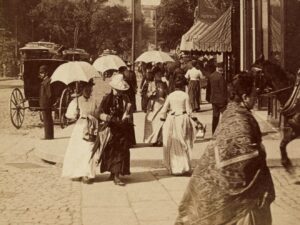
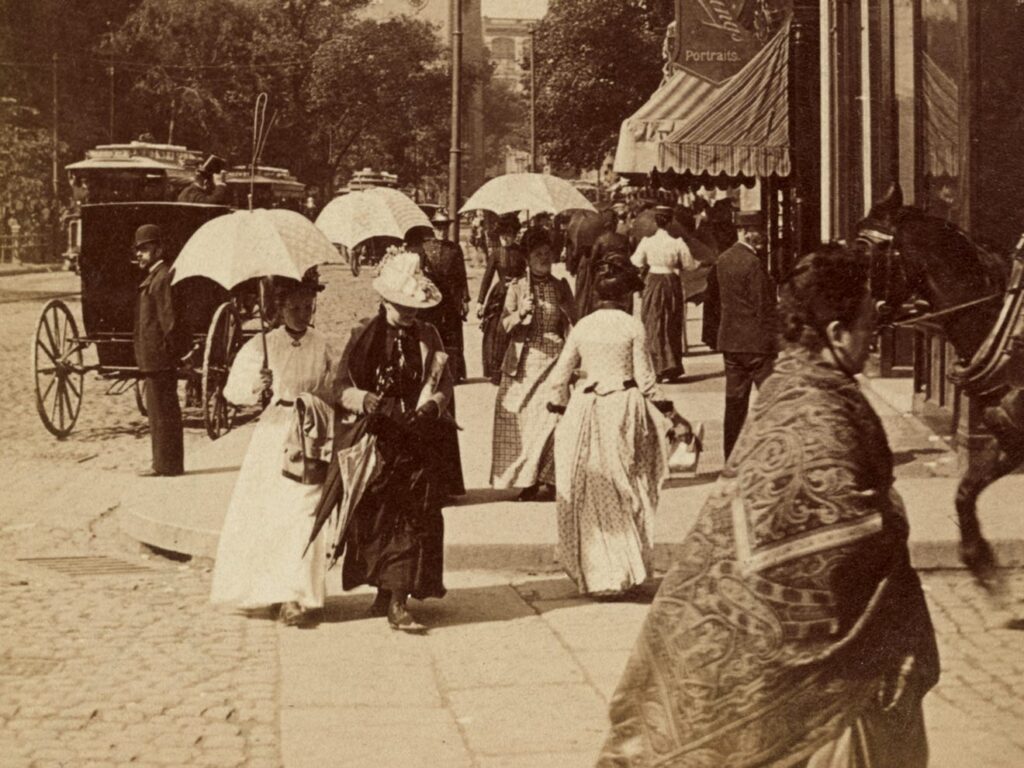
Depending on which survey you read, women today influence between 67 and 83 percent of all consumer spending in the United States. That trend, some historians suggest, can be linked to the rise of department stores in the late 1800s. Large urban stores, the theory goes, provided a safer, socially acceptable, and welcoming environment for unchaperoned women who had previously been excluded from the largely male-dominated city streets.
In 1893, the focus of this week’s history article, Marshall Field opened its nine-story “Annex” store in Chicago. Anticipating massive crowds visiting the Chicago World’s Fair, that year, the department store boasted 100 departments, 23 elevators, and 3,000 employees. Public shopping, at least for middle and upper class women, was a visible symbol of their increasing independence, political influence, and economic clout.
Women for women
Miniscule by comparison, but no less fascinating, is an eight-page newspaper for Victorian women entitled June Leaves. Only one copy is known to exist. Printed by the Portsmouth Journal on June 21, 1893, it was created by “The Woman’s Exchange,” a group we still know little about. Working from an office on State Street, it appears, the group was “in no means a charitable institution,” according to June Leaves.
The Women’s Exchange is described as a society “organized for the purpose of assisting young women in the field as breadwinners.” Like similar women’s groups forming across the nation, its primary goal was to help locate markets for goods produced by other women. The Exchange was dedicated to business networking, advanced education, mutual support of women workers, self-improvement, and leisure activities.
Part chamber of commerce, part clearinghouse, part social club, the Woman’s Exchange stated goal was to “assist in lightening the burden of the toiler” and to “cast a gleam of sunshine” into the lives of women working at home and elsewhere. Our only copy of the newspaper includes the announcement of an upcoming summer Women’s Exchange dance with an orchestra, ice cream, flowers and cake to be held at Peirce Hall just off Market Square. It was hoped that those attending the dance might “enjoy contact with their kind, throw aside the monotony of daily tasks, and gain strength for new exertions.“
Inside June Leaves
While big department stores may have played a role in liberating upper class urban women, store profits almost universally went to male store owners. And while the only known edition of June Leaves was packed with advertising, the Portsmouth company owners also appear to be exclusively men. Many are familiar to readers of this column, including specialty grocer Charles Laighton & Co., Hoyt’s stationery, Dondero fruits, Trafton Lumber, Walker Coal, auctioneer Henry Wendell, and photographer L.V. Newell. Both the Rockingham and Wentworth Hotels, owned by millionaire and former mayor Frank Jones, purchased sizable ads on the front page.
Portsmouth merchant Andrew Preston was especially willing to promote his sweet-smelling lavender bath salts, “teeth powder,” cold cream, and smelling salts for fainting spells in June Leaves. Beyond his Market Square shop, Preston’s branded tonics, powders, and toiletries were created at the company’s “laboratory” on Bow Street near St. John’s Church. In the summer of 1893 Preston’s line of “Portsmouth Specialties” products were on display at the Chicago World’s Fair. “Look us up there,” Preston’s ad in the Woman’s Exchange reads. “We will be glad to see you.”
Support of the fledgling publication was widespread in 1893. Portsmouth advertisers selling everything from baby carriages to bicycles appeared eager to tap into the targeted female market. The trim well-designed newspaper included ads, not surprisingly, for confections, gloves, food, flowers, eyeglasses, hats, furniture, clothing, crockery, clocks, pianos, picture frames, and kitchen appliances. Merchants also placed notices in the Woman’s Exchange newspaper to sell furnaces, tombstones, and even the newly-patented “lawn-mowers.”
Like many summer newspaper “shoppers” today, the editorial content of June Leaves was sparse and lighthearted. A letter (likely invented) from a woman reader complained that she was going to carry a revolver and shoot the next person who described her as “well preserved.” Writing included short verses, humorous anecdotes, fashion hints, and tips for dealing with sunstroke and insomnia. A lengthy poem winding throughout the entire newspaper offered verses in praise of every paid advertiser. For example:
For currants and spices and dainties and fruits
Canned goods of all kinds, in measures to suit,
For savory soups and nice sauces, repair
To John Laighton’s store, number one on the Square.
The Chicago Connection
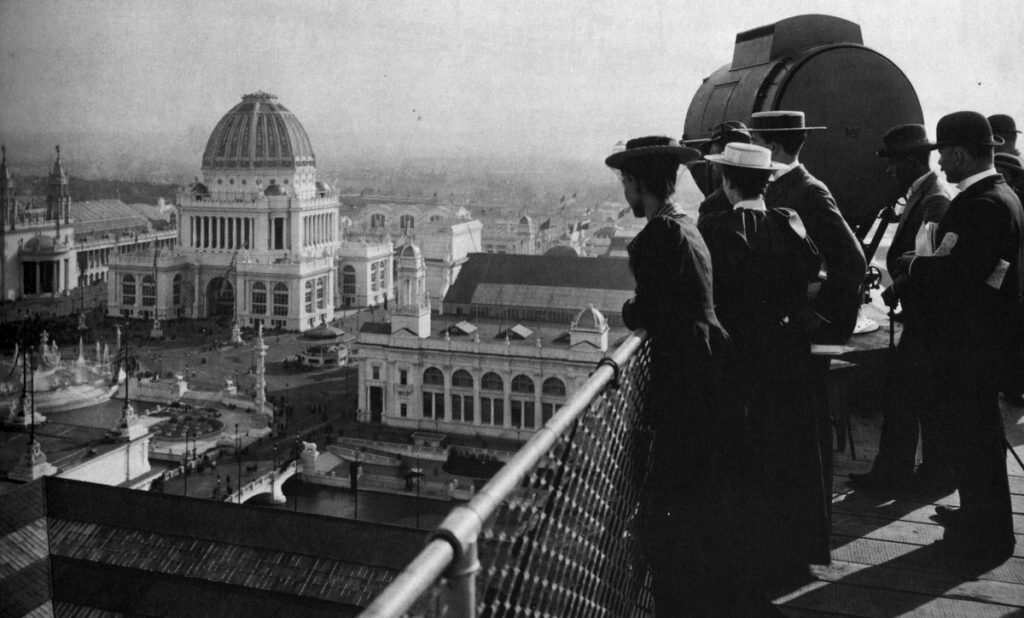
The most newsworthy item in June Leaves was a satirical report on Rev. Dr. Thomas Treadwell Eaton, a Southern Baptist minister. Eaton, along with temperance leaders and other Protestant ministers, was opposed to keeping the massive 690-acre Chicago World’s Fair open on Sundays. When Congress refused to allocate funds to operate the fair on Sundays, the Chicago Woman’s Club stepped up. The group petitioned Congress to keep the fair open, arguing that Sunday closure would prevent laborers who worked six-day weeks from attending. The Chicago Woman’s Club was later involved in health care reform, establishing city kindergartens, women’s suffrage and advocated for birth control.
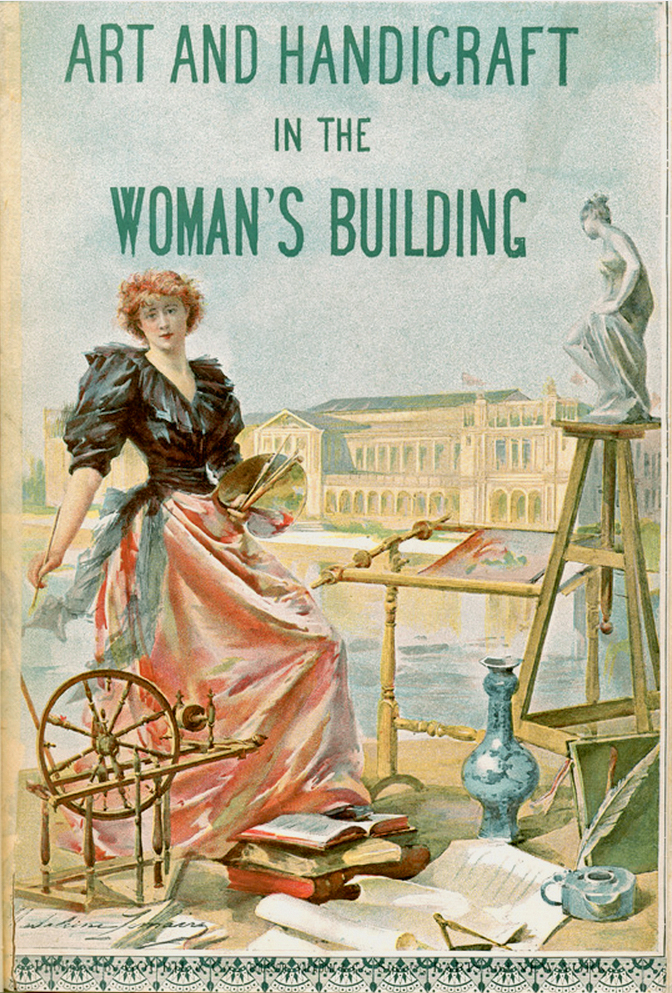
Inventor Thomas Edison and his workers signed the pro-Sunday petition. The woman’s group won the day, allowing working women access to incredible exhibitions featuring the latest technological advances and information about world cultures. Among the exhibits was the Woman’s Building, designed by female architect Sophia Hayden with sculptures by Alice Rideout, and huge murals by women artists. A “Gallery of Honor” showcased the advancement of women through history, exhibitions featured women’s work and art, while lecturers spoke on women’s rights.
So when Rev. T.T. Eaton declared that he would not attend the Chicago fair in protest of Sunday opening, the little Portsmouth newspaper reacted with humor. “The Worlds’ Fair to be Abandoned” a headline in June Leaves announced. Eaton’s refusal to attend created “great consternation” in Chicago the mock report claimed. The president of the Chicago World’s Fair “turned pale and gasped for breath” on hearing the news, the article continued, and he was required to sit on a block of ice in order to cool down.
“Do you think it’s possible that Dr. Eaton will revoke his cruel pronouncement?” Mrs. Potter Palmer, a wealthy Chicago businesswoman and founder of the Woman’s Building asked the reporter.
“Nay, fair lady,” the reporter replied. It was rumored that Rev. Eaton was even opposed to the reading of Sunday newspapers.
“Then we are lost,” Mrs. Potter cried in agony. “The fair can never go on unless he comes.”
The Chicago World’s Fair did go on, however, and helped champion the cause of women’s rights. The fair was attended by 28 million visitors. Our little June Leaves, however, appears to have bloomed and faded in the summer of 1893.
Copyright J. Dennis Robinson, all rights reserved.
 Giant Hooks for Giant Cod