

Wow, that was quick. But if you think the five-day Senate impeachment trial of Donald Trump went by rapidly in 2021, check out what happened with New Hampshire’s Superior Court Justice Woodbury Langdon of Portsmouth in 1790.
As with the federal government, a state impeachment begins in the House of Representatives. So like presidents Andrew Johnson in 1868, Bill Clinton in 1998, and Donald Trump in 2019 and again in 2021, Judge Langdon was technically impeached. All of these men were “charged with misconduct.” None were convicted. Richard Nixon resigned his office before the House could impeach him.
Unlike our impeached presidents, Woodbury got in trouble for what he did not do. He didn’t have sex with an intern then lie about it under oath or incite a riot at the U.S. Capitol. He did not fire a member of his cabinet without permission of the Congress, which is what happened to Andrew Johnson, although the Tenure of Office Act was eventually declared unconstitutional. Judge Langdon was impeached because he failed to show up for work.
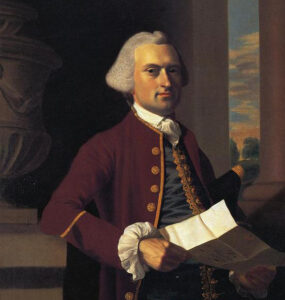
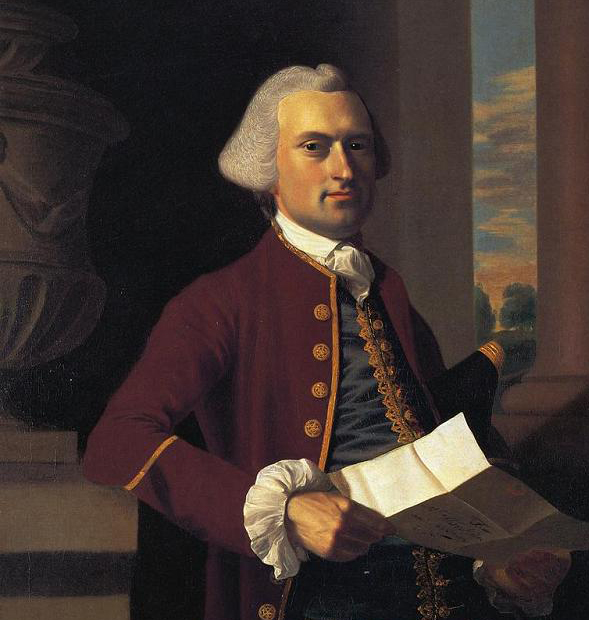
Let’s start at the beginning. Woodbury’s baby brother was “founding father” John Langdon, the guy who led the raid on Fort William and Mary, served as a delegate to the Constitutional Convention, signed the U.S. Constitution, built the tall ship Ranger for John Paul Jones, and later served as governor of New Hampshire. Tough sibling competition. Like his brother John, Woodbury made his fortune in the maritime trade. He has been described as “One of the handsomest and ablest men of the time in New Hampshire.”
A contemporary named William Plumer said Woodbury Langdon was “a man of great independence and decision – bold, keen, and sarcastic. He spoke his mind of men and measures with great freedom. He was naturally inclined to be arbitrary and haughty, but his sense of what was right, and his pride prevented him from doing intentional evil.”
In 1775, as the American Revolution began, Woodbury went to England to check on some of his investments. When he returned in 1777, no one was quite sure which side he was on. But he recovered his status as a patriot and by the 1780s, as the war ended, he was a justice on the N.H. Superior Court and living in a fine home on State Street in Portsmouth.
Thanks to the magic of the Internet, it’s possible to download the details of Woodbury Langdon’s impeachment from “The Laws of New Hampshire.” On June 17, 1790, the House complained that the justice had “at diverse times neglected his duty in said Office in not attending at the times and places prescribed by Law.” Preferring to attend to his business in Portsmouth, Langdon had failed to show up in the towns of Amherst and Plymouth. His absence caused “much inconveniency, damage, and uneasiness among the good citizens” of New Hampshire.
Langdon was accused of willfully and corruptly misbehaving and impeached by the NH House. Before his trial in the Senate, however, his politically powerful brother John was able to have Woodbury appointed by President Washington as commissioner in charge of settling Revolutionary War claims. Woodbury then resigned his post on the state Superior Court. His Senate impeachment trial was never held, but the Honorable. Mr. Langdon was never able to rebuild his political career. He died in Portsmouth in 1805 and is buried in one of those grass-covered vaults at North Cemetery.
Woodbury Langdon, readers of this column may recall, built a mansion on State Street next door to what is today the John Paul Jones House Museum. Locals called his three-story brick mansion “the costliest house anywhere about.” It was converted after his death into the Rockingham House. That became part of the Rockingham Hotel, owned and expanded in the next century by none other than millionaire alemaker Frank Jones. The towering Rockingham we see today was rebuilt again after a fire in 1884 and was converted to condominiums in the 20th century.
Copyright by J. Dennis Robinson
BONUS: A PROFILE OF WOODBURY LANGDON
by Steve Adams
The brother of John Langdon was a complex and powerful man. He was unafraid of expressing his opinion, even when it got him into trouble during the Revolutionary Era. Today he is buried in the historic North Cemetery and the site of his opulent brick mansion has been turned into a popular local restaurant.
William Plumer, New Hampshire’s caustic historian and a contemporary of Woodbury Langdon, once described Langdon as “a man of great independence and decision-bold, keen, and sarcastic. He spoke his mind of men and measures with great freedom. He was naturally inclined to be arbitrary and haughty, but his sense of what was right, and his pride prevented him from doing intentional evil.” This was great praise coming from Plumer, but Woodbury Langdon deserved it. No other man of the times was as willing to voice an unpopular opinion and to stand behind it as he was.
A Wealthy Conservative
Born in Portsmouth in 1738 or 1739, Woodbury Langdon attended the local grammar school and then went to work in the counting room of Henry Sherburne, a prominent Portsmouth merchant. In 1765 he married Sherburne’s daughter, Sarah, and soon parlayed his influence and intelligence into a fortune of his own. He took the conservative side in the early days of hostilities with Britain and was influential in preserving Portsmouth’s conservative attitude during the early 1770s. The moderates of Portsmouth elected Langdon to the Assembly in the spring of 1774 and to the revolutionary Provincial Congress at Exeter the following summer, and they reelected him to the Assembly in February of 1775.
Whose Side Is He On?
When war broke out in 1775, Langdon went to London in hopes of salvaging “a considerable sum of money” he had invested there. He left England two years later and sailed for New York with “nothing but his baggage.” Upon his arrival he found himself restricted to the city by the British commander, Gen. Howe. No one was sure whose side Langdon was on and the British were not willing to let him go until they were sure of his leanings. Neither the influence of Langdon’s British friends, nor the efforts of his brother, John Langdon, could win his freedom; so Woodbury Langdon set aside accepted procedure and escaped in December of 1777.
Woodbury Langdon returned to Portsmouth and in the spring of 1779 he was elected to, and served a year in, the Continental Congress. In 1780, 1781, and 1785 he was reelected, but chose to remain in New Hampshire where he served in the legislature. In 1782 he was appointed a justice of the Superior Court, but after a year he resigned the post despite the legislature’s requests that he remain in office. In 1786 he once again accepted the office, but this time the legislature ended up regretting its choice.
Impeached By NH House
Langdon failed to attend several sessions of the court that were held in the outlying counties, preferring instead to pursue his commercial interests in Portsmouth. On June 17, 1790 the New Hampshire House of Representatives impeached him for neglect of his duties. Langdon appeared before the House and countered the impeachment with charges that the legislature failed to provide honorable salaries for judges and interfered in court decisions. The trial was postponed because of a technicality and during the postponement John Langdon managed to have his brother appointed a commissioner of Revolutionary claims by President Washington. Secure in his new position, Woodbury Langdon submitted a letter of resignation to the president of New Hampshire and the trial never took place, though the sentiment in the legislature was that Langdon’s conduct was “impertinent and unbecoming to his office.”
A few years later Langdon tried to make a political comeback but failed, because of his inability to seek popularity, in attempts to win election to the United States Congress in 1796 and 1797. He won his few supporters with his directness and his ability. Be it a failure or a virtue, he could not compromise his convictions. He died in Portsmouth on January 13, 1805.
By Steve Adams. Updated © 2006 SeacoastNH.com. First published online here in 1997. Originally published in “NH: Years of Revolution,” Profiles Publications and the NH Bicentennial Commission, 1976. Reprinted by permission of the author and publisher.
 Copycat Portsmouth Tea Party Narrowly Avoided