


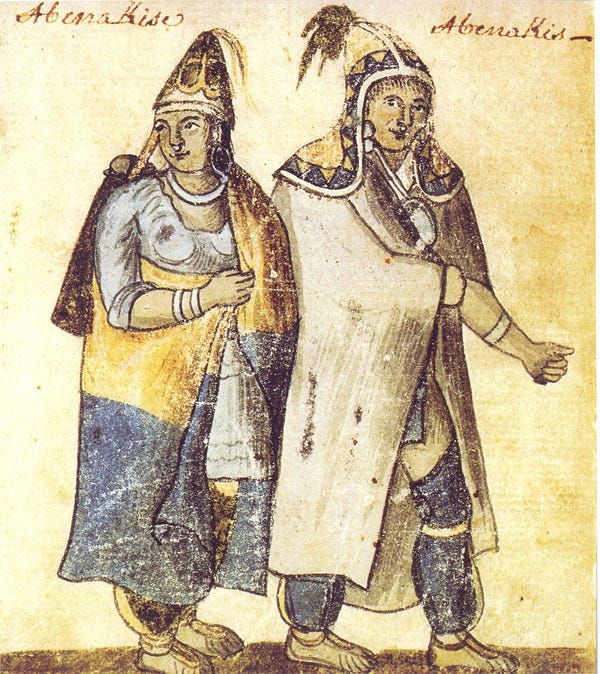
A few years back, CNN fired commentator Rick Santorum for allegedly making “racist, pro-colonization comments” about Indigenous People. A former Pennsylvania Senator, Santorum was speaking to a group of young political conservatives.
“We birthed a nation from nothing,” Santorum told his audience. “I mean, there was nothing here. I mean, yes, we have Native Americans, but candidly, there isn’t much Native American culture in American culture.”
My first thought was, Wow, this guy has never attended an elementary school Thanksgiving pageant, watched a Western, seen a buffalo nickel, or heard of Indigenous Peoples Day. In an off-the-cuff history lesson to young Americans, he managed to cancel a culture that has lived here for 15,000 to 20,000 years, long before the Pilgrims stepped off the Mayflower. Perhaps Santorum’s words were taken out of context.
Founding of NH
My second thought was, Boy, he sounds like most of the men who wrote about the founding of New Hampshire. Our local history books, written almost exclusively by white Christian men, often ignored Natives until they began to resist European settlers in the late 17th century.
“For more than a century after Columbus had discovered America,” 19th-century historian Charles Brewster wrote, “the noble Piscataqua was unvisited and unknown.” Unknown by whom?
When English explorer Marin Pring visited the Piscataqua River in search of sassafras trees in 1603, Brewster noted, he found none and moved on. “Nor do they find a red man in the present site of Portsmouth,” Brewster added, “although the embers of extinguished fires were often visible, showing the spots where they had encamped earlier in the spring.”
Ravished by European-borne diseases, their population reduced by as much as 90 percent, the First People did not always rush to meet the foreign immigrants with the big boats and the big guns. The cannon that David Thompson mounted on the first English house at what is now Rye in 1623 was “a terror to the Indians,” according to colonist Samuel Maverick. In what would become Maine, Native Americans were kidnapped and shipped to England. In what was to become Massachusetts, Pilgrim enforcer Myles Standish murdered a group of warriors after inviting them to dinner.
That same year, in 1623, while exploring the Isles of Shoals, Christopher Levett famously noted that, “Upon these Islands are no savages at all.” Recent archaeological digs prove that Indigenous residents hunted at the Shoals for at least 6,000 years. They were not there in 1623, most likely, because hundreds of English fishermen had set up a fish processing operation.
Without an ounce of evidence, one reporter noted in 1870: “The Shoals were an aggravation to the brave Red Man. They were remote from the main land, and the intermediate water could not be depended upon; so scalps were safer there than on the coast. This is one reason why the islands were early inhabited [by British fishermen].”
The fact that Indigenous Peple were rarely reported in the Portsmouth area and did not attack and destroy the first European outposts here is sometimes seen as evidence they were never here at all. Prehistoric Portsmouth is often depicted as an empty landscape frozen in time. Well into the 20th century local historians imagined an unpopulated and lush region, a proto-American Garden of Eden, along a breathtaking and swift river. The Piscataqua was waiting, they implied, only to be discovered and put to good use by white Christian explorers, directed here by the hand of the Almighty.
Popular mythology
Before the arrival of English settlers, Charles Brewster noted there was only “wild land” and “the lonely wigwam.” This popular mythology may be what Sen. Santorum was referring to when he claimed that patriotic Americans “birthed a nation from nothing.” Which is an odd interpretation of the fact that French, Dutch, Portuguese, and Spanish settlers were rushing to the “New World” in order to tap its abundant natural resources. Those resources had been sustained and managed by Indigenous Peoples for millenia.
The failed English plantation of Strawberry Bank (later Portsmouth) was formed to tap those resources. Readers will recall that the primary goal of the new colony here was to strike it rich nu mining for precious metals. When that failed, the motley group tried to raise grapes for wine. Only the third goal, trading with the Native Americans, brought any success upriver at Salmon Falls. By 1635, the British investors had cleared out, the project was abandoned, and the surviving squatters stuck around to fish and later to harvest the forests.
There are rare moments in early documents when English settlers offered an alternate view. Thomas Morton, for example, was kicked out of Massachusetts by the Plymouth founders and dumped on the Isles of Shoals, presumably to starve. He was saved by local Native Americans. “If you be hungry there is meat for you, where, if you will eat, you may,” he wrote of them. “Such is their humanity.” Colonial investor Sir Ferdinando Gorges found the Indigenous People of Maine to be much more trustworthy than his English partners.
The topic of Native Americans in our Seacoast town histories usually skips the first half century and focuses on the Native American “massacres” that followed. Stackpole’s history of Kittery and Parson’s history of Rye, for example, have a lot to say about the raids. In his 1923 history of Dover, John Scales offered the popular explanation that white settlers were part of the problem. Native Americans, he wrote, “had become degenerated by contact … with wicked and covetous white men.”
As early as 1784, historian Jeremy Belknap was aware that colonial settlers had mistreated, enslaved, lied to, and exploited the local Natives. “However fond we may have been of accusing the Indians of treachery and infidelity,” Belknap wrote, “it must be confessed that the example was first set them by the Europeans. Had we always treated them with that justice and humanity which our religion inculcates, and our true interests at all times required, we might have lived in as much harmony with them, as with any other people on the globe.”
People of the Dawnland
Indigenous Peoples have been and continue to be a huge part of the American story. And yet, a century after Belknap, writers and educators continued to stereotype and marginalize – if not erase–the People of the Dawnland. In his 1888 History of New Hampshire, John N. McClintock offered this patronizing and demeaning view: “Physically the American Indian is a splendid type of manhood. As he was found by the first-comers, he was honest, honorable, and hospitable. …The settlers did not treat them fairly. They were ‘children of the forest’ and should have been treated as children or wards.”
As Dartmouth historian Jere R. Daniel pointed out in his book Colonial New Hampshire, our view of Native American life in the 1600s and beyond is “almost totally dependent on European reports and these are scarce and notoriously undependable.” That early point of view, thankfully, is rapidly being replaced, but not everywhere.
“You get savaged for telling the truth,” former Republican Senator Santorum told Fox News host Sean Hannity after being let go from CNN. “I misspoke,” Santorum explained. “I said Native Americans didn’t affect American culture. I meant the American founding. That’s what we were talking about. The whole speech was about the founding.”
Copyright 2021 by J. Dennis Robinson, all rights reserved.
 A Moving Memorial to Ensign Charles Hovey