


Historic moments come and go quickly. But historic houses live on. This is the story of a genteel Boston family that moved into the rambling mansion of New Hampshire’s royal governor. Their lives – and their talented and influential friends – fostered the city’s arts community that thrives today.
It’s a fact. Without rich people from out of town there would be no historic Portsmouth. In almost every case, the restored, colonial house museums that give this city its character and “open door” cache were gifted to us by wealthy summer visitors in the 20th century. Some, like the Langdons and the Wendells, had Portsmouth roots. Others like antiquarian Wallace Nutting, preservationist William Sumner Appleton, and artist John Templeman Coolidge III were drawn from Massachusetts to the scenery, the history, and the architecture of dilapidated Portsmouth mansions.
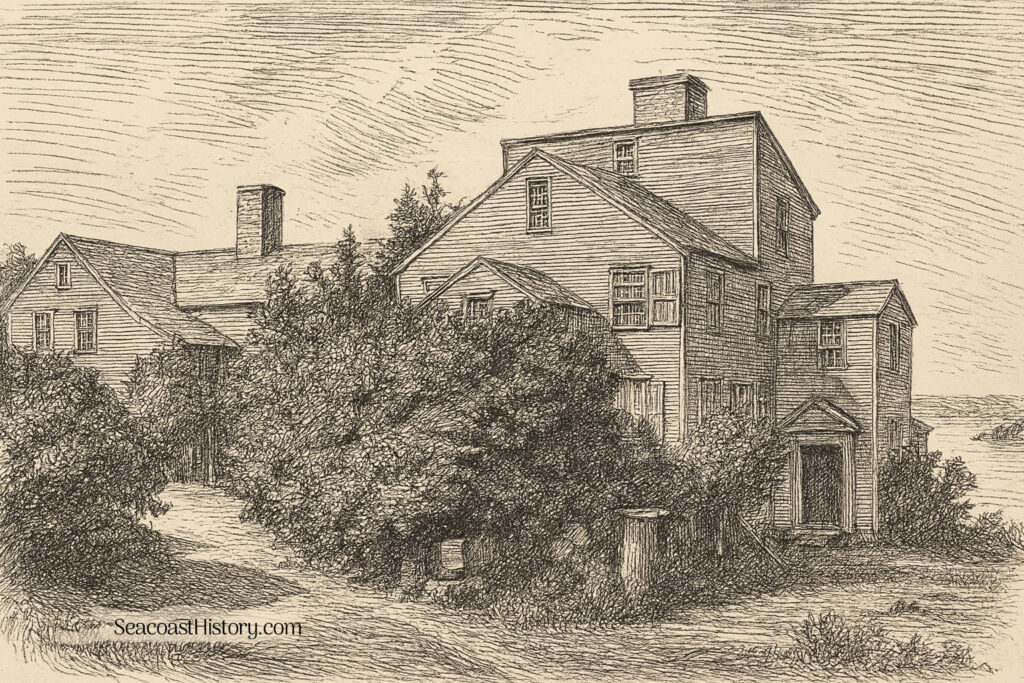
Colonial Governor Benning Wentworth had been dead and buried in St. John’s cemetery for more than a century when the Coolidge family bought his Little Harbor mansion in 1886. J. Templeton Coolidge came from well-to-do, socially prominent Boston stock. After graduating from Harvard with a fine arts degree in 1879, he refined his oil painting talents in Paris. His wife Katherine Parkman was the daughter of renowned history writer Francis Parkman, also of a wealthy Boston clan. Think of it as new millionaires buying an old millionaire’s place.
Frozen in time
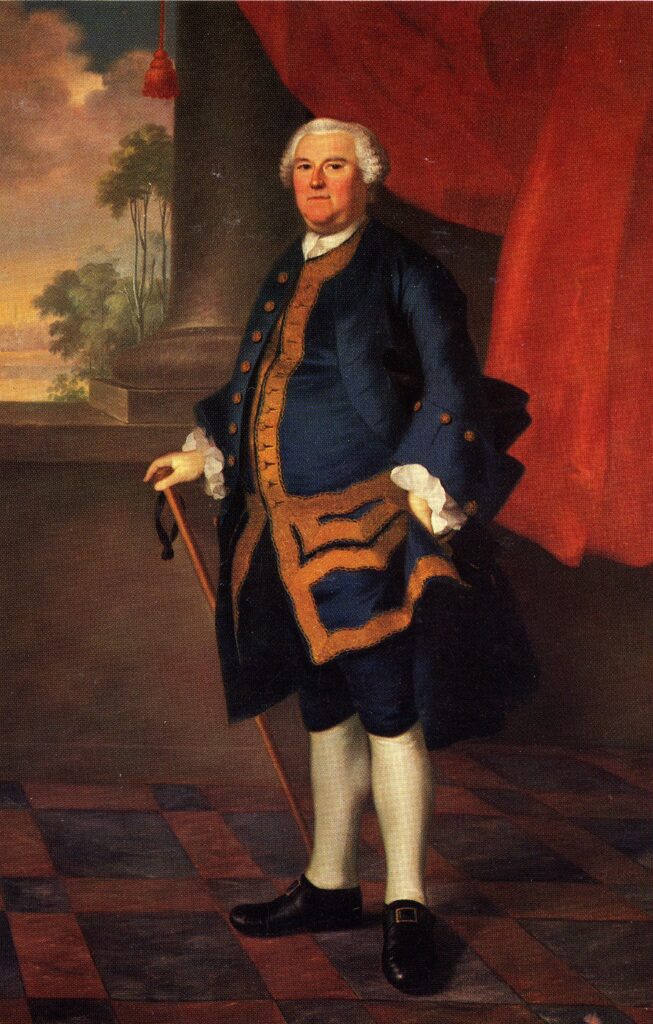
Like most historic houses, we tend to think of the rambling Wentworth-Coolidge Mansion as empty architecture frozen in time. Beautifully situated on Little Harbor, it is forever linked to its elderly aristocratic owner who married his housekeeper who was 40 years his junior. Their May-December romance is the subject of an historically inaccurate poem by Henry Wadsworth Longfellow. Wentworth, appointed by King George II was a powerful figure and shaped both NH and Vermont history.
There is no Georgian mansion like it anywhere in America. Assembled from four or five 18th century building frames, the 40-or-so surviving rooms are all different. NH state historian James Garvin calls it “a rambling, somewhat incoherent mass of architecture”. The mansion served as a country gentleman’s farm and the colonial seat of New Hampshire before the Revolution. The original governor’s council – mostly the governor’s relatives – met here in a large room where Benning flaunted his wealth. The governor’s council still meets here symbolically every year or two and the building is now owned by the state.
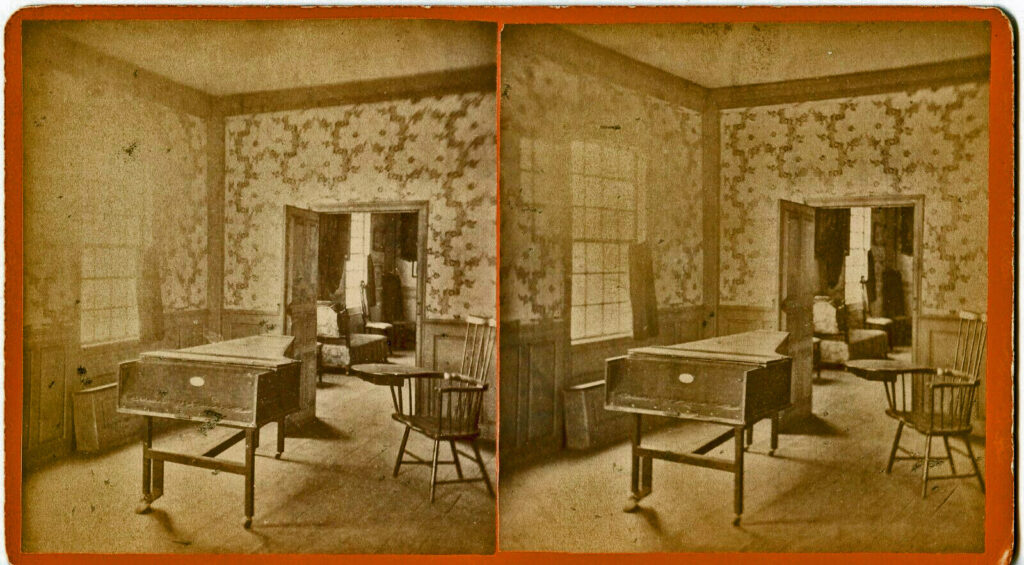
We forget, however, that historic houses have many lives. Between the Wentworths and the Coolidges, William Cushing ran the property as a farm. His nephew William Israel inherited the property that slowly fell into decline. Israel, who is inevitably described as “eccentric”, was known to give tours of the old governor’s mansion to anyone who asked. According to Garvin, with the exception of George Washington’s home at Mount Vernon, these historic tours beginning in the 1840s were among the first in the nation.
Host to rich and famous
The Coolidges went a long way to restoring the mansion during their 50 summers at Little Harbor, pulling it back from the brink of destruction. Trained as an artist, Templeman painted in oil, drew, carved in wood and built model ships. But more important than his own art, his charm, wit and bohemian lifestyle drew a host of cultured Bostonians to Portsmouth. His Harvard classmate John Singer Sargent, a great American painter, was a frequent guest as was father-in-law Francis Parkman and Isabella Stewart Gardner, whose world art collection of 2,500 pieces launched the Boston museum named in her honor.
The Coolidges were a culture-magnet for the elite – a Supreme Court justice, delegates to the Russo-Japanese Peace Treaty, men of letters, and even a surprise visit by President Roosevelt. While they might be considered well off, their new neighbor Arthur Astor Carey was descended from the super rich. Another Harvard chum, Carey, bought land next door and constructed “Creek Farm”, now home to the Shoals Marine Lab. Noted architect R. Clipson Sturgis, who restored Boston’s Old North Church, moved in next door at Little Harbor. Impressionist painter Edmund Tarbell visited “Wentworth Mansion” before purchasing a house nearby in New Castle. Sumner Appleton and Barrett Wendell, who both created Portsmouth historic house museums, were frequent guests.
As an accomplished amateur artist, Templeman relished playing host to talent greater than his own. His Portsmouth mansion with its dock, sailboats, gardens and expansive lawn was the ideal lure for seasonal guests. With his little yacht Theo (purchased from Arthur Carey) moored nearby, and with the luxury Wentworth Hotel visible in the distance, Little Harbor became a hot retreat for the Boston elite. Today, the Coolidge Center for the Arts, established in the 1990s, carries on that artistic tradition.
“That was his genius,” says Templeman’s granddaughter Susannah Coolidge Jones. “He could do it himself, but he got others to do it too… He believed in the work of your hands. That was really his prayer.”
Growing up Coolidge
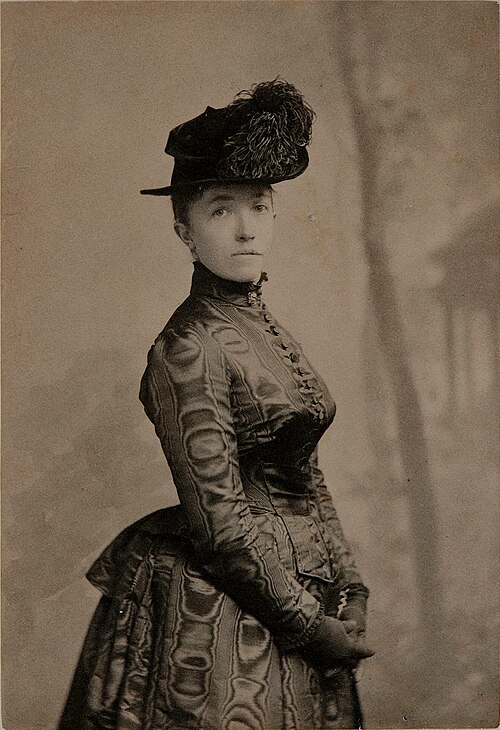
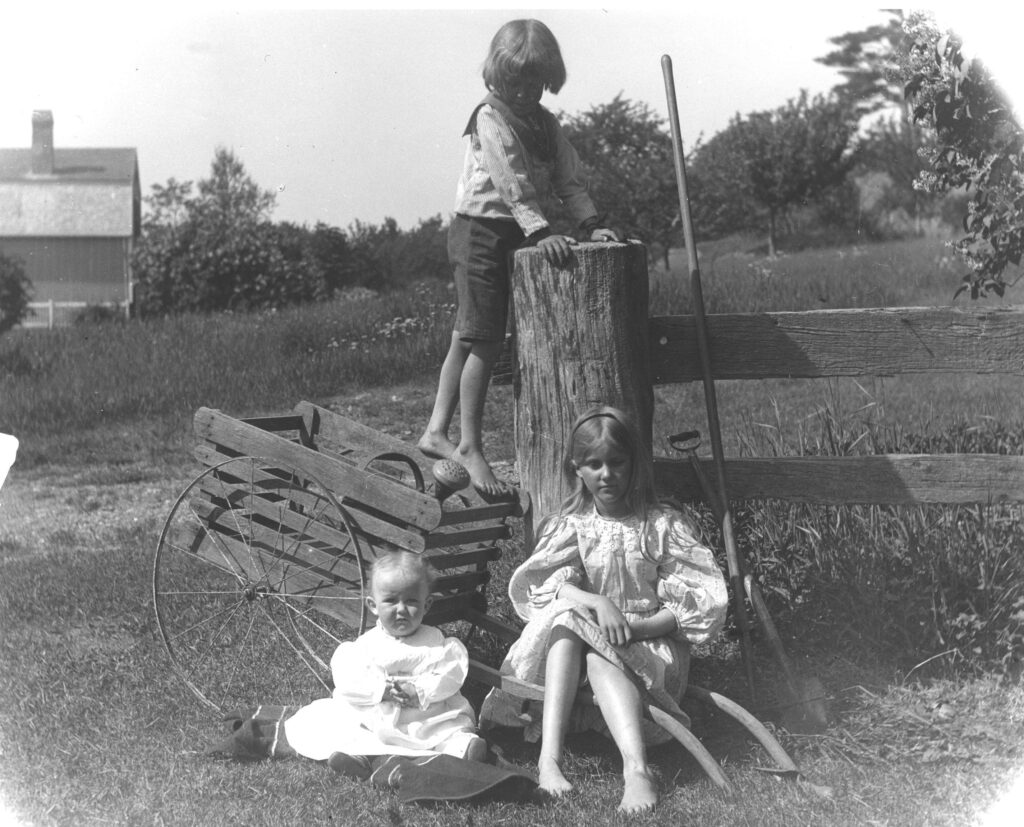
It is a fair bet that the old governor’s mansion was never livelier than when the Coolidge clan was in residence. Templeman and Katherine had five rambunctious children who were brought up steeped in the arts. The children spoke French, posed for their father’s paintings, and put on dramatic plays in the pine forest. Eldest daughter Molly, whose bedroom was once Gov. Wentworth’s dressing closet, rode her horse, swam in the creek, and traveled the grounds in a two-wheeled sulky pulled by Billy the Goat. Her early photographs show naked sprites (her sister and brother) posing in the woods and costumed princes and fairies.
In a memoir published to her grandchildren Molly recalled spending five days in an abandoned house on Leaches Island, within view of the Wentworth Mansion. In another story, she and her siblings went ragged and barefoot to the Wentworth Hotel, a three-mile journey on horseback. Pretending to be wandering minstrels, they played musical instruments and sang for guests at the summer resort, returning home with a pocketful of quarters. At one point a New Castle resident holding a mop burst out of her house and screamed “You get out of here!”
“I seen that hoss in the city,” the woman shouted, “and I know you’re rich folks disturbing the poor and trying to get their money. Get along.”
The Coolidge life was a privileged one, with maids and cooks, high tea, private schools, and European vacations. These were, after all, wealthy people summering in an even wealthier man’s mansion. Their guests were the movers and shakers of the Boston art world. They did not punch a clock like the rest of us, or worry about the mortgage.
Katherine and J. Templeman Coolidge had five children. Thirteen years after Katherine’s death in 1900, Templeman married Gail Parsons of Kennebunk and they had two boys. Their grandchildren, too, frolicked around the mansion, although they put on their best manners indoors where the aging grampa Templeman could be a loving, but sometimes critical and fearsome host.
Templeman died in 1945 and his wife Gail deeded the 1760-era landmark to the state in 1954. She didn’t have to. The scenic Little Harbor point with the ancient yellow mansion might have become a gorgeous condo park, or the home of another wealthy American family. But today it is open for tours, picnics, art exhibits, weddings, lectures and an annual lilac festival.
Today the state of New Hampshire groans over the few dollars that it spends keeping one of the nation’s most fascinating buildings standing. Today the city of Portsmouth, once a hard-knuckle seaport of blue collar workers, is considered a cultural Mecca, thanks in part, to the Coolidge influence. Today anyone with seven dollars ($3 for kids) can tour the rooms where the governor worked and Molly Coolidge and her siblings played. The grounds and the gallery are free to the public.
All this – and every other historic house in town — is thanks to “those rich folks” who as we all know, are forever exploiting the poor.
SOURCES: (1) “The Coolidge Years” a short DVD documentary by Dennis N. Kleinman; (2) Building Portsmouth by Prof. Richard M. Candee; (3) Once I Was Very Young by Mary Coolidge Perkins with an introduction by Woody Openo.
Copyright © 2009 by J. Dennis Robinson, All rights reserved.
 The Only True Pirate Tale from the Isles of Shoals