


Justin Downing Hartford was in a tight spot. His father, Fernando W. Hartford, a seven-term Portsmouth mayor, had been a towering figure in local business and politics. Trained at the knee of millionaire ale tycoon Frank Jones, “FW” Hartford had become the owner of the Portsmouth Herald newspaper and the historic Music Hall theater. But by 1938, FW was dead, The Music Hall was bleeding cash, and it was Justin’s job to stanch the flow.
(Portsmouth Herald)
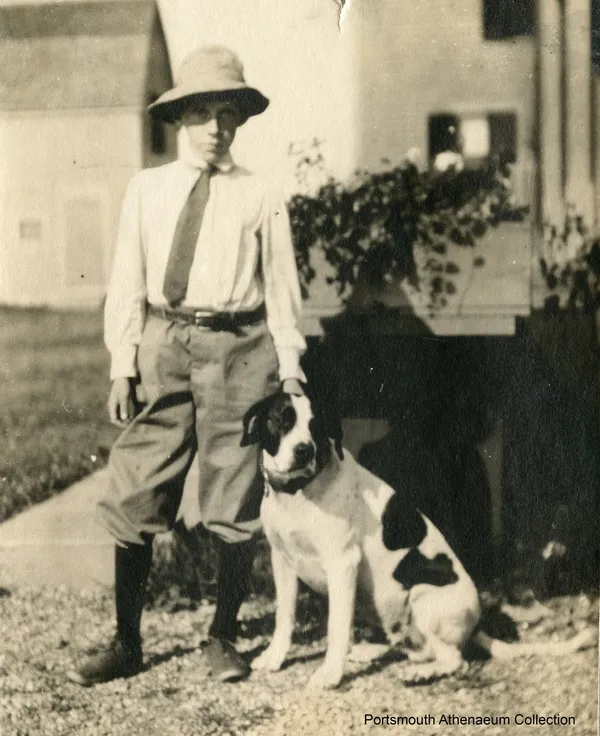
Born in Portsmouth in 1898, son Justin was a graduate of the Naval Academy at Annapolis. Justin (friends called him “Juddy”) was well into a successful military career when he was called home to run the family businesses — and to fill some very large shoes. Outflanked by three downtown cinemas, the old theater on Chestnut Street had been largely shuttered for years by the time Justin took over in 1938. Worse yet, a terrifying world war was looming.
Following the Japanese attack on Pearl Harbor in 1941, the city was gripped by the frenzy of war. So the old Music Hall, just up a sloping road from Justin’s newspaper office on Congress Street, was the last thing on his mind. Production at the Portsmouth Naval Shipyard hit a record-breaking pace during World War II as 22,000 employees, men and women, worked three nonstop shifts. From 1941 to 1945 the shipyard produced an unprecedented 79 submarines.
The Music Hall was largely dark, as was much of the city, during forced “blackouts,” designed to reduce lights that might be spotted by enemy aircraft. Hundreds of soldiers stationed at fortifications along the coast scanned the seas for enemy submarines that never came.
The movie business, however, was in full swing downtown. In 1940 MGM Studios surveyed all major movie houses on the East Coast. In Portsmouth, the Colonial, Arcadia and Olympia theaters all received high marks from MGM. The aging Music Hall, however, was not included in the survey. In January 1942, Justin Hartford reached out to Warner Brothers “circuit management corporation” in hopes of finding someone to take over his inherited theater. After inspecting The Music Hall, a Warner Bros. executive wrote to say “this proposition is one which our company cannot handle.”
Negative cash flow
Hartford family records archived at the Portsmouth Athenaeum offer a previously untold story of The Music Hall during World War II. As the primary shareholders in the theater, Justin and his mother, Lizzie Hartford, had to bear the cost of taxes and insurance, more than $2,000 per year (about $35,000 today), with little or no income. Unable to cash in on the lucrative movie business, Justin was forced to consider other ideas. A local Realtor had found a client who planned to turn The Music Hall into a nightclub — “which they think might go over big in Portsmouth” — the Realtor wrote.
Justin was not thrilled. A hard-knuckle seaport, Portsmouth had been famous for its glitzy seedy clubs and brothels in the recent past. But Justin’s father, FW Hartford, had campaigned tirelessly during his tenure to clean up the city’s image and to bring moral and “high end” professional entertainment to The Music Hall. To convert to a nightclub, the Realtor explained, the new owner would need a liquor license.
“I cannot visualize one of the New York or Boston type (of nightclubs) doing business in Portsmouth,” Justin told the prospective buyer. The deal fizzled.
Unfortunately for the Hartfords, wartime audiences wanted to be distracted and entertained rather than culturally enlightened. Louis Rothenberg of the Boylston Amusement Company in Boston also wanted to lease the theater as a bar or dance hall. When Rothenberg offered to pay $2,400 a year with an option to purchase The Music Hall for $35,000, Justin grudgingly considered the plan.
The haunting of Mrs. Hartwig
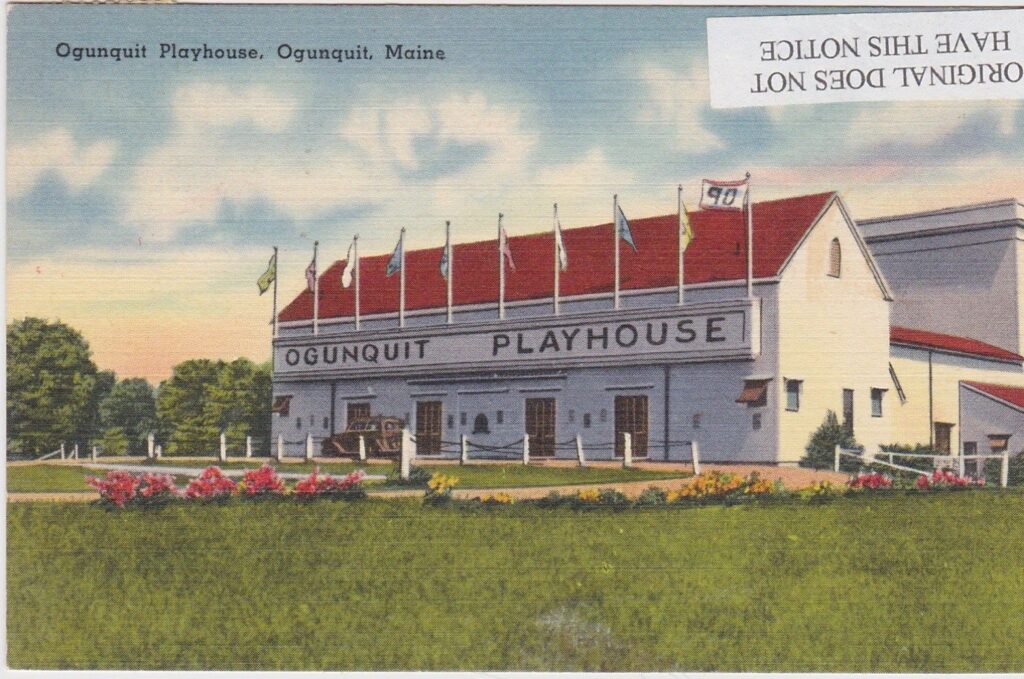
As Justin was pondering the Boylston Amusement deal, he was approached by a veteran of the “legitimate theater.” Maude Hartwig, who ran the famed Ogunquit Playhouse in nearby Maine, requested a personal tour of The Music Hall. Her husband, Walter Hartwig, had founded the “Little Theater” movement that saw high-quality community playhouses popping up across the country.
Their summer repertory had started in an old Ogunquit garage. Then, in 1937, they built the nation’s first — and now longest-running — seasonal theater. When Walter Hartwig died in 1941, his wife carried on. Maude instantly fell in love with the abandoned Music Hall with its gilded proscenium arch and the ample backstage built in the Frank Jones era. She imagined creating a year-round performance space in Portsmouth, a city peppered with ancient mansions and rich in history. Her breathless letter of May 30, 1942, to Justin Harford says it all:
“What a theater you own and what a thrill it gave me to visit it,” she wrote. “The Shades of the theater, great with all their pomp and circumstance, passed before my mind’s eye — and I saw to the thousands whose burdens were lightened and lives brightened because of those who trod the boards, and gave them all inspiration and showed them Fairyland. To uplift the mind and give a vision is what the theater, the most democratic of the arts, can do best.”
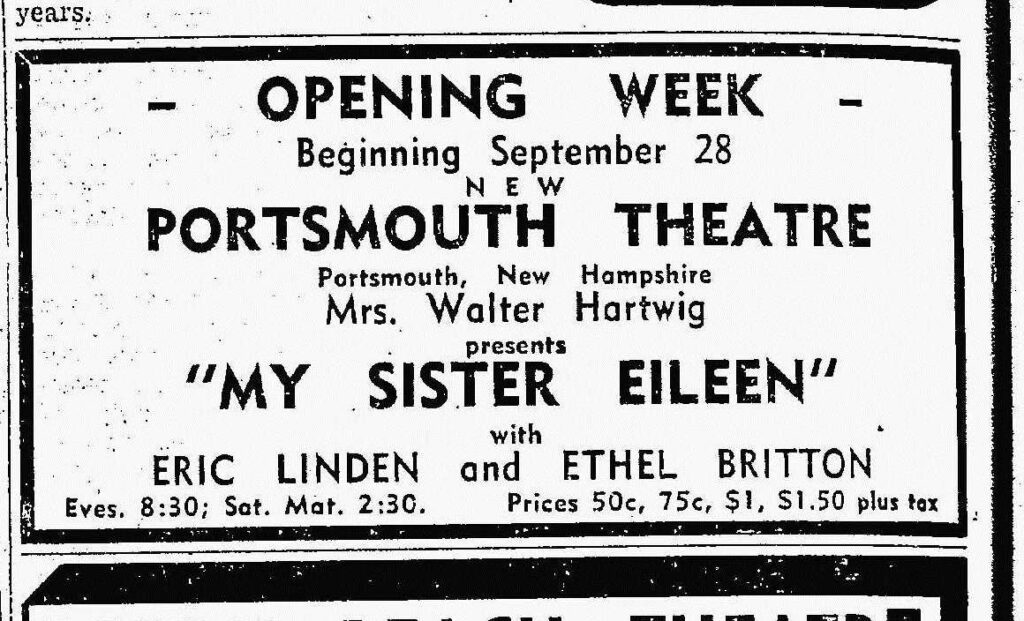
“I truly hope,” Mrs. Hartwig continued, “that the amusement company of whom you spoke are not permitted to desecrate it. I know that we live in a commercial age, that the Arts, the schools and even the churches are prostituted to the dollar … but we do not live by bread alone.”
Three days later, she wrote again, all but begging to use The Music Hall. “Your theater was haunting me yesterday,” she told Justin, who found himself caught in a classic dilemma. While Mrs. Hartwig embodied the quintessential spirit of the performing arts, she was high risk, underfunded, and seeking only a short-term rental. Mr. Rothenberg, on the other hand, was all business, and probably could live by bread alone. So Justin Hartford took the middle road. He leased his theater to the Boylston Amusement Company, and then Mr. Rothenberg rented it to Mrs. Hartwig.
The Portsmouth theater revival was short-lived. Mrs. Hartwig’s advance team made a few improvements to The Music Hall stage. Then her New York City-based actors, veterans of the Ogunquit Playhouse, delivered four popular plays and quickly disappeared. By December, as Americans felt the impact of wartime food and gasoline rationing, Portsmouth merchants were grumbling to Justin Hartford. Mrs. Hartwig’s acting troupe, it seems, had left a variety of unpaid bills in their wake.
The final straws
Within a year Justin was threatening Rothenberg, who also ran the neighboring Arcadia Theater and at least 10 other regional cinemas, with a lawsuit. Boylston Amusement was already in arrears for $3,295 due to unpaid insurance fees, taxes and lease payments on The Music Hall. That deal, too, collapsed.
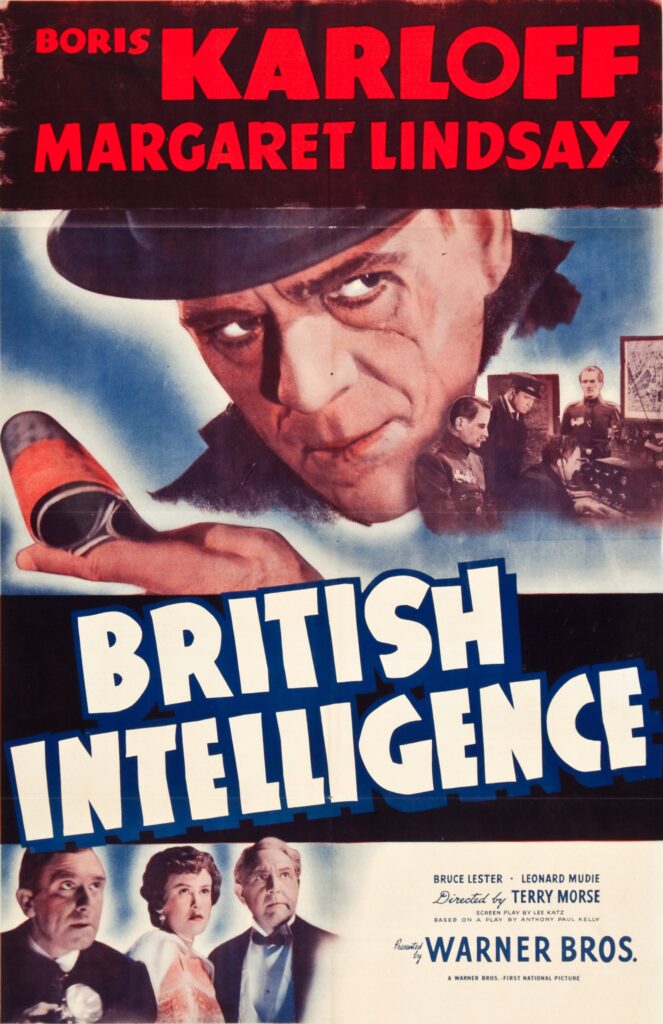
Acting groups continued to inquire about putting on shows and were politely turned down. In late 1943, Justin rented The Music Hall to another optimistic actor. Austin Fairman, who had recently appeared in the film “British Intelligence” (1940) with Boris Karloff, had grand plans to create “a permanent acting company for Portsmouth” at The Music Hall.
“It is all a gamble, of course, with them,” Justin’s Realtor warned, “and I suppose you might only get one month’s rent.” The Realtor was right. After a single production, the newly formed Fairman Players dropped off a handwritten note at the Portsmouth Herald offices and ran. The note began: “This is to inform you that we find it impossible to continue at the Portsmouth Theatre and hereby enclose key to same and forfeit the money placed on deposit against rent.”
Enough was enough. After the next potential buyer proposed turning The Music Hall into a bowling alley, Justin Hartford put his inherited theater up for auction. On May 3, 1945, despite a gathering of roughly 50 curious onlookers, only a single bidder made an offer of $10,000. The Music Hall was sold in 20 minutes to Guy Tott, a developer and shipyard worker from Kittery, Maine. As the old theater was being renovated, Adolf Hitler committed suicide, the United States dropped atomic bombs on Hiroshima and Nagasaki, Japan, and Germany and Japan surrendered. The war was over.
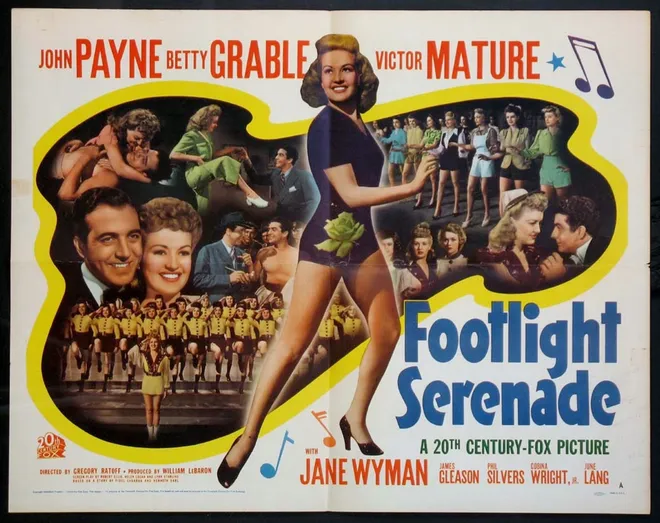
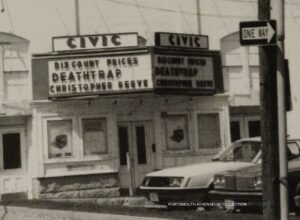
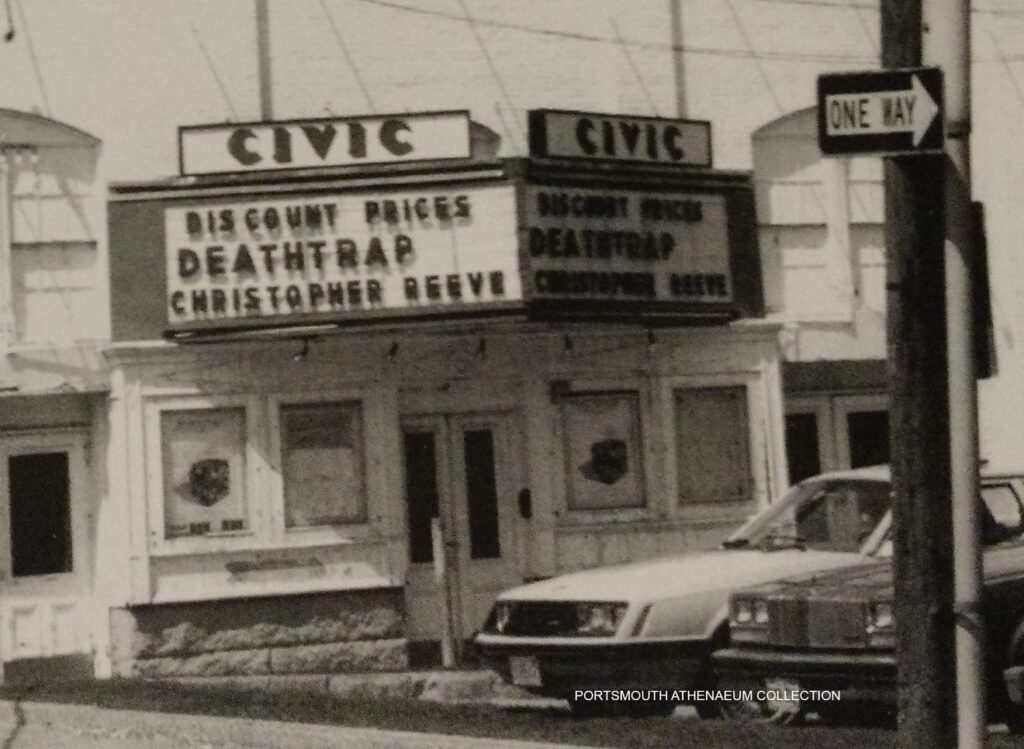
The renovated theater, renamed The Civic, opened on Sept. 23, 1945 with a screening of the musical “Footlight Serenade” starring Betty Grable. Guy Tott attempted to bring back live vaudeville performances as well, but he died three years later and the Civic was slowly absorbed by movie mogul E.M. Loew. In a curious twist of fate, the three purpose-built downtown cinemas that had closed the old Music Hall, were themselves forced out of business by the rise of multiplex cinemas, malls, and color television. The Civic played on — its audience and film quality shrinking — until the early 1980s. The near destruction and ultimate revival of The Music Hall is a story for another day.
Copyright 2018 by J. Dennis Robinson, all rights reserved.
 Warner House Before the Warners