



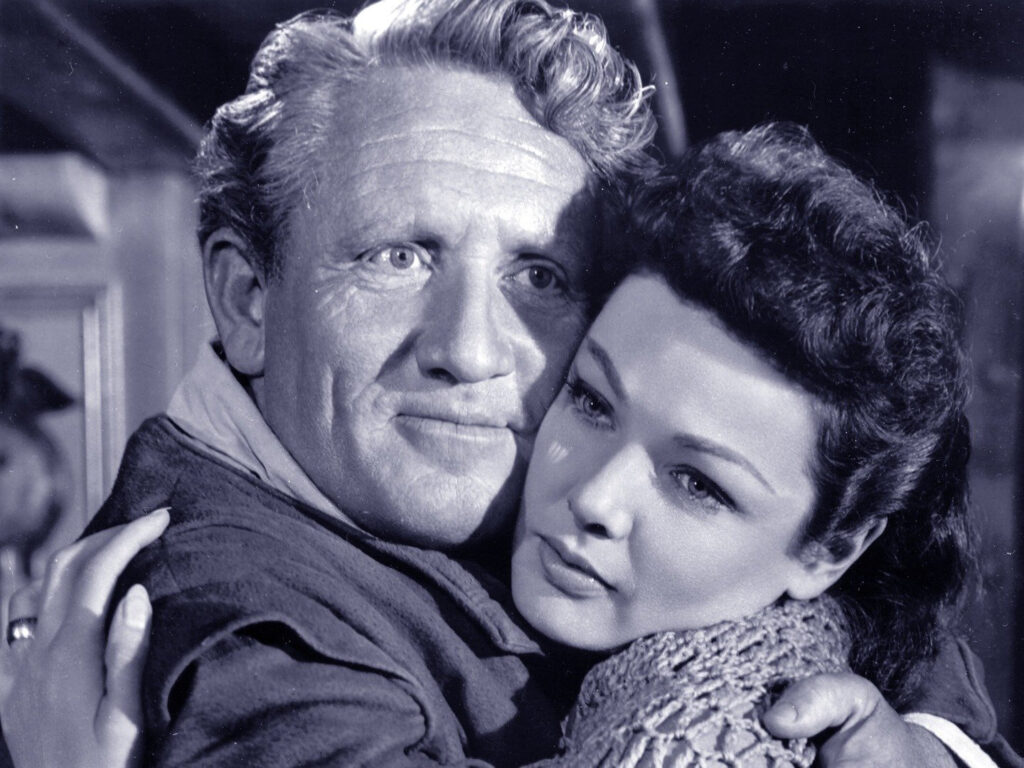
Much of my research for my “1623” book on the founding of New Hampshire came from reports first published in the 1600s. It’s tough reading. I also extracted forgotten details from scholarly articles by 19th- and 20th-century historians, an excellent sedative for anyone who has trouble sleeping. To liven things up, I rented the 1952 Technicolor movie classic, “Plymouth Adventure.” It stars Spencer Tracy as a mean-spirited, sour-faced version of Christopher Jones, who captained the original Mayflower.
The film hints at the dark, damp, smelly, claustrophobic life of 102 passengers trapped below decks in a tiny ship for 10 weeks. The special effects, including a model of the Mayflower battling a killer storm at sea, won an Oscar. The movie clarifies that fewer than half the passengers were religious Separatists. (They called themselves “Saints,” not “Pilgrims.”) The rest were nonseparating Puritans, Royalists, servants and sailors, plus a few farm animals. Three women aboard were pregnant and only half the passengers would survive the coming year.
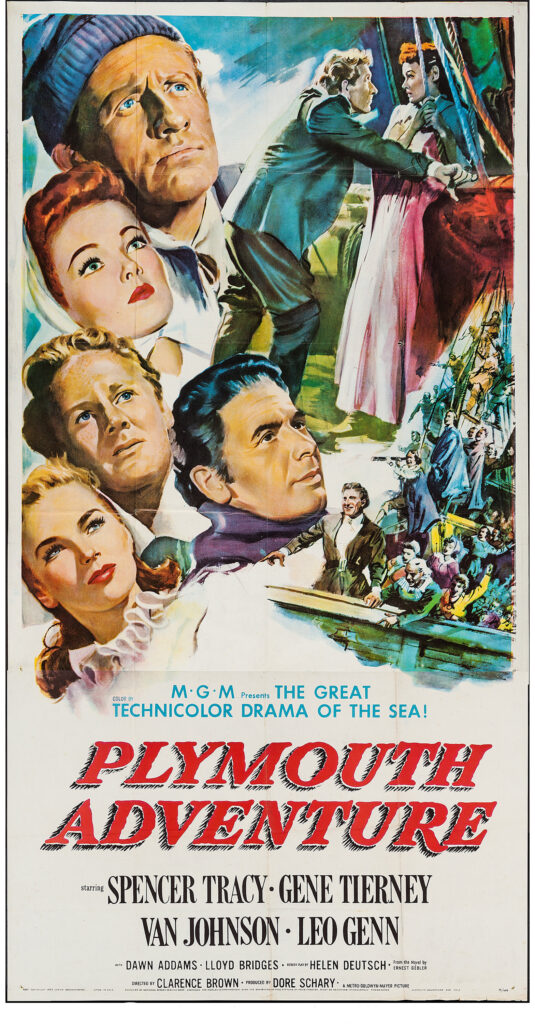
But this is no documentary. “Plymouth Adventure” was based on a romantic novel of the same title that strayed shamelessly from the facts. In his 89th film, Lloyd Bridges plays the bare-chested first mate who despises the strange religious fanatics. As the film opens, the despotic Captain Jones, is smitten by William Bradford’s wife Dorothy (Gene Tierney). She spurns his bold advances in favor of her pious but dull husband (Leo Genn).
“By the time this voyage ends,” Jones warns Dorothy Bradford, “this ship will contain — not 102 passengers and 30 crewmen. It will contain 132 cats and dogs, 132 rutting beasts! It’s the sea that does it, and the closeness, you’ll see.”
“What a foul man you are!” Dorothy hisses in response.
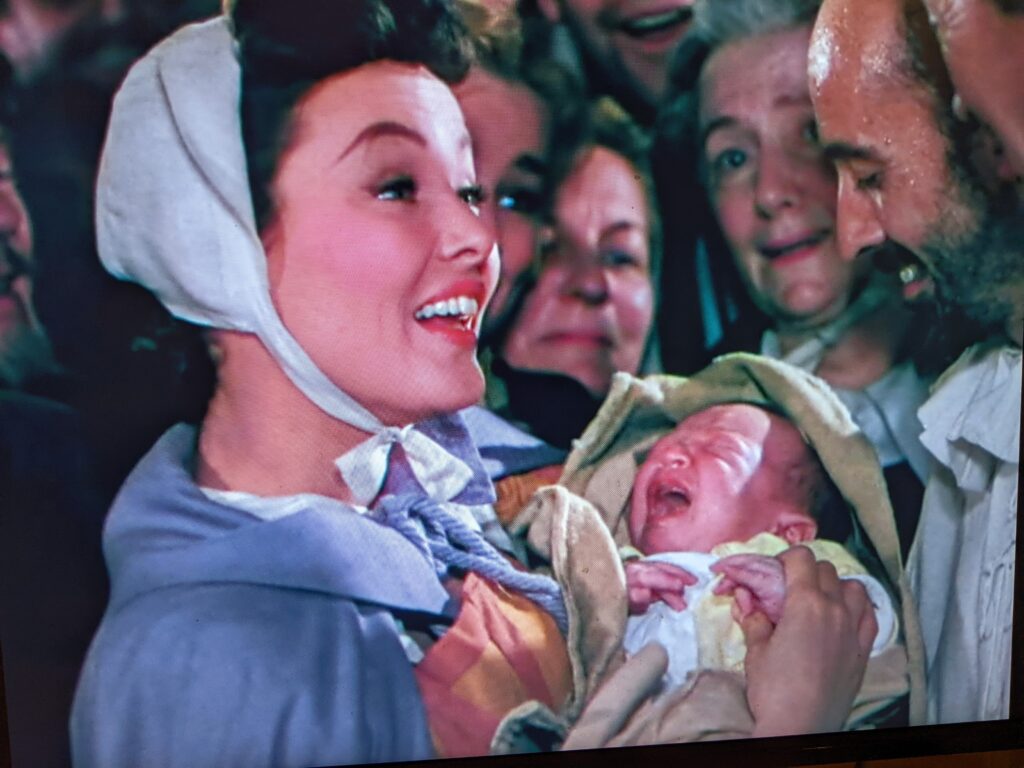
In the movie, the fearsome Miles Standish (Noel Drayton) is reduced to a comic figure. Wearing his helmet aboard ship, Standish attempts to teach the inept future colonists how to load their matchlock rifles. It’s a scene right out of Laurel and Hardy.
In reality, just before visiting the Thompson’s fishing station in 1623, Miles Standish perpetrated a preemptive strike on a group of Natives. Hearing rumors of a possible Indian raid on New Plymouth, Standish invited a Neponset warrior named Wituwamat and his men to negotiate a peace. During a meal, Standish leaped up, grabbed the warrior’s knife, and stabbed him in the heart. Eight Pilgrims murdered six other Natives during the Wessagusset Massacre, a story rarely told in American classrooms. When Thompson delivered fish to the starving Pilgrims a few months later, Wituwamat’s severed head was mounted on a pole atop the fort at New Plymouth.
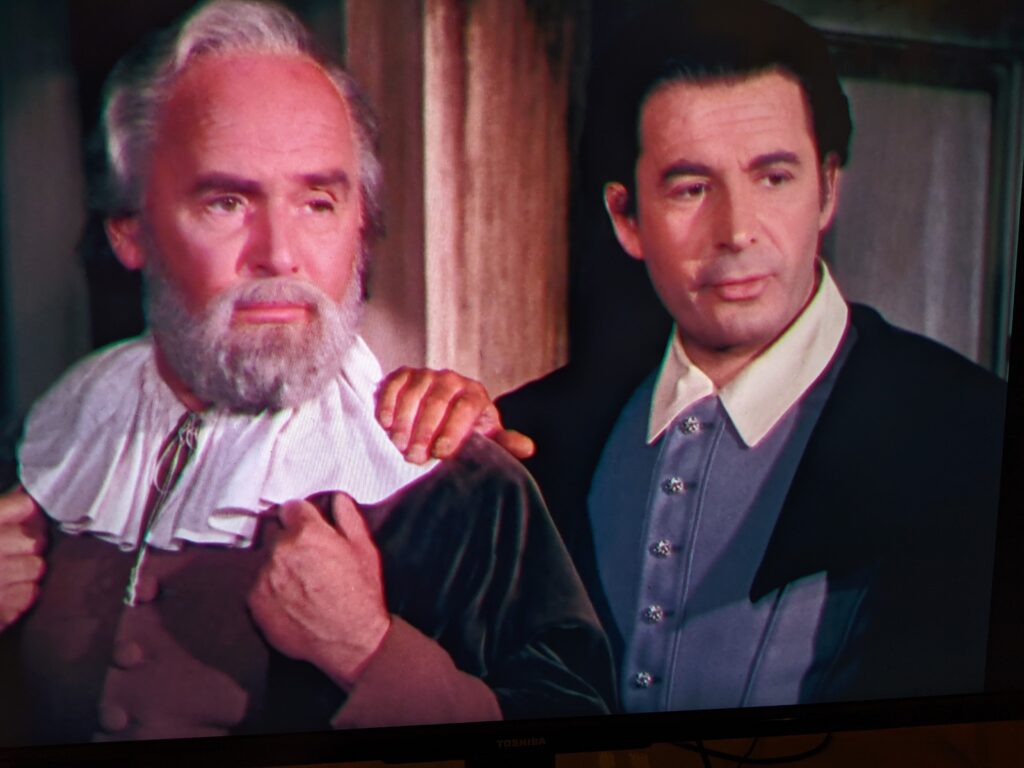
Pilgrim leader Edward Winslow, who mentioned New Hampshoure founder, David Thompson, in his journal, stopped at Pannaway in 1626. Winslow is memorable in American history and forgettable in the film. The movie Winslow (Lowell Gilmore) sports a mustache, goatee and long hair. In a striking red velvet suit, he resembles a medieval lord or one of the Three Musketeers. His brother Gilbert Winslow (John Dehner), who was also on the Mayflower, wears a similar outfit in forest green.
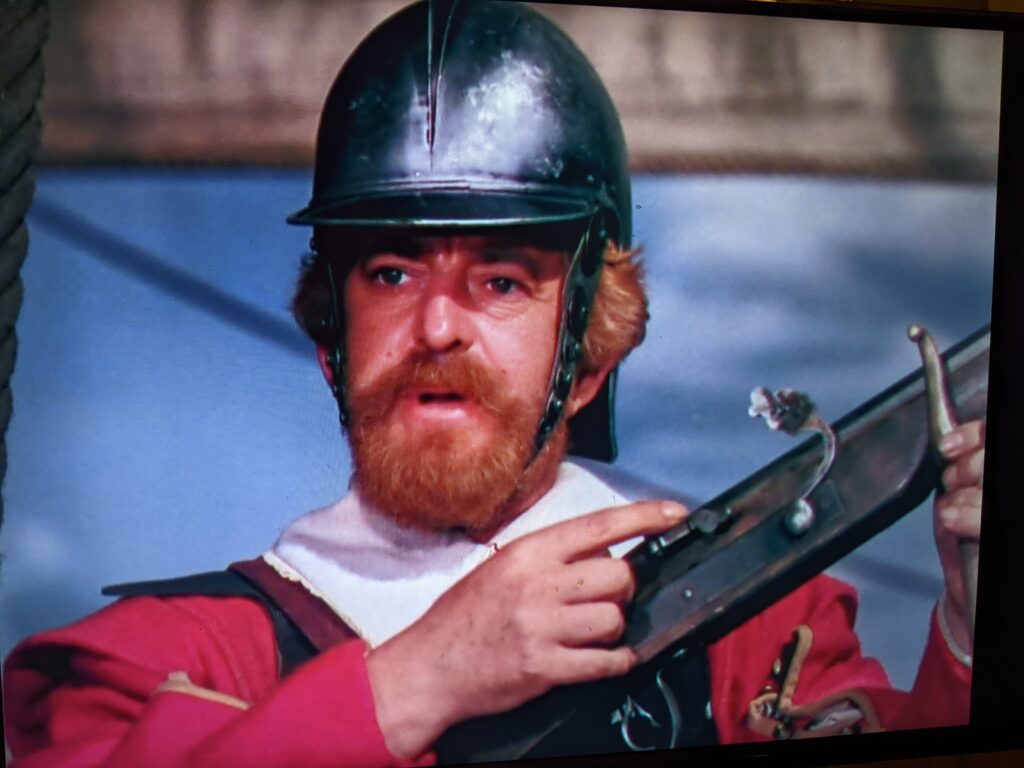
In Bradford’s journal, Thomas Weston turned from a Pilgrim supporter to an unscrupulous profiteer. In the film, Weston is a full-on villain played with a heartless sneer by Welsh character actor Rhys Williams. According to history, the Separatists intended to land in Virginia but were forced to settle at Massachusetts due to a late start, harsh weather, bad luck, and rough seas. In “Plymouth Adventure,” the fictional Mr. Weston bribes Captain Jones to dump the religious zealots in New England.
Buoyed by an unsinkable faith and backed by a stirring soundtrack of church choirs, the Pilgrims arrive at Cape Cod as winter closes in.
“What is the deadliest danger we now face?” William Bradford declares before they go ashore. “Hunger, wild beasts, savages? No. The deadliest danger we face is that we may disagree — that we may each go grubbing in the wilderness for himself alone and so face quick destruction.”
Forty-one white males signed the Mayflower Compact, a document that is too often compared to the Declaration of Independence. (It is signed by “the Loyal Subjects of our dread Sovereign Lord King James.”) In the movie, Captain Jones watches all this happen and his heart begins to soften. But as Bradford, Standish and Winslow leave in a small boat to find a suitable place to settle, Captain Jones makes a final play for Dorothy.
“We’ll sail away together,” Jones begs Mrs. Bradford.
“No, no!” Dorothy cries and, after 66 days aboard ship without a bath or a toothbrush, they embrace and kiss. It is a cringeworthy moment, but it gets worse.
“This is wrong,” Dorothy says, pulling from the captain’s embrace.
“It’s just as wrong living beside him and thinking of me,” the captain replies.
“I know,” she sighs.
While her husband was exploring the coastline, the real Dorothy Bradford fell from the Mayflower and drowned in the frigid waters of Provincetown Harbor. Speculation that she jumped to her death has been whispered ever since. In 1869, a short story in Harper’s Magazine titled “William Bradford’s Love Life” implied that Mrs. Bradford was distraught over her affair with Captain Jones. That salacious bit of fiction found its way into the 20th-century novel that became a film.
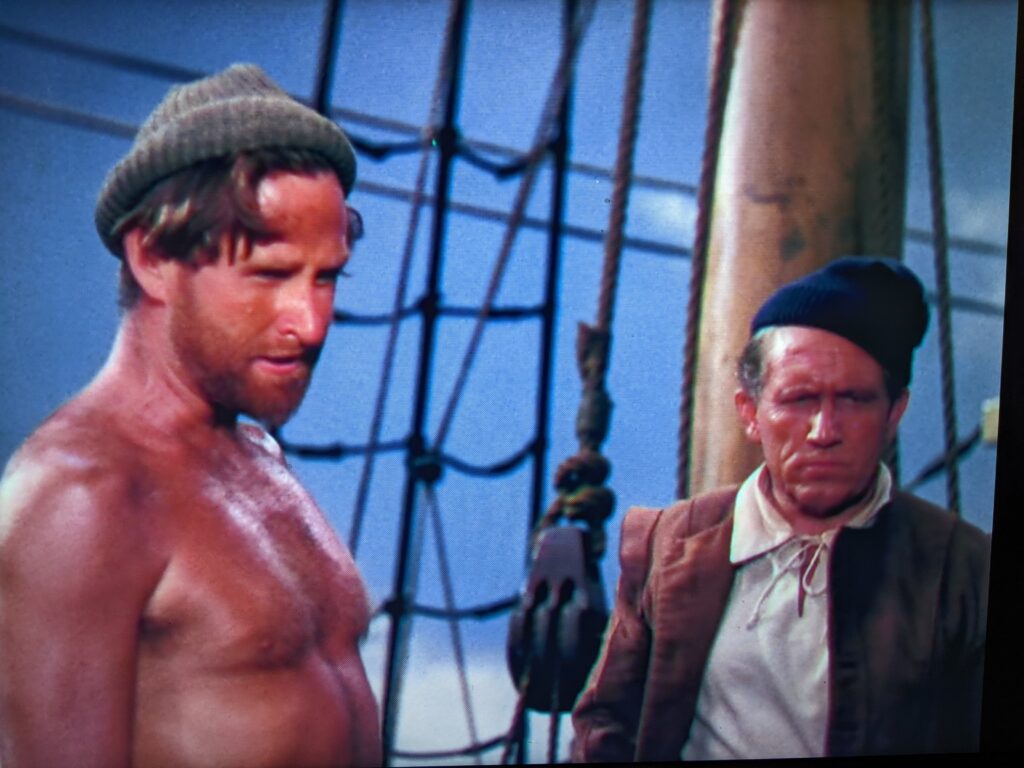
Instead of returning immediately to England as planned, both the historical Christopher Jones and Spencer Tracy chose to anchor the Mayflower off New Plymouth during the first deadly winter. In the movie, when Lloyd Bridges threatens to lead the crew in a mutiny and head home, Tracy beats him senseless with a belaying pin.
“Plymouth Adventure” ends as Captain Jones departs in the spring of 1621. Amid a manly moment, Jones tells William Bradford, “She never betrayed you.” Bradford sobs. Their hands touch. Jones stares at the horizon and promises to return with more settlers to build a new nation. (He never does.) Back on the iconic tall ship, the captain fires a farewell cannon salute. The orchestral music swells as the Mayflower sails toward an azure sky.
David and Amias Thompson will never have a national holiday or their own theme park. They will not be pictured on Hallmark cards or portrayed in grammar school
plays. But there are worse things than being forgotten, like being the subject of a Hollywood movie.
Copyright J. Dennis Robinson. Portions of this article first appeared in NH Magazine.
 Why I Hate Fake Pirates