

Every day we’re sending messages to the future, but they cannot answer back. Its called history. Once in a rare while, we make it formal with a time capsule. This one is scheduled to be opened in 2123 AD. Will they hate us by then?
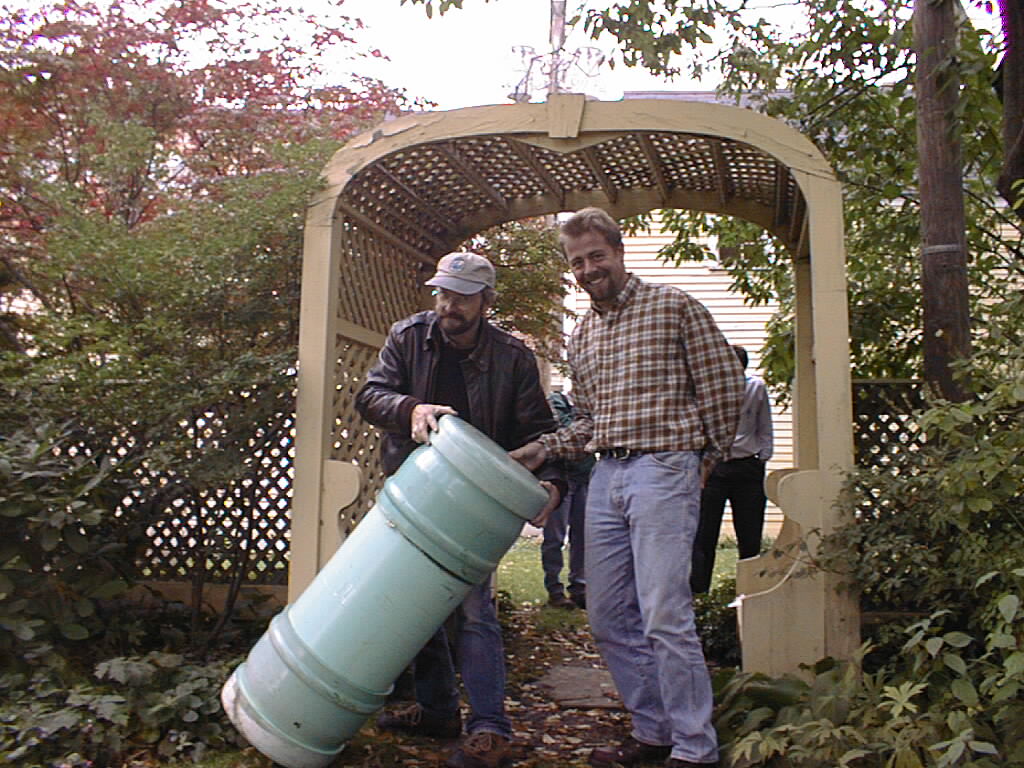
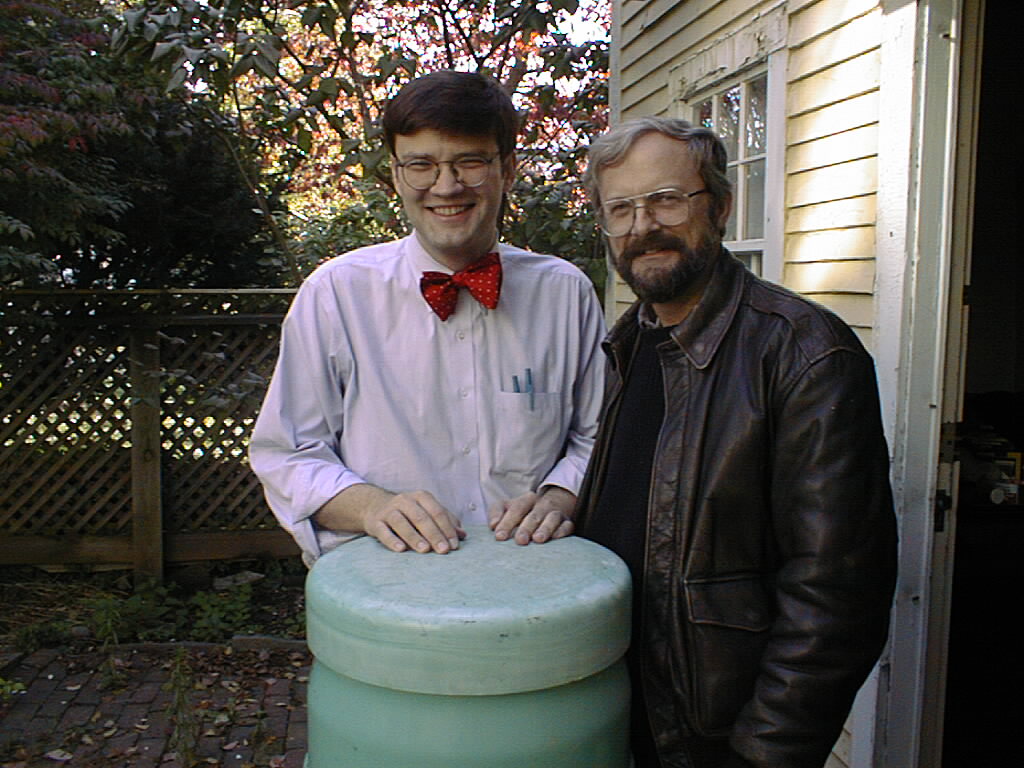
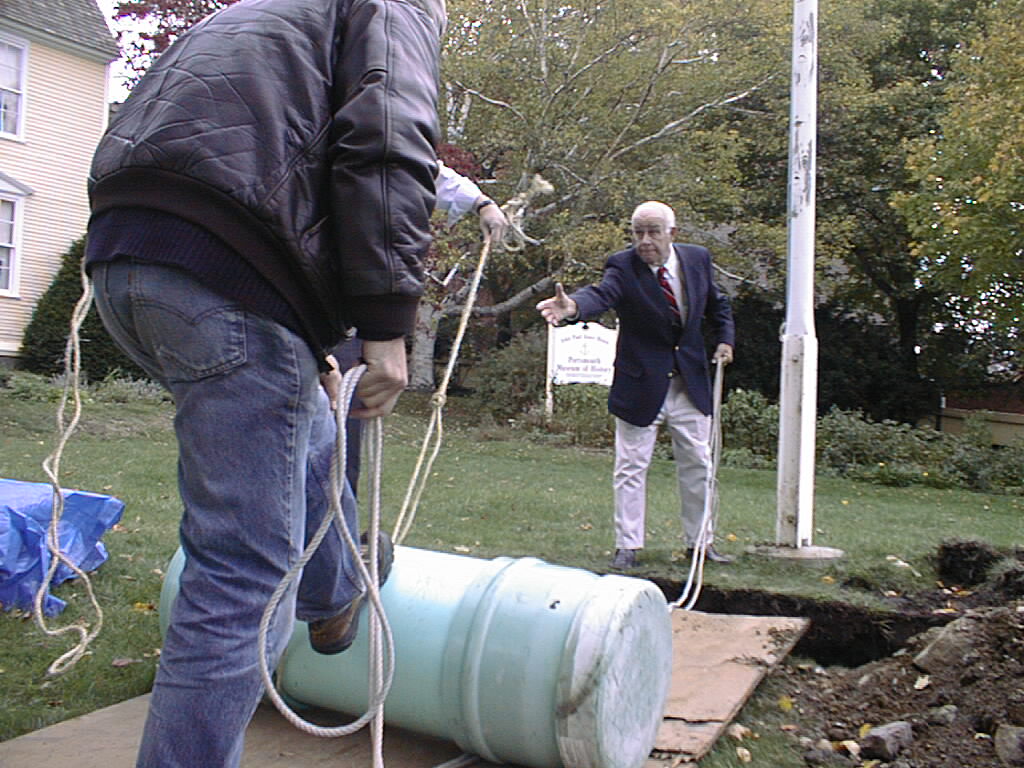
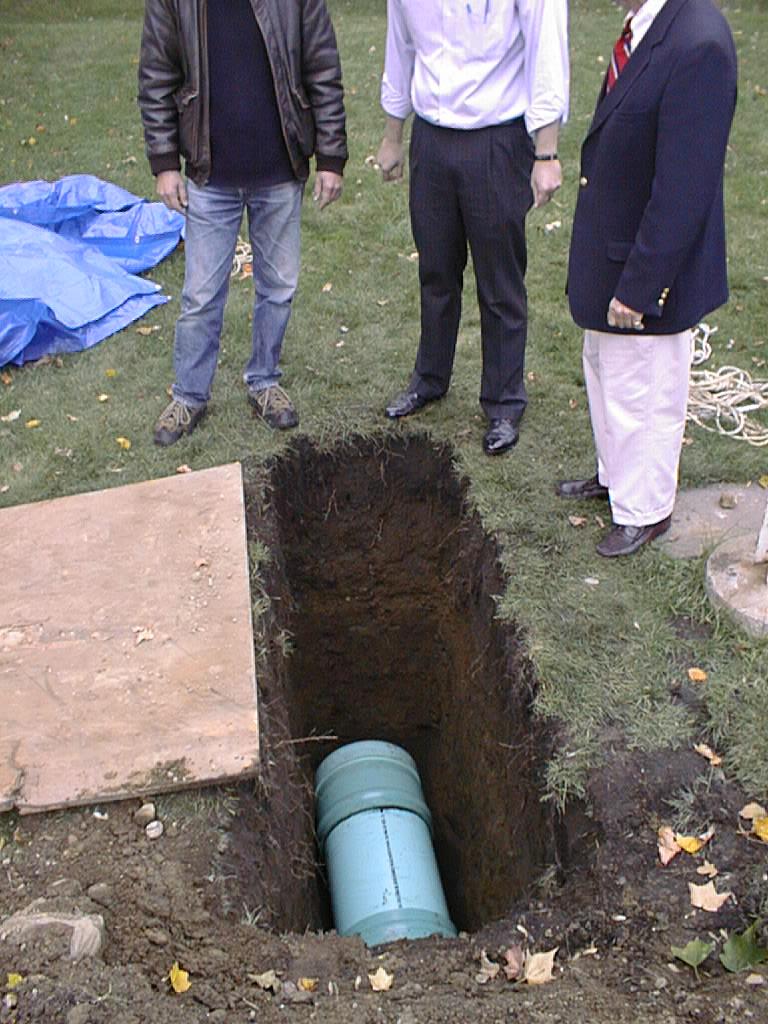
The big plastic pipe sits five feet under the front lawn at the Portsmouth Historical Society. Four of us lowered the thing with ropes into a grave-sized hole for the benefit of reporters.
A time capsule is a strange machine. First, you stuff it with goodies like a piñata. Then you bury it like a lost relative. Then you have a party and forget about it for a hundred years. Hopefully, your descendants–who may be a race of radioactive mutants, half-grasshopper, half-laptop computer — will dig it up and have another party.
Into the 22nd century
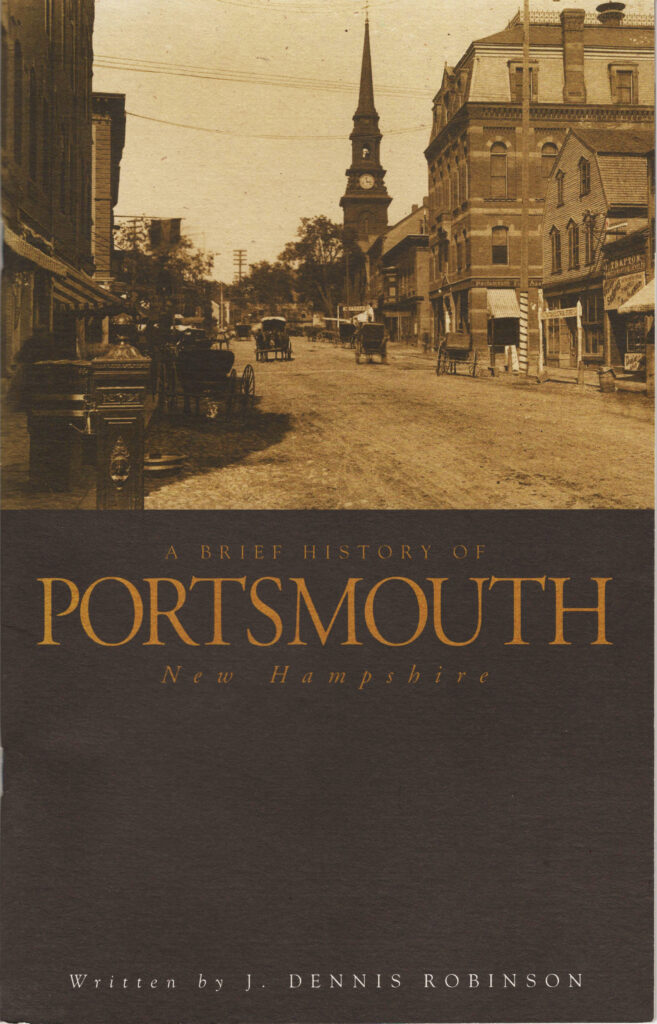
The year 1998 was the 375th anniversary of the founding of Portsmouth, NH. It was a pretty lame event. As a member of the Mayor’s Blue Ribbon Committee, I confess, we weren’t even sure it was worth celebrating. I ended up writing “A Breif Guide” to the history of the city. Brown & Company did the design. I still have a couple hundred copies in my office.
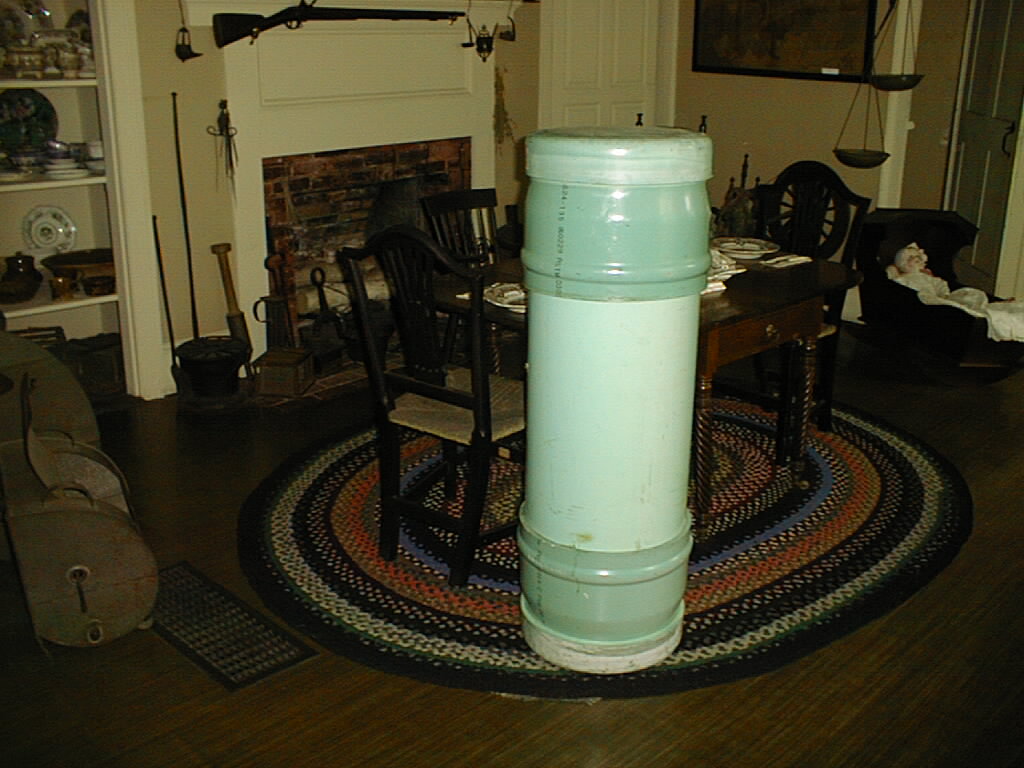
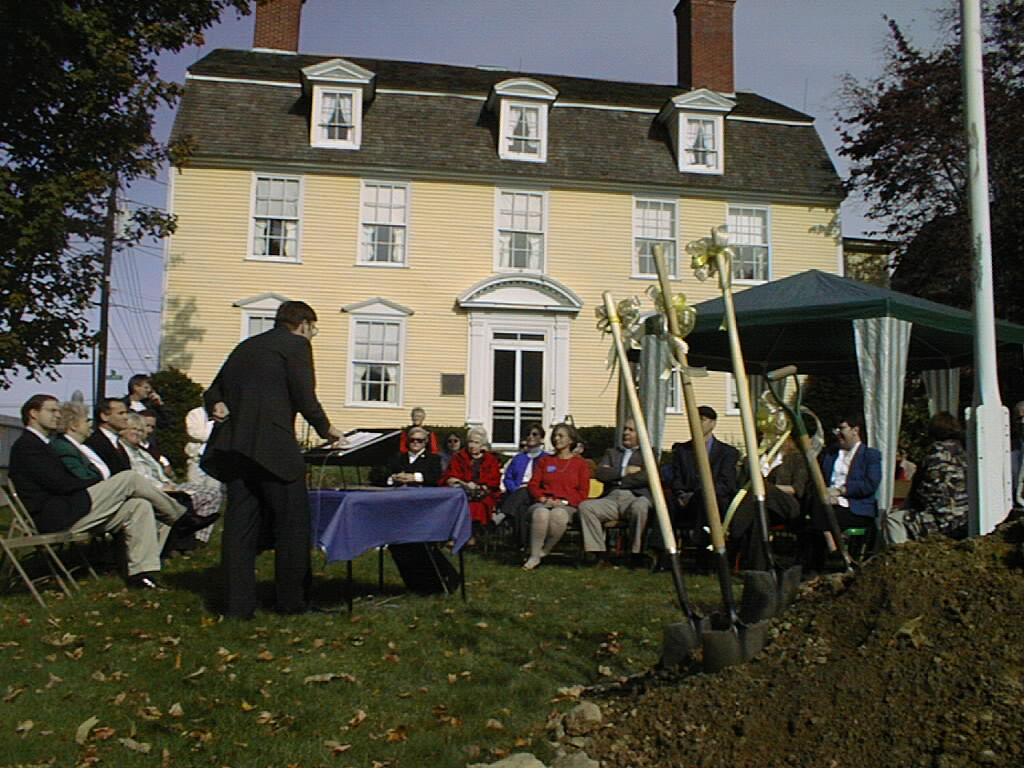
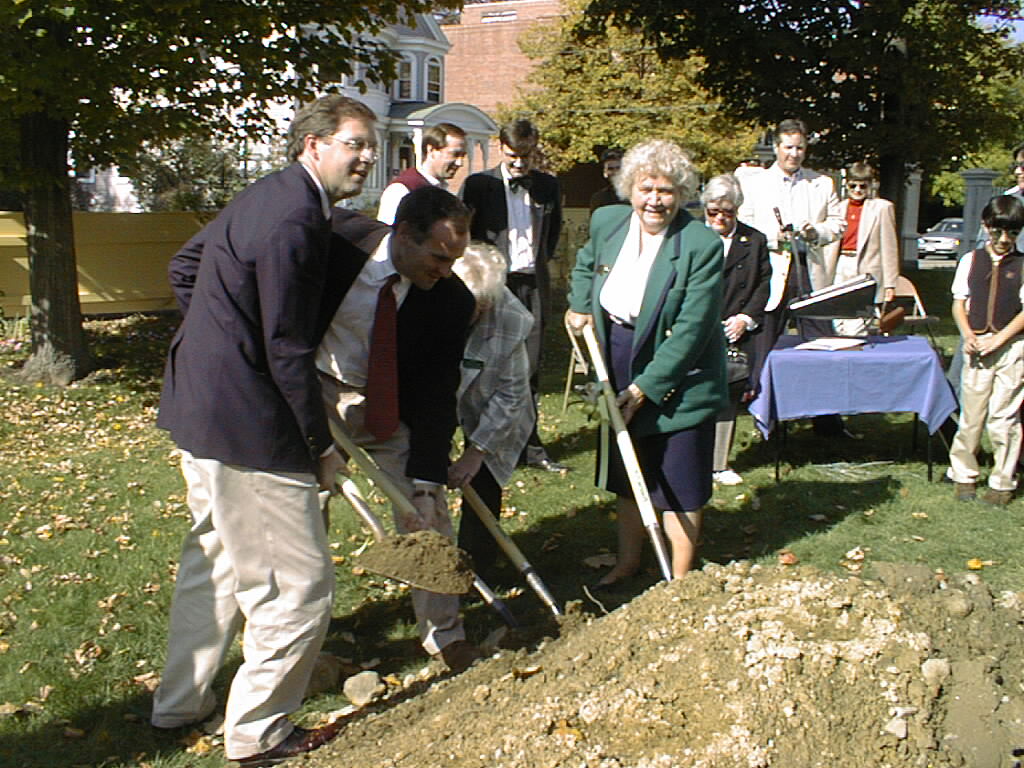
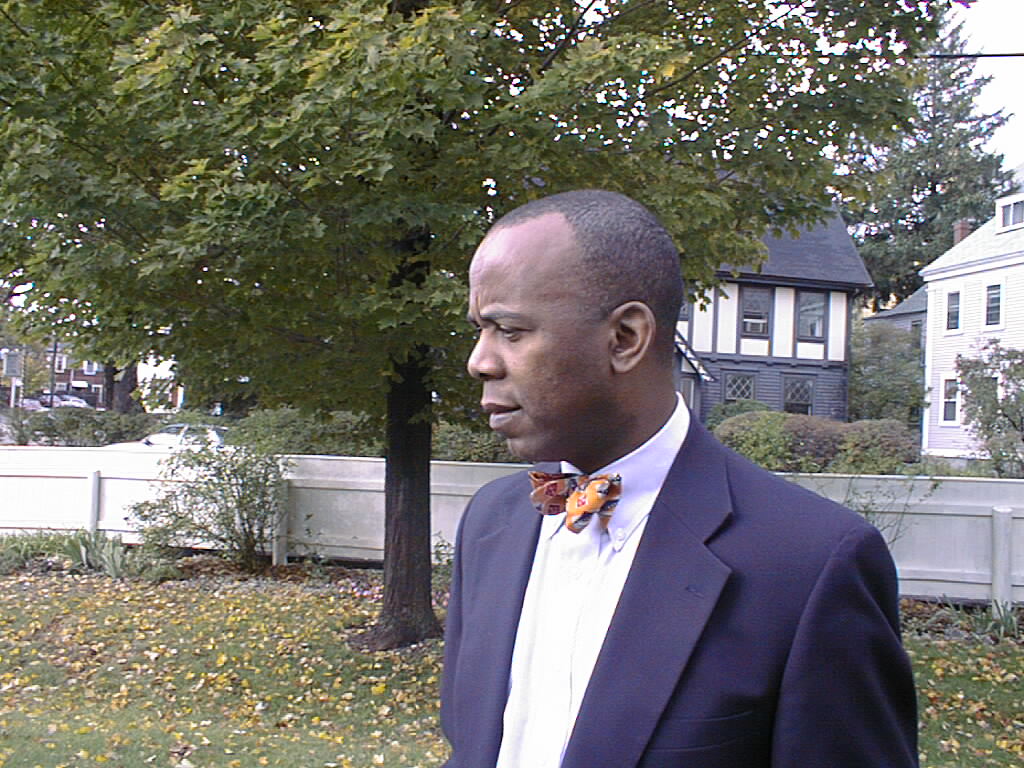
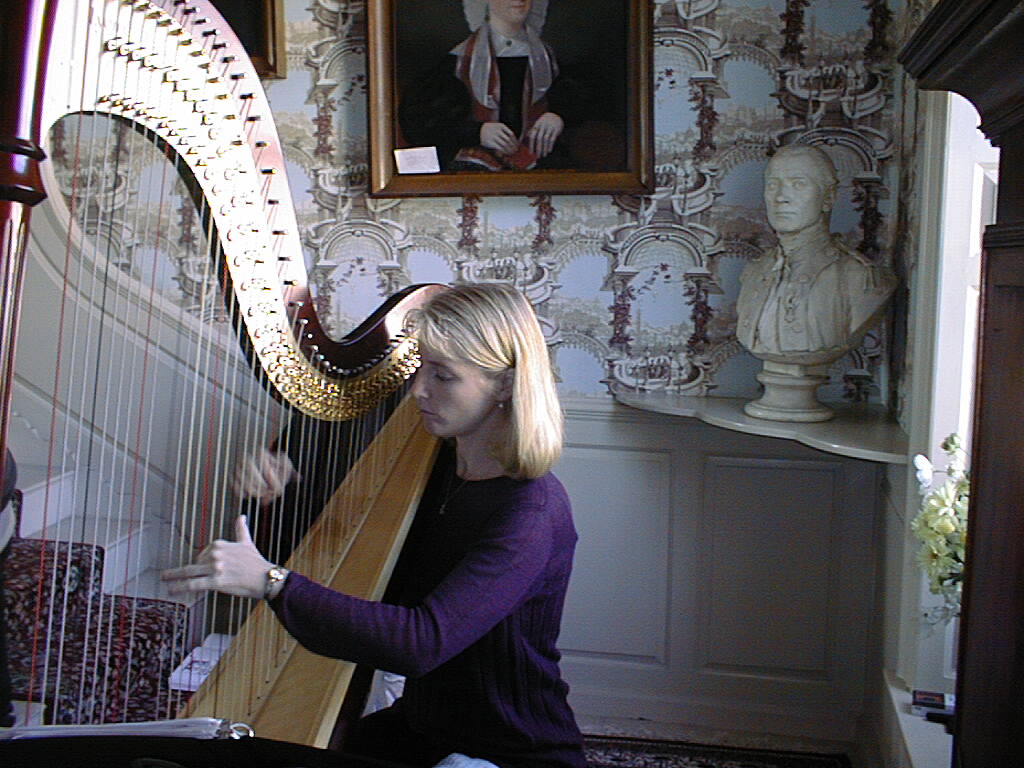
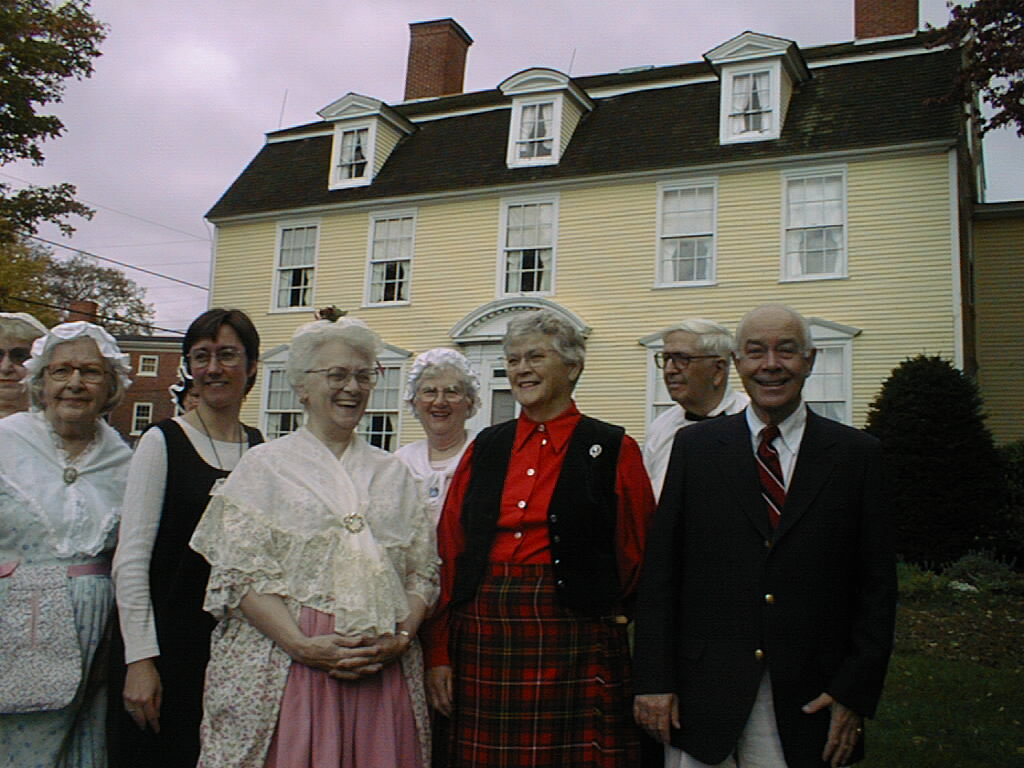
Then, to honor our forebears, we filled a four-foot long-by-15-inch wide section of green PVC pipe with stuff. Congressman John Sununu, state senator Burt Cohen, Mayor Evelyn Sirrell, and other dignitaries tossed a few shovels full of dirt into the hole. Paul Peter Jesep, then president of the historical society, gave a nice speech. Then we went inside the John Paul Jones House Museum for cake while a woman plucked on a harp. I took photos with a digital camera from the Mesozoic era.
A gift gone bad
Hopefully, our descendants will unearth this time capsule more gracefully than one discovered in Portsmouth in 1912. That was the year that the members of Temple Israel purchased the old Methodist Church on State Street for $7,000. The Temple kept the pews, carpets, and fixtures. The Methodists took the church bell, the organ and their hymnals.
The transition went smoothly until someone remembered that the cornerstone of the brick building held a time capsule of artifacts placed there during the building of the church in 1827. Technically, the contents belonged to the synagogue, but the Methodists wanted their artifacts back. After a heated discussion, Jewish leaders turned the time capsule over to Methodist leaders for a payment of $100, with the stipulation that any rare coins found inside remained the property of the synagogue. The coins were taken to Boston for analysis. When the old coins were valued at less than $10, the transfer was completed and tempers cooled.
Houston, we have a problem
Those are the tales that make history fun. In our case, the project ran smack into the immutable laws of economics and physics. Because the historical society had no time capsule budget, special events coordinator June Rogers had to make do. First, she obtained a piece of plastic pipe from the city’s Public Works Department. The Water and Sewer people closed one end of the pipe, then threaded the top and created a screw-on cap fitted with a rubber gasket.
Volunteers collected artifacts that might please Portsmouth citizens in 2123. They include 10 books of local history, letters in acid-free envelopes, written messages from eight religious leaders, postcards, magazines including the 1998 fall football issue of TV guide, VHS tapes, menus, car brochures, lottery tickets, photographs, some pottery and souvenirs, coins and a thing called a CD-rom. A copy of Playboy magazine did not make the cut.
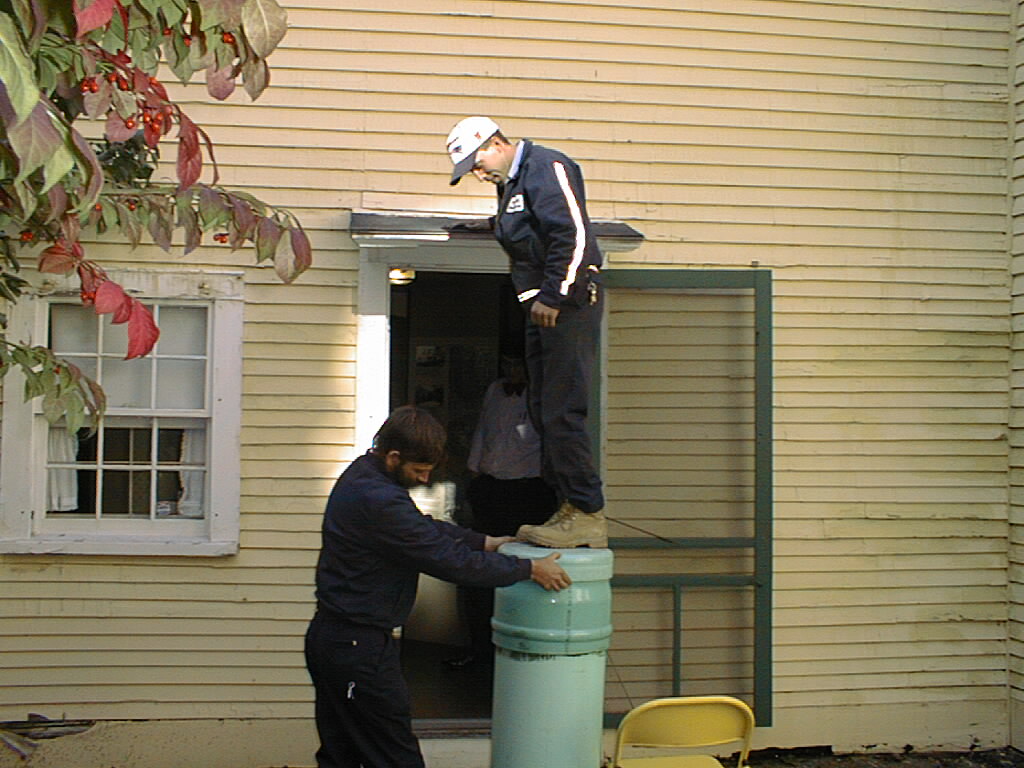
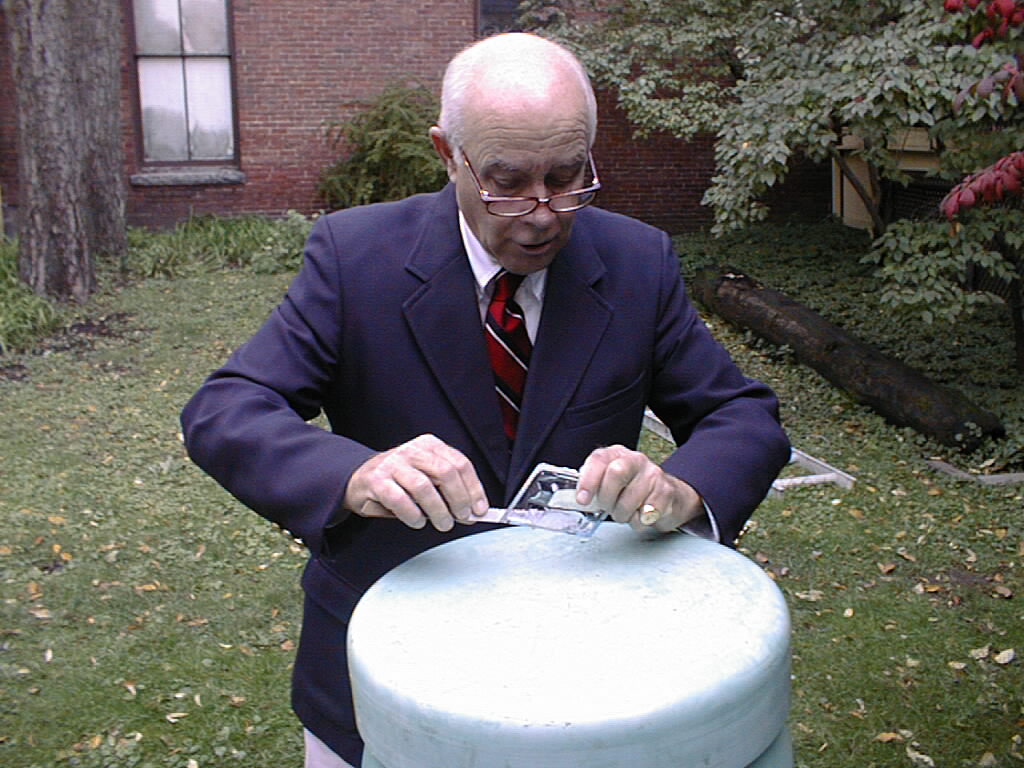
As the dedication ceremony loomed, society members screwed on the airtight cap – or tried – but it would not close. Two men from Public Works held the capsule upright against the side of the historic John Paul Jones House. Then two more city workers stepped from a yellow folding chair onto the capsule and began jumping up and down. It still would not shut. In desperation, workers drilled a tiny hole in the cap to release air, then called in city backhoe No. 59. The backhoe bucket pressed down on the capsule until, with a lout “pop”, the rubber seal locked on. Society trustee “Jock” Brodie, dressed in his suit and tie, picked up a tube of plastic cement at Peavey’s Hardware and filled-in the air hole. Perhaps moisture has leaked into the opening and the contents of the capsule, even now, are turning to mush. You and I will never know.
The end is not near
And so the time machine inches ahead, ticking its way into the future. The global positioning of the burial spot has been registered so it can be located even if Future Portsmouth lies far below the Atlantic Ocean. Worst case, duplicate contents of the capsule will still be available on eBay at a reasonable price. With luck, the 1758 Georgian mansion will still be standing. Originally it belonged to Sarah Purcell who, legend says, rented a room to John Paul Jones. Hopefully the yellow wooden fence, perhaps the oldest in the city, will still encircle the garden and the little marker next to the flagpole where our time machine travels on.
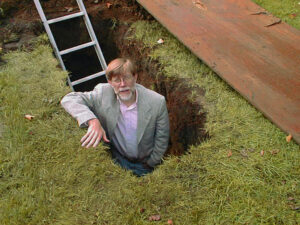
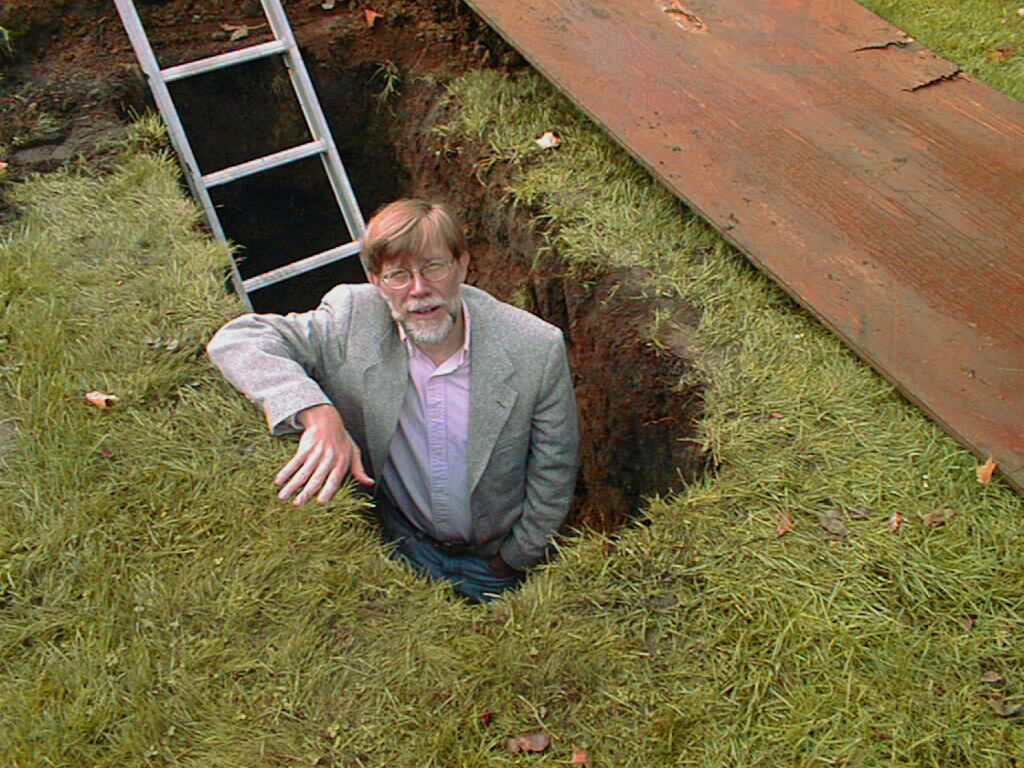
But such thoughts are best left to fortune tellers. We historians can only look backwards. Thankfully, my memory of those pre-9/11 days are still clear. The October chill was just kicking in. In the days before the capsule was buried, I frequently climbed down into the hole in the ground looking for artifacts. I found chips of discarded pottery, animal bones, the leg of an iron kettle, bits of glass and broken silverware. When the newest trustee of the historic society saw me poking around in the hole like a grave robber, she took a photo, which I now pass on to you. .
Back in 1998 the Red Sox were still losers, President Clinton was still fretting over his Monica Lewinski lies, George Bush was just a harmless governor of Texas, Iraq was a war we had already won, and the biggest financial crisis in American history was something in the past, not looming in the headlines.
The capsule has a long way to travel through time. We look back because we cannot see forward. We do good deeds, have children, and leave time capsules to prove, not just to our descendants, but to ourselves, that we were really here.
Copyright © 2008 by J. Dennis Robinson. All rights reserved.
 Why George Savary Wasson Still Matters