


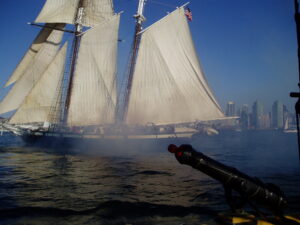
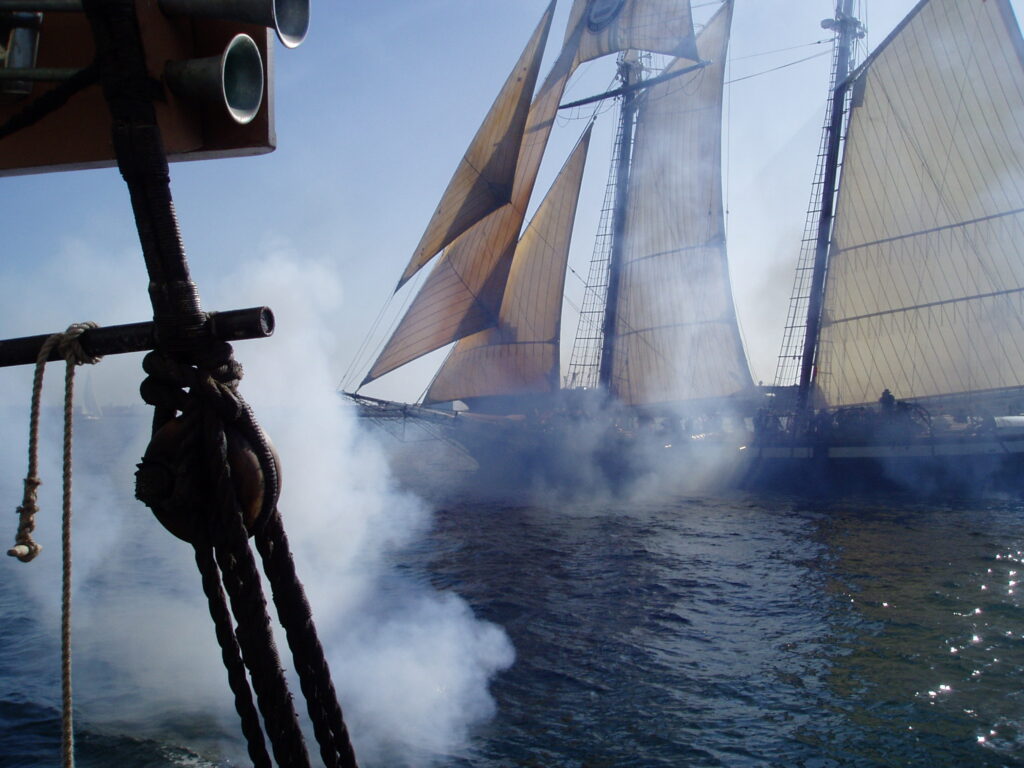
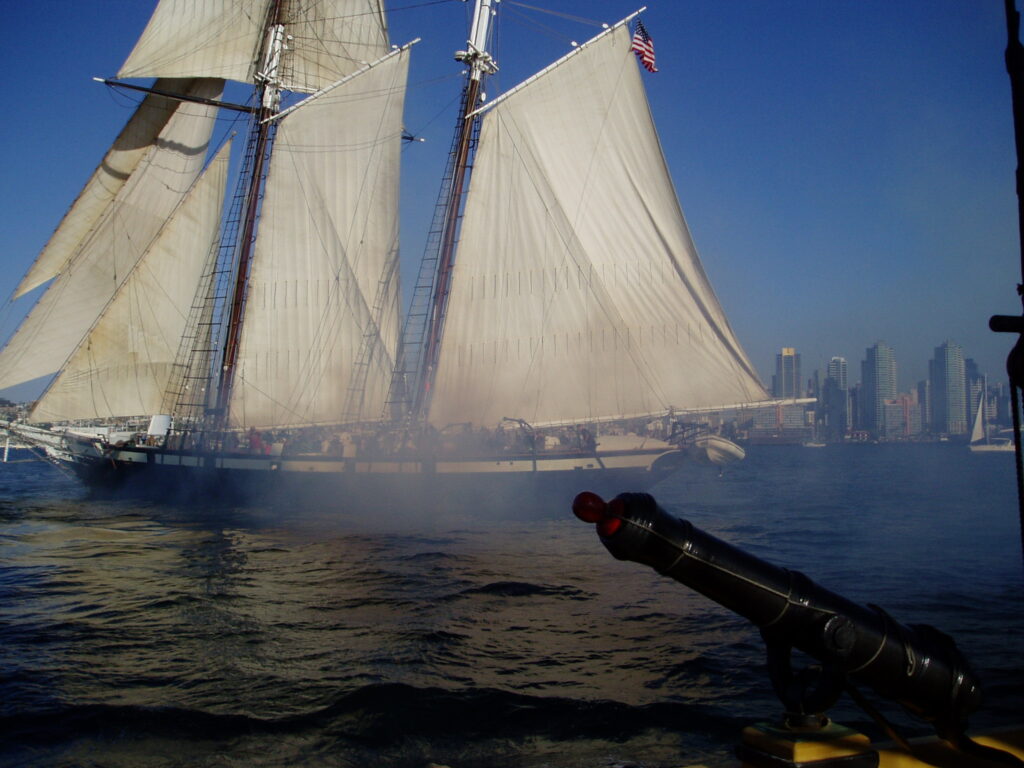
The Californian got off the first shot of the battle in San Diego Bay. It was the sudden gunfire from the silently approaching tall ship that caught me off guard more than the concussion blast from her six-pounder cannon. I turned, tripped over a coil of rope on the deck of Privateer Lynx and stumbled back against the housing of the officer’s stateroom. To the cheering tourists aboard the enemy vessel, I was the first casualty of the day.
Battle Sail in San Diego Bay
.It was late 2009. I was in California to see off the Lynx, a topsail schooner, and the topic of my next history book. Although built at Rockport, Maine and officially registered in Portsmouth, NH, the reproduction tall ship had been on the West Coast since its launch in 2001. But with the War of 1812 bicentennial looming, it was time for Lynx to return to the East Coast. At least, thats what I had told Woody Woodson, the man who funded the $3 million ship and who had hired me to write it story.
Lyns is a modern interpretation of an earlier Lynx, built at Fells Point in Baltimore, MD at the onset of the War of 1812. The original Lynx was a “letter of marque,” an armed private vessel designed to carry and defend cargo in time of war. And if the opportunity arose, as it usually did for privateers, to capture an enemy prize and cash in on the booty. The new Lynx would had been educating West Coast students and adults to the life of the privateer at sail and the “Forgotten War” of 1812. In part, at my suggestion, she was headed home.
The plan was for Lynx and her crew to leave California on November 16, Lynx and arrive in Florida by January. She was scheduled to stop briefly at Portsmouth in May 2010 on her way to a tour of the Great Lakes. Lynx then planned to travel up and down the Atlantic seaboard for five years to celebrate the bicentennial of the war that would culminate in a flotilla of tall ships at Baltimore, MD in 2014.
The farewell tour
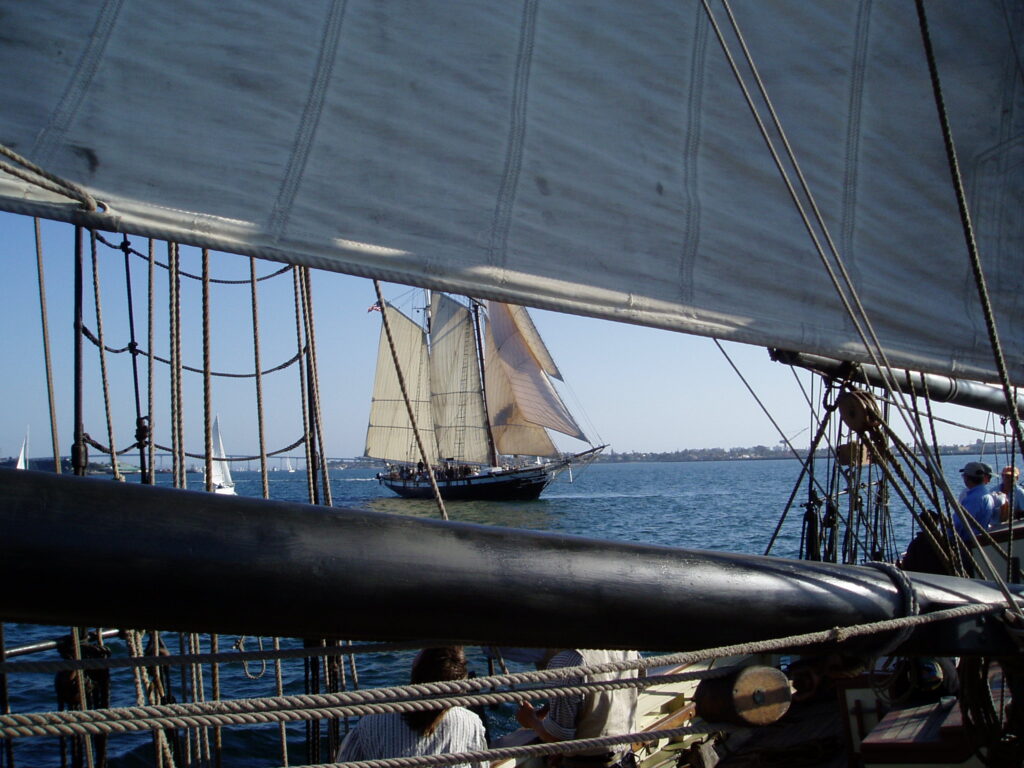
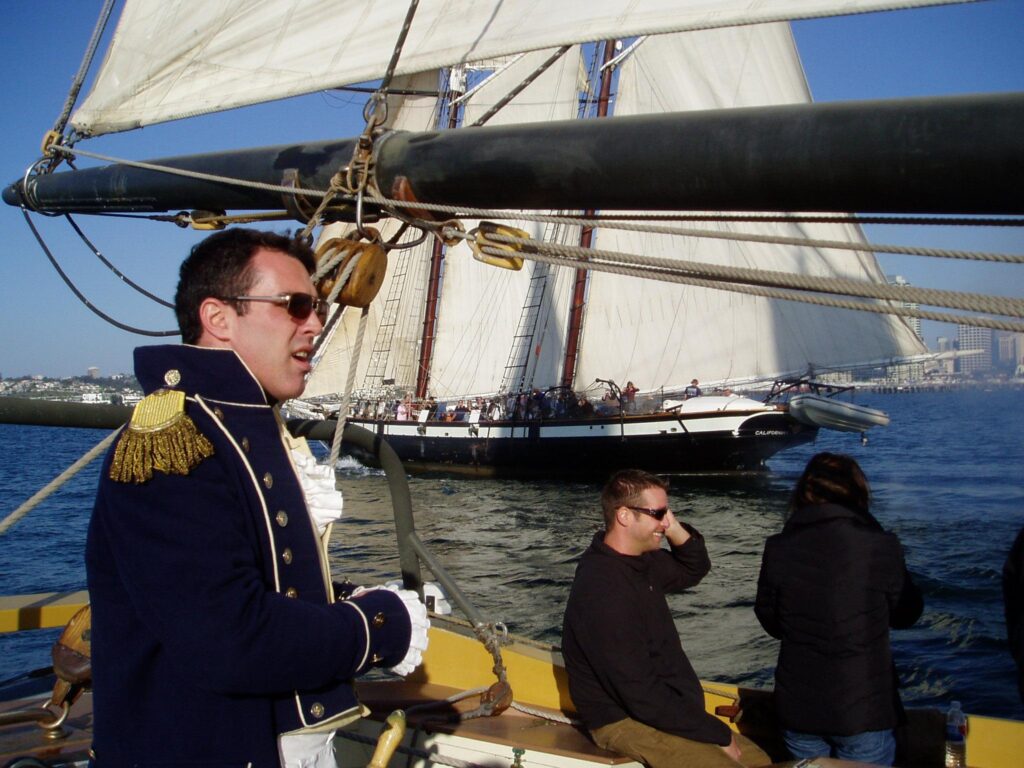
Privateer Lynx celebrated her last hours on the West Coast with a mock battle against the Californian, the official tall ship for the state of California. Launched at the 1984 Summer Olympic Games in Los Angeles, Californian is a replica of a 1847 federal Revenue Cutter, a forerunner of the U.S. Coast Guard, that patrolled the California coast during the Gold Rush era. Both topsail schooners were designed by Melbourne Smith of Annapolis, MD. Smith had hoped to design a version of the 1777 Portsmouth-built tall ship Ranger, captained by John Paul Jones, but the local nonprofit Ranger Foundation sank from a lack of funds a few years ago.
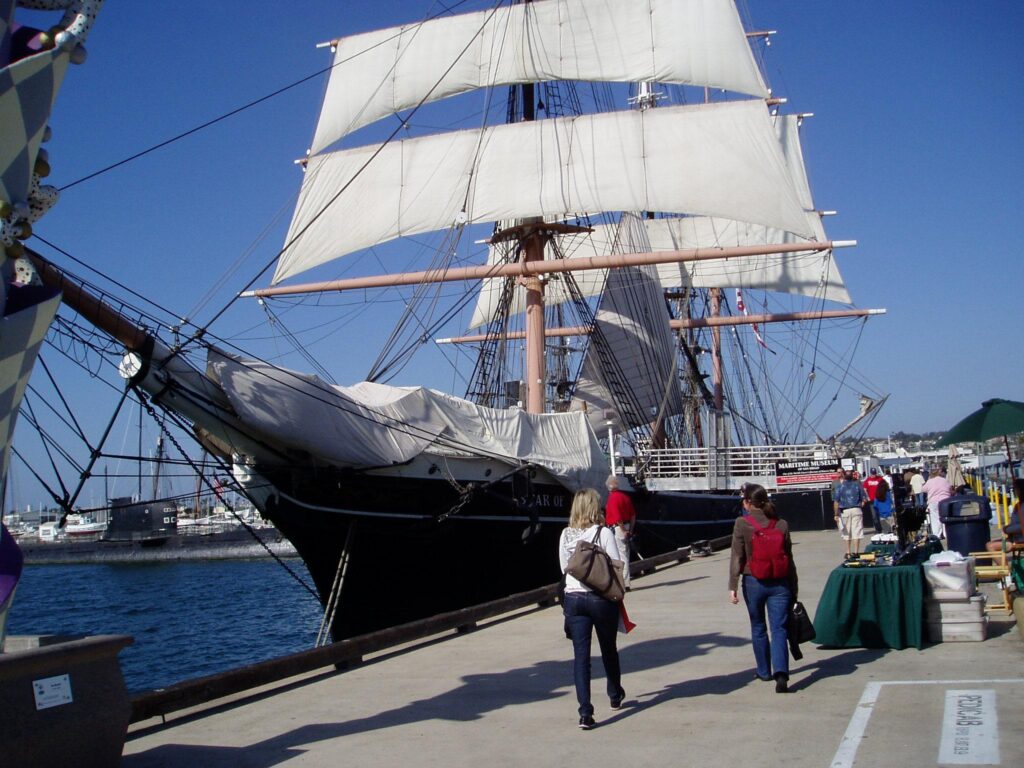
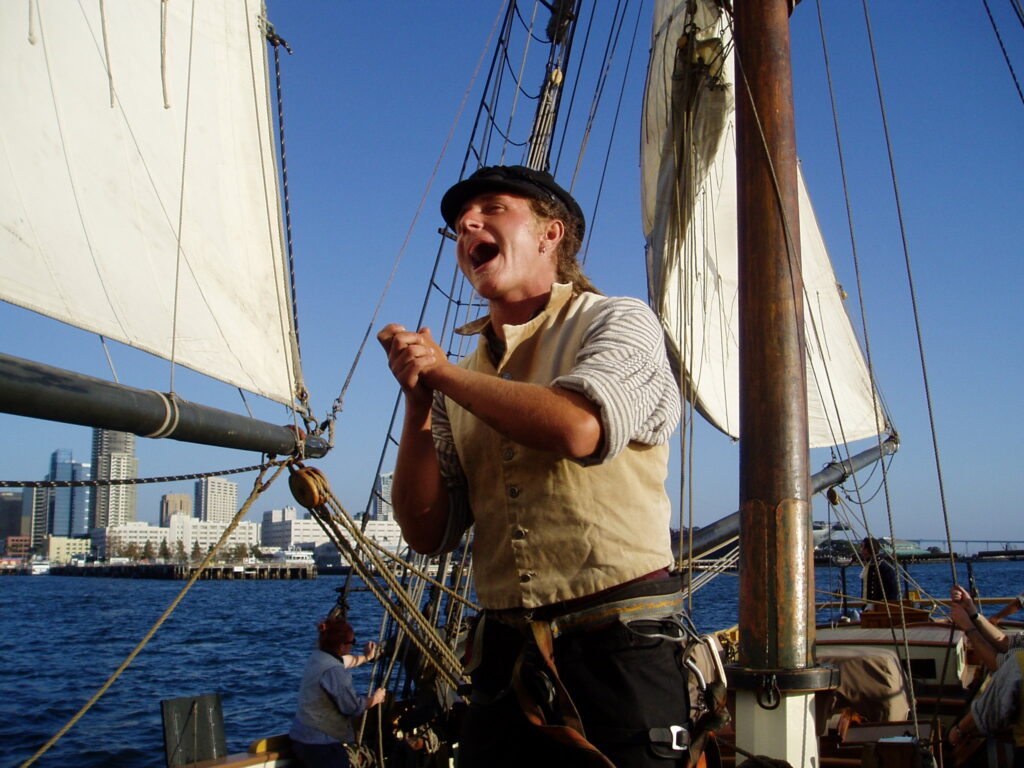
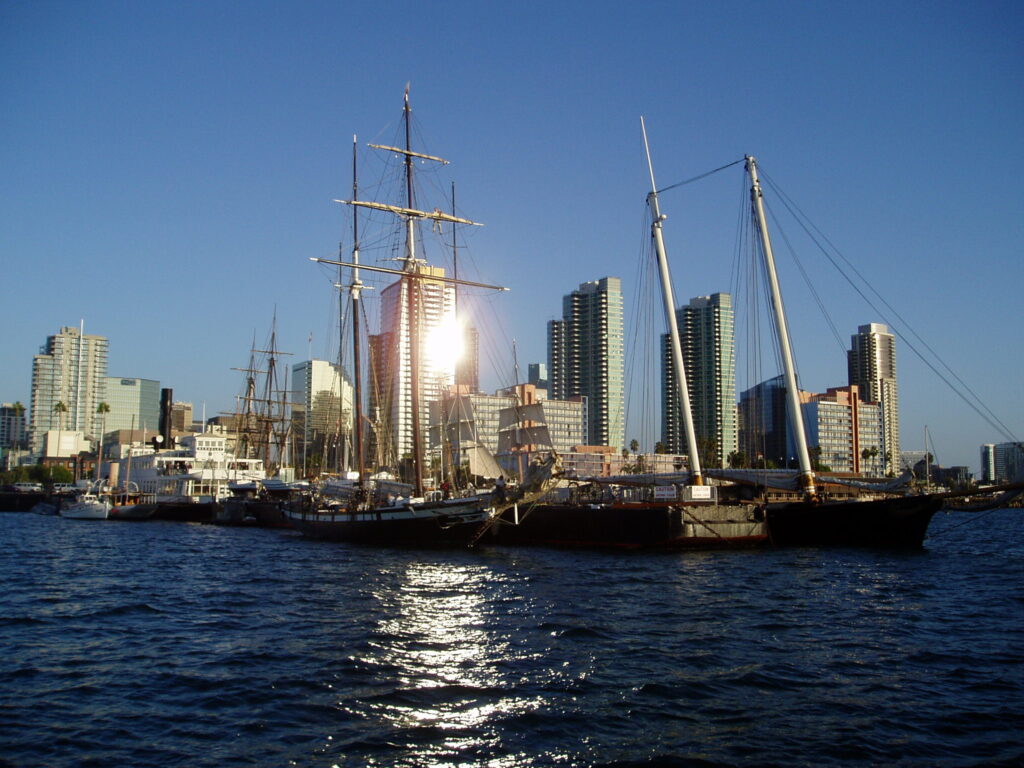
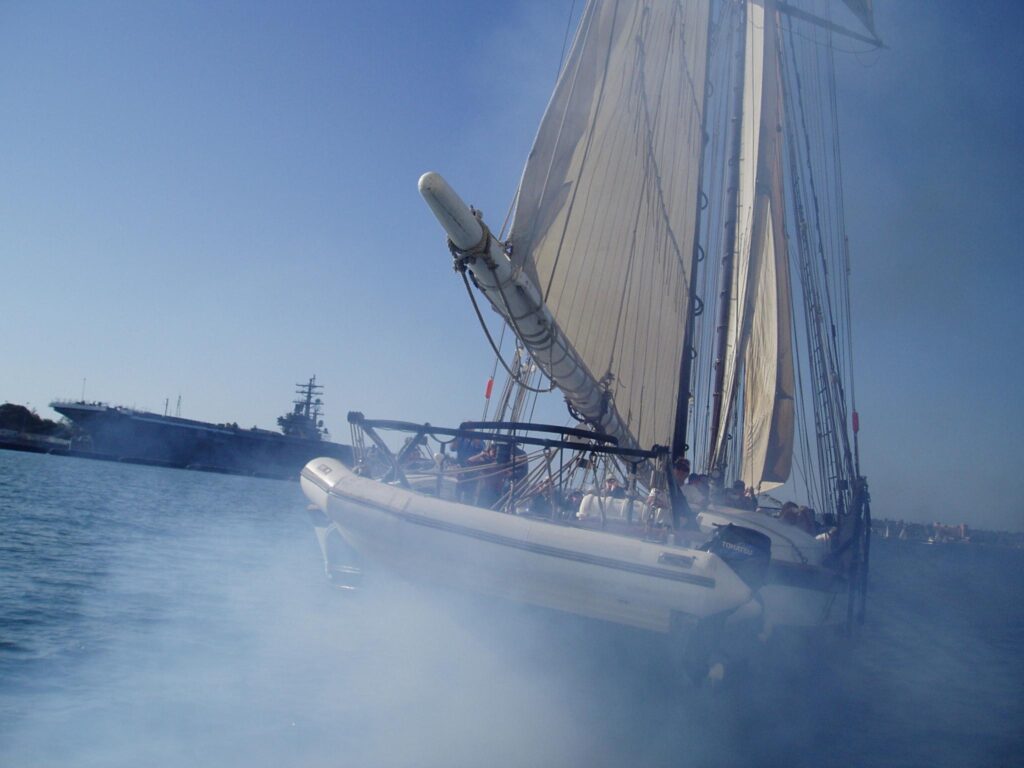
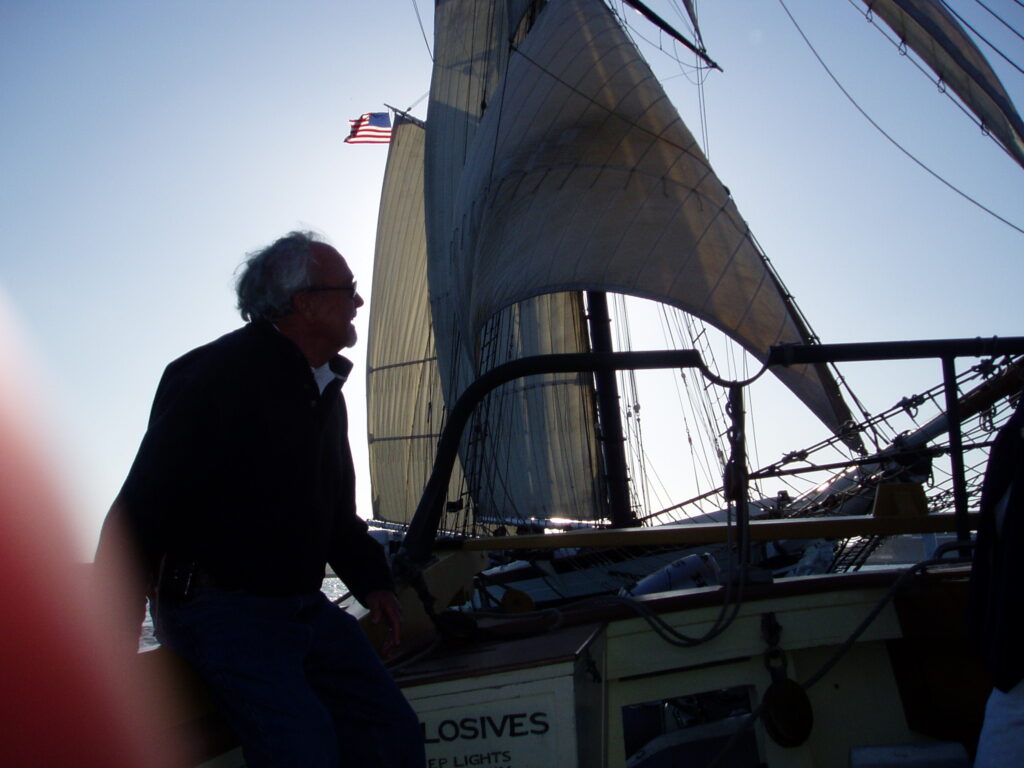
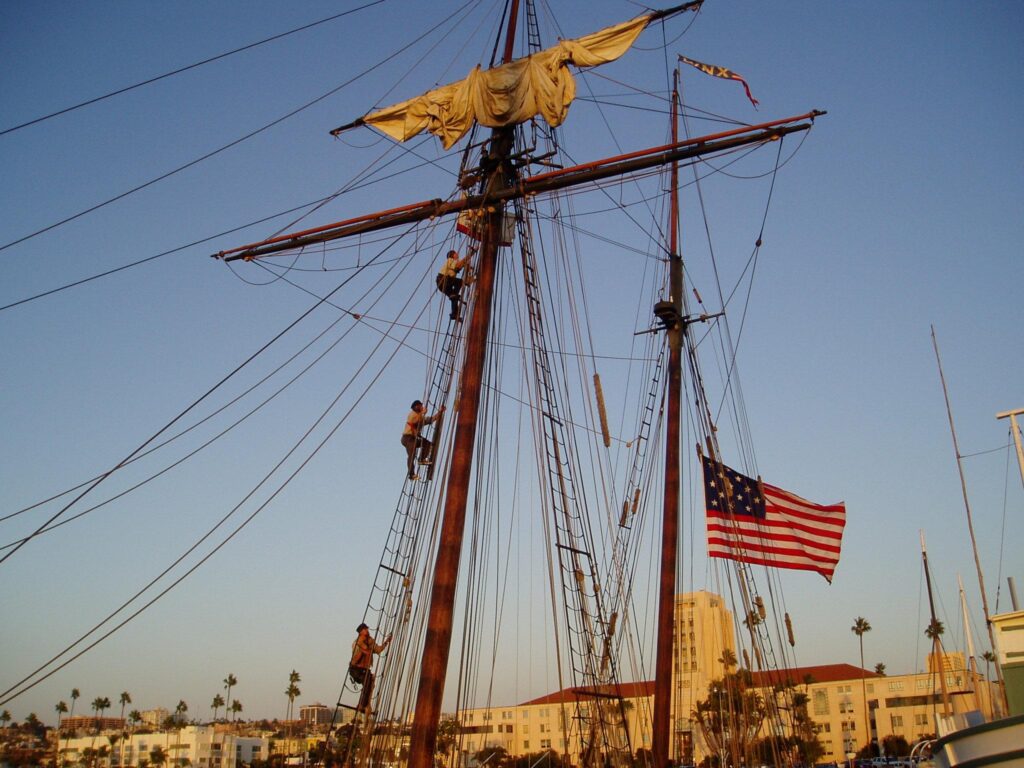
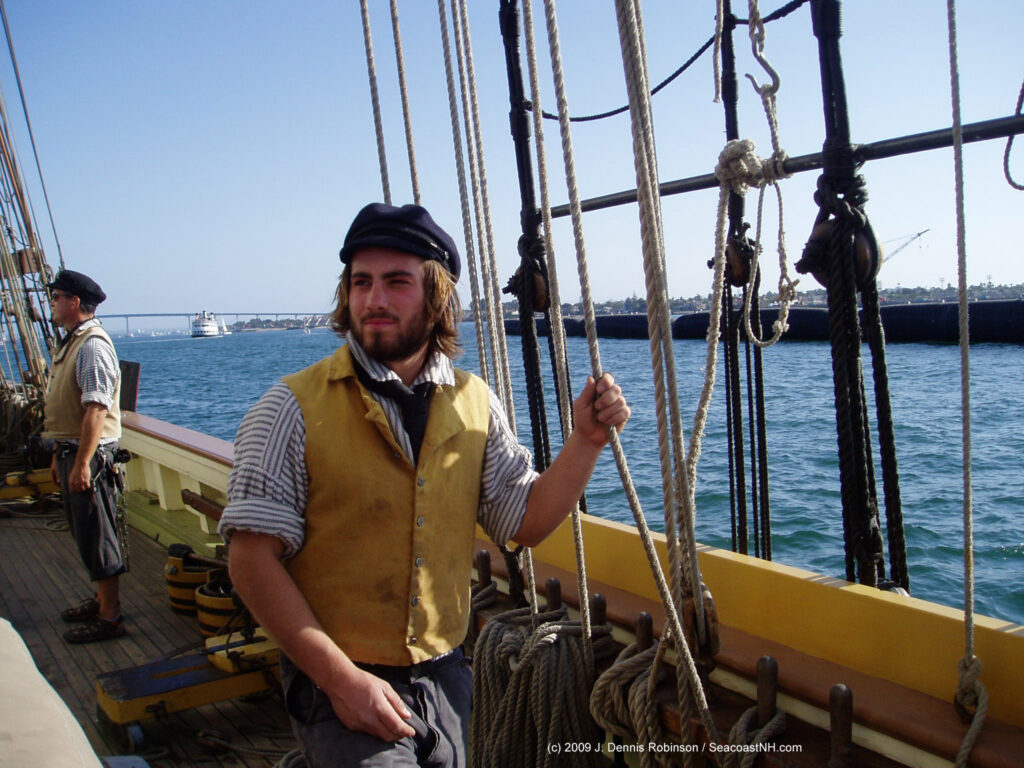
After visiting the Lynx headquarters at Newport Beach (site of TV shows The O.C. and Desperate Housewives) it was off to the San Diego Maritime Museum, housed inside a 279-foot steam ferryboat. The museum also operates the majestic Star of India (1863), the oldest tall ship still in sailing condition in the nation. Lynx was docked at the back, past the replica HMS Surprise (used in the Hollywood movie Master and Commander), beyond a real 1972 Soviet submarine and near a 1905 steel yacht. Following a brief safety lecture, the eight-member crew, assisted by about two dozen tourists, hoisted the sails to do battle with the Californian.
The smoke of battle
“Will we strike our colors like cowardly dogs?” a costumed sailor shouted in response to the Californian’s initial attack.
“Nay!” the Lynx tourists shouted in unison, and the fight was on.
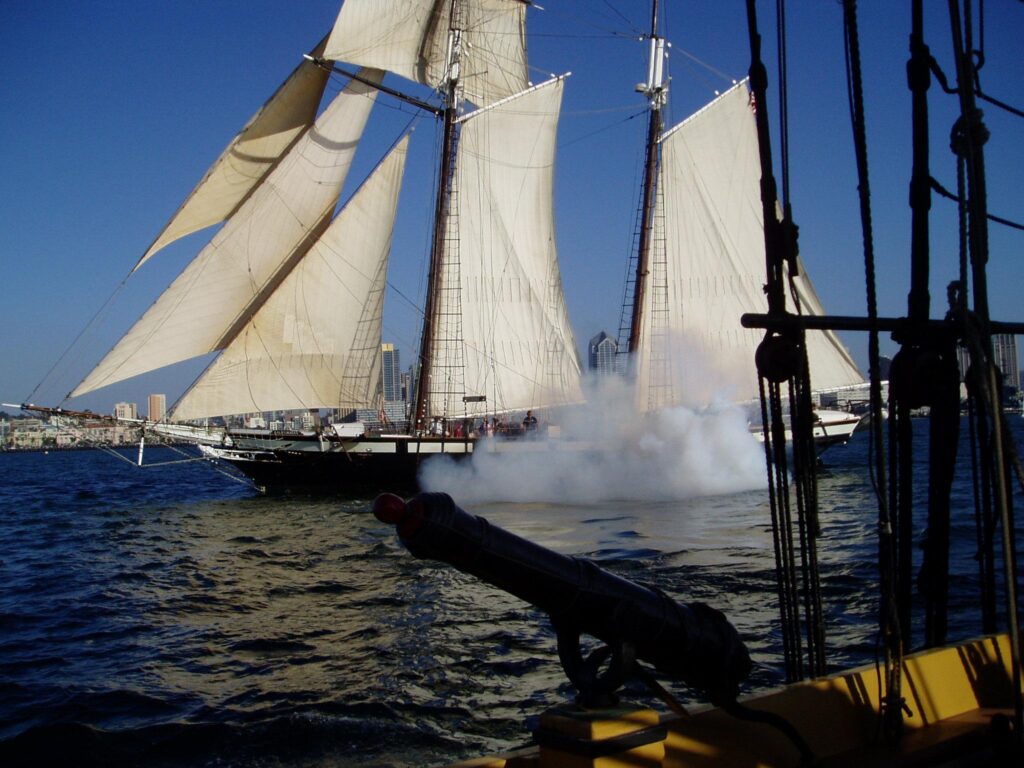
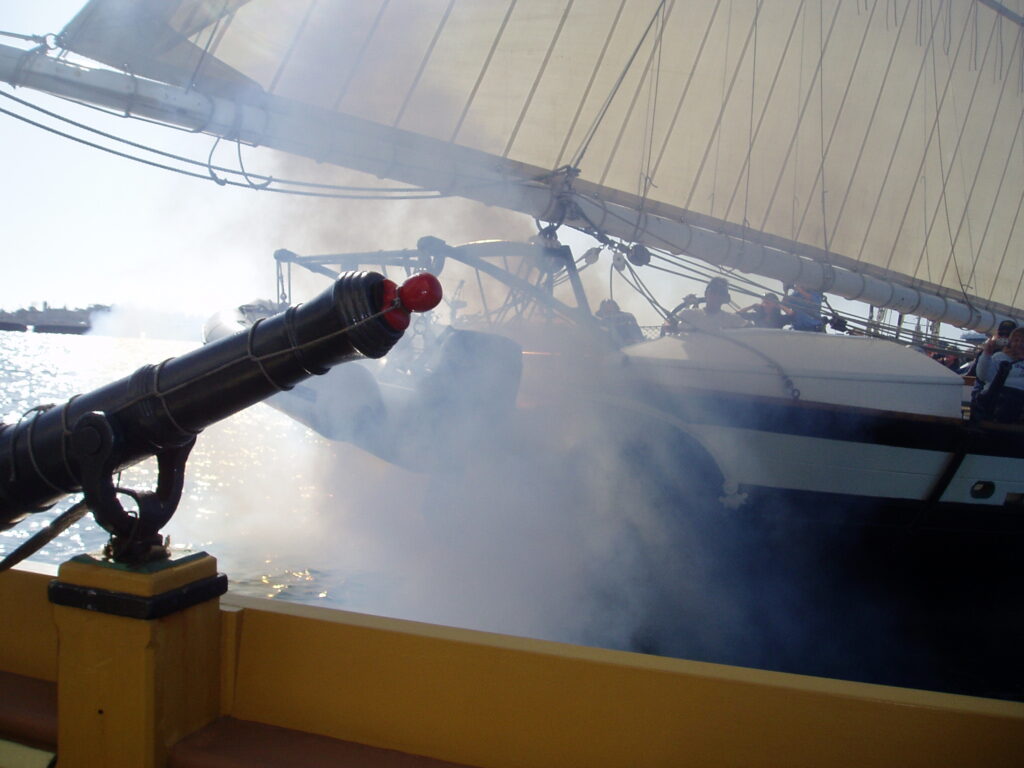
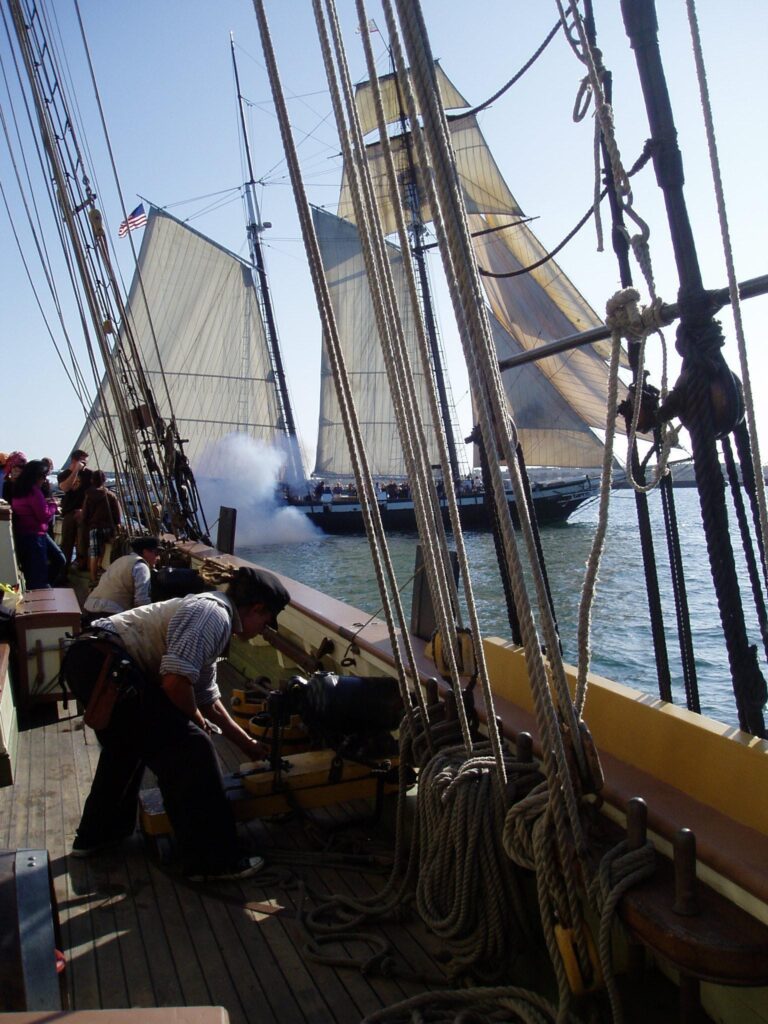
After firing four defensive rounds, using real cannon with real gunpowder – but no ammunition — the Lynx took off in pursuit of her prey.
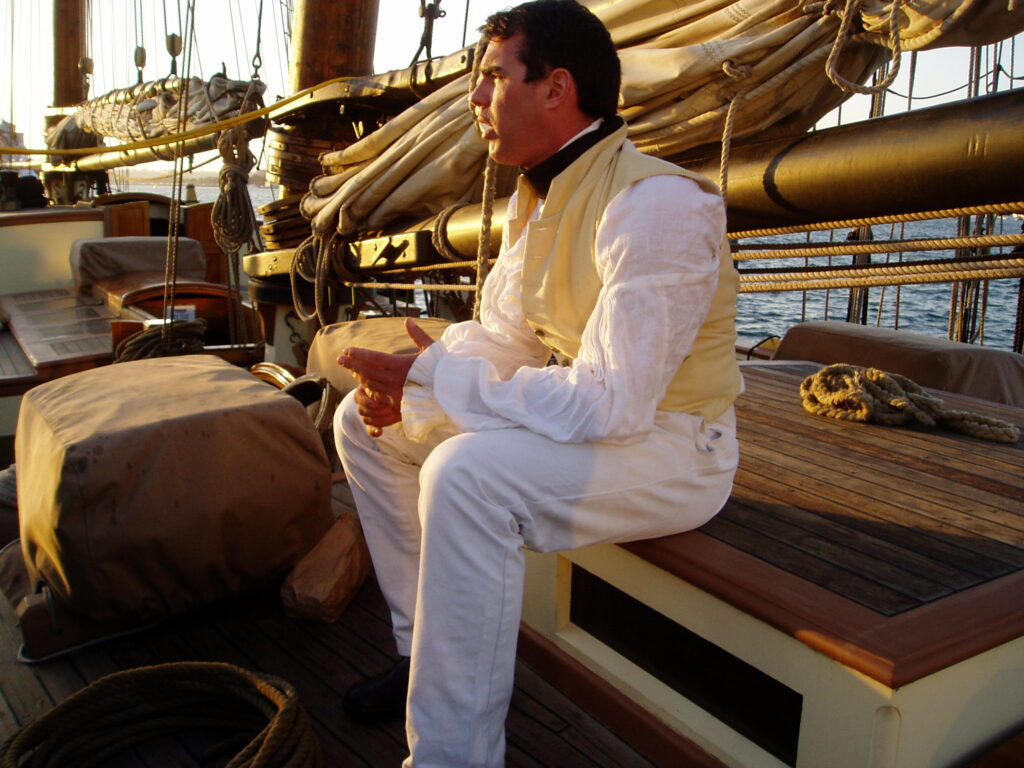
“Stand by to come about! Ease the main sheet!” the captain called out, and each command was repeated by sailors, male and female, down the line. Dressed in a puffy white shirt with dignified blue coat and brass buttons, he was the spitting image of Horatio Hornblower in the PBS TV series. For two hours, between bouts with the enemy, the captain offered us a wealth of detail on the armament, ships, politics, battles and personalities of the War of 1812. Then in mid-lecture, the captain broke off:
“Braces, brace one point fore tack. Raise two points starboard tack! Clear the gun decks. Prepare to fire!”
“Sorry, mum,” a gunner apologized as he tripped over a tourist on the crowded wooden deck in a rush to man his station.
Then as the Californian eased within firing range, each boat let go a full broadside, filling the air with smoke and ear-splitting explosions. At one point, the captain turned quickly, cutting his hand, and sprinkling the deck with blood. Two centuries earlier, there might have been gallons.

A too close encounter
The Coast Guard issued marine broadcasts requesting that small boats keep a respectful distance from the mock battle. But that did not stop a number of curious pleasure craft from sailing directly into the line of fire and forcing a temporary halt to the fracas. Security police from the nearby San Diego Naval Shipyard hovered nervously as the armed conflict raged on.
With the sun threatening to expire, the Californian made its final approach. Lynx stood ready with just two remaining rounds. This would be, not only the last pass of the day, but for Lynx it was the final encounter in San Diego Bay for at least five years.
Although the crew had promised an “incident free” voyage, the last few minutes were especially dramatic. While “down at the wind” on a starboard tack with the Californian off port, the two tall ships did not quite clear. The Lynx captain slammed on the 21st century diesel engines to get a final burst of speed, but the evasive maneuver was not quite enough. The jib boom of the Californian caught the main sail of the Lynx as she passed. I happened to be sitting right in the action zone and dived onto the deck as the bowsprit of the attacking cutter passed just overhead.
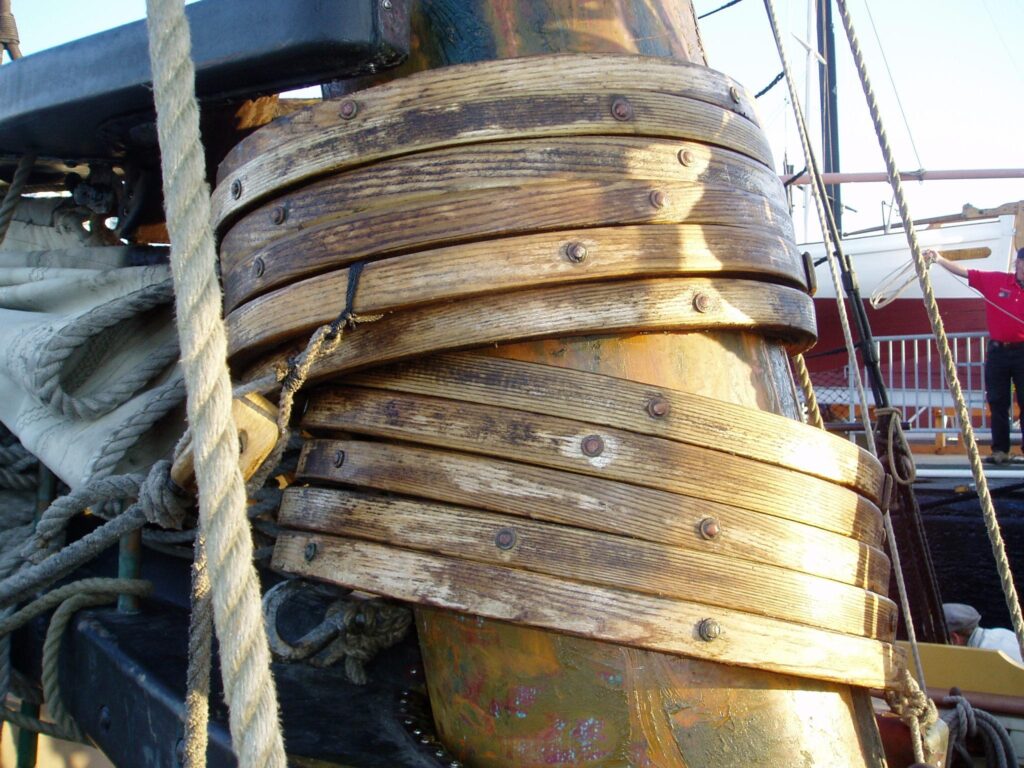
Three more feet and it would have been just a close call. The only damage was the destruction of a half dozen mast tubes. These wooden hoops are attached to the sail and work like the rings on a shower curtain. As the canvas absorbed the shock of contact, the rings stretched with a painful creaking moan, then snapped. Besides some chafing to the mast, nothing or no one was hurt. No one panicked, and the captain later announced that there would be no surcharge for the added excitement.

Bon voyage
The following day the Lynx made her final cruise of San Diego Bay while we took a whirlwind tour of the city’s tourist hotspots. That evening, we gathered at a waterside restaurant in the shadow of the looming USS Midway, an aircraft carrier turned museum with 25 restored planes and helicopters on board. Among the departing Lynx crew we met New Hampshire native Alex Peacock of Newmarket. Someday, Alex will tell his hi-tech grandchildren how he sailed from the Pacific through the Panama Canal to the Atlantic in a sleek wooden schooner with a raked mast built at Rockport, Maine. Not many can make such a claim.
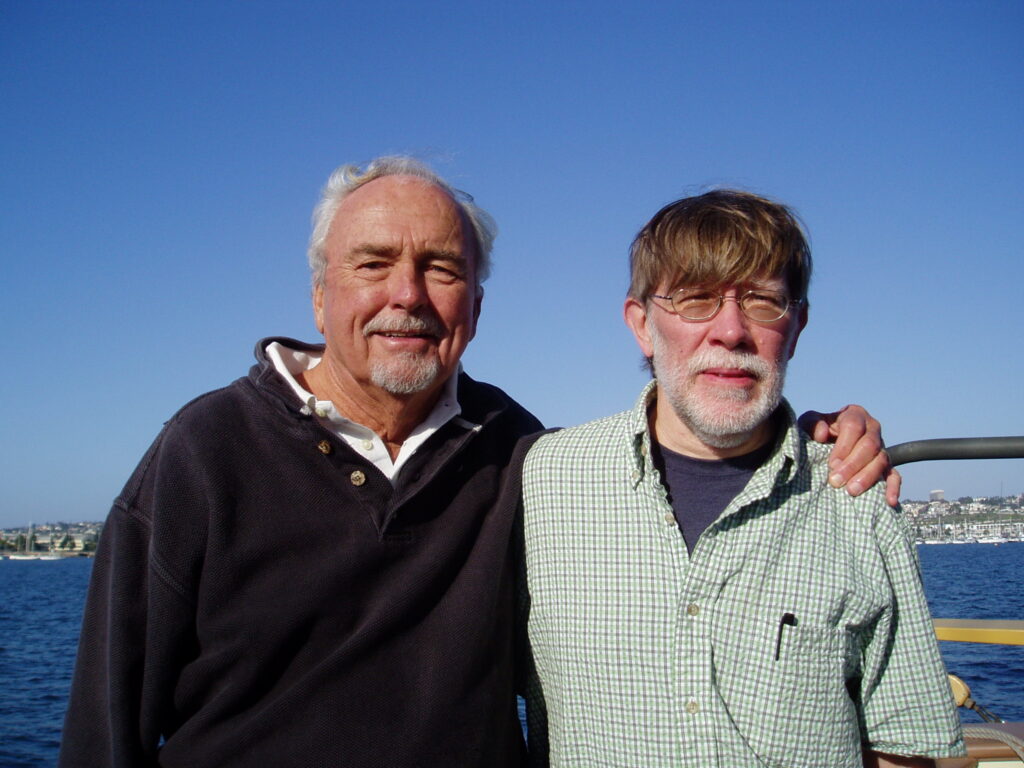
Woodson K. Woods of Hawaii, our host for the California trip and the man whose resources and vision created Privateer Lynx, offered his blessing for a safe passage. His son Jeff Woods, director of the Lynx Educational Foundation, reminded the captain and crew of the Lynx motto: “Be excellent to each other and to your ship”.
Stories flowed like beer, and with their departure only hours away, the Lynx crew sang a sea chantey in anticipation of their own arrival on the East Coast in January 2010. They are, perhaps, singing it even now as they hoist the sails and swap the decks and brave the wine dark sea.
The following day the Lynx made her final cruise of San Diego Bay while we took a whirlwind tour of the city’s tourist hotspots. That evening we gathered at a waterside restaurant in the shadow of the looming USS Midway, an aircraft carrier turned museum with 25 restored planes and helicopters on board. Among the departing Lynx crew we met New Hampshire native Alex Peacock of Newmarket. Someday Alex will tell his hi-tech grandchildren how he sailed from the Pacific through the Panama Canal to the Atlantic in a sleek wooden schooner with a raked mast built at Rockport, Maine. Not many can make such a claim.
Woodson K. Woods of Hawaii, our host for the California trip and the man whose resources and vision created Privateer Lynx, offered his blessing for a safe passage. His son Jeff Woods, director of the Lynx Educational Foundation, reminded captain and crew of the Lynx motto: “Be excellent to each other and to your ship”.
Stories flowed like beer, and with their departure only hours away, the Lynx crew sang a sea chantey in anticipation of their own arrival on the East Coast in January 2010. They are, perhaps, singing it even now as they hoist the sails and swap the decks and brave the wine dark sea.
Long we’ve tossed on the rolling main,
Now we’re safe ashore, Jack.
Don’t forget yer old shipmate,
Folly rolly rolly rolly rye oh!
Copyright © 2009 by J. Dennis Robinson, all rights reserved.

 The “Bad Boy” Book Genre was Born Here