

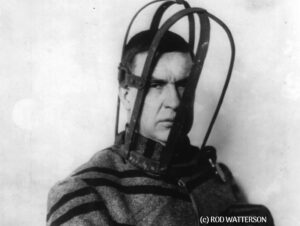
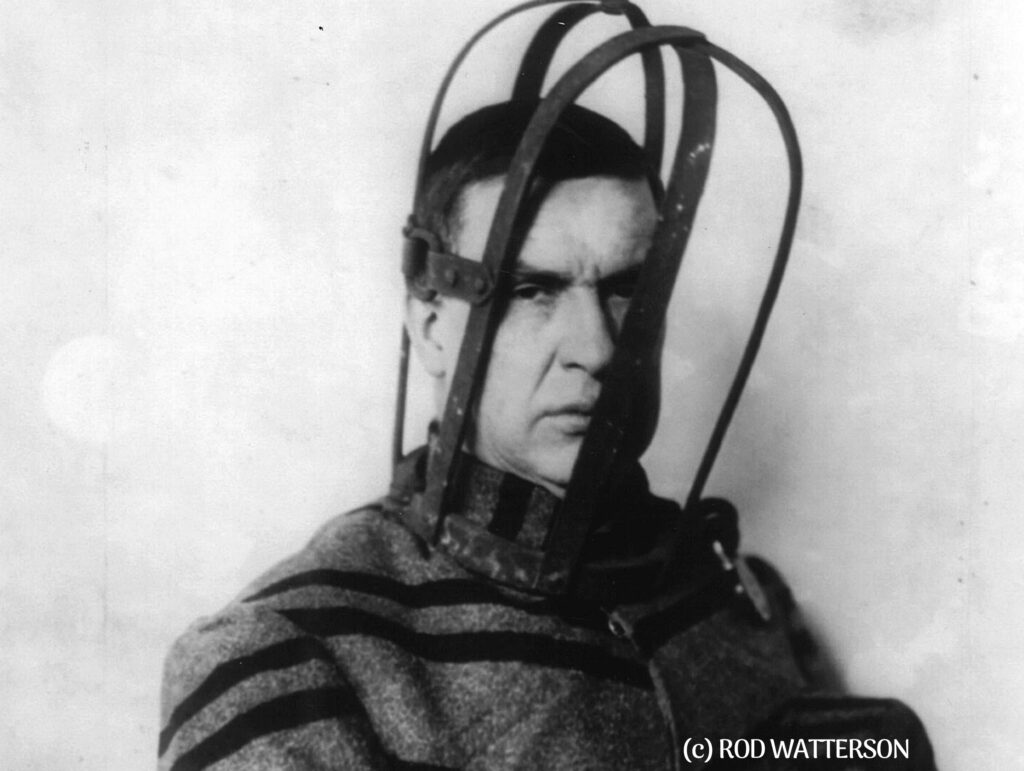
Secrets breed rumors and no seacoast spot is more enigmatic than the towering cement prison at the Portsmouth Naval Shipyard in Kittery, Maine. Shuttered now for over half a century, it is off-limits to all visitors on a secure island inside a guarded federal facility. There it crumbles and rusts, unlikely, at this writing, ever to be used again.
We know precious little about the 86,000 prisoners who lived and died inside “The Castle” in its 66 years of operation. Too often all we hear are rumors of three-foot long rats prowling the hundreds of dark empty cells, or imagined tales from so-called paranormal “researchers.” Then there is that unkillable myth that says the building inspired Walt Disney’s design for Cinderella’s Castle at the Magic Kingdom. It’s not true.

The prison was built between 1905 and 1908 on the former Revolutionary War site of Fort Sullivan. It was the first prison in the nation designed specifically to house convicted criminals from the U.S. Navy and later the Marines. It is true that actor Humphrey Bogart delivered a prisoner to Portsmouth Naval Prison during World War II. Bogart himself served a brief term in stir while in the Navy, but not at Portsmouth. And while it is also true that the characters in the 1973 Jack Nicholson film The Last Detail were on their way to deliver a prisoner to Portsmouth, the movie was not filmed there.
From whips to walls
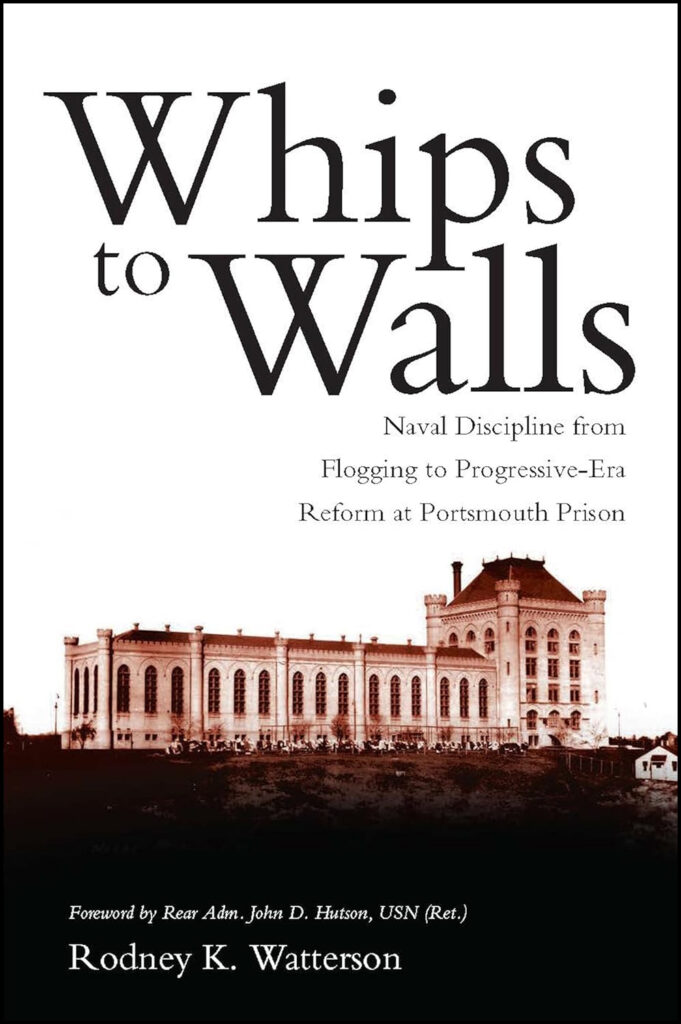
There is a crack in those old prison walls. A ray of sunshine has broken in. Historian Rod Watterson’s book WHIPS TO WALLS sheds light on the amazing and little-known period when life was good inside the Castle.
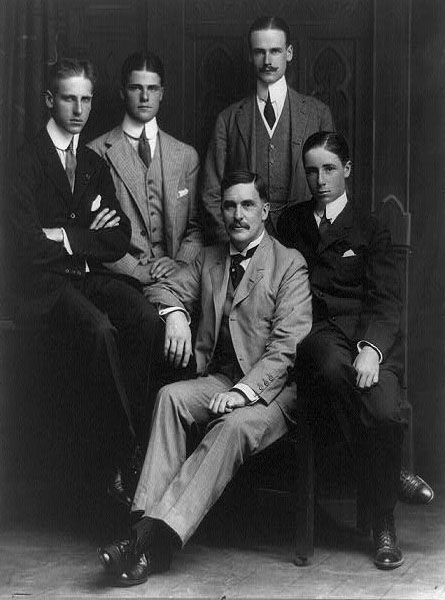
(Wikimedia Commons)
It didn’t last long. During World War I prisoner reformer Thomas Mott Osborne turned Portsmouth Prison into a model community in which convicts nearly guarded and governed themselves. A liberal visionary, Osborne believed that every prisoner could be rehabilitated if treated humanely. But Osborne was also stubborn and had little respect for naval bureaucracy and the conservative military chain of command. Soon after the war ended, Osborne was gone and the harsh penal system for which Portsmouth is known returned with a vengeance.
Watterson’s full title is Whips to Walls: Naval Discipline from Flogging to Progressive Discipline at Portsmouth Prison (1850-1920). Flogging or lashing sailors on the bare back was a time-honored maritime tradition that occurred almost daily until the practice was abolished in 1850, the author points out. (The Navy also terminated its daily grog ration to sailors in 1862.) Adapting from corporal punishment to confining offenders in jails was not an easy transition for the Navy.
The book was conceived while Watterson was conducting research on early Portsmouth submarines for his master’s degree at UNH. Among the records in the archives, he kept bumping into correspondence between Osborne and Josephus Daniels, the Secretary of the Navy and the Assistant Secretary Franklin Delano Roosevelt. It was clear, says Watterson, that these powerful men were good friends.
“Also, there was much internal shipyard correspondence that suggested Osborne was an odd duck, a quirky fellow, who didn’t at all fit with the Navy’s way of doing things, the author says.
Watterson swapped his thesis to Osborne and eventually did his PhD dissertation on World War II submarines. That study became his first book, The title — 32 in ’44 — refers to the record-breaking number of submarines produced in a single year at the Portsmouth Naval Shipyard.
An untold story
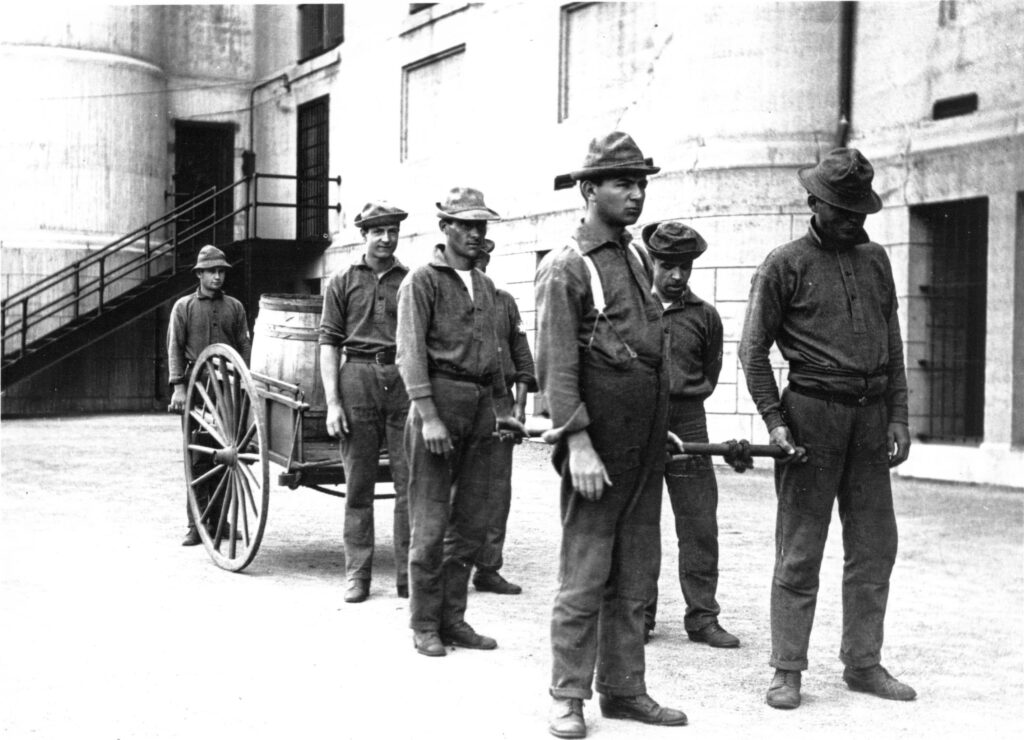
Osborne’s brief transformation of Portsmouth Prison has never been reported in any detail until now. Under the harsh “Auburn system” of confinement common at the time, prisoners were required to march by shuffling “lockstep,” to wear striped convict suits and restraining chains, to retain strict silence almost all the time, and to live in solitary isolation. Before arriving at Portsmouth in 1917, Osborne developed his progressive techniques at Sing-Sing Correctional Facility in New York.
In a bold move, before taking over as warden, Osborne disguised himself as a prisoner and arrived incognito. In this dramatic way, he was able to observe prison conditions first hand. As many as half of all naval prisoners were not hardened criminals, but were in jail for desertion or acts of insubordination. As warden, Osborne advocated for open cells, rehabilitation, education, exposure to culture, and prisoners guarding one another. Osborne favored “indeterminate” sentences of no fixed length and established a Mutual Welfare League for prisoner self-government.
With World War I ongoing, Osborne was tasked with the goal of getting as many prisoners as possible back onto active duty in the fleet. At the same time, the inmate population at Portsmouth doubled to twice its capacity of 500 men. Osborne announced that men could not be “clubbed into submission” or coddled or bribed to reform their ways. “Prisoners are human beings…like the rest of us,” Osborne told naval officials, and they would respond best to a “square deal” based on individual freedom and accountability.
Naval officials pushed back against these loose standards, claiming eventually that, under Osborne, sailors would prefer to live at his jail than endure combat and naval discipline. Osborne fought back, ignoring military protocol, and frequently pulling strings with his friends Daniels and Roosevelt at the federal level. In one case FDR officially approved the right of prisoners to attend shows at the Portsmouth Opera House.

but he conducted the orchestra. (SeacoastNhistory.com)
With the war over, Watterson writes, Osborne was accused of “condoning rampant immoral and homosexual activity at the prison.” Prisoners were then discovered with a home made still making their own liquor from stolen fruit. The prison had become “a joke,” and while Osborne had returned record numbers of rehabilitated men back into naval service, a significant portion of those men later washed out. Osborn survived a formal investigation in 1920 thanks to his support from Roosevelt. “Almost heart-broken” by the Navy’s inability to change and already in his 60s, Osborne retired, ending the progressive experiment at Portsmouth.
Both sides now
Whips to Walls is a deeply researched book with an academic structure. Watterson frequently inserts charts and graphs to support his conclusions. But it is also refreshingly unbiased. As a career naval engineer turned historian, Rod Watterson looks at the Osborne years with rare objectivity.
“He was a hero to thousands of young men whose lives were changed for the better as a result of his influence, ” Watterson says. “His dedication and belief in the basic goodness of all men, especially prisoners, never wavered. I have to admire him for that.”
“However, he was also an arrogant, pompous individual who frequently let his pride cloud his judgment and cause him to act irrationally,” says Watterson. “He was an irritant to his fellow officers in the yard and a curse to the officers in the fleet who were the recipients of the many marginal prisoners he restored to active duty.”
Ultimately, Watterson says, he leans more toward hero than heel. The author has even spoken with a Portsmouth theater group about transforming the warden’s time here into a play. He sees the scene where Osborne disguises himself as a prisoner as good fare for the stage. In another potentially comic scene, Osborne requested that the Navy issue rifles to the prisoners so they could conduct drills.
Portsmouth Prison still has many secrets to unpack. It was more hell than heaven for its thousands of inmates and those stories are still untold. Asked why we should remember those few years when Osborne’s liberal policies were in play, Rod Watterson is quick to respond:
“I believe the Osborne story is an important part of Portsmouth history. I know from my research that it is an important part of penal history too. It is often cited as the most ambitious experiment in the entire history of progressive prison reform. Yet that fact is unappreciated, if not unknown, locally.”
Copyright © 2014 by J. Dennis Robinson, all rights reserved.
 Poem: The Vane of the Old North Church
Leave a Reply