


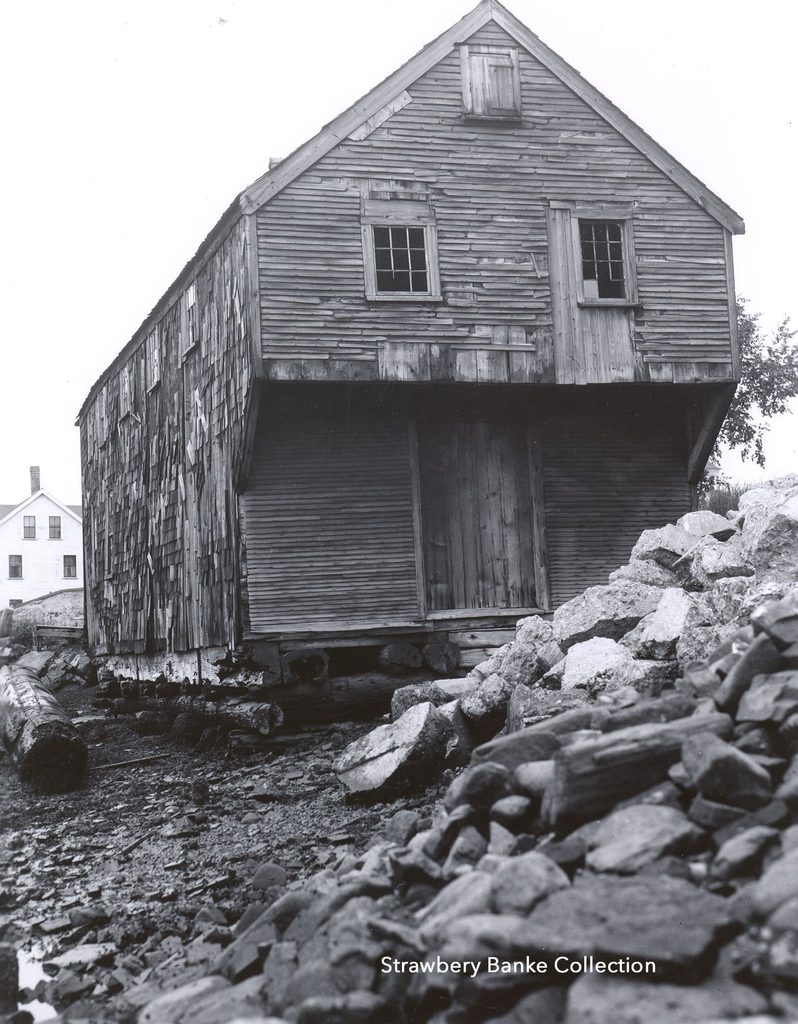
It stands as a small but defiant symbol of an era, long gone, when Portsmouth was a world trading center. Wooden wharves and wooden warehouses lined the riverside of Water Street. Tall ship workers unloaded aromatic teas, coffee, tobacco, sugar, rum, and spices. Then workers loaded up timber masts, sawn planks, barrel staves, and salted fish for export. The region’s first enslaved African arrived here in 1645, roughly a century before the Sheafe Warehouse was built.
Today the scenic Sheafe building leans toward the Piscataqua River. Its overhanging second floor made loading and unloading easier. But rising sea level threatens the old warehouse and the surrounding Prescott Park. In 2026, Sheafe Warehouse was designated among “seven to Save” structures by the NH Preservation Alliance. Nearby Shaw Warehouse (circa 1800), home to offices of the Prescott Park Arts Festival, and the Brick Marine Railway building (1833), home to Player’s Ring Theater, are also on the endangered list thanks to global warming.
Not Jacob Sheafe?
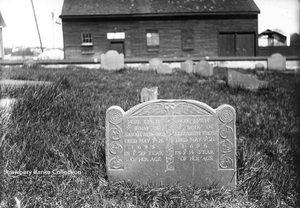
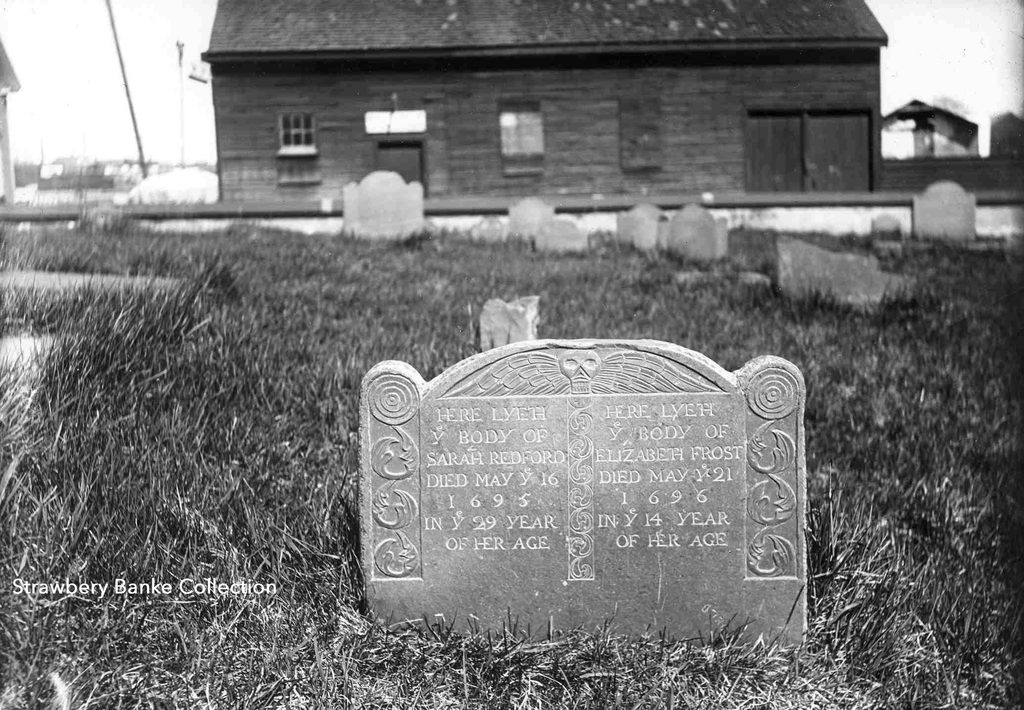
At this point, the warehouse backstory in most reports turns to the life of merchant Jacob Sheafe. He was born in the parish of New Castle, back when the island was Portsmouth’s political and commercial hub. He married Hanah Seavey, heir to another early Portsmouth family whose property was a long Sagamore Creek. A slave owner, like many merchants of his era, Sheafe was remembered in his day by a carved eulogy at North Cemetery.
As a man
He was humane,
Just and generous.
As a merchant
Which business he followed
for upwards of fifty years,
He was ever esteemed
for his honesty and punctuality.
His conduct in private and public life.
Will erect the best statue to his memory.
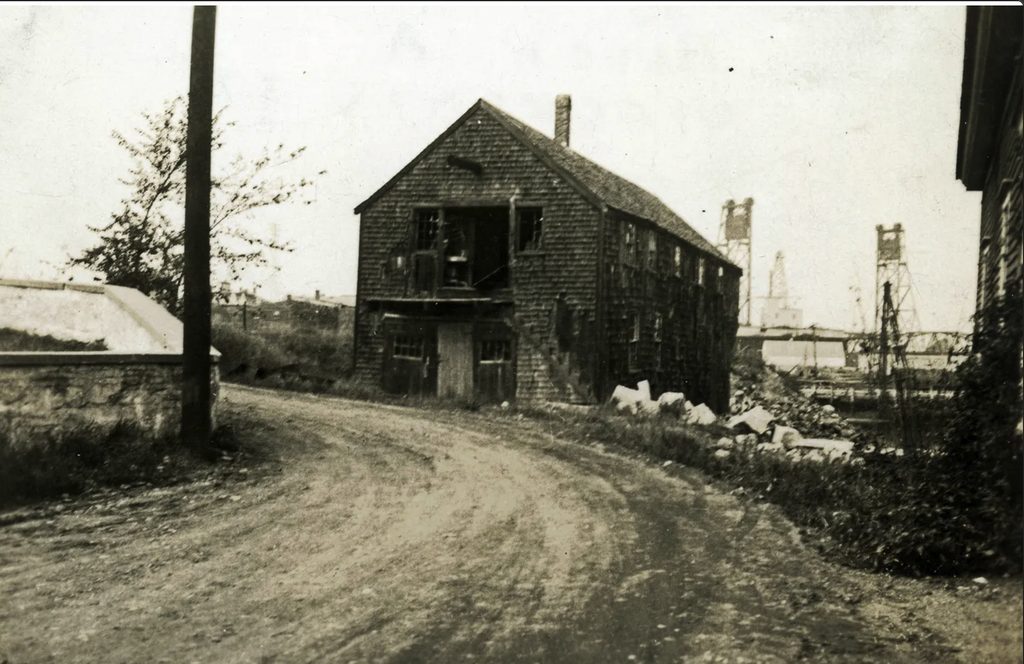
But wait! According to a 2011 report on Prescott Park by researcher Barbara Benn, this wasn’t Jacob’s warehouse at all. Benn suggested that the land at Pickering’s Neck in the South End made no mention of a warehouse. John Pickering sold some of his land to John Wentworth, the provincial lieutenant governor of New Hampshire, whose 1695 mansion once stood at what is now the parking lot of Strawbery Banke Museum. His deed does mention a warehouse. The “Wentworth Warehouse” was eventually owned by another John Wentworth, later royal governor of New Hampshire. Legend says that, after the governor fled to Canada amid the American Revolution, that John Paul Jones fitted out the sloop of war Ranger from this warehouse.
The wealthy Peirce family later bought the land. At that time, the warehouse was situated at what would become the bridge from the South End near Point of Graves to Peirce Island. The warehouse was preserved and moved in the 1930s to its current location. It was then used for storage by the “antiques” dealer and former bordellow owner, Cappy Stewart. Today the Gundalow Company presents an annual art exhibit from the ancient structure. Officially endangered once more, the Sheafe Warehouse awaits its next salvation from the tides of time and sea.
© 2026 J. Dennis Robinson.


 Spencer Tracy Steers the Mayflower in 1952
