


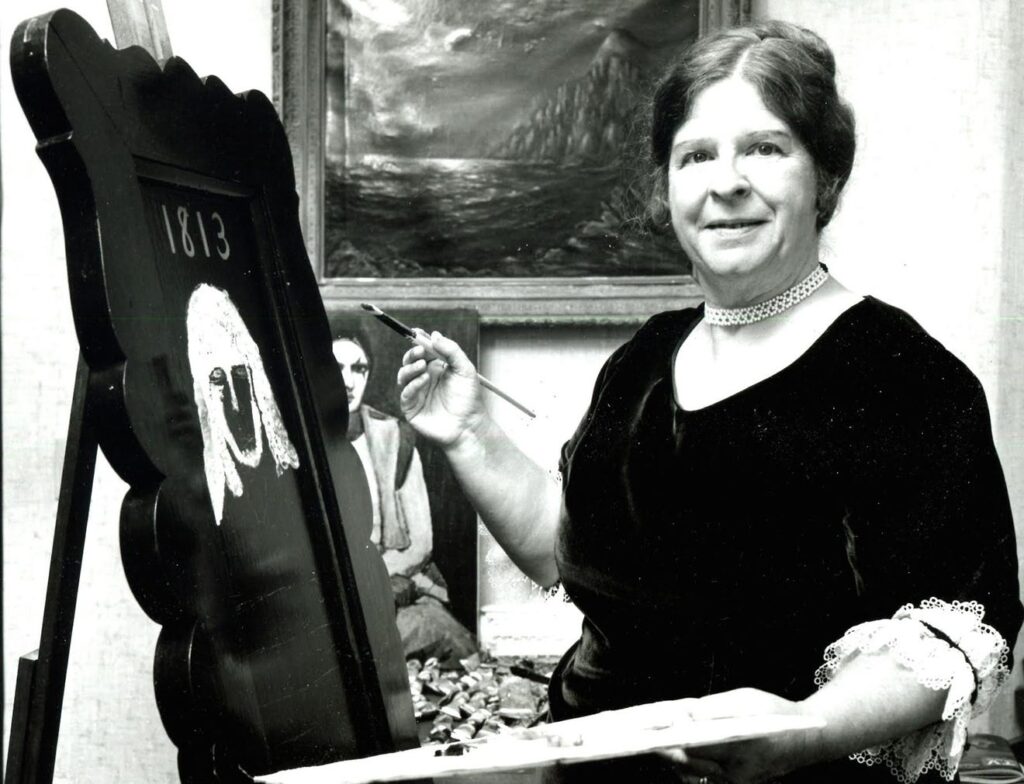
If at first you don’t succeed, take a lesson from Rose Cushing Labrie. A writer by trade, Rose spent 25 years trying to land a book contract with a national publisher. She hired five literary agents, but all came up empty. Yet by her death in 1986, she had become a celebrated self-taught painter in the “primitive” style.
Rose Labrie was called “New Hampshire’s Grandma Moses,” but the comparison isn’t precise. Anna Mary Moses, aka “Grandma Moses,” was 78 when she began her painting career and lived to age 101.
“Thank you, no! Not Grandma Moses at my age!” Labrie protested back in 1965 after winning an award for her painting. “And besides, I don’t want to copy anyone’s work, however good. I have to be just myself.”
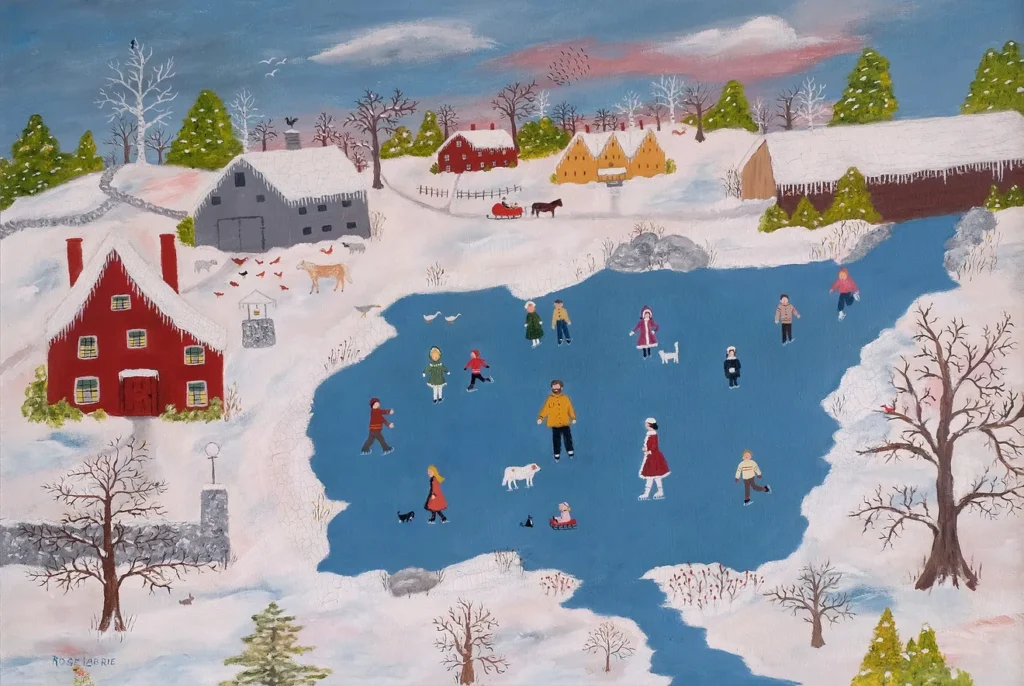
“She was a good local writer,” says historian Richard Candee. “Rose always wanted to paint too, but didn’t think she could.” Intrigued by the artist’s indomitable spirit, Candee curated a retrospective of her work i 2018.
Labrie was born in 1916 to a mother from Nova Scotia and a father from Ireland. She grew up on a 240-acre Vermont farm. The vivid colorful landscape of pastures, mountains, and forests dotted with animals, she later wrote, “had every influence on my becoming a primitive painter half a century later.” The deep white snow, brilliant blue sky, yellow pastures, and green trees became the vivid backdrop to her work. She filled the landscape of her “memory paintings” with horse drawn sleighs, boxy two-dimensional houses, and doll-like figures.
“I signed up for a drawing course, as I loved art,” Rose wrote in an unpublished memoir. This was during the Great Depression in the 1930s. By this time she was attending high school in Concord, NH. “Unfortunately, I couldn’t seem to follow instructions. … I wasn’t surprised when I was asked to change to a course in music appreciation.”
She married electrician Alfred A. Labrie in 1939 and they settled with their children in Kittery, Maine. Rose flirted with a career in photography in the 1950s, but preferred to dabble with painting. She drew inspiration from family members and seacoast scenes.
Entirely self-taught, she experimented with paintings of tall ships and historic homes. Her oil on canvas rendering of the Nubble Lighthouse in York, Maine, appeared on the cover of her self-published booklet about the lighthouse in 1958. It sold thousands of copies at a dollar each – and her painting career blossomed.
“As an experienced journalist, Rose understood the importance of story, branding, and publicity,” Candee notes. “Once she was recognized as a ‘primitive painter’ I think she branded herself as New Hampshire’s Grandma Moses just so she could demur. But that name gave her a recognizable identity.”
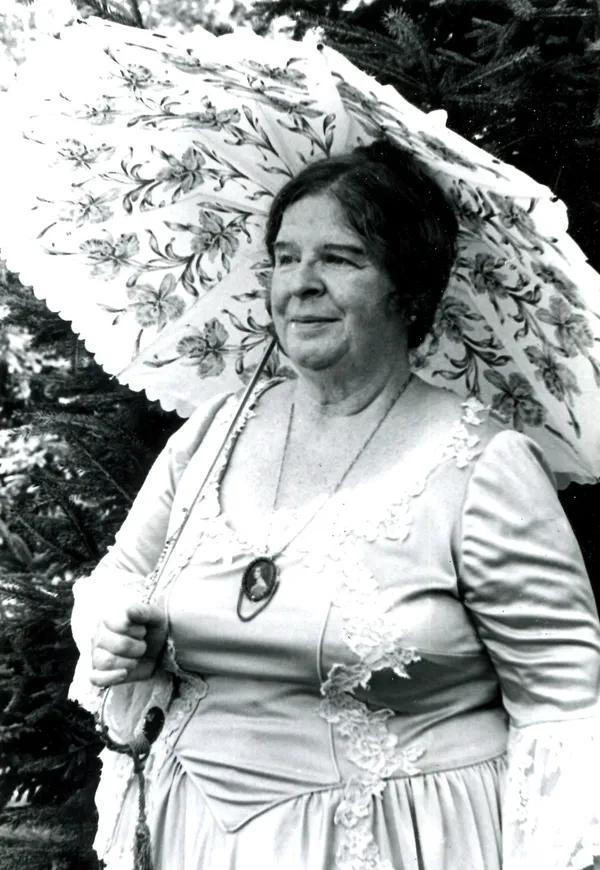
In 1965, she won first prize from the Portsmouth Art Association for her memorial painting of the ill-fated USS Thresher, a locally-built submarine that was lost at sea two years earlier with 129 crew members. That same year, Strawbery Banke Museum opened to the public. Rose found the campus of ancient houses an ideal place to work. Painting under the shade of an apple tree, dressed in Colonial costume, she was often joined by curious children. For three years, beginning in 1966, Rose volunteered to direct summer art classes and exhibits for children at the museum. In 1969, her program moved across the street and gave birth to the Prescott Park Arts Festival.
By the 1970s Rose was becoming a hot property in the world of folk art. Her “primitive” paintings were selling in a New York City gallery. She was attracting collectors and getting commissions. Some of her work appeared on the cover of regional and national magazines. Marrying words to her art, she also produced three children’s books – “Randy the Rooster,” “Dancer’s Image” and “Lucky the Leprechaun Pony.”
A beloved seacoast figure whose work touched countless children and grown-ups, Rose Labrie passed away before her memoir was complete. Her paintings now tell her story.
Copyright J. Dennis Robinson

 Oops, I Meant to Say “Oar House”