


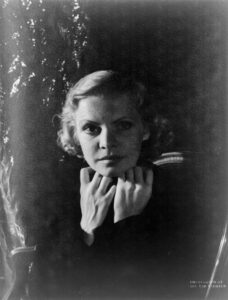
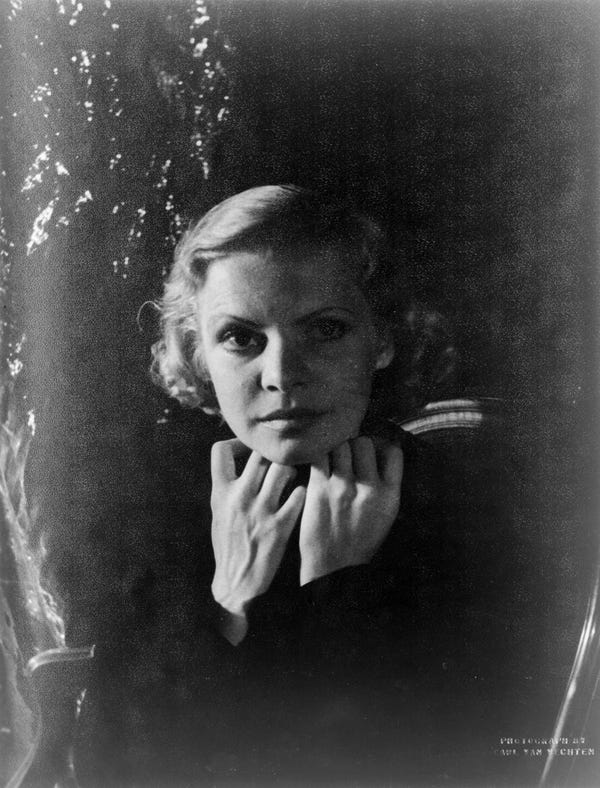
October 1942 was a tough month for singer, actor and dancer Claire Luce. She was onstage almost daily as the female lead in two plays at the Portsmouth Theatre, now the historic Music Hall. Reading between the lines, Luce was a famous actor performing in a largely abandoned old theater during World War II in what must have seemed like the New England hinterland.
Claire Luce (1903-1989) arrived in Portsmouth with an impressive resume. A Ziegfeld Follies dance star in the Roaring Twenties, she was Fred Astaire’s partner in the theatrical version of “The Gay Divorcee” (1932). She co-starred in films with Humphrey Bogart and Spencer Tracy. Luce originated the Broadway role of Curley’s wife in “Of Mice and Men” (1937). An often quoted letter from author John Steinbeck complimented Luce on her stage performance and offered her tips on how to play the complex role.
Luce spent most of World War II in Britain, entertained the troops, and survived the London Blitz bombings. Exactly why she ended up in Portsmouth amid a semi-professional cast is unclear. At the time, the Music Hall had been largely shuttered for a dozen years or more and was in disrepair. In 1942, Mrs. Maude Hartwig, creator of the Ogunquit Summer Playhouse, rented the old theater in hopes of creating a permanent Portsmouth acting troupe. The experiment was a flop and the theater was later auctioned off.
Despite Luce’s star power and considerable coverage in the Portsmouth Herald, it appears that local live theater did not fare well in wartime. Luce first appeared in the comic drama “Mr. and Mrs. North” with fair-haired actor Eric Linden, who had played a minor part in the film “Gone with the Wind” (1939). Originally a novel about a detective couple, “Mr. and Mrs. North” was a successful Broadway play, adapted to radio, and later became a popular film and television series. According to a Portsmouth Herald headline, the play combined “spine-tingling thrills … with belly laughs galore.” The opening night review, however, was tepid.
“The play is amusing and well enough presented,” the newspaper critic wrote. The cast and stage crew, he acknowledged, had only five days to rehearse and prepare. “You’ll find it a top-flight antidote for war jitters, blues, or general boredom,” the reviewer concluded.
Luce then took the lead in “Tonight at 8:30,” a cycle of ten short one-act plays by the renowned Noel Coward. Mrs. Hartwig’s choice may have been too highbrow for a wartime New Hampshire audience, even at 50 cents to $1.50 per ticket. A quick scan of the Portsmouth Herald during the month of October 1942 shows a wide-range of lowbrow entertainment available downtown, including two leggy vaudeville shows, one billed as “raw, rowdy and ruthless.” There were also feature-length first-run Hollywood films starring Gene Autry, Fred MacMurray, Humphrey Bogart, Dorothy Lamour, Don Ameche, Rosalind Russell, Donna Reed, Lionel Barrymore, Sonja Henie, Buster Crabbe and Tyrone Power.
Mrs. Hartwig quickly returned to her New York City home, leaving a sprinkling of unpaid debts in Portsmouth.
Luce returned to England, according to her 1989 obituary in the New York Times. In 1942, she also played Katherine in “The Taming of the Shrew.”
“She became the first American actress to play leading roles at the Shakespeare Memorial Theatre in Stratford-on-Avon,” the Times reported. Luce traveled widely with a one-woman show featuring female characters from the plays of William Shakespeare. She began, but never finished an autobiography. Her days in Portsmouth, we can assume, were best forgotten.
Copyright by J. Dennis Robinson, all rights reserved.
 Folk Artist Rose Labrie