



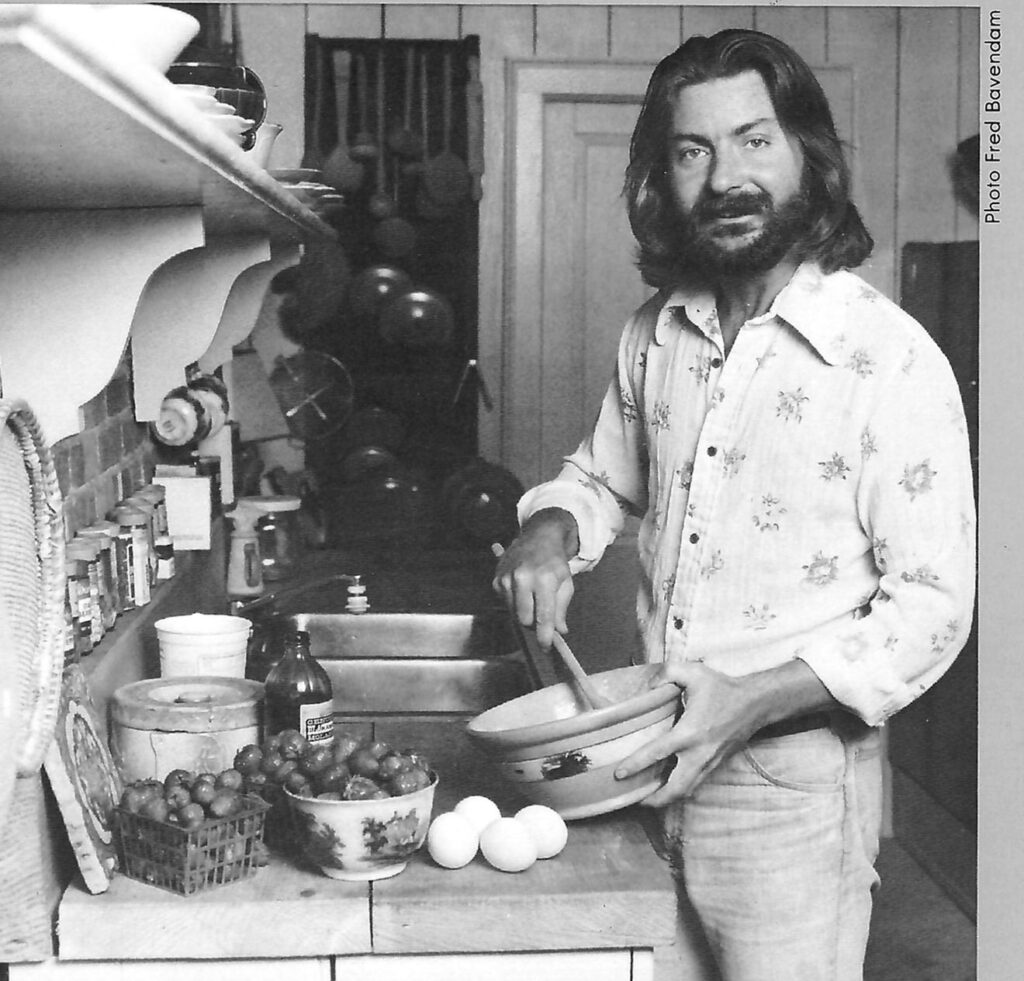
What we call “history” is really an effort to make sense of a series of accidents that happened in the past. If master chef James Haller, for example, had not stopped for a hot dog at Gilley’s Lunch Cart in Market Square one evening in 1969, would Portsmouth look the way it does today?
That historic hot dog—topped with yellow mustard, green relish, and chopped white onions—was consumed the year of the moon landing, Woodstock, and the Beatles’ break-up. Haller, then 33 and living in New York City, was visiting a friend who was introducing him to the limited nightlife of downtown Portsmouth. These were the days when Ralph Gilbert parked his dinner cart illegally in front of the North Church six nights a week from 5 p.m. to 5 a.m.
In the first chapter of his latest memoir, “At the End of Ceres Street,” Haller recalls the event that changed his life, and some say, changed the life of a town:
“The cook, Gilley, a wiry short guy in his sixties wore a white T-shirt and checkered chef’s pants with a white apron and a round paper hat. … Gilley was wonderful to watch deftly managing the orders coming at him from both sides while carrying on a conversation with the cop who had stopped in for a coffee.”
“Here ya’ go, Bill,” Gilley said, handing Haller two dogs wrapped in wax paper. (Gilley called every male “Bill” and every female “Miss.”) The Chicago-born tourist and his friend Gene Brown settled onto the granite steps of the iconic North Church to dine while surveying the ancient and curious town. “It all got me thinking,” Haller recalls. “Could I live here?”
Blue Strawbery days
He stayed. Despite being recently unemployed and untrained in the food service industry, Haller, Brown, and friend Mark John Burke were “fired by an inexplicable optimism” to open a restaurant. They settled on the basement floor of an old brick building, a former chandlery at 29 Ceres St., then the rough and tumble end of a funky seaport.
Haller’s idea was to cook dinner each night in two settings (at 6 and 9 p.m.) for about 30 people. “It’ll never work,” he was told again and again.
The three entrepreneurs borrowed $1,500 each. With $80-worth of pressed-wood chairs, two small stoves, and a mixed set of dinnerware, they opened the Blue Strawbery on November 18, 1970.
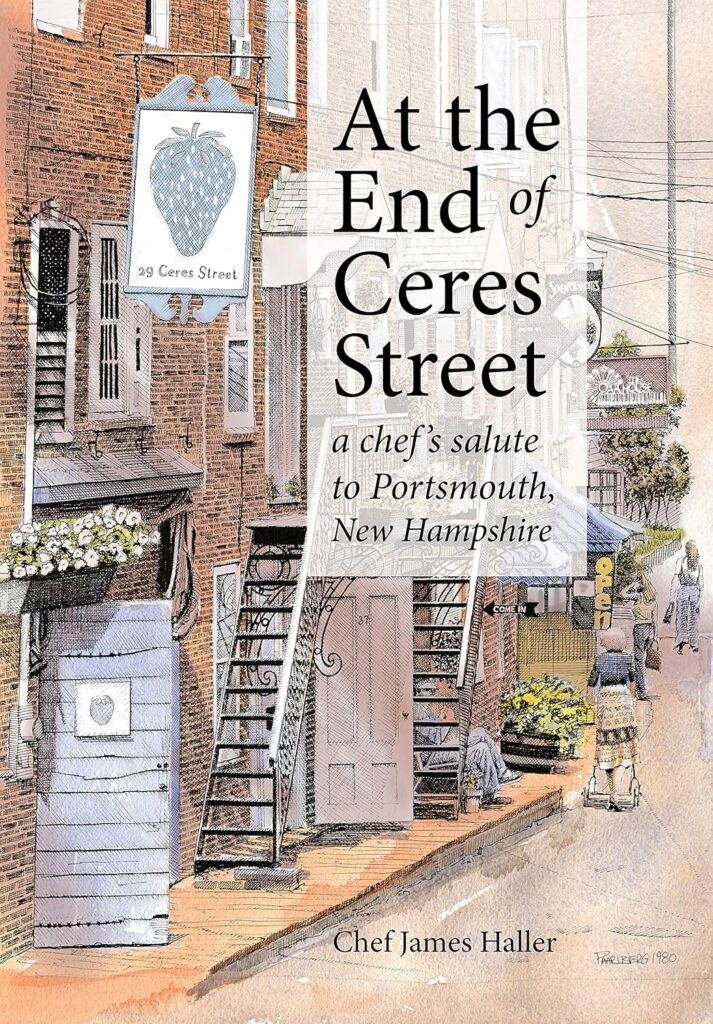
Over 16 years, Chef Haller says today, he never made the same meal twice. His tiny hippie-chic eatery with its unplanned, off-the-cuff, no-recipe dining drew both customers and rave reviews. Diners came from as far away as Boston. The Blue Strawbery was the perfect complement to an evening at Theatre by the Sea just a few doors down Ceres Street, where tall ships from around the globe had once unloaded their goods during the heyday of the colonial East India Trade.
As the 1970s progressed, the “risque” part of town, better known for its topless bars, was adding new shops and restaurants. Enhanced by the early success of Strawbery Banke Museum and Prescott Park on the South End, Portsmouth was gaining attention as a tourist destination for daytrippers. Art galleries, annual festivals, outdoor concerts and plays, tourist-friendly streetscapes, historic sites, parks marked the city’s cultural renaissance that continues today.
Down Ceres Street
It is worth noting that in 1966, the year after Theatre by the Sea opened on Ceres Street, a group of local businessmen had already begun efforts to market the city’s historic waterfront. Members of Portsmouth’s Olde Harbour Association were dedicated to turning the rough and tumble North End waterfront into a tourist attraction. The group included the owners of Bow Sprit Antiques & So Forth, Beever’s Antiques and Finds, Captain’s Locker Nautical Gifts and others. These largely forgotten trendy mom-and-pop shops paved the way for the coming revival even before Haller consumed his first Gilley’s hot dog.
Haller’s newest book is about a familiar but unredeemable city half a century ago, where anyone could rent a downtown Portsmouth apartment for a couple hundred dollars a month.
“Back then you could afford to be here,” he says today. “The town was open to you. All you needed was your dream. Whatever it was I wanted to do, I knew I could do it here.”
“At the End of Ceres Street” is an homage to the people and places from that brief but delicious era, served up in a series of saucy sketches from a master wordsmith. His latest book is peppered with characters including abstract artist Russ Aharonian, longshoreman Ace Karlo, “Penny Poet” Robert Dunn, preservationist Buzzy Dodge, actor Scott Weintraub, mime Marguerite Mathews, and a busload of Hare Krishna devotees.
In these gentle pages, “Buddy” Haller buys a used green-velvet Empire sofa, invests in Clarence’s Chowder House, visits the Modern Launderette, rents movies from Atlantic Video, and shops for a teddy bear at G. Willikers! He invents the sweet potato frappe, cooks on a Boston television show, and serves up baked shark steaks in a lemon ginger sauce, delivered fresh from Marconi’s Blue Fin Market. There are also recipes for Portsmouth pie, French dressing, apple and turnip huggins, sour cream and coffee brandy sauce, breast of duck, Polish doughnuts, and more.
On being a writer
Even with eight books under his belt, at 85, James Haller remains an insecure author. His “Blue Strawbery Cookbook” or “Cooking Brilliantly Without Recipes” (1976) remains a classic guide to innovative cuisine. He is the author of “Vie De France,” a travel journal, a guide to cooking in the Shaker spirit, and “What To Eat When You Don’t Feel Like Eating” on cooking for cancer patients, which has sold over 800,000 copies.
“I wanted to be a writer ever since I was 8, 9,10 years old,” he says. “I saw a movie where a writer was sitting at a table talking to people about his writing. I liked that.”
His mother challenged his dream, however, and Haller quit school at 15, never finishing high school. He later wrote humorous sketches for a comedy team that appeared on “The Tonight Show” with Johnny Carson. TV host Merv Griffin praised Haller for his comic writing and the budding author almost landed a job on the television show “Laugh-In” in the 1960s. Haller was staying in South Berwick, Maine, when his comedy career fell apart. That’s when he wrote his “autobiography at age 31,” he says laughing, that remains unpublished in his bottom drawer.
It was only after finding success as a chef — another field in which he had no formal training — that his writing career took off. His previous book with Great LIfe Press, “Salt & Pepper Cooking” (2015), was also a foodie memoir that traces his family origins. “At the End of Ceres Street” picks up the story with his arrival in Portsmouth half a century ago.
Haller credits his candid, flowing prose style to his editor and 35-year partner John “Jack” Byrne.
“He’s worked on everything I’ve ever sold,” Haller says. “You write from the heart, from your intuition. It’s like cooking. But he takes my stuff and helps turn it into literature.”
The reporter asks the inevitable question: “What next?”
“I thought this might be my swan song,” Haller says of his latest literary effort. “Then I thought, no it’s not. There’s several more I’d like to do. So, it’s just — hang on, and be happy that you’re here, because it’s time to do the next one, and the one after that, and the one after that.”
 When William Met Celia