


In “New Castle, Historic and Picturesque” (1884), John Albee wrote with more candor and pizzazz than you average 19th-century historian. Unlike dull town chronicles in Kittery and Rye, for example, Albee noted: “I did not promise a faithful history.” Asked why he accepted the job of writing about New Hampshire’s historic island village, he confessed, “In truth, there is no one else who will undertake the labor.” He was more interested in the “frosting” of history, he said, than the cake itself.
Early in the book he wrote at length about colonial graves that were scattered all over the rocky island. “In old times they didn’t dig very deep,” an old New Castle farmer told Albee, “and when the coffin gets empty and the wood thin and a heavy ox steps on the right place, down he goes.” Funerals and cemetery plots were getting so expensive on Great Island, the author noted, only the rich could afford to die.
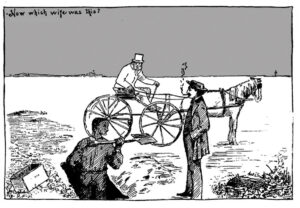
In one Hamlet-like scene, pictured here in an illustration from the book, Albee bumped into a “decrepit” gentleman sitting in a wagon. The old guy had hired a gravedigger to exhume his three wives and move their bodies to a central spot, so he could be buried beside them all. Eventually, the digger stopped to announce that he had struck the coffin. He explained in gross detail how the longevity of the remains were related to the weight of the deceased. “When a man gits down to the bone afore he dies,” the digger said to the gaunt old man, “he has a good chance of staying pretty much so.”
Women don’t go “digging up their old hubbies,” the irreverent gravedigger added. Women prefer to move on with much livelier men. “Now, which wife was this?” he asked, cracking open the rotted coffin. But the old man just sat in his wagon, staring silently out at the Isles of Shoals.
Albee’s story gets even grosser as the digger talked about ashes, worms, bones, and worse. Eventually, the old man spoke up. He looked, the author wrote, like a man ready to be interred. The ancient gentleman, having lost three wives and all his offspring, finally turned to Albee and spoke. “How much did you get for your potatoes this year?” he asked.
Copyright by J. Dennis Robinson
 Starving Writer Seeks Food Stamps in 1970s
Leave a Reply