


The historic 1874 Wentworth by the Sea hotel is back, reopened in 2004. From the outside its stately wooden towers and the curving mansard roof look much as they always have. But inside almost everything is new. The steam-powered elevators, a luxury to early guests, have given way to heated, marble bathroom floors and an exotic glassed-in spa. The six original electric arc lamps, the first of their kind in the region, cannot hold a candle to modern high-speed Internet service in every room.
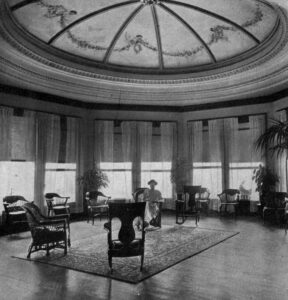
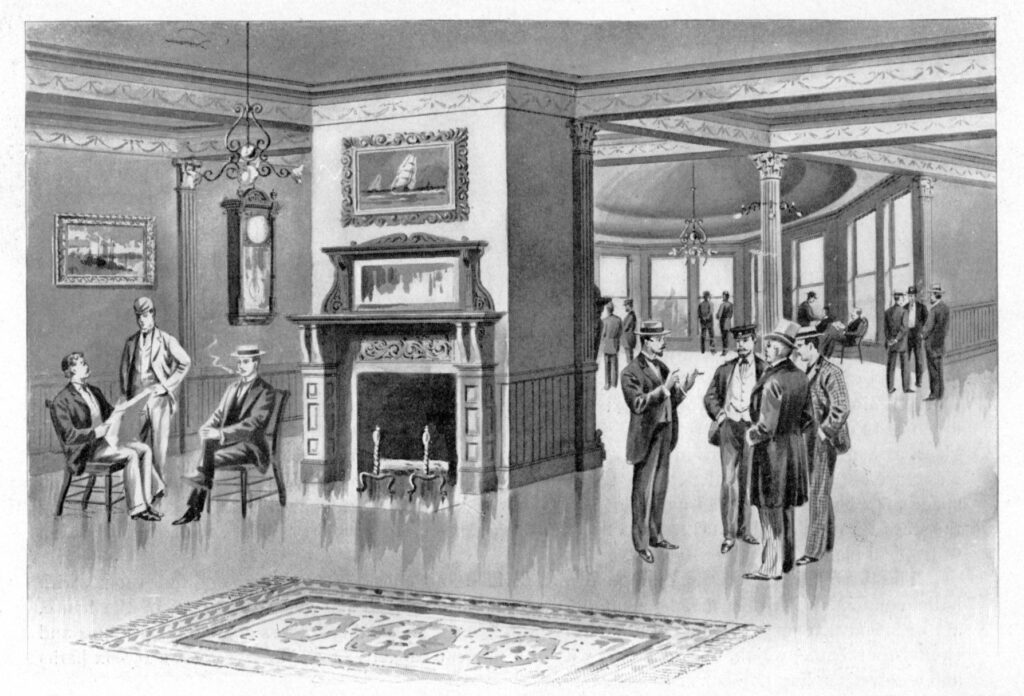
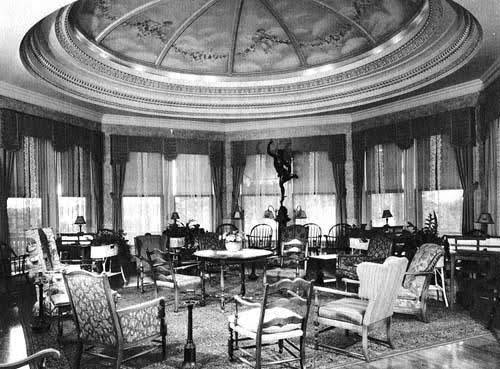
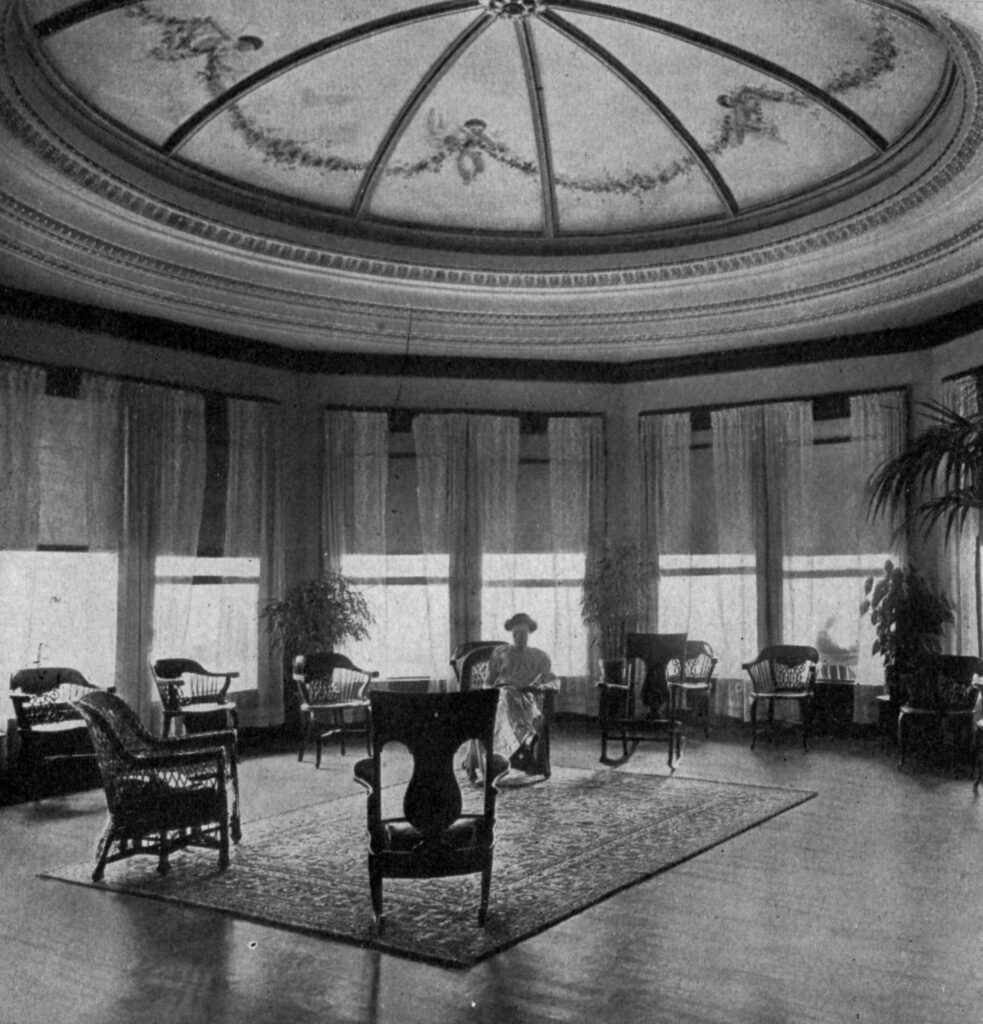
The ornate dome in the dining room is among the few original interior elements. An early brochure shows figures gathered beneath the dome in what was originally a males-only lounge. Decades later, the room was jammed with fancy imported furniture. A haunting publicity photo depicts a lone, fashionable woman in a neatly appointed open space.
Restoration architect John Merkle who managed the hotel revival, tells the story. “It’s definitely a unique feature,” Merkle says. “A dome is not an easy thing to build, and this one is exactly in the state it was. We didn’t have to do a single thing to it. It still has the original paint, and luckily, the roof around it was intact and it survived the demolition of the rest of the building.”
The dome was likely built for owner Frank Jones, the Portsmouth ale tycoon who purchased the building in 1879. A late-19th-century brochure shows a cluster of richly-dressed gentlemen smoking cigars in what was then the guest salon. Jones, who also owned the Rockingham Hotel, a bank, the local railroad, a racing stable, the electric and telephone companies, the massive local brewery and at least three homes — had a taste for the finer things in life. Under his ownership and lavish spending, the Wentworth Hotel became among the most famous in New England.
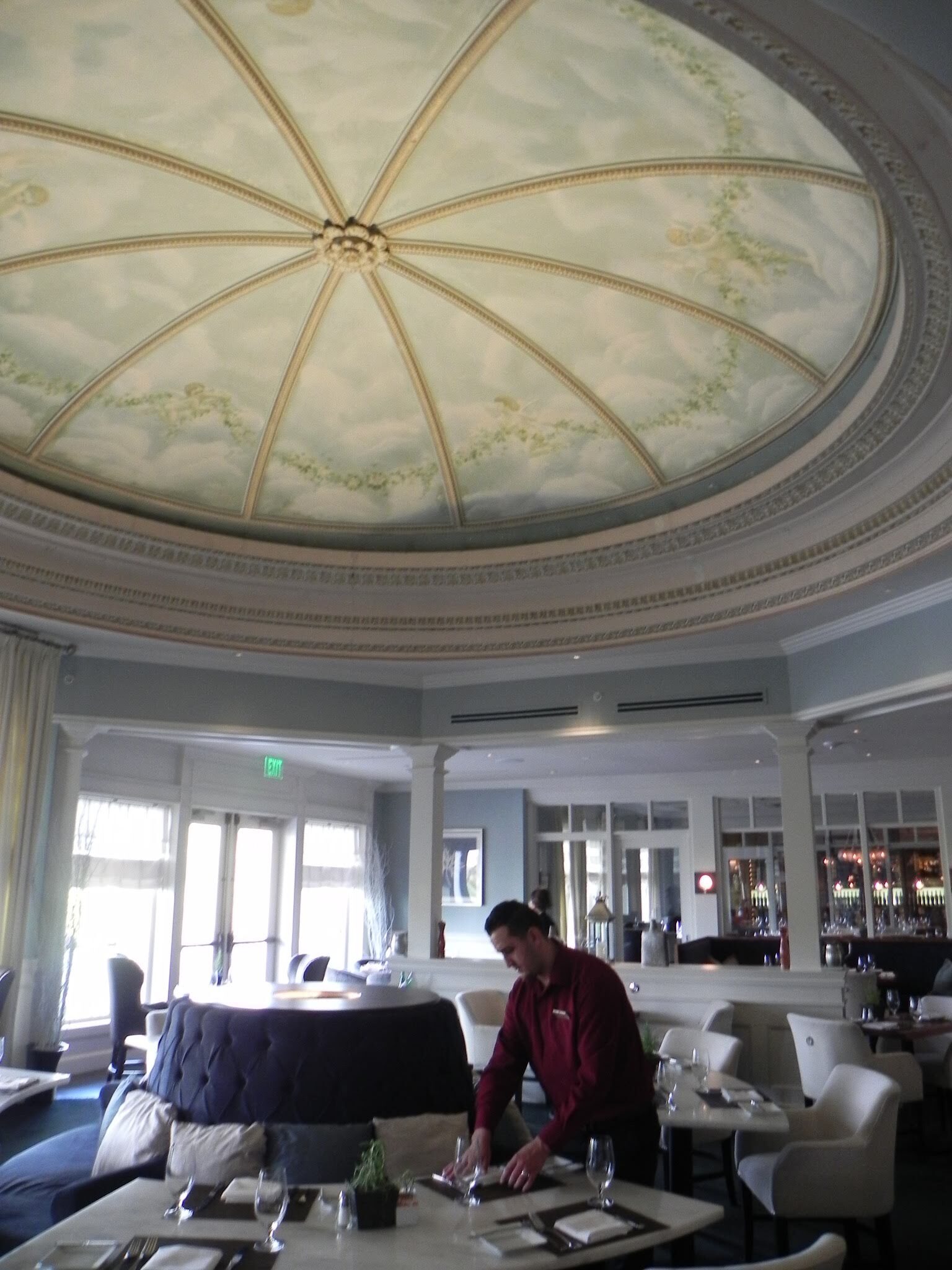
Its survival is a small miracle. For two decades as the 20th century came to a close, this gilt-edged dome hovered above an empty room. These were the “limbo years” for Wentworth by the Sea. Five corporate owners came and went as the sprawling Victorian resort fell into ruin. Where 400 wealthy guests had watched the scarlet sunset, only raccoons, mice and pigeons took shelter. During its decline, as preservationists struggled to save the building, more than eighty percent of the hotel was razed. Ornate Colonial Revival columns and sculpted figures were torn down and smashed. But somehow the golden dome survived, its ornate carved spines and hand-painted cherubs are exactly as they were first installed.
Historians are uncertain when the chubby winged figures were painted and the elaborate rosette fashioned in the center. The dome is divided into ten slices and today is the showpiece of the hotel restaurant.
Classic rotunda domes are not just relics of the past. Merkle says he recently built one for a private home in York, Maine. That dome too is decorated with cherubs amid vines of laurel, a standard theme among ancient Romans who popularized the noble dome. Today we think of domes in state capitals and church buildings, but Merkle says they can bring a dramatic and formal look to the foyer of a large house.
“They do take up a lot of volume,” Merkle says, “so you lose the space above the dome in the house. Cutting the curved material completely out of wood is time consuming, and not inexpensive. But the finished rotunda creates a very special effect.”
Although the Wentworth by the Sea dome was built with the same hand craftsmanship as the one in the modern York home, Merkle says his carpenters had an advantage. They used a computer-aided design system to map out templates for the building contractor. Frank Jones, we can be certain, would approve.
By the say, be careful where you sit in the dining room. The dome has strange acoustic properties. A whisper from the right spot can be clearly broadcast to a distant table.
J. Dennis Robinson is author of Wentworth by the Sea: The Life and Times of a Grand Hotel.



 Bow Street Window Once in a Bordello?