



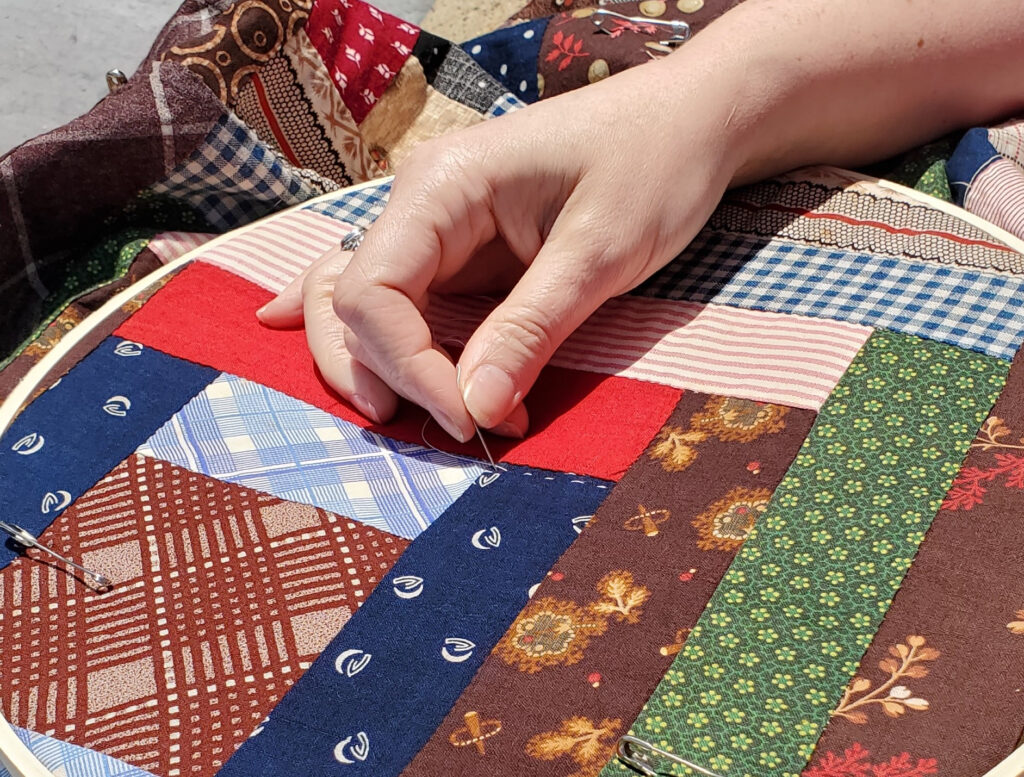
High on my Top 10 list of Portsmouth legends is the myth of the Helen Seavey Quilting Party whose members allegedly sewed the first American flag for naval hero John Paul Jones. I love that fake story. It’s time to meet the woman who uncovered the hoax.
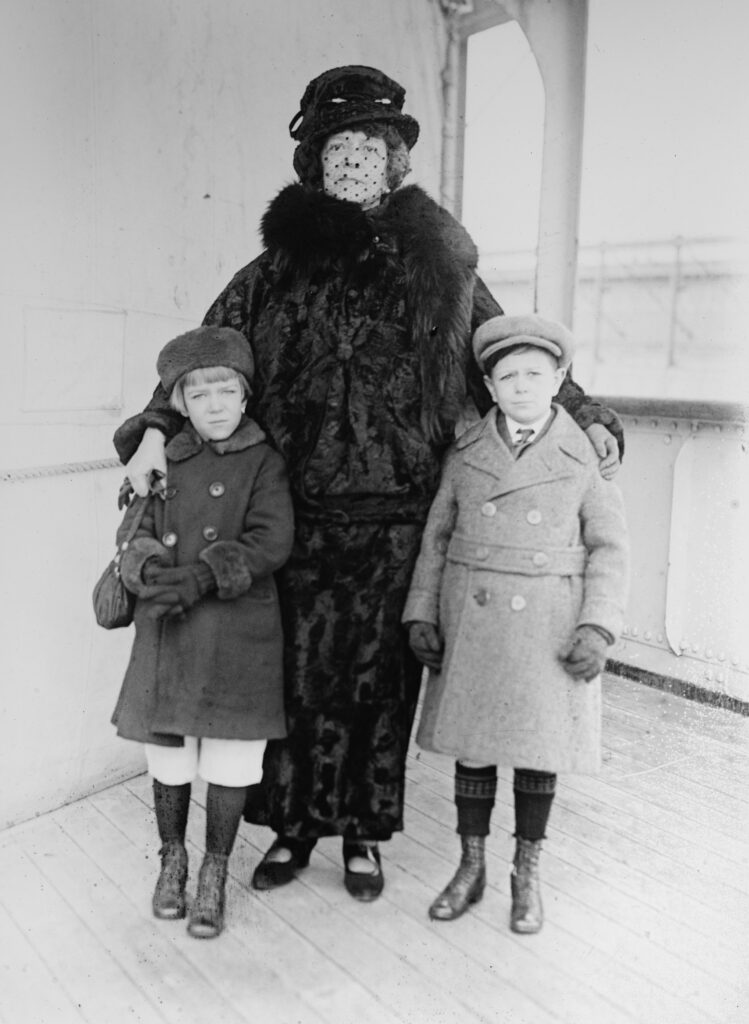
A prominent New York socialite, Anna had penned two novels under the name Mrs. Reginald de Koven before she was 35. She was researching the life of John Paul Jones when, in 1900, a two-volume biography of Jones by Augustus C. Buell hit the bookstores.
A perfect book
“Paul Jones: Founder of the American Navy” was a big hit. Buell claimed his lively readable history of the Revolutionary War sea-fighter had taken him 14 years to complete. Buell’s biography “eclipses all others” the New York Tribune gushed. It was “A PERFECT BIOGRAPHY.”
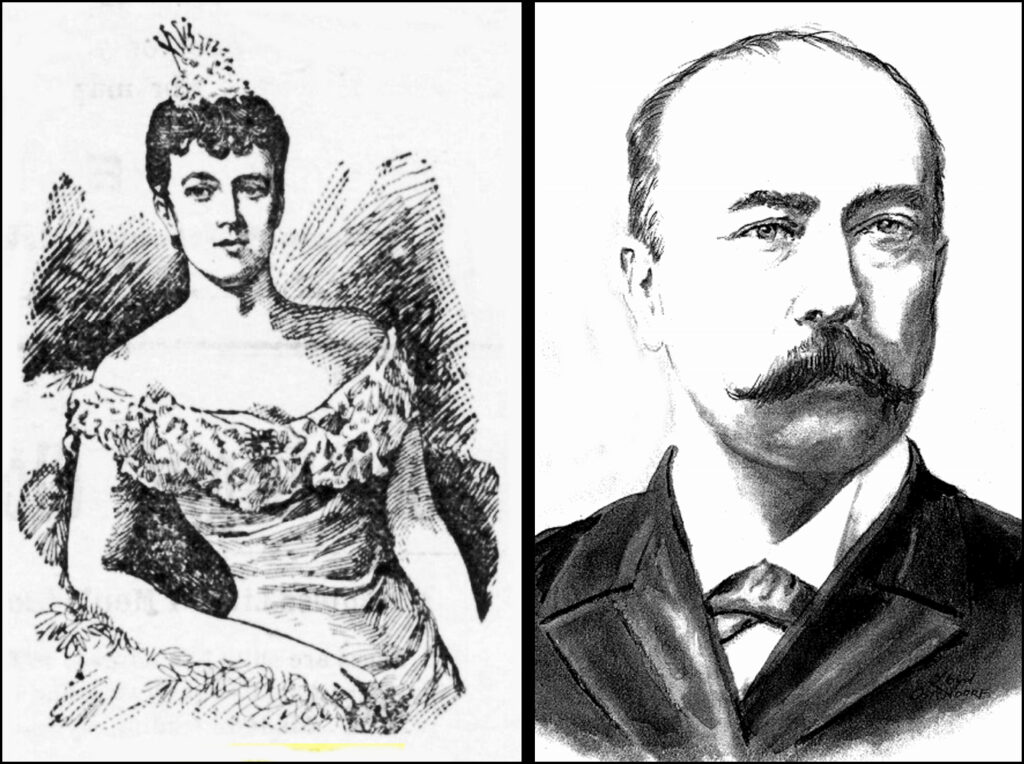
Her name was Anna Farwell de Koven (1862-1953). The daughter of a wealthy U.S. senator and wife of a famous composer, Anna carved her own niche. Born with a silver spoon in her mouth, according to a contemporary newspaper profile, Anna was “socially clever, musical, literary, and with a host of intellectual advantages beyond the ordinary beauty.” Vigorous and competitive in her youth, Anna once said “no sport is too reckless, too daring, or too strenuous for the more experienced among athletic American women.”
Col. Augustus Caesar Buell was probably born in New York in 1847. It is hard to be certain because so much of his life and so many of his books were peppered with lies. His military title was honorary, not earned, although Buell did serve in the Civil War. His first popular book, “The Cannoneer,” offered a vivid first-person description of the author’s participation on the front lines at the Battle of Gettysburg. Buell, however, was not there. He had not even enlisted at the time of the battle and seems to have crafted his memoir from interviews with veterans who were there.
During a decade as a Washington, D.C. journalist, Buell developed a dramatic fact-laced writing style. This was an era when reporters frequently “borrowed” heavily from other writers without permission and embroidered the facts to sell newspapers. He was sued once for libel. Accused of falsifying details, Buell refused to reveal his sources, whether real or fabricated, and won his case in the Supreme Court.
Long before internet fact-checkers, Buell discovered he could invent people, letters, events, official documents and other sources with impunity. His fictionalized biographies of famous Americans like Quaker leader William Penn and President Andrew Jackson were often a better “read” than dry accounts by real historians. Experts who questioned Buell’s work were shocked to discover that even the sources cited in his footnotes were sometimes imaginary.
Body of evidence
Cautious critics labeled portions of Buell’s historical biographies as “fabricated” or “ludicrous.” But his prolific output and entertaining prose sold books, and sales – then as now – trumped accuracy. At his death from “kidney disease” in 1904, Buell was still widely regarded for his body of work. Then in 1905, after a lengthy search, the mummified remains of John Paul Jones were discovered in a lead coffin under the streets of Paris. Preserved in alcohol, the corpse was exhumed, autopsied, honored with great pomp, and shipped to Annapolis, Maryland, where it lies today.
The story made worldwide headlines for months. President Theodore Roosevelt used the arrival of Jones’ body to push for funding to build his Great White Fleet of Navy vessels. Readers rushed to learn more about Capt. Jones and Buell’s five-year-old biography became a bestseller again. Amid the furor, Anna de Koven boldly spoke up. Her comments in the New York Times – a newspaper that had often hired Buell to write about American history – pulled no punches.
Buell’s book depicting Jones as a “flawless hero,” de Koven wrote, was a “romance,” not history. She accused Buell of deliberate forgery by inventing letters from George Washington and Ben Franklin, by printing extracts from imaginary journals, and by quoting from diaries that existed only within the mind of Buell himself.
De Koven’s scholarly “dissection” of Buell, as national newspapers described it, did little to undo the damage. “Paul Jones’ reputation will not suffer,” the Times reported on June 12, 1906, “though some of the pretty little legends about him are exploded.” Or not.
The quilting party
From 1905 until 1913, the body of John Paul Jones was housed in a small brick building on the Annapolis campus while his ornate sarcophagus was being installed in a crypt below the Annapolis chapel. It was in 1913 that Anna de Koven’s own massive two-volume biography of John Paul Jones was finally published. It wasn’t until the fourth appendix at the back of the second volume that the author finally reacted to Buell’s fake news about Portsmouth. There was no documentary evidence, de Koven pointed out in her book, that a recently married young Helen Seavey had sacrificed her wedding dress to sew the stars in the Ranger flag in 1777.
(Author’s History Collection)
The evil genius of Buell’s hoax was that he identified the members of the “quilting party” using surnames long connected to the Piscataqua region – Mary Langdon, Caroline Chandler, Augusta Pierce, and Dorothy Hall. “Present residents of that colonial town who have carefully investigated birth records and authoritative accounts,” Anna de Koven wrote in 1913, “have declared they have been unable to find that any of these patriotic maidens ever existed in the flesh, or that the quilting party ever took place.”
Buell cleverly cited his source for the Portsmouth story as a letter from “a grandnephew of Betsy Ross” in Philadelphia. Historians have since cast doubt on the legend of Betsy Ross as the originator of the first American flag, but a century ago that flag story was as indisputable as the myth of young George Washington chopping down the cherry tree.
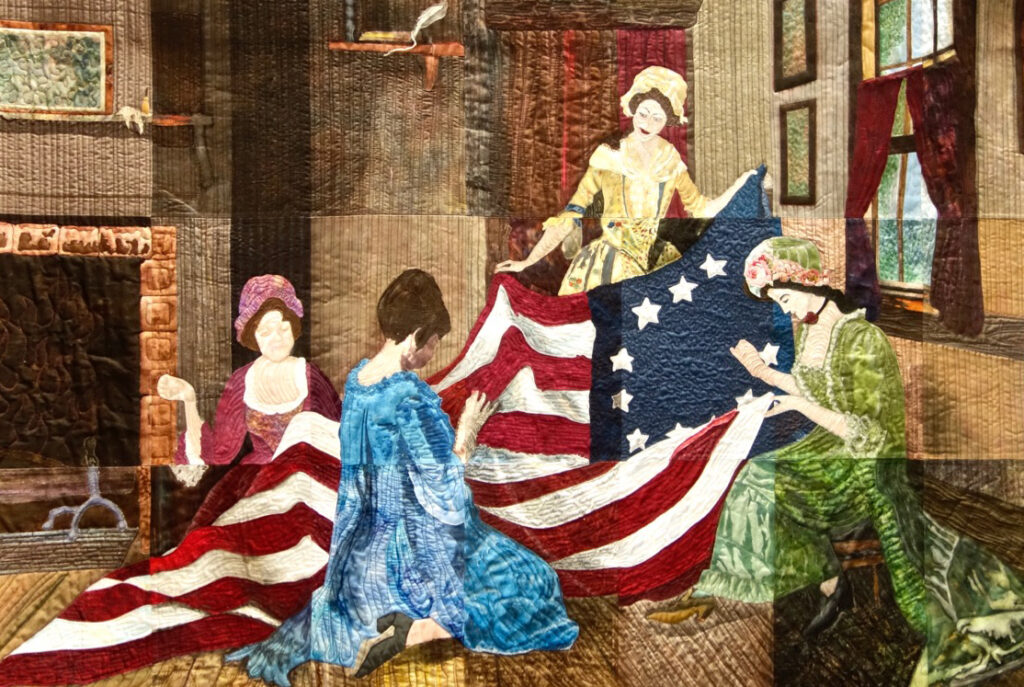
When a descendent of Betsy Ross wrote to Buell in 1901 insisting he document his sources, the “fraudulent historian” referenced an article in an early Portsmouth newspaper. According to that news clipping in his scrapbook, Buell claimed, John Paul Jones, who returned to Portsmouth in 1781, attended a banquet in which he thanked “the dainty hands of the Portsmouth maidens” who had sewn the Ranger flag. Buell explained he first heard the Helen Seavey story “orally” from a Portsmouth woman named Sherburne who was the friend of an elderly woman from Dover. The Dover woman was the descendent of a crewmember who had sailed on the Bonhomme Richard with John Paul Jones, according to Buell’s hazy recollection.
“I have gone over all my original notes – that is, all that I have saved of them, and I cannot find anything to indicate exactly where [these] could be found,” Buell wrote to the descendant of Betsy Ross in 1901. He would look for the clipping from the Portsmouth newspaper, Buell promised, then grew indignant and contrite. He argued that, in writing about Paul Jones, he had no idea he would have to defend his work. In fact, he wasn’t even sure he would publish the book. “As a result,” Buell confessed, “I was careless about preserving the documentary evidence.”
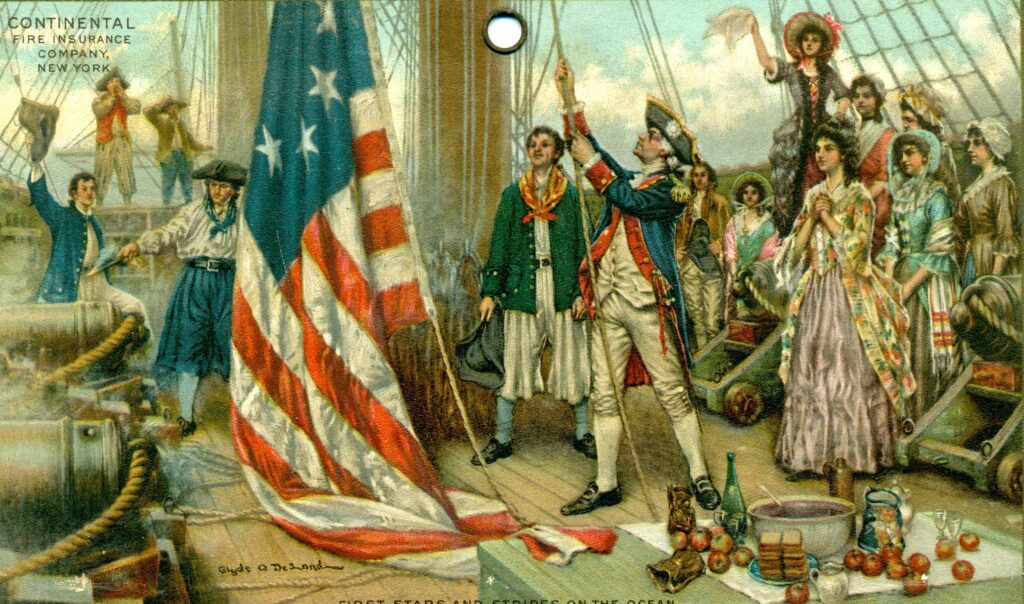
It was during this same period that a German-born painter named Henry Mosler composed a scene showing Betsy Ross and a group of young companions sewing the first flag. Completed in 1911, Mosler’s picture, “The Birth of the Flag,” was immediately reproduced in publications, prints and calendars across the country. Like Buell’s work, it was an imaginary view of an imaginary event, but patriotic Americans immediately took it to heart. Similar illustrations of John Paul Jones raising the quilting party flag aboard the Ranger appeared on calendars during this time. In one version, the Helen Seavey party has spread out a picnic lunch on the deck of the Portsmouth-built warship.
The dead historian
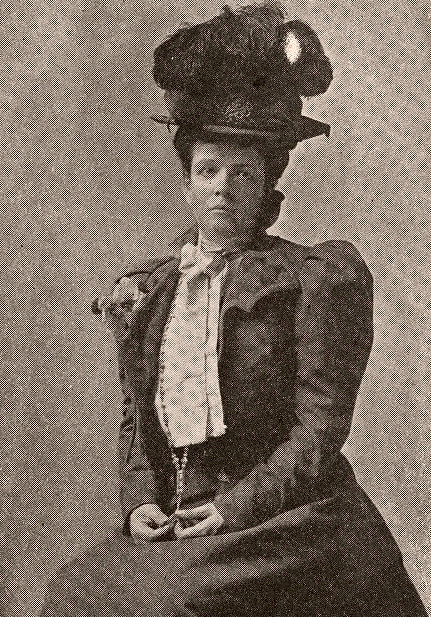
Whether anyone in Portsmouth ever read the footnotes to Anna de Koven’s biography of Jones is unknown. In a quick online survey of Portsmouth newspapers from 1900 to 1915 the name “de Koven” occasionally pops up. But the reference is inevitably to Anna’s husband, Reginald de Koven, who composed the music for two operettas that were then popular at The local Music Hall.
That same online newspaper search, however, turns up the phrase “Helen Seavey Quilting Party” more than 50 times. The name was adopted by a woman’s group, a companion to the Paul Jones Club of Portsmouth. Inspired by the international publicity generated by the discovery of the remains of Paul Jones, both male and female clubs were active here in the early 20th century. The men’s group held banquets at the Rockingham Hotel and gave speeches. The Helen Seavey group published the dainty menu cards for the dinners.
The woman’s club also hosted annual patriotic lectures and observed Flag Day. According to a 1908 issue of the Portsmouth Daily Herald, the Buell myth was still alive and well. The annual banquet celebrated “the deeds of the heroes and heroines of the Revolution.” Special attention was paid to “the gallant Paul Jones and to the girls of Portsmouth’s historic quilting party who made the flag of the Ranger and the Bonhomme Richard.” Somehow the legend had expanded to include two warships captained by Jones.
Neither Anna de Koven’s buzzkill 1906 article in the New York Times, nor her revelatory 1913 book seems to have dampened the spirit of Portsmouth patriots. In 1913, the Helen Seavey Quilting Party attached a plaque to the aging 1758 mansion at the corner of Middle and State streets. This was the house, according to local legend, where Capt. Jones had twice boarded with widow Sarah Purcell while fitting out the warships Ranger and America, built at Kittery by the patriot John Langdon.
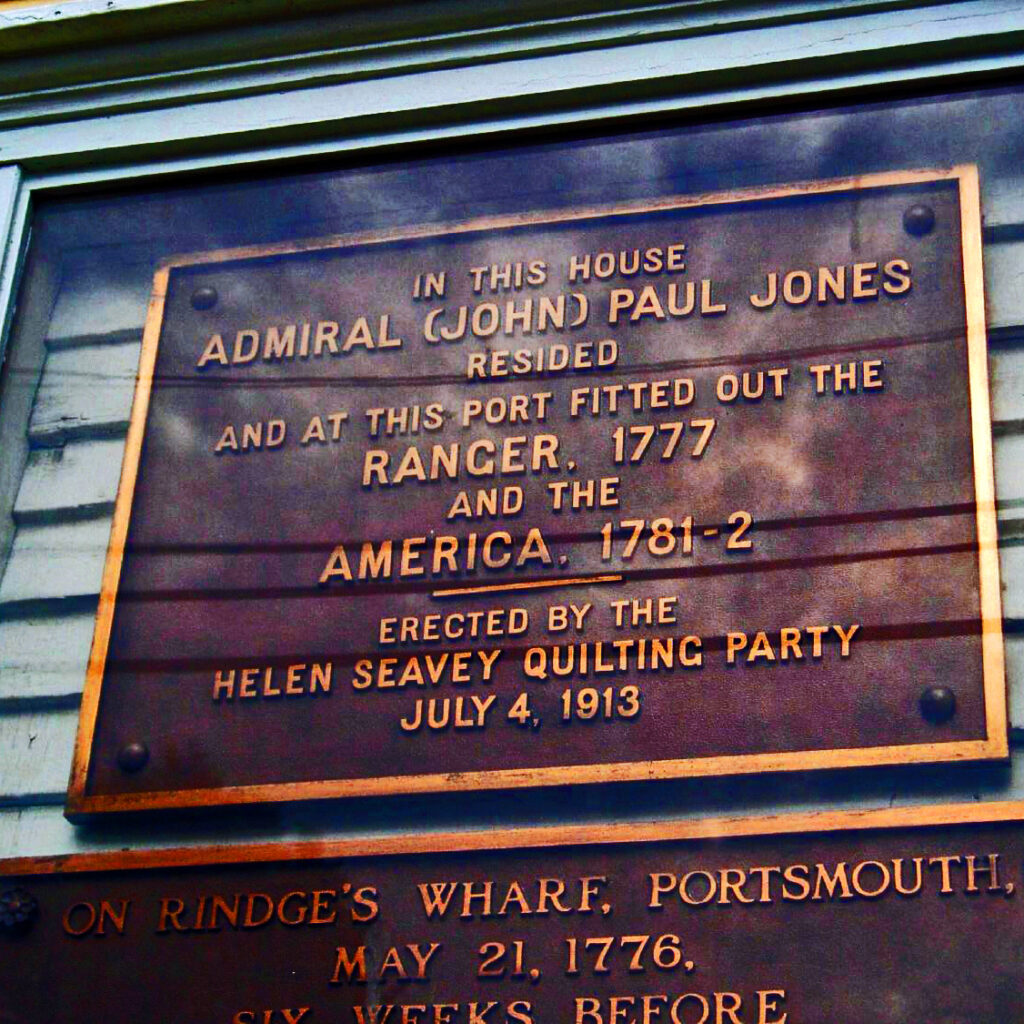
In 1917, the Portsmouth Historical Society was founded in order to save that building when it was scheduled for demolition. Today, the iconic yellow John Paul Jones House Museum and its colonial walled garden survive and thrive. The historic marker is still attached to the house, just inside the wooden gate across from Discover Portsmouth. Did Buell and his fake quilting party save the John Paul Jones House from destruction?
“It is hard to estimate the effect of the dead hand on the writing of history,” critic Milton Hamilton wrote half a century ago. A colonial scholar from New York, Hamilton wrote in detail about the damage the “fraudulent historian” Augustus Buell had done. Should all libraries, Hamilton wondered, be required to brand Buell’s books with the Latin phrase “cave mendacem” – beware of evil? Too late, modern historians have noted, since Buell’s digitized books, rich with both exciting details and false information, are now available as free downloads on the internet, forever to be rediscovered and recycled.
Copyright 2020 by J. Dennis Robinson, all rights reserved
 Kearsarge Pumper Fought the Great Boston Fire of 1872