

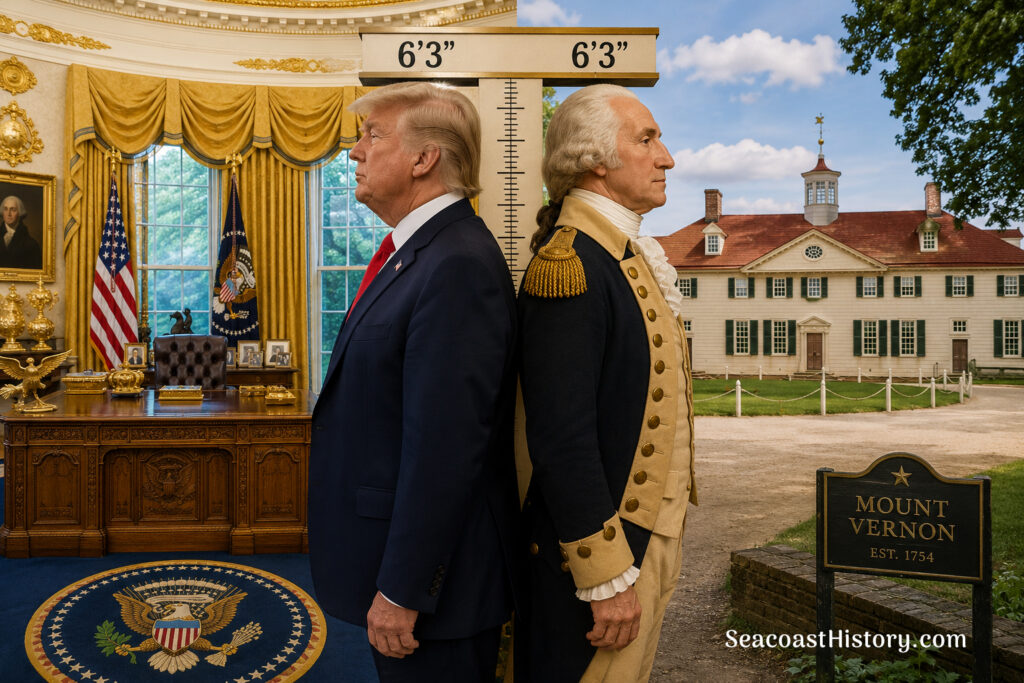
Chin up, people, we’ve survived worse. Heck, this could be the 1700s. (SeacoasatHistory.com Robo-Art Dept)
Donald J. Trump and George Washington have at least three things in common. Both presidents measure in at 6’ 3”. Both were born into privilege and got richer. With personal assets estimated at $580 million (including 318 enslaved Africans), Washington was our wealthiest president until Trump’s inauguration in 2017. Washington’s longstanding record was broken by something entirely new in American presidential history–a populist billionaire. But both men also inherited a nation in deep discontent.
During his post-inauguration visit to downtown Portsmouth in 1789, George Washington was welcomed as a near-godlike figure. Donald Trump, by contrast, entered the White House with the lowest popular approval rating on record for an incoming president. His inauguration was attended by fearful protesters and jubilant supporters.
Despite his popularity, the first president also faced a divisive nation. The “caldron of discontent” that led to the American Revolution, according to one historian, has never stopped boiling. The 45th/47th president now grapples with many of the same issues that made headlines in Portsmouth, New Hampshire in the turbulent 1700s. Here are just a few hot topics.
Nepotism & scandal
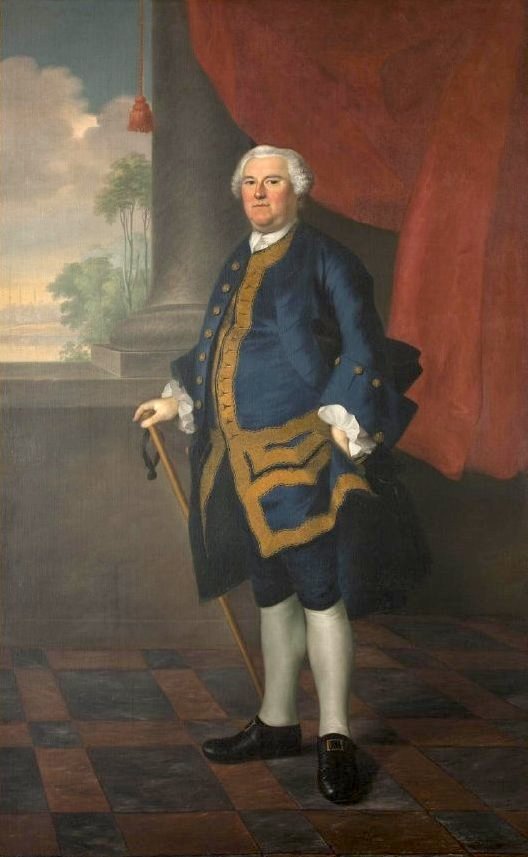
Powerful leaders want to stay safely in power. But who can they trust? Once a bankrupt merchant, Benning Wentworth of Portsmouth managed to enrich himself with a series of real estate grants and profitable business deals after he was appointed governor of the colony of New Hampshire in 1741. Benning stocked his Executive Council, not with wise advisers, but with relatives, partisans, and wealthy friends.
Over the next two decades, as New Hampshire grew, Benning gained a reputation for cronyism, self-dealing, and nepotism. His second marriage, at age 64, to a former housekeeper 40 years his junior, was his final scandal.
He was replaced in 1767 with his nephew, John Wentworth. Although well-liked, the younger Wentworth also scandalized locals when he married his cousin Frances Atkinson just 10 days after the death of her first husband. As to scandals, the current White House has no match. Estimates suggest the Trump family has increased its wealth during the second administration by up to four billion dollars.
Demanding loyalty or self deportation
The Sons of Liberty, who organized the Boston Tea Party, now considered patriots, could be a thuggish group, using intimidation and threats to foment revolution. Despite protests over the hated Stamp Act and the famous Powder Raid on the British fort at New Castle island, many Portsmouth residents remained loyal to the King of England. But the pressure for locals to join the rebellion increased when a Portsmouth mob drove their formerly beloved governor, John Wentworth, and his wife and new son out of town in 1775, never to return under penalty of death. Then came the conflict at Lexington and Concord, the Battle of Bunker Hill, and the Declaration of Independence.
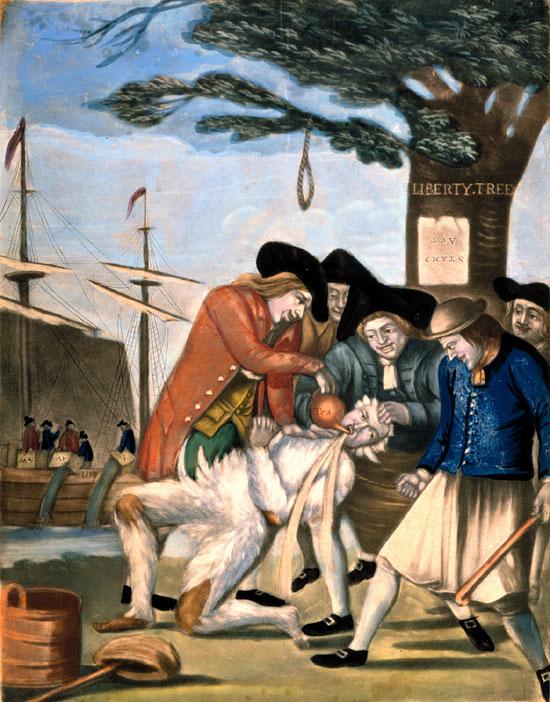
To assure locals would back the illegal uprising of the Continental Congress against England, all New Hampshire men over the age of 21–not including lunatics, Negroes, and idiots– were required to sign a loyalty oath. By May 14, 1776, Portsmouth was required to turn in the names of, not only the men who signed the Association Test (also called the Patriot Test), but the names of all men who refused. Some 497 white Portsmouth males signed the list. In doing so, they vowed to join their “American Brethren” in defending the life, liberty, and property of all others in the “United Colonies.” They also agreed, at the risk of their lives and fortunes, with arms, to oppose the hostile British.
Thirty-one local men did not sign. They were deemed “notoriously disaffected to the common cause,” and their names turned in. While some were absent, others were sympathetic to the British, or like Jonathan Warner, were employed by the Crown. Other. The document provided a handy enemies list reprisals by the Sons of Liberty. By war’s end, those Loyalists who had not “self-deported” to Canada or England decided to back the patriot cause. Today, millions of immigrants, both illegal arrivals and citizens, are being confronted, arrested, detained, and deported by ICE troops in a deeply controversial campaign.
Women’s rights & civil rights
The Women’s March on Washington following the 2017 inauguration of Donald Trump demonstrated deep discontent. The end of Roe V. Wade during the second Trump term has created an even deeper controversy. But things were worse in Portsmouth’s past. Women rarely appeared in the town’s early annals, except as victims of domestic violence, or when accused of being a witch, a scold, or a person of loose morals.
In 1768, during the administration of Gov. John Wentworth, 31-year-old Ruth Blay was hanged at South Cemetery. She was the third woman executed here for, not murder, but for concealing the death of her stillborn infant. Despite protests, reprieves, and a looming sense that something very wrong was taking place–the execution was carried out in public on Gallows Hill. Blay remains the last woman executed in New Hampshire, so far. And despite Abigail Adams’ request to her husband John that the Founding Fathers should “remember the ladies” when drafting the new nation’s laws, they did not. Women remained second-class citizens well into the 20th century and their battle for respect and equality continues.
The current administration has openly campaigned to remove Black History, including elements of slavery, from the public record and public education. The ongoing battle against racial discrimination also resonates in New Hampshire’s only seaport, where the first enslaved African arrived in 1645. In the lead-up to the Revolution, as wealthy white men protested against a “slavish” King George, prominent merchants and ministers kept Africans in bondage. The Warner, Whipple, Wentworth, Sherburne, Moffatt, Fowle, Langdon and other prominent Portsmouth families counted enslaved blacks among their possessions. By the execution of Ruth Blay, at least four percent of the city’s population was black.
The founding American principle that “all men are created equal,” did not apply to women or People of Color. Yet, inspired by the Declaration of Independence, a group of enslaved Portsmouth blacks petitioned the state’s general assembly for their freedom in April 1780. Despite their eloquent claim that “freedom is an inherent right of the human species, not to be surrendered,” their petition went unanswered.
The never-ending healthcare crisis
Within hours of his first inauguration, President Trump signed an executive order designed to roll back the Affordable Care Act, best known as Obamacare, an insurance plan that provides health insurance to millions of Americans.
Back in George Washington’s time, Portsmouth was still a century away from its first “cottage hospital” with only half a dozen beds. During the late 18th century, according to Portsmouth historian Charles Brewster, young men and women would participate in “smallpox parties” on Pest Island (now Shapleigh’s Island) on the New Castle border. In May and June 1779, Brewster reported, a group allowed themselves to be inoculated on the isolated spot, away from the general population. “A greater amount of that species of amusement known as ‘love-making,’ was, probably, never concentrated within a briefer space or more limited period,” Brewster notes.
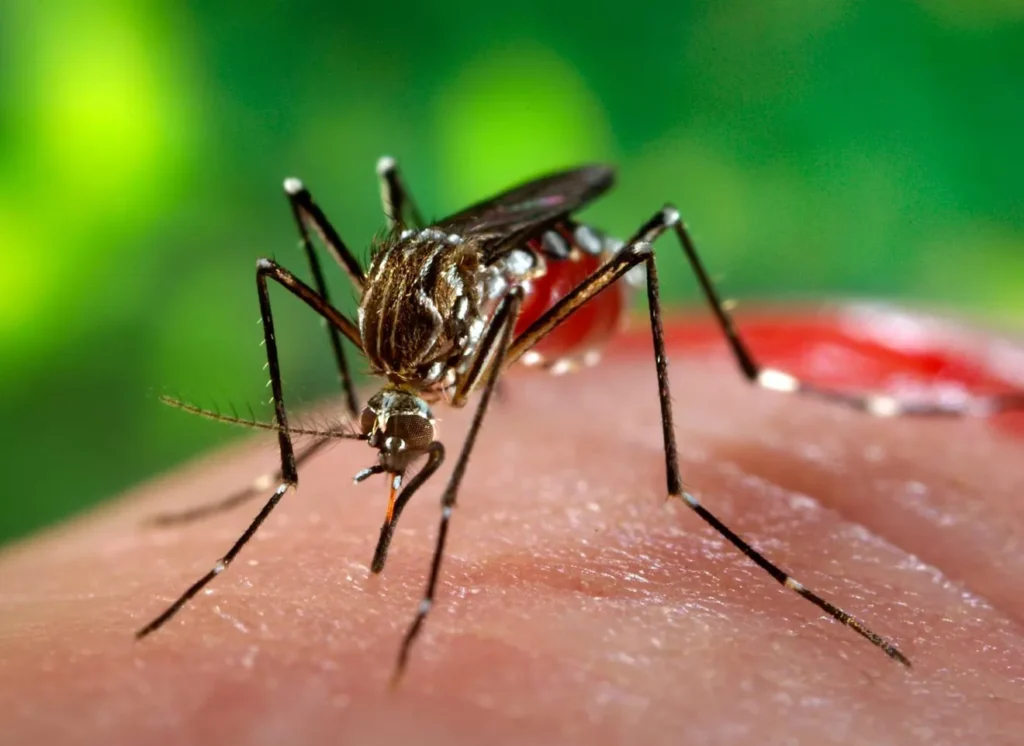
The following year, in 1798, a hundred Portsmouth residents died in just two months as a plague of yellow fever moved from the North End to downtown. The disease had arrived aboard the ship Mentor, owned by merchant Thomas Sheafe, on its return from Martinique. So many died that relatives who were not sick had to carry the corpses away by night. The stench of death wafted through the city for eight weeks. “Such a pestilence had never before, nor has since visited our town, which ranks among the healthiest in the Union,” according to Brewster.
Foreign policy & party politics
Times change, but not all that much. Our Revolutionary era ancestors were nervous about changes to the environment, especially earthquakes. They fretted over what to do with immigrants, foreigners, and terrorists. They moped about the economy. They debated the need for more ethics in government and complained about unfair taxes–all familiar topics today. At this writing, America is shaken over an ongoing war with Iran, one final example will suffice.
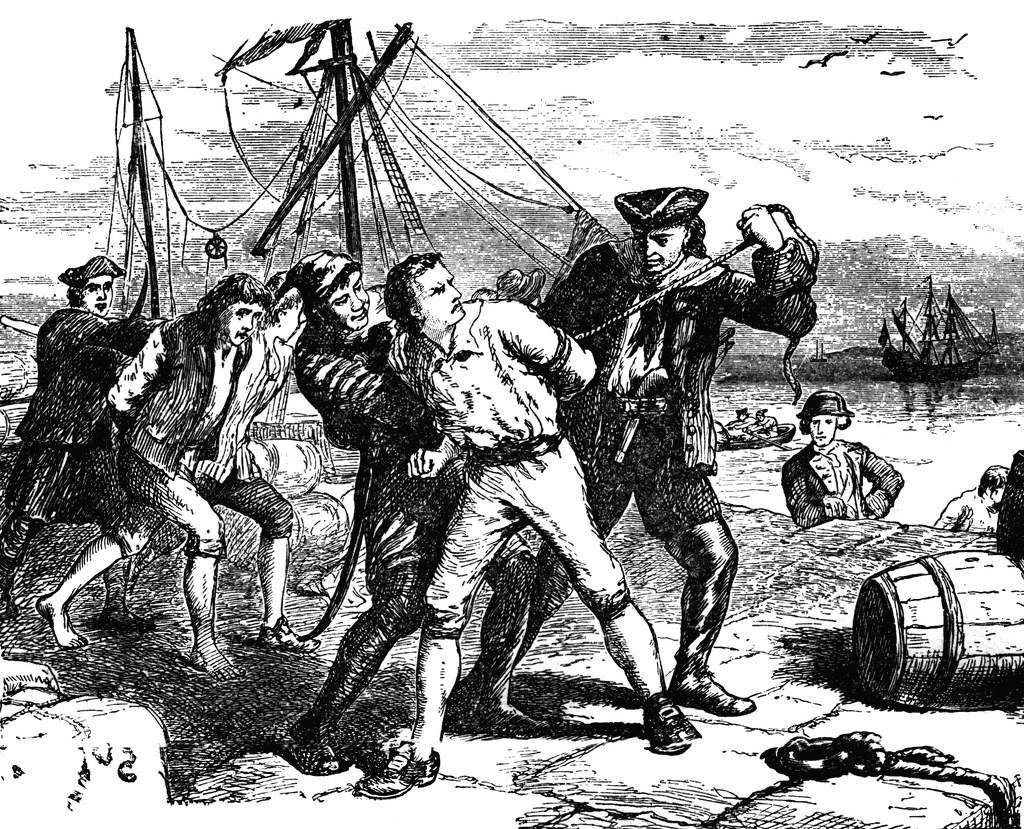
After the Revolution, Americans on the seacoast hoped to become a wealthy merchant nation. We would trade with every nation, remain neutral, and keep our noses out of foreign politics. That was the plan. But by the mid-1790s, France and Britain were at war again. Both countries were harassing American trading ships at sea, while the English, our best economic customer, continued to illegally impress our sailors into their British Navy.
President George Washington, a Federalist, attempted to negotiate a secret treaty with Britain, but word leaked out. That rankled an evolving new political party, the Democratic Republicans, who felt strong ties toward France, who had come to America’s aid in the Revolution. So the Republicans of Portsmouth wrote a letter to President Washington expressing “our most hearty disapprobation” in his planned treaty with England.
Portsmouth Federalists, in response, wrote their own letter in support of Washington’s treaty. About 200 enraged Republicans, armed with clubs, took to the streets, beating drums in protest, and carrying effigies of Federalists. The protesters smashed Portsmouth windows, stomped down fences, injured trees, and threatened their opponents with bodily harm.
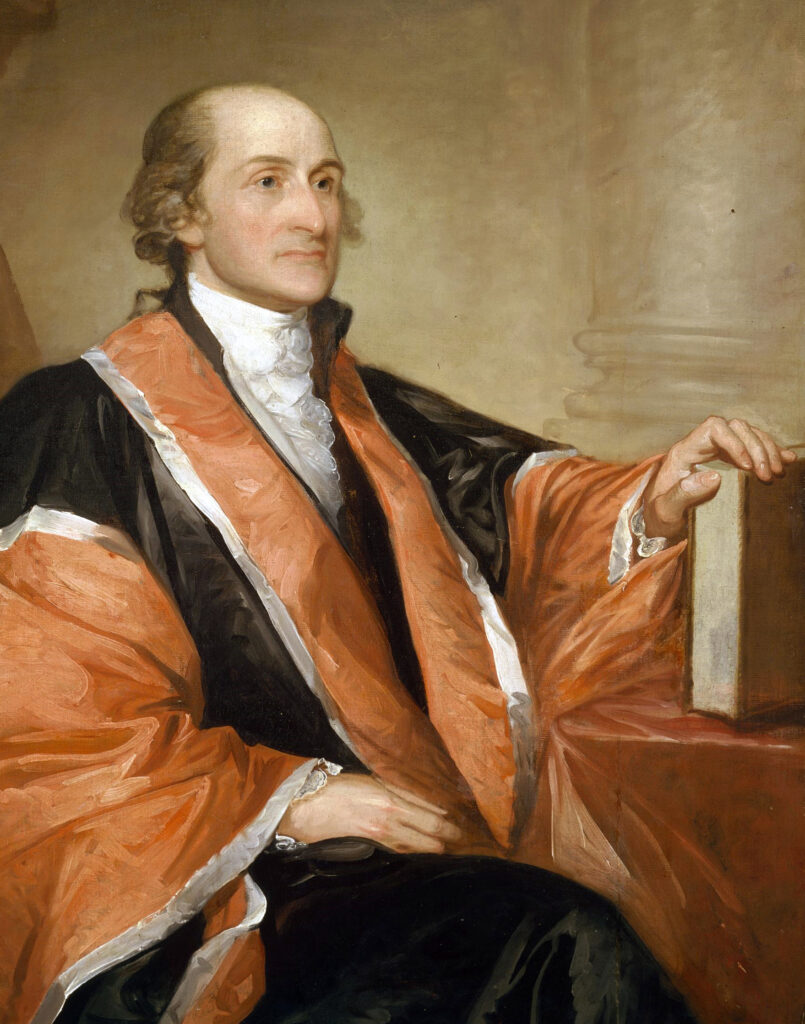
After holding the city in terror for hours, the protesters burned their effigies and went home. The letter from Portsmouth Federalists to President Washington was never sent. But the Jay Treaty, named for founding patriot John Jay, was signed all the same in 1795. The British, true to form, did not honor their promise to stop impressing sailors, but the treaty did delay a new conflict until the War of 1812. John Jay, the first Chief Justice of the United States, became the most hated man in America.
“Damn John Jay!” people shouted. “And damn everyone who won’t damn John Jay!” Jay once joked that he could travel from Boston to Philadelphia at night following the light of his burning effigies. And American party politics was born.
Copyright J. Dennis Robinson, adapted from a published 2017 article.
 Baking in the Old Port a Century Ago